Our pick. Halo
Check price on Amazon →Halo Versa 16 Review (2026): Is It Worth It? + Better Alternatives
The Halo Versa 16's motorized rotating stone spins your pizza past the flame so you don't have to, the most beginner-proof oven in its price class. Here's the honest verdict on whether the rotation is worth it, and the three ovens we'd compare against it first.
By The Pizza Oven Review DeskUpdated 2026-06-28~9 min readRanked on verified floor heatHow we research
We earn a commission on purchases through our links, at no cost to you. It never decides a ranking. How this works
Our top pick.The One You're Researching, rotating-stone, beginner-proof
Halo Versa 16
- Price.
- ~$499
- Our rating.
- 4.4 out of 5
A motorized rotating stone that cooks the pizza evenly for you, the most beginner-friendly oven in its class.
Not sure yet? Compare all 4 picks below ↓
The single hardest thing about a home pizza oven isn't getting it hot, it's getting the pizza evenly cooked once it's in there. A stationary oven cooks the back of the pie facing the flame far faster than the front, so you spend the whole 90 seconds turning the pizza with a peel, and one missed rotation gives you a scorched edge. The Halo Versa 16 solves that with a motor: its 16-inch cooking stone rotates automatically, carrying the pizza past the dual burners so every edge gets equal time near the flame. For beginners, that's close to magic.
We judge every oven by the same lens, peak floor temperature, the 60-Second-Pizza Club, and heat recovery, and on stated specs the Versa 16 is competitive: Halo lists a ~950°F peak, the top of the Neapolitan band, with dual burners feeding a full 16-inch deck. The interesting questions are whether the rotating stone delivers enough of an edge over a cheaper stationary oven to justify it, whether the motor is a reliability liability over time, and how it stacks up against both the value leaders and the budget rotating ovens that copy the same trick.
Standard disclosures before the verdict: Halo did not pay for this review, has no relationship with this site, and didn't know we were writing it. We do not bench-test ovens; see the methodology for how we assess them, and every spec, price, and temperature below was pulled from our PA-API-verified dataset in June 2026. If you buy through our links we may earn an Amazon commission at no extra cost to you; that never changes a rating or a ranking.
The short version.
- Verdict: the Halo Versa 16 is one of the most beginner-friendly ovens you can buy, the motorized rotating stone genuinely fixes uneven cooking, the single most common cause of bad first pizzas.
- On stated specs it's right in the mix: a manufacturer-stated ~950°F peak (top of the Neapolitan band) and dual burners feeding a full 16-inch deck for around $499.
- The honest catch: the rotation is a convenience, not a flavor upgrade, a stationary oven plus a little peel skill makes identical pizza, and the motor is one more thing that can eventually fail.
- What to compare it against: the Ooni Koda 16 (~$498) for effectively the same price without the motor, the Mimiuo (~$300) if you want the rotating trick on a budget, and the Solo Stove Pi Prime (~$400) for a simpler, cheaper gas oven.
- Buy the Versa 16 if hands-off, even bakes matter more to you than saving money or learning the peel-turn; otherwise a stationary oven gives the same pizza for the same or less.
At a glance.
| Oven | Fuel | Peak temp (stated) | Max pizza size | Price | Check price |
|---|---|---|---|---|---|
| Halo Versa 16 | Gas (rotating stone) | ~950°F | 16 in | ~$499 | Check price on Amazon |
| Ooni Koda 16 | Gas | ~950°F | 16 in | ~$498 | Check price on Amazon |
| Mimiuo (Rotating) | Gas (rotating stone) | ~860°F | 13 in | ~$300 | Check price on Amazon |
| Solo Stove Pi Prime | Gas | ~850°F | 12 in | ~$400 | Check price on Amazon |
The Halo Versa 16 vs. the three ovens we'd cross-shop it against, specs and prices verified against our PA-API dataset in June 2026. Peak temps are manufacturer-stated.
Halo Versa 16
Halo
A motorized rotating stone that cooks the pizza evenly for you, the most beginner-friendly oven in its class.
Our verdict: The Versa 16's rotating stone solves the one problem that ruins most first pizzas: uneven cooking. Dual burners and a full 16-inch deck hit a stated 950°F, and the motor spins your pie past the flame so you don't have to. The honest question is whether you value that hands-off convenience enough to choose it over an identically-priced stationary oven.
On paper. Manufacturer-stated ~950°F peak with dual burners and a motorized rotating 16-inch stone. We have not independently clocked this unit; figure is as stated by Halo.
The rotating stone is the entire pitch, and it's a good one for beginners. On a stationary oven, the edge of the pizza facing the burner cooks dramatically faster than the front, so you're constantly turning the pie with a peel to even it out, and missing one turn means a burnt edge. The Halo Versa 16 automates that: a motor rotates the 16-inch stone, carrying the pizza in a slow circle past the dual burners so every part of the crust gets equal flame time. The result is consistent, evenly leoparded pies with almost no skill required, which is exactly why we rate this among the most forgiving ovens for newcomers.
On our lens, the dual-burner setup feeding a full 16-inch deck at a stated 950°F puts the Versa 16 firmly in 60-Second-Pizza Club territory, and the rotating stone helps heat recovery feel steadier because the pizza never sits in one cold spot. The trade-off worth naming is the motor: it's one more component than a stationary oven has, and any moving part is a potential point of failure over years of use. Owner feedback on Halo's reliability is generally positive, but it's the honest asterisk on an otherwise very approachable oven.
Who should buy it.
Buy the Versa 16 if you want consistently even pizza without learning to turn a pie on a peel, it's the most beginner-proof oven in its price class and a genuine stress-reducer for anyone intimidated by the 90-second window. It suits the cook who values hands-off convenience and a full 16-inch deck and isn't bothered by having a motor in the mix.
What we don't like.
The rotation is convenience, not performance, a stationary Ooni Koda 16 costs the same and makes identical pizza for the cook willing to turn it. The motor adds a moving part that a simpler oven doesn't have, and budget rotating ovens copy the same trick for about $200 less (with lower stated peaks).
- Fuel
- Gas (motorized rotating stone)
- Peak temp
- ~950°F (manufacturer-stated)
- Max pizza size
- 16 in
- Weight
- 41 lb
- Price
- ~$499
What we like.
- Motorized rotating stone, even bakes with almost no skill
- Dual burners feeding a full 16-inch deck
- Stated ~950°F peak, top of the Neapolitan band
- The most beginner-forgiving oven in its class
Worth noting.
- Rotation is convenience, not hotter or better pizza
- Motor adds a moving part that can fail over time
- Budget rotating ovens do the same trick for far less

Ooni Koda 16
Ooni
Our Best Overall gas pick, same price, same stated peak, no moving parts to fail.
Our verdict: The Versa 16's most direct rival, dollar for dollar. The Koda 16 costs effectively the same, around $498, hits the same stated 950°F on the same 16-inch deck, and has no motor to worry about, you just learn the peel-turn. It's our Best Overall gas oven and the default we'd recommend most buyers.
On paper. Manufacturer-stated ~950°F peak; 16-inch deck; L-shaped burner. The category's most-owned, most-reviewed gas oven.
Same price, same peak, one fewer thing to break. The Ooni Koda 16 is our Best Overall gas oven and the Versa 16's natural cross-shop: around $498, a full 16-inch deck, a stated ~950°F peak, and an L-shaped burner that runs flame up the back and across one side for even heat. The one thing it asks that the Halo doesn't is that you turn the pizza yourself with a peel, a skill most people pick up within their first three or four bakes.
The Versa 16 wins only on hands-off convenience. If even bakes with zero technique are your priority, the Halo earns it; if you'd rather have the simplest possible reliable oven, the Koda 16 is the safer long-term pick.
Who should buy it.
Buy the Koda 16 if you're willing to learn the peel-turn, you get the same deck, the same stated peak, and the category's deepest support, with no motor to fail, all for the same money.
What we don't like.
You do have to rotate the pizza yourself, which is a small learning curve, and the thinner stone recovers a touch slower than heavily-massed ovens on long sessions.
- Fuel
- Gas (propane; natural-gas version available)
- Peak temp
- ~950°F (manufacturer-stated)
- Max pizza size
- 16 in
- Weight
- 40.1 lb
- Price
- ~$498
What we like.
- Effectively the same price and stated peak as the Versa 16, no motor
- Full 16-inch deck; our Best Overall gas pick
- Most-owned, best-supported oven in the category
- Portable at 40 lb
Worth noting.
- You rotate the pizza yourself (minor learning curve)
- Thinner stone, slightly slower recovery on marathons

Mimiuo Rotating Gas Pizza Oven
Mimiuo
The rotating-stone trick on a budget, about $200 under the Halo, with a lower stated peak.
Our verdict: If the rotating stone is the whole reason you wanted the Halo, the Mimiuo gives you that exact feature for around $300, roughly $200 under the Halo. The trade is a lower stated peak (~860°F) and a smaller 13-inch deck, but for casual cooks who just want even, hands-off pizza, it's remarkable value.
On paper. Manufacturer-stated ~860°F peak with an auto-rotating stone. The budget answer if rotation is the feature you actually want.
The Mimiuo proves the rotating trick doesn't have to cost $499. The Mimiuo rotating gas oven has the same headline feature as the Halo, an auto-rotating stone that carries the pizza past the burner for even cooking, at around $300. Its stated peak is lower (~860°F versus the Halo's ~950°F) and the deck is smaller at 13 inches, but it still clears the lower Neapolitan threshold and still delivers the hands-off even-bake experience that's the rotating oven's whole appeal.
The honest read: the Halo is the better-built, hotter, larger rotating oven; the Mimiuo is the value-maximizing way to get the same convenience if budget is tight and you don't need the top of the temperature band.
Who should buy it.
Buy the Mimiuo if rotation is the feature you care about and budget matters, it delivers the same hands-off even-bake experience for about $200 under the Halo.
What we don't like.
Lower stated peak (~860°F) and a smaller 13-inch deck, and budget-tier build means it's less refined and likely less durable than the Halo.
- Fuel
- Gas (auto-rotating stone)
- Peak temp
- ~860°F (manufacturer-stated)
- Max pizza size
- 13 in
- Weight
- 39 lb
- Price
- ~$300
What we like.
- Same rotating-stone trick for about $200 less
- Still clears the lower Neapolitan threshold
- Hands-off even bakes on a budget
Worth noting.
- Lower stated peak (~860°F) than the Halo
- Smaller 13-inch deck
- Budget-tier build and durability

Solo Stove Pi Prime
Solo Stove
A clean, simple single-burner gas oven, no motor, about $100 less, easy to live with.
Our verdict: If the Halo's appeal is 'easy gas oven' but the motor gives you pause, the Pi Prime is the stripped-down answer. A single-burner gas oven with a clean round design, it's about $100 cheaper, has nothing to fail, and is genuinely easy to use. The trade is a smaller 12-inch deck and a lower stated peak.
On paper. Manufacturer-stated ~850°F peak; single propane burner; round design. The simplicity-first gas value pick.
The simplest path to good gas pizza. The Solo Stove Pi Prime strips the oven back to essentials: a single propane burner, a handsome round body, and nothing electronic to break. It's around $400, roughly $100 under the Halo, and reaches a manufacturer-stated ~850°F, which clears the lower end of the Neapolitan band. You'll turn the pizza yourself, but on a 12-inch deck that's quick and easy.
It's the right pick for a casual cook who wants a good-looking, low-fuss gas oven and doesn't need a 16-inch deck or the rotating gimmick.
Who should buy it.
Buy the Pi Prime if you want simple, good-looking gas pizza with nothing to break, it's the no-motor, lower-cost route to an easy oven, ideal for casual or smaller-batch cooking.
What we don't like.
Smaller 12-inch deck and a lower stated peak (~850°F) than the Halo, and a single burner gives slightly less even heat than dual-burner designs, you'll turn the pie more attentively.
- Fuel
- Gas (single propane burner)
- Peak temp
- ~850°F (manufacturer-stated)
- Max pizza size
- 12 in
- Weight
- 30.8 lb
- Price
- ~$400
What we like.
- Simple single-burner design, nothing to fail
- About $100 cheaper than the Halo
- Clean, attractive round build; easy to use
Worth noting.
- Smaller 12-inch deck
- Lower stated peak (~850°F)
- Single burner, turn the pizza more attentively
What you'll need.
Prices approximate at time of writing.
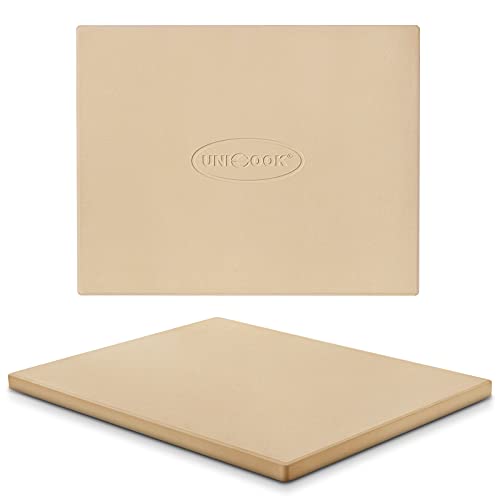
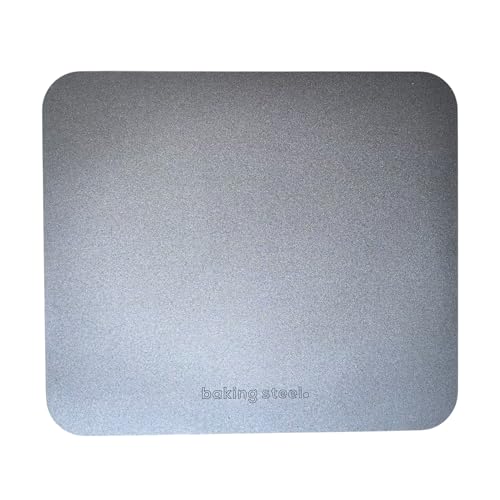
The five tools that do the work in every method on this site: a slab that stores heat, something to launch with, a way to read the surface, and a clean cut.


More ovens worth comparing
Beyond this guide, the highest-rated ovens across every fuel and budget, with a live price check on each.
- Check price on Amazon
- Check price on Amazon
- Check price on Amazon

- Check price on Amazon
- Check price on Amazon

- Check price on Amazon

As an Amazon Associate we earn from qualifying purchases, at no cost to you.
Quick shop: every pick.
Skip the scroll: the whole lineup, with a live price check on each.
- Halo Versa 16The One You're Researching, rotating-stone, beginner-proofHalo · ~$499Check price on Amazon
- Ooni Koda 16Best Overall Alternative, same price, no motorOoni · ~$498Check price on Amazon
- Mimiuo Rotating Gas Pizza OvenBest Budget Rotating Alternative, the same trick for lessMimiuo · ~$300Check price on Amazon
- Solo Stove Pi PrimeBest Simple Gas Alternative, fewer parts, lower priceSolo Stove · ~$400Check price on Amazon
How we chose.
We judge every pizza oven by one signature lens: the peak temperature the floor actually reaches, whether it can join the 60-Second-Pizza Club (a Neapolitan-style pie in 60 to 90 seconds), and how quickly the stone recovers its heat for the next bake. Those three things decide whether an oven makes restaurant-grade pizza at home, far more than any single convenience feature. We pull every spec, price, and ASIN from our PA-API-verified dataset and never invent a number.
We do not bench-test ovens, so for the Halo Versa 16 we assess the verified specs, the Amazon listing, and the weight of owner reports against the same standard we hold every oven to. So we report the Versa 16's peak as the manufacturer-stated ~950°F and label it as stated, rather than claiming a clocked figure we don't have. With feature-led ovens like this one, we separate what the feature genuinely improves (even cooking) from what it doesn't change (peak heat, flavor, the underlying pizza), so the rotation gets credit for exactly what it does.
Key terms
- Rotating stone
- A motorized cooking deck that spins the pizza past the burner so every edge gets equal flame time. It automates the peel-turn that even-cooking otherwise requires, a convenience that mainly helps beginners.
- Peak floor temperature
- How hot the cooking surface gets, the most important spec for Neapolitan-style pizza, which needs roughly 850 to 950°F. The Versa 16's stated ~950°F is the top of that band; we label stated figures as stated when we haven't clocked the unit ourselves.
- 60-Second-Pizza Club
- Our shorthand for ovens that can cook a Neapolitan-style pie in 60 to 90 seconds. The Versa 16's stated 950°F peak and dual burners put it comfortably in the club, with the rotating stone helping every edge finish at the same time.
- Dual burners
- Two gas burners rather than one, feeding heat more evenly across the deck. Combined with the rotating stone, they're why the Versa 16 cooks so consistently with little user input.
Questions, answered
Is the Halo Versa 16 any good?
Yes, it's one of the most beginner-friendly ovens in its price class. The motorized rotating stone fixes uneven cooking, which is the single most common cause of disappointing first pizzas, and the dual burners feeding a full 16-inch deck reach a manufacturer-stated ~950°F, the top of the Neapolitan band. The honest caveat is that the rotation is a convenience, not a performance upgrade: a stationary oven at the same price makes identical pizza if you're willing to turn it yourself. We rate it a strong buy for hands-off, even bakes.
What's a better alternative to the Halo Versa 16?
It depends on what drew you to it. For the same price without the motor, the Ooni Koda 16 (~$498) gives you the same 16-inch deck and stated 950°F peak, our Best Overall gas pick, and asks only that you turn the pizza yourself. If the rotating trick is the real appeal, the Mimiuo (~$300) does it for about $200 less. And if you want a simple, durable gas oven with nothing to fail, the Solo Stove Pi Prime (~$400) is the low-fuss option.
How hot does the Halo Versa 16 get?
Halo states a peak of around 950°F, the top of the Neapolitan band (roughly 850 to 950°F floor temperature), driven by dual burners across a 16-inch deck. We report that as the manufacturer's stated figure because we haven't independently clocked this unit; combined with the rotating stone, it's comfortably capable of fast, evenly cooked Neapolitan-style pies.
Is the rotating stone on the Halo Versa 16 worth it?
It's worth it if you value hands-off, even cooking and don't want to master turning a pizza on a peel. The motor carries the pie past the flame automatically, so every edge cooks evenly with almost no skill, a real stress-reducer for beginners. It is not worth it if you're happy to learn the peel-turn, since an identically-priced stationary oven like the Ooni Koda 16 makes the same pizza, or if you'd rather not have a motor as a potential long-term failure point.
Is the Halo Versa 16 worth it?
For the beginner or the convenience-first cook, yes, it's the most forgiving oven in its class and reaches a competitive stated peak on a full 16-inch deck. For the value-focused or simplicity-focused buyer, it's a closer call: the Ooni Koda 16 matches its price and performance without a motor, and the Mimiuo offers the same rotation for about $200 less. Decide based on how much you value automated even bakes versus saving money or avoiding moving parts.
Does the Halo Versa 16 motor make it less reliable?
Any moving part is a potential failure point a stationary oven doesn't have, so the motor is the honest asterisk on the Versa 16. That said, owner feedback on Halo's reliability is generally positive, and the rotation is the feature people buy the oven for. If long-term simplicity is your priority, a motorless oven like the Ooni Koda 16 or Solo Stove Pi Prime removes that variable entirely.
Keep reading.
The Best Pizza Ovens (2026)
Every oven we cover, ranked by the only thing that matters: how good the pizza is for the money.
The Best Gas Pizza Ovens (2026)
The gas field ranked, where the rotating Versa 16 lands against the stationary value leaders.
Ooni Koda 16 Review
Our deep-dive on the same-priced stationary oven we'd cross-shop against the Versa 16, no motor, identical pizza.
Ooni vs Gozney: Which Brand Wins?
The two giants head to head, same ~950°F ceiling, very different philosophies, one clear way to choose.
Ooni Fyra 12 Review
Ooni's lightest wood-pellet oven reviewed, real live-fire flavor at $349, and what to cross-shop.