The collection.
Pizza Oven 101
- Guides.
- 50
- Brands reviewed.
- 10
- Paid placements.
- 0
- Updated.
- Aug 2026
The brief.
Everything a smart buyer needs before spending a dollar: how an outdoor pizza oven actually reaches 900°F, why floor temperature matters more than dome temperature, gas versus wood, and the spec sheet tricks to ignore.
No products to sell you in most of these, just the foundation that makes every review on this site make sense.
01Start here. Explainer
Are Pizza Ovens Worth It? (2026): An Honest Cost/Benefit
The honest answer is: for some people, absolutely, and for others, no, and they should buy a $100 baking steel instead. A dedicated pizza oven does one thing a home oven physically cannot: it reaches the 850 to 950°F floor that makes true Neapolitan pizza. Whether that one capability is worth the money, the space, and the learning curve depends entirely on what you actually want to eat. Here's the unsentimental math, who it's for, who it isn't, and the cheaper alternative we'll happily send you to.
Read the guide~10 min read
Ranked on verified floor heat.
Not sure which oven fits your setup? See our top picks.
The full collection.
Explainer · ~12 min read
How to Choose a Pizza Oven (2026): The Complete Buyer's Guide
Pizza-oven marketing is a contest to print the biggest temperature number, and almost none of those numbers is the one that decides your pizza. This is the rigorous version: how to pick a fuel, why the FLOOR (not the dome) makes the crust, how size and portability and insulation actually trade off, what the learning curve really costs, the budget tiers that matter, and the signature test method we use to separate ovens that bake from ovens that just claim a big number.
Explainer · ~10 min read
How Pizza Ovens Work (2026): The Physics of a 60-Second Bake
A pizza oven is, underneath the marketing, a simple machine doing three jobs at once: conducting heat into the base, radiating it onto the top, and circulating hot air through the chamber. Understand those three modes of heat, and how dome heat and floor heat divide the labor, and every spec on the box suddenly makes sense. Here's how a pizza oven actually cooks a pizza in sixty seconds, why insulation matters more than the headline temperature, and what the fuel really changes.
Explainer · ~12 min read
How Much Does a Pizza Oven Cost? (2026): A Tier-by-Tier Breakdown
A capable outdoor pizza oven starts around $121 and the sweet spot lives at $400 to $500, but the sticker is only part of the answer. The true cost of ownership adds roughly $75 to $150 of essentials, fuel, peels, an infrared thermometer, a cover, plus the fuel you burn and the learning curve you pay in failed first pies. Here is the full price map, tier by tier, using real current prices, plus the cheapest honest path to great pizza if a dedicated oven is more than you need.
Explainer · 13 min
Pizza Oven Price Index: The Oven Barely Moves, the Accessories Never Stop
We tracked the price of 134 pizza ovens, accessories, and dough tools every day for 16 days through the official Amazon Product Advertising API. Gas and multi-fuel ovens changed price 10.3% of the time. Baking stones and steels changed 0.0% of the time. Thermometers and scales changed 75.0% of the time. The advice that follows is the opposite of what you have been told: do not wait for a deal on the oven, time the accessories.

Explainer · ~10 min read
When to Buy a Pizza Oven (2026): What Our Own Price Tracking Shows
The standard advice is to wait for a sale. Our own tracking says the opposite for the oven and exactly that for the accessories. Across 16 days and 10 automated checks of 134 products, gas and multi-fuel ovens changed price 10.3% of the time while thermometers and scales changed 75.0% of the time. Here is how to time a purchase using data rather than folklore.

Buyer's Guide · ~9 min read
Pizza Oven Deals (2026): What's Actually Discounted Right Now, Verified
Most 'pizza oven deals' pages are lists of affiliate links wearing a sale costume. This one is verified: we pull live prices from Amazon's catalog API, compare them against each oven's real list price, and only call something a deal when the math says so, with the check date on every number. As of August 24, 2026, four ovens we recommend anyway are genuinely marked down, led by the Ooni Karu 12 at 29 percent off, and several famous names are not discounted at all, which we say plainly. Labor Day weekend (September 5 to 7) is the next natural price window; this page is built to stay honest through it, and through Black Friday after that.
Explainer · ~9 min read
Costco Pizza Oven (2026): What the Warehouse Actually Sells, and the Same Money on Amazon
Costco does sell pizza ovens, seasonally, in rotating warehouse and costco.com lineups that in recent seasons have included big-brand bundles alongside value gas ovens. The membership math can genuinely work: bundle pricing plus Costco's famously generous return policy is a real edge when the oven you want happens to be in the lineup. The catch is the word happens: the selection rotates by season and region, and the specific oven you researched is often not the one on the pallet. Here's the honest pattern, what to check before buying one, and what the same money buys on Amazon today, with live-verified prices.

Explainer · ~10 min read
Walmart Pizza Ovens (2026): What's Actually Worth Buying, and What Happened to the Blackstone
Walmart sells more pizza ovens than almost any retailer in America: budget countertop electrics on the shelf, value gas ovens in seasonal outdoor aisles, and a sprawling online marketplace carrying everything from no-name imports to big brands. Quality runs the full spectrum, and the store's most famous oven, the Blackstone 16-inch rotating pizza oven, is discontinued, which strands a lot of searches. Here's the honest map: what the shelf and site actually offer, the answer to the Blackstone question, and the verified buys we would actually make at each price.
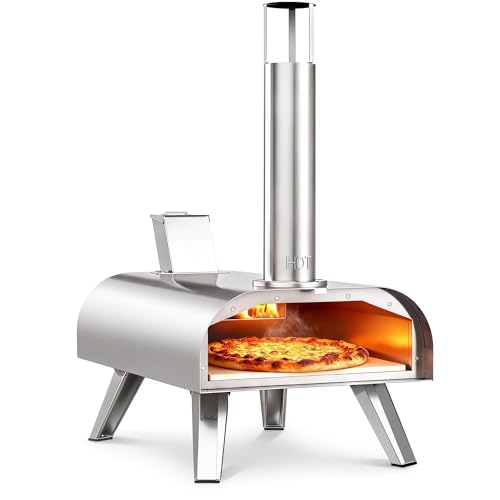
Explainer · ~9 min read
Aldi Pizza Oven Review (2026): Worth Grabbing, or Buy a Real Budget Oven Instead?
Aldi periodically drops budget pizza ovens into the Aldi Finds aisle, Crofton-branded electrics and seasonal outdoor gas ovens, at prices that make everyone stop the cart. The honest verdict: they're fine as a cheap impulse experiment if you happen to catch one in stock, but availability is hit-or-miss, quality is entry-level, and there's no real warranty or support ecosystem behind them. If you want a dependable budget oven you can actually buy today, these are the ranked alternatives we'd point you to instead.
Explainer · 16 min
What It Actually Costs to Run a Pizza Oven: The Real Math, Fuel by Fuel
The fuel in a homemade pizza costs between 1.7 cents and 10.6 cents. We derived that from manufacturer-published burner ratings and wattages, US Energy Information Administration energy prices, and arithmetic we show in full so you can check it. Includes cost per hour, cost per million BTU, and a break-even table for whether a cheaper-to-run oven ever repays a higher sticker price. Spoiler: almost never.
Explainer · 16 min
The Pizza Oven Database: 66 Ovens, Every Spec Sourced, Nothing Guessed
One sortable reference table for every pizza oven we can verify, with a provenance marker on every figure so you can tell a certified rating plate from a marketing claim. Includes two numbers nobody else publishes: dollars per square inch of pizza, and burner output per square inch of pizza. Where a spec is genuinely unpublished we print "not published" and leave the arithmetic blank rather than fill the gap with a guess.
Explainer · ~11 min read
What Size Pizza Oven Do I Need? (2026): 12 vs 14 vs 16 (and 20)
Cooking-floor size is the first real decision in buying a pizza oven, and bigger is not automatically better. A 12-inch oven is the lightest, cheapest, most portable class and makes a perfect personal-to-medium pie. A 14-inch is the do-everything middle. A 16-inch is the entertainer's party-pie size, and Ooni's 20-inch Koda 2 Max is a feed-a-crowd showpiece. Here's how to match the floor to how many you cook for, your space, and your budget, with the real weights and prices, not vibes.
Explainer · ~9 min read
Gas vs Wood-Fired Pizza Ovens (2026): Which Should You Buy?
The most-argued question in the category, settled with published numbers instead of vibes. Modern gas and wood ovens hit the same ~950°F ceiling, so this is not really a fight about temperature. It's a trade between convenience and flavor, between a 15-minute push-button preheat and a fire you tend, and between heat recovery that resets in seconds and a bed of coals you have to feed. Here's how each one actually behaves, who each one is for, and the multi-fuel option that quietly wins for more people than either purist will admit.
Explainer · ~12 min read
Wood vs. Gas vs. Electric Pizza Oven (2026): The Definitive Fuel Decision
Fuel is the first fork in the road, and it quietly decides your whole experience, the flavor, the effort, the peak heat, even where you're allowed to put the thing. Gas is convenience and consistency. Wood (and multi-fuel) is flavor, ritual, and the highest heat. Electric is the only one you can run indoors. Here's the honest three-way breakdown, the real peak-temperature differences, and exactly how to choose by what you actually care about.
Explainer · ~9 min read
What Temperature Should a Pizza Oven Be? (2026): Every Style's Number
Neapolitan wants 850 to 950°F. New York is happy at 600 to 700°F. Detroit and pan styles bake lower still. The single biggest mistake home cooks make is running one temperature for every pizza, and the second is measuring the air when they should be measuring the floor. Here is the real number for each style, why the FLOOR temperature is the one that makes the crust, and how to measure it with a $20 thermometer.
Explainer · 17 min
Pizza Oven Temperature and Cook Time Chart: The Sourced Reference
The two documents that formally define Neapolitan pizza state the floor and dome temperatures in opposite order. The AVPN puts the cooking surface at 380 to 430°C and the dome at 485°C. The EU regulation puts the floor at 485°C and the dome at 430°C. Below: the full temperature and cook-time chart by style with every figure attributed, plus why your infrared thermometer and your oven's gauge will never agree.
Explainer · ~8 min read
How Long to Cook Pizza at 450°F (2026): Times for Every Crust, Plus 425, 475 and 500
A homemade pizza at 450°F takes 12 to 15 minutes on a tray, 8 to 10 on a preheated stone, and 6 to 8 on a baking steel. Frozen pizza runs 12 to 18 depending on the box. Here are the consensus times for every crust style and surface, what changes at 425, 475, and 500, and the three doneness cues that matter more than the clock.
Explainer · ~7 min read
Pizza Stone Temperature (2026): How Hot It Should Be, How Long to Preheat, and How to Check
A pizza stone should be as hot as your oven can make it, 475 to 550°F for most home ovens, and it takes 45 to 60 minutes to get there even though the oven beeps at 15. Here is the temperature each pizza style wants, the preheat time by stone thickness, how to check the surface with an infrared thermometer, and why a stone that feels hot is not the same as a stone that is ready.
Explainer · ~9 min read
How to Use a Pizza Stone (2026): Preheat, Launch, Bake, and Clean It Right
A pizza stone turns a home oven into something close to a pizzeria, but only if you use it the way owners have learned to: cold oven in, an hour of preheat, a floured peel, a confident launch, and never, ever soap. Here is the whole method, the mistakes that crack stones, and how to care for one so it lasts a decade.
Explainer · ~8 min read
How to Use a Pizza Steel (2026): Preheat, Rack, Broiler, and Care
A baking steel makes the crispest home-oven pizza there is, and it is harder to ruin than a stone, but it asks for a different routine: a shorter preheat, a higher rack, the broiler at the end, and a wipe of oil after cleaning so it never rusts. Here is the whole method.
Explainer · ~7 min read
How to Clean a Pizza Stone (2026): Scrape, Wipe, Never Soap
A pizza stone is cleaned with a scraper and a dry cloth, not with soap or a sink. This is the whole routine, what to do about burnt cheese, black stains, and a stone that smells, and the two habits that crack stones for good.
Explainer · ~9 min read
How to Make Pizza in a Regular Oven (2026): The 500°F Method That Works
A kitchen oven tops out around 500°F, half what a pizza oven reaches, and it can still turn out a pizza with a crisp, spotted base and a blistered rim. The method is a preheated stone or steel, a hot rack position, a lightly topped pie, and the broiler at the finish. Here is every step and every number.
Explainer · ~10 min read
How to Reheat Pizza in the Oven (2026): Every Method, Ranked
Leftover pizza deserves better than the microwave, and the fix costs nothing you do not already own. This is the definitive reheat guide: the skillet-then-broiler trick that wins for a slice or two, the 275°F low-and-slow oven method that revives a whole pie without drying it out, the 450°F stone-or-steel method that gets closest to fresh, and where the air fryer honestly fits. Exact temperatures and times for each, drawn from the broad consensus of home cooks who have argued this question to death, plus the two mistakes that ruin more leftover slices than anything else.
Explainer · ~7 min read
How to Reheat Pizza in an Air Fryer (2026): Exact Temp, Time, and the Crust Trick
The air fryer is the fastest good way to reheat a slice, and the easiest to overshoot. Here is the setting the home-cooking community has converged on, how long each crust style really needs, the foil-versus-bare-basket question settled, and the one habit that stops a slice from turning into a cracker.
Explainer · ~7 min read
How to Reheat Pizza on the Stove (2026): The Skillet Method That Beats the Oven
For one or two slices, a covered skillet is the best reheat in any kitchen: crisp base from the pan, melted cheese from the trapped steam, five minutes, no preheat. Here is the method as the home-cooking community has refined it, the pan that works best, the water-drop trick, and the timing by crust style.
Explainer · ~7 min read
How to Reheat Pizza in the Microwave Without It Going Soggy (2026)
The microwave is the worst way to reheat pizza and sometimes the only one you have. This is the damage-control guide: the cup-of-water trick and why it works, the power level and time that keep the cheese from turning to rubber, and the 90-second microwave-then-skillet finish that gets a microwaved slice most of the way back to good.
Explainer · ~7 min read
How to Reheat Deep Dish Pizza (2026): Oven, Skillet, and Air Fryer Methods
A slice of deep dish is two inches of cold cheese, sauce, and sausage over a buttery crust, and the thin-crust reheat rules do not apply. The method that works is lower heat for longer, with the center checked by temperature, not by the clock. Here is every method, ranked, with the numbers.
Explainer · ~7 min read
How to Keep Pizza Warm (2026): Oven Hold, Box Tricks, and Pizza-Night Timing
Pizza goes from perfect to limp in about ten minutes, and every method for holding it longer trades a little crispness for time. Here is the one that loses the least (a low oven, slices on a rack), the answer to whether the box can go in the oven, and how to run a pizza night where nobody eats cold.
Explainer · ~6 min read
How to Cut a Pizza Evenly (2026): 6, 8, 10, 12 Slices, Square Cut, and the Right Tool
Even slices come from three habits: resting the pizza two minutes, cutting all the way across the pie in full passes instead of sawing from the center, and using a blade long enough to do it. Here is the geometry for every slice count, the tavern square cut, and which cutter actually makes the job easy.
Explainer · ~11 min read
How Hot Does a Pizza Oven Get? (2026): The Signature Number
Most dedicated pizza ovens reach a peak floor temperature of roughly 900 to 950°F, hundreds of degrees hotter than a home oven, which tops out near 550°F. That gap is the entire reason the category exists: it's what makes true 60-second Neapolitan pizza possible, and nothing in your kitchen can close it. Here are the real numbers by oven type, why the floor temperature (not the dial, not the air) is the one that sets your crust, and why max heat isn't always the heat you actually want.
Explainer · ~10 min read
Neapolitan vs New York Pizza (2026): The Two Styles, and Which Oven Each Needs
They look similar in a photo and could not be more different in the kitchen. Neapolitan is a fast, blistered, soft-centered round that cooks in 60 seconds at near-1,000°F. New York is a big, foldable, chewy slice that bakes for minutes at a much calmer heat. The dough is different, the temperature is different, the bake time is different, and crucially, the oven you should buy is different. Here's how to tell them apart, and how to pick the right oven for the one you actually want to eat.
Explainer · ~11 min read
Pizza Oven vs. Regular Oven (2026): The 400°F Gap That Decides It
Do you need a dedicated pizza oven, or can you just use your kitchen oven? The whole answer comes down to one number. A pizza oven reaches a ~900 to 950°F floor; a home oven is capped near 550°F by design and regulation. That ~400°F gap is not a detail, it's the entire story, and no kitchen hack closes it. Here's exactly what that gap does, what your regular oven is genuinely great at, and the honest line that tells you which side you're on.
Explainer · ~11 min read
Pizza Oven vs. Grill (2026): Can't I Just Use My Grill?
Short, honest answer: yes, your grill makes good pizza, especially with a baking steel or a grill-top pizza attachment, and it's a great low-cost way to start if you already own one. But a dedicated pizza oven makes BETTER pizza, because it pairs a ~900°F stone underneath with an enclosed chamber that blasts heat down across the top of the pie. A grill heats from below and fights to char the top before the bottom burns. Here's where each one wins, and how to decide without overspending.
Explainer · ~11 min read
Do Pizza Ovens Use a Lot of Gas? (2026): The Honest Running-Cost Answer
Short version: no, a portable gas pizza oven is one of the cheapest things you'll ever run. A standard 20 lb propane tank lasts a portable Ooni or Gozney across many cooking sessions, not a single one, so the fuel cost per pizza lands somewhere between a few cents and roughly a dollar's worth across a whole evening. The big fuel draw isn't the pizza, it's the 15-to-25-minute preheat to a 900°F-plus floor. Here's how the energy actually maps to hours of cooking, why fast heat recovery keeps your burner low, how gas compares to wood and electric, and the honest tricks to use less of it.
Explainer · ~11 min read
How Much Electricity Does a Pizza Oven Use? (2026): The Honest Running-Cost Answer
Short version: less than you fear. An electric pizza oven, an Ooni Volt 2, a Breville Pizzaiolo, a Ninja Artisan, a Cuisinart Indoor, plugs into a standard household outlet and draws on the order of a high-wattage countertop appliance, roughly in the league of a space heater or toaster oven while it's heating. The cost of a whole pizza session lands at pennies to a small fraction of a dollar of electricity, not the scary number people imagine. The biggest single draw is the preheat that pulls the stone to its floor temperature; once it's hot, the elements cycle and use less. Here's how to estimate YOUR cost with a simple method, how electric compares to gas, whether it'll trip a breaker, and the honest tricks to use less.
Explainer · ~11 min read
Natural Gas vs. Propane Pizza Oven (2026): Which Fuel Hookup?
Almost every gas pizza oven sold ships set up for propane (the standard 20 lb tank), and many of the popular ones (the Ooni Koda 16, the Gozney models) offer a natural-gas conversion kit that plumbs the oven into your home's gas line. Here's the honest version of the choice: it is a convenience-and-installation decision, not a pizza-quality one. Propane goes anywhere and needs no install but you swap tanks; natural gas never runs out and is usually cheaper to run, but it ties the oven to a fixed line and a hookup. Neither makes a better pizza. Here's how to pick the right one for your patio.
Explainer · ~11 min read
How Long Does a Pizza Oven Take to Heat Up? (2026)
Short answer: most portable gas ovens reach a pizza-ready ~900°F floor in roughly 15 to 25 minutes; wood and multi-fuel ovens usually want a bit longer because you have to build and establish the fire (often 20 to 30+ minutes); and indoor electric ovens like the Ooni Volt 2, Breville Pizzaiolo, and Ninja Artisan typically preheat in around 20 minutes on a preset. But the number that actually matters isn't the air, it's the floor. The burner heats the air fast, and the cooking stone lags well behind it. Launch before the stone is soaked and you get a pale, soggy bottom. Here's how long it really takes, why the floor is the wait, and exactly how to know it's ready.
Explainer · ~11 min read
Where to Put a Pizza Oven (2026): Placement & Safety
Almost every pizza oven is an outdoor appliance, a gas or wood-fired one runs at 900°F, throws heat off its shell and chimney, and (for the wood and charcoal models) emits smoke and live embers. That makes placement a safety decision, not a decorating one. Here's where a pizza oven actually belongs: the clearances that keep your house from catching, the kind of surface that can hold the weight, why wind is the enemy of your peak floor temperature, the truth about covered patios and balconies, and the only ovens you can safely run indoors. Read this before you buy, because the right oven for your space is the one your space can actually hold.
Explainer · ~11 min read
Can You Leave a Pizza Oven Outside? (2026): The Honest Weather & Storage Rules
Mostly yes, most gas and multi-fuel outdoor pizza ovens can live outside year-round if you protect them with a fitted weatherproof cover and follow a few rules, because the real enemy isn't cold, it's moisture: rust on the metal, a cracked cooking stone, and water in the electronics. Electric ovens are the exception and should come indoors. Here's exactly what survives outside, what doesn't, and the boring storage habits that keep your oven hitting temperature for years.
Explainer · ~11 min read
How Long Do Pizza Ovens Last? (2026): A Durability Reality Check
A well-built portable pizza oven, steel body, ceramic-fiber insulation, cordierite stone, can easily last a decade or more, because the core is dead simple: a shell, a stone, and a burner or fire chamber, with almost nothing to break. The honest catch is that a few parts genuinely wear, and one of them (the baking stone) is the part most people crack themselves. Here's what actually fails, what's a cheap replaceable part, how care changes the math, and why a gas oven tends to outlive an electric one.
Explainer · ~11 min read
Why Is My Pizza Oven Not Getting Hot Enough? A Diagnostic Walkthrough
Nine times out of ten, an oven that "won't get hot" is getting hot, you're just not preheating the stone long enough or you're reading the wrong number. Most dedicated pizza ovens are built to push a floor near 900°F, but they only do it once the cooking surface has soaked, and only when the fuel and the weather cooperate. This is the checklist we work through, in order, before ever blaming the oven: how to measure heat correctly first, then gas, wood, and electric fuel problems, then the environment, and finally, the rare case where it really is the oven.
Explainer · ~11 min read
Pizza Oven Safety Tips (2026): Run a 900°F Oven Without Getting Burned
A pizza oven is the hottest appliance most people will ever own, the same ~900°F floor that makes leopard-spotted Neapolitan pizza also makes the shell, the mouth, and the chimney genuinely dangerous to touch. None of this is reason to be afraid of the thing; it's reason to respect it. Here's the practical, no-drama safety checklist: where to put it, how to handle gas and wood safely, how not to burn yourself, and the few rules that are non-negotiable. When in doubt, your manufacturer's manual and local codes win over anything here.
Explainer · ~12 min read
What Can You Cook in a Pizza Oven? (Besides Pizza)
A pizza oven is, underneath the name, a screaming-hot live-fire convection oven that hits a floor most kitchens can only dream about. That same heat that blisters a 60-second Neapolitan also sears steak, chars vegetables, roasts a chicken, bakes bread, and finishes a skillet cookie. The trick isn't more heat, it's learning to cook DOWN from the peak, using each cooling zone for the food it suits. Here's the honest, technique-first guide to everything else a pizza oven does, and how to manage the heat to do it well.
Explainer · ~10 min read
How to Use a Pizza Oven (2026): First Fire to First Pizza
Your oven just arrived. Here's exactly what to do, from the curing burn nobody warns you about, through the long preheat that actually matters, to launching, turning, and pulling your first leopard-spotted pie. The whole process is simpler than the internet makes it look; the two things that separate a great first night from a stressful one are a fully-charged floor and a calm launch. We'll get you both.
Explainer · ~11 min read
Are Ooni Pizza Ovens Worth It? (2026): An Honest Verdict
Short version: yes, for most people who actually want backyard Neapolitan pizza. Ooni hits the ~950°F floor that makes a true 60-second pie, and it does it across the widest, best-supported lineup in the category, gas, multi-fuel, electric, and pellet, from a ~$249 starter to a $1,299 showpiece. The only real caveat isn't Ooni; it's you, whether you want that pizza enough to use the thing. Here's where Ooni earns it, where it doesn't, which model fits which person, and who should look at Gozney, Solo Stove, or no oven at all instead.
Explainer · ~11 min read
Are Gozney Pizza Ovens Worth It? (2026): An Honest Verdict
Short version: yes, if you value build quality and design and you'll pay a premium for them. Gozney makes some of the best-built, best-insulated ovens in the category, every one of them hits the ~950°F floor that defines a true 60-second Neapolitan pie, and they look the part on a patio. The catch is price: model for model, Gozney costs more than Ooni for the same peak heat, the lineup is smaller, and the showpiece Dome is a serious install. Here's where Gozney earns the premium, where it doesn't, which model fits which person, and who's better served by Ooni or Solo Stove instead.
Explainer · ~11 min read
Are Solo Stove Pizza Ovens Worth It? (2026): An Honest Verdict
Short version: yes, if you want a simple, affordable, good-looking 12-inch oven from a brand you may already trust, especially if you own Solo Stove fire pits. The round, clean Pi and Pi Prime are easy to live with, fairly priced (~$400 and $424), and the multi-fuel Pi reaches the ~950°F floor that bakes a true 60-second Neapolitan pie. The catches are real: the lineup is just two ovens, both 12-inch only, and the gas Pi Prime runs cooler (~850°F) than Ooni's and Gozney's ~950°F gas ovens. Here's where Solo Stove earns it, where it doesn't, which model fits whom, and who's better served by Ooni's range or Gozney's build.
Explainer · ~11 min read
Ooni Karu vs. Ooni Koda (2026): Which Ooni Line Should You Get?
Both are Ooni. Both hit the same ~950°F class. Both join the 60-Second Club. So the Karu-vs-Koda decision isn't about heat at all. It's about fuel philosophy. Karu is the multi-fuel line: wood and charcoal for real live-fire flavor, with an optional gas burner when you want it. Koda is the gas-only line: push a button, no flame to tend, no ash to clean. Same brand, same temperature ceiling, two completely different relationships with fire. Here's how to know which one is you.
Explainer · ~9 min read
Pizza Stone vs Baking Steel (2026): Which Floor Makes the Better Crust?
The floor is the most important surface in your oven, because the floor is what cooks the crust, and the two contenders behave in opposite ways. Steel conducts heat hard and fast for an aggressive, browning bake; cordierite stone holds heat gently and steadily for a softer, more forgiving one. Then there's the floor your dedicated pizza oven already has. Here's how conduction actually works, which floor suits which style and which oven, and when each one is the right call.
Our top-rated pizza ovens
Whatever you decide, these are the ovens we recommend, ranked on stated floor heat. Live price check on each.
- Check price on Amazon
- Check price on Amazon

- Check price on Amazon
- Check price on Amazon

- Check price on Amazon

- Check price on Amazon

As an Amazon Associate we earn from qualifying purchases, at no cost to you.
Keep exploring.
All reviews & guidesBest Pizza Ovens
Our rankings, by fuel, by price, by use-case. The shortlist for every kind of buyer.
ExploreGas Pizza Ovens
Crank the dial, hit temperature in 15 minutes, bake on demand, the convenience class.
ExploreWood-Fired & Multi-Fuel
Real fire, real flavor, the wood and multi-fuel ovens, and how to run them.
ExploreElectric & Indoor
No propane, no smoke, no backyard required, the countertop class.
ExplorePizza Oven Gifts
Who it is for, what you can spend, and the one present that is genuinely worth buying at each budget.
ExploreAccessories & Technique
The peels, stones, and skills that turn a hot oven into great pizza.
ExplorePizza Troubleshooting
One page per failure. Burnt base, soggy centre, cold spots, smoke, and the dough that fights back.
ExplorePizza Dough Fundamentals
Hydration, dough weight, salt, yeast, flour and ferment, with every number attributed to a named source.
ExploreComparisons & Head-to-Heads
Every pizza oven matchup, settled, brand vs brand and model vs model, on the same spine.
ExploreBrand & Budget Oven Reviews
Every brand you'll meet on the shelf or the search bar, reviewed straight: the sleepers, the rebadges, and the ones to skip.
Explore