Our pick. Ooni
Check price on Amazon →How to Choose a Pizza Oven (2026): The Complete Buyer's Guide
Pizza-oven marketing is a contest to print the biggest temperature number, and almost none of those numbers is the one that decides your pizza. This is the rigorous version: how to pick a fuel, why the FLOOR (not the dome) makes the crust, how size and portability and insulation actually trade off, what the learning curve really costs, the budget tiers that matter, and the signature test method we use to separate ovens that bake from ovens that just claim a big number.
By The Pizza Oven Review DeskUpdated 2026-06-28~12 min readRanked on verified floor heatHow we research
We earn a commission on purchases through our links, at no cost to you. It never decides a ranking. How this works
A pizza oven is one of the few kitchen purchases where the single most-advertised spec is also the most misleading. Every box leads with a temperature, 950°F, 1,000°F, sometimes more, and treats it as the headline you should buy on. But your pizza never touches the air that number describes. It touches the stone, and the stone's heat, how steadily it holds it, and how fast it recovers it after each launch are what actually decide whether you pull a crisp, leopard-spotted pie or a pale, soggy disc. Choosing well means learning to read past the marquee number to the handful of things that genuinely matter, and that's exactly what this guide is built to do.
We'll work through it in the order a real buyer decides: first fuel, gas, wood, multi-fuel, or electric, because that choice shapes everything downstream, from how hot you can get to how much you'll fuss. Then the idea this whole site is organized around: why floor temperature beats dome temperature, and how to tell which one a manufacturer is quoting. From there, the practical trade-offs, how big a pizza you actually need, how portable an oven really is once you account for its weight, and why build quality and insulation are the invisible specs that separate a forgiving oven from a frustrating one. We finish with the honest learning curve, the budget tiers worth understanding, and the test method we run on every oven so you can judge them the way we do.
Two ground rules before we start. First, independence: no manufacturer pays for coverage here, no brand sees our verdicts early, and nothing in our rankings can be bought, when we name an oven, it's because it earned the mention, and any affiliate commission never changes a word. Second, safety and honesty: high-temperature ovens run hot enough to demand real respect (clearances, supervision, no live oven left alone), and we describe what these machines do rather than promise what your dough will do, because that part is on you. This is buying guidance, not professional installation advice. Every spec discussed below is tabulated model by model in our pizza oven database, which marks each figure with the kind of source it came from so you can weigh a certified rating plate differently to a listing claim.
The short version.
- Fuel is the first decision and it cascades: gas is the easy, consistent default; wood adds flavor and effort; multi-fuel hedges; electric trades peak heat (~700 to 850°F) for no-flame, often-indoor convenience.
- Judge an oven by peak FLOOR temperature, not the dome or 'max temp' on the box, your pizza is cooked by the stone it sits on, and two ovens with identical box numbers can behave completely differently under a real pizza.
- Size, portability, and build quality trade against each other: a 12-inch oven is lighter and faster; a 16-inch feeds a table; heavy insulation makes a stable, forgiving floor but adds weight and cost.
- The learning curve is real but short, most of it is launching cleanly and turning the pizza, and the right features (a rotating stone, presets, simple gas) shrink it dramatically.
- Budget tiers run roughly $250 to 400 (capable entry), $400 to 700 (the sweet spot, insulation, size, or convenience), and $1,000+ (showpiece). Our signature test, peak floor temp + the 60-Second-Pizza Club + heat recovery, is how we cut through the spec sheets.
Our top-rated pizza ovens
Whatever you decide, these are the ovens we recommend, ranked on stated floor heat. Live price check on each.
- Check price on Amazon

- Check price on Amazon

- Check price on Amazon

- Check price on Amazon

- Check price on Amazon

- Check price on Amazon

As an Amazon Associate we earn from qualifying purchases, at no cost to you.
What you'll need.
Prices approximate at time of writing.
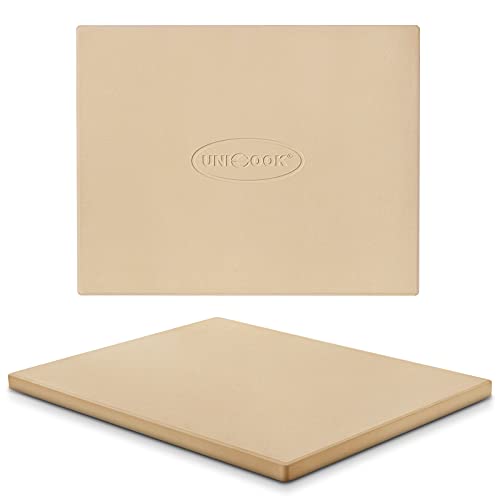
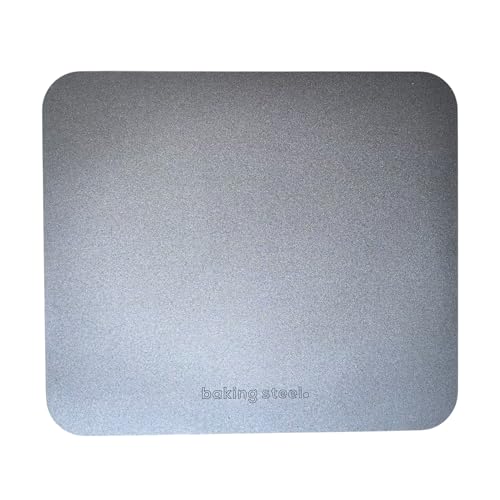
The five tools that do the work in every method on this site: a slab that stores heat, something to launch with, a way to read the surface, and a clean cut.


Start with fuel: gas vs. wood vs. multi-fuel vs. electric
Fuel is the first fork in the road because it determines almost everything that follows, how hot you can get, how much attention the oven needs, where you can use it, and how your pizza tastes. There's no universally "best" fuel; there's the one that fits how you want to cook. Here's the honest version of each.
Gas (propane or natural gas). This is the default for most buyers, and for good reason: a gas burner delivers instant, consistent, controllable heat with nothing to manage. You turn a knob, the oven comes to temperature in 15 to 20 minutes, and the heat stays exactly where you set it, no fire to feed, no ash to clean. The trade is character: gas makes a superb pizza but skips the wood smoke some purists chase. The bulk of our beginner and everyday picks are gas, from the Ooni Koda 12 to the heavily insulated Gozney Roccbox, precisely because gas removes a whole skill from the equation.
Wood (and wood pellet). Wood is the romance and the flavor, live fire, real smoke, the closest thing to a Naples street oven. It also asks the most of you: you're managing a fire as well as a pizza, reading the flame, feeding fuel, and tending the burn between pies. The reward is genuine wood-fired character that no gas oven reproduces; the cost is a second skill stacked on top of learning to bake. Pellet ovens (like the gravity-fed wood-pellet designs) automate some of the fuel handling, but live-fire cooking is inherently more hands-on than gas.
Electric. Electric ovens trade peak heat for sheer convenience: no flame, no fuel, often usable indoors. Outdoor electric models like the preset-driven Ninja Artisan top out around ~700°F, and indoor countertop units like the Cuisinart Indoor Pizza Oven bring real pizza-oven heat to apartments with nothing but an outlet. You give up the 950°F gas ceiling and the live-fire char, but for no-yard, any-weather, point-and-shoot pizza, electric is the only fuel that delivers. We go deeper on the first fork in our gas-vs-wood breakdown.
The most important number nobody prints: floor temperature, not dome temperature
This is the idea the whole site is built around, so we'll be precise about it: your pizza is cooked by the stone it sits on, not the air above it. The crust, the part that makes or breaks a pizza, is set by conduction from the FLOOR. The dome and the air contribute to the top, but the base, the crispness, the structure all come from how hot the stone is and how well it holds that heat once a cold, wet pizza lands on it.
Manufacturers advertise a "max temperature" because a four-digit number sells, but that figure is almost always the dome, the air, or even the flame tip, the hottest thing they can honestly measure, not the thing that touches your dough. Learning to ask "what does the FLOOR do?" instead of "what's the max temp?" is the single biggest upgrade you can make as a buyer, and it will keep you from overpaying for a headline number that never reaches your crust.
This is also why some of our most-recommended ovens don't have the highest claimed temperatures. A densely insulated oven that holds a stable 800°F floor will out-bake a thin-walled oven that flashes to 950°F in the air and collapses under the first pizza. When you read a spec sheet, mentally cross out the headline number and ask three things instead: how hot is the floor, how steady does it stay, and how fast does it come back? Those are the questions the rest of this guide, and our entire test method, exists to answer.
Size and max pizza: how big do you actually need?
Cooking size is usually quoted as the largest pizza an oven fits, commonly 12, 14, or 16 inches, and it's tempting to assume bigger is better. It isn't, automatically. The right size depends on who you're feeding and how you cook, and the bigger chamber carries real trade-offs in weight, fuel use, and heat-up time.
12-inch ovens make personal-sized Neapolitan pizzas, the authentic format, fast to heat and easy to manage. Most portable gas ovens (the Koda 12, the Roccbox, the Pi Prime) live here. The workflow is one pizza at a time, which is the traditional rhythm anyway, you cook, you serve, you cook the next. For couples, small families, and anyone learning, 12 inches is plenty.
14- and 16-inch ovens let you cook larger pies or simply give you more room to maneuver the peel, which, counterintuitively, can make launching easier for beginners because there's more margin around the pizza. A 16-inch oven like the Halo Versa 16 is the move if you regularly feed a table and don't want to run a long one-pizza-at-a-time relay. The cost: bigger chambers weigh more, use more fuel, and take longer to bring the whole floor to temperature.
Portability: weight is the spec the brochure buries
"Portable" is one of the most abused words in pizza ovens. Almost everything gets called portable, but the spec that actually decides it, weight, is usually printed in small type, if at all. There's a world of difference between an oven you genuinely toss in the trunk for a camping trip and one that's "portable" only in the sense that two people can lift it onto a patio.
The lightest real ovens are around 20 pounds, the Ooni Koda 12 at roughly 20 lb is the kind you carry one-handed and store on a shelf. Mid-weight ovens in the 30 to 45 lb range, like the Roccbox (44 lb) or the Halo Versa 16 (41 lb), are "patio-portable": you'll move them, but you won't be tossing them in a backpack. And plenty of excellent ovens, the showpiece domes and rotating-stone units, run 90 to 200+ pounds and are effectively permanent installations.
Be honest with yourself about how often you'll actually move it. Most buyers who think they want a featherweight travel oven end up cooking on the same patio every time, in which case the extra ten pounds of insulation is a benefit, not a burden. Buy the truly light oven only if you genuinely plan to take it places.
Build quality and insulation: the invisible specs that decide everything
Insulation is the spec you can't see and the one that most separates a forgiving oven from a frustrating one. It rarely gets a headline number, but it governs the two things that actually make pizza: how stable the floor stays under a cold launch, and how fast it recovers before the next one. A well-insulated oven is, functionally, a more forgiving oven, which is why our top overall picks tend to be the heavier, denser ones.
What good build quality looks like. Dense, heavy insulation around the chamber so heat doesn't bleed out the moment a wet pizza lands. A thick, quality cordierite or refractory stone that stores and re-radiates heat instead of giving it all up at once. Tight construction with no obvious gaps where heat escapes. The Roccbox is our reference point here: most of its 44 pounds is insulation, and that mass is exactly why its floor stays stable through a back-to-back session where a thin-walled oven would sag.
Build quality also shows up over years, not just sessions: stones that don't crack, burners that stay consistent, hinges and doors that survive repeated thermal cycling. You can't fully test longevity in a store, but a brand's reputation and warranty, plus the obvious heft-and-fit signals above, are reasonable guides. The cheapest ovens save money largely by skipping insulation, which is why they often hit a big air temperature but can't keep a floor hot under load.
The learning curve: what it actually costs to get good
Every pizza oven has a learning curve, and it's worth being honest about it because the right oven can shrink it from weeks to a single session. The good news: the curve is short and mostly about two skills. The bad news: those two skills are the ones a 60-second bake punishes hardest.
Skill one: launching cleanly. Getting a topped, raw pizza off the peel and onto the hot stone without it folding, sticking, or sliding off is the first thing beginners fumble. It's a matter of a floured peel, a confident motion, and a little practice, and a slightly larger chamber (14 to 16 inch) gives you more margin while you learn. Skill two: turning the pizza. In a fast bake the flame is on one side, so you rotate the pie every fifteen seconds or so to cook it evenly. That's the move that goes wrong most, too slow and one edge chars, too rough and the launch slides.
The reassuring truth is that almost everyone gets competent within a handful of sessions regardless of oven, pizza is more forgiving to learn than it looks, and the fundamentals transfer. The oven you choose mostly decides whether your first night is exciting or stressful, not whether you'll eventually make great pizza. You will.
Budget tiers: what each price band actually buys
Pizza ovens span from about $200 to well over $1,500, and the price ladder is rational once you know what each rung buys. You're not paying for a bigger temperature number as you go up, you're paying for insulation, size, build quality, and convenience features.
~$250 to $400: capable entry. This band gets you a genuinely good oven. The Cuisinart Indoor ($299), Ninja Artisan (~$300), Ooni Koda 12 (~$299), and Solo Stove Pi Prime (~$400) all live here and each removes a specific barrier, price, simplicity, weight, or no-yard convenience. The compromise is usually insulation: lighter builds that bake beautifully but recover a little slower under a hard back-to-back session.
~$400 to $700: the sweet spot. This is where most buyers should look, because it's where insulation, size, and convenience features arrive. The Gozney Roccbox (~$399) buys dense insulation and a safe-touch shell, and it now sits right at the bottom edge of this band; the Halo Versa 16 (~$499) buys a 16-inch chamber and a pizza-turning motorized stone. You're paying for forgiveness and capability you'll feel on every session, not a spec-sheet flex.
Our signature test method: floor temp, the 60-Second-Pizza Club, and heat recovery
Here's how we actually evaluate every oven, the method behind the picks elsewhere on this site, and the one you can apply yourself with a cheap infrared thermometer. It exists because spec sheets lie by omission, and these three measurements are what they leave out.
One: peak floor temperature. We measure the temperature of the stone itself, with a surface thermometer at the center of the floor, after a full preheat, not the air, not the dome, not the number on the box. This is the heat that sets your crust, and it's frequently lower than the advertised "max temp." Knowing the real floor figure tells you what an oven can actually do to a pizza, which is the only thing that matters.
Three: heat recovery. We launch a cold pizza, watch how far the floor temperature drops as the dough pulls heat out of the stone, and clock how long it takes to climb back. Fast recovery, a minute or two, is the signature of a well-insulated, forgiving oven; slow recovery is what gives you a great first pie and a disappointing third. This single measurement, more than any headline temperature, predicts whether you'll enjoy cooking for people.
Put together, these three cut straight through marketing. An oven can claim any number it likes; we ask what the floor reaches, whether it can run the Club, and how fast it recovers, and those answers, not the box, decide where it lands in our rankings. Everything we publish is held to verified specs and this same test discipline, with no brand paying for placement.
Ready to buy? Start with our top picks
Whatever this guide steered you toward, here's where most readers land, ranked on stated floor heat. Live price check on each.
- Check price on Amazon
- Check price on Amazon
- Check price on Amazon
- Check price on Amazon
- Check price on Amazon
- Check price on Amazon
As an Amazon Associate we earn from qualifying purchases, at no cost to you.
Key terms
- Peak floor temperature
- The temperature of the cooking stone itself, measured under where the pizza sits, after a full preheat, the single most important number in pizza, because the floor sets the crust. It is NOT the same as a manufacturer's advertised 'max temp,' which is usually the dome, air, or flame-tip reading.
- Dome temperature
- The temperature of the air and roof of the oven's chamber, which cooks the TOP of the pizza. It's the figure manufacturers most often print as 'max temp' because it reads highest, but your crust is made by the floor, not the dome, so a big dome number alone doesn't guarantee a good base.
- Heat recovery
- How fast an oven's floor temperature climbs back after a cold pizza lands and pulls heat out of the stone. Fast recovery is what makes the second, third, and fourth pizza as good as the first, the hallmark of a well-insulated, forgiving oven. It's the spec that best predicts whether you'll enjoy cooking for a crowd.
- 60-Second-Pizza Club
- Our signature pass/fail test: an oven joins if it can cook a true Neapolitan-style pie, set base, leopard-spotted, puffed cornicione, in 60 to 90 seconds, then do it again immediately without a long reheat. It captures floor heat and recovery in one test, which is what a real session demands.
- Multi-fuel
- An oven that can run on more than one fuel, typically wood or charcoal for flavor, plus an optional gas burner for convenience, so you can choose live fire or push-button heat session to session. The hedge costs a little extra weight, money, and setup versus a single-fuel oven.
- Cornicione
- The puffed, airy outer rim of a Neapolitan-style pizza, the part that leopard-spots and rises in a hot oven. A high, evenly blistered cornicione is the visual proof an oven's floor and dome heat are working together; a pale, flat rim usually means the floor never got hot enough.
Questions, answered
What's the most important thing to look for in a pizza oven?
Peak floor temperature and how steadily the oven holds it, not the 'max temp' on the box. Your pizza is cooked by the stone it sits on, so the floor's heat and its recovery between pies decide your crust, while the advertised number is usually the dome or air reading that never touches your dough. The best practical proxy when shopping is weight within a size class: a heavier oven almost always has more insulation, which means a more stable, faster-recovering floor. Then pick the fuel and size that fit how you cook.
Should I get a gas, wood, or electric pizza oven?
Gas is the easy default: instant, consistent, controllable heat with no fire to manage, reaching ~850 to 950°F, best for most buyers and nearly all beginners. Wood adds genuine smoke flavor and live-fire romance but asks you to manage a fire as well as a pizza. Multi-fuel ovens do both (wood for flavor, optional gas for convenience) for a small weight-and-cost premium. Electric trades peak heat (~700 to 850°F) for no flame, no fuel, and often indoor use, the only choice if you have no outdoor space. Choose by how much fuss you want and where you'll cook.
Why does floor temperature matter more than the oven's max temperature?
Because the crust, the part that makes or breaks a pizza, is set by conduction from the stone, not the air. Manufacturers print a 'max temp' that's usually the dome, air, or flame tip because it reads highest, but your pizza never touches that. Two ovens can both claim '950°F' while one holds 800°F under the pizza and the other sags to 600°F the moment a cold pie lands; the box number is identical and the pizzas are opposite. That's why we measure peak floor temperature and heat recovery on every oven instead of trusting the headline.
What size pizza oven do I need?
Match the chamber to your typical gathering, not your largest imaginable one. A 12-inch oven makes authentic personal Neapolitan pies, heats fast, and feeds a crowd fine if its heat recovery is quick, you just cook back-to-back. A 14- or 16-inch oven lets you make bigger pizzas and gives you more room to launch (which can actually help beginners), but it weighs more, uses more fuel, and takes longer to bring the whole floor to temperature. Optimize for fast recovery over raw size unless you specifically want larger pies.
How much should I spend on a pizza oven?
Roughly $250 to $400 buys a capable entry oven that removes one specific barrier, price, simplicity, weight, or indoor use. The $400 to $700 band is the sweet spot, where larger chambers and convenience features like a rotating stone arrive, and heavy insulation and a safe-touch shell now start just under it, at the ~$399 Gozney Roccbox. This is where most buyers should look. Above $1,000 is showpiece territory: bigger, more permanent, more beautiful, but not a fundamentally hotter floor. You're paying for insulation, size, build quality, and features as you climb, not for a bigger temperature number.
How long does it take to learn to use a pizza oven?
Most people get competent within a handful of sessions. The learning curve is mostly two skills: launching the pizza off the peel cleanly, and turning it mid-bake so one side doesn't char. Both come with a little practice, and the right oven shortens the curve dramatically, a motorized rotating stone removes the turning skill entirely, presets on an electric oven remove temperature management, and a gentler ~700 to 850°F floor stretches the bake to give you more reaction time. The oven you choose mostly decides whether night one is fun or stressful, not whether you'll eventually make great pizza.
Keep reading.
The Best Pizza Ovens (2026)
Our full ranked shelf across every fuel, size, and budget, scored on floor heat, the 60-Second-Pizza Club, and recovery.
Gas vs. Wood-Fired Pizza Ovens
The first fork in the road, settled: convenience vs. character, and which fuel makes the better pizza for you.
Best Pizza Ovens for Beginners (2026)
Our forgiving, foolproof picks, ranked on the floor heat, recovery, and features that take the timing out of your hands.
Ooni vs Gozney: Which Brand Wins?
The two giants head to head, same ~950°F ceiling, very different philosophies, one clear way to choose.
Ooni Fyra 12 Review
Ooni's lightest wood-pellet oven reviewed, real live-fire flavor at $349, and what to cross-shop.