Our pick. Gozney
Check price on Amazon →Best Pizza Ovens for Beginners (2026): Forgiving, Foolproof Picks
Most "best beginner oven" lists just rank the cheapest ones. We did the opposite: we looked for the ovens that forgive a slow launch, recover their floor heat between pies, and don't punish you for a learner's mistake. These are the six we'd hand a first-timer, from a safe-touch gas oven to a rotating stone that turns the pizza for you, to an indoor countertop unit that needs nothing but an outlet.
By The Pizza Oven Review DeskUpdated 2026-06-28~11 min readRanked on verified floor heatHow we research
We earn a commission on purchases through our links, at no cost to you. It never decides a ranking. How this works
Our top pick.Best Overall for Beginners, The Forgiving Workhorse
Gozney Roccbox
- Price.
- ~$399 (gas; optional wood burner)
- Our rating.
- 4.8 out of 5
The densest insulation on this list makes the most stable, most forgiving floor, wrapped in a safe-touch shell.
Not sure yet? Compare all 6 picks below ↓
The hardest part of your first pizza is not the dough, it's the thirty seconds the pizza spends on the stone. A real Neapolitan-style pie cooks in 60 to 90 seconds, and in that window a beginner has to launch cleanly, turn the pizza so one side doesn't char, and pull it before the cornicione goes from leopard-spotted to carbon. A forgiving oven shrinks every one of those margins for error: it holds its floor heat so the bake is even, it recovers fast so pizza number two isn't a disaster after pizza number one stole the stone's heat, and, in the best cases, it turns the pizza for you or keeps its outer shell cool enough that a stray hand doesn't end the night. That, not price, is what makes an oven beginner-friendly, and it's what we optimized this list for.
Our north star is a number almost no box prints: peak floor temperature. Manufacturers love to advertise a headline "max temp", often the air or dome reading, sometimes a flame-tip figure, because a big number sells. But your pizza doesn't touch the air; it touches the stone. The floor is what sets the crust, and a stone that reads 750°F under the pizza will bake beautifully even if the dome is screaming 950°F, while an oven that claims 950°F but can't keep its floor above 650°F once a cold pizza lands will give you a pale, soggy base every time. Throughout this guide we talk about what the floor actually does, how hot it gets, and how fast it climbs back (heat recovery) after each launch, because that's the physics a beginner feels, even if they've never heard the term.
One disclosure before the picks, because independence is the whole point of this site: no brand paid for placement here, no manufacturer saw this list before it published, and none of these rankings can be bought. Every price, fuel type, cooking size, weight, and temperature below comes from our verified spec dataset, checked against manufacturer materials. If you buy through our links we may earn a commission at no extra cost to you, and that never moves a product up or down. The rest is common sense for anyone firing a 700 to 950°F oven: these get hot, keep kids and pets back, never leave a live oven unattended, and follow the manufacturer's clearances. None of this is professional installation advice.
The short version.
- Beginner-friendly is about forgiveness, not price: high peak FLOOR temperature, fast heat recovery between pies, and features that take the timing out of your hands (a rotating stone, a preset, a safe-touch shell).
- Our top pick is the Gozney Roccbox (~$399, gas, ~950°F): dense insulation gives it the most stable floor on this list and a safe-touch outer shell that forgives a learner's stray hand.
- If timing scares you, the Halo Versa 16 (~$499, gas, ~950°F) turns the pizza for you on a motorized stone, no peel-spinning skill required, and bakes a full 16-inch pie.
- For the lowest-stress gas starts, the Solo Stove Pi Prime (~$400, ~850°F) and Ooni Koda 12 (~$299, ~932°F) are single-knob, no-fuss propane ovens that fire in 15 to 20 minutes.
- No yard or no patience? The Ninja Artisan (~$300, electric, ~700°F) cooks preset-driven 3-minute bakes outdoors, and the Cuisinart Indoor ($299, electric, ~700°F) needs nothing but a kitchen outlet.
At a glance.
| Oven | Fuel | Peak temp | Max pizza | Weight | Price | Check price |
|---|---|---|---|---|---|---|
| Gozney Roccbox | Gas (+optional wood) | ~950°F | 12 in | 44 lb | ~$399 | Check price on Amazon |
| Halo Versa 16 | Gas | ~950°F | 16 in | 41 lb | ~$499 | Check price on Amazon |
| Solo Stove Pi Prime | Gas | ~850°F | 12 in | 30.8 lb | ~$400 | Check price on Amazon |
| Ooni Koda 12 | Gas | ~932°F | 12 in | 20.4 lb | ~$299 | Check price on Amazon |
| Ninja Artisan | Electric | ~700°F | 12 in | 34 lb | ~$300 | Check price on Amazon |
| Cuisinart Indoor Pizza Oven | Electric | ~700°F | 12 in | 24 lb | ~$299 | Check price on Amazon |
The six beginner picks at a glance, fuel, peak temperature, cooking size, weight, and price verified against our spec dataset (June 2026).
Gozney Roccbox
Gozney
The densest insulation on this list makes the most stable, most forgiving floor, wrapped in a safe-touch shell.
Our verdict: If we could hand a first-timer one oven, it's the Roccbox. At 44 pounds it's the heaviest 12-inch oven here, and that mass is the point: dense insulation holds the floor temperature steady, so your bake is even and your second pizza is as good as your first. The safe-touch outer shell forgives the inevitable learner's bump, and it runs on simple propane with an optional wood burner for when you're ready to level up.
On paper. Peak floor heat consistent with its ~950°F dome rating; the heavy insulation is what keeps the stone hot through back-to-back launches, and the silicone-jacketed shell stays touchable.
Beginner-friendly usually means "cheap and weak." The Roccbox is the opposite, it's beginner-friendly because it's overbuilt. The Roccbox carries dense, heavy insulation that most portable ovens skip to save weight, and that single design choice is why it forgives so much. A well-insulated floor doesn't dump its heat the instant a cold, wet pizza lands on it; it holds, which means an even bake and, critically for a learner, a fast recovery before the next launch. This is the oven that lets you cook for a crowd without pizza number four coming out paler than pizza number one.
The forgiveness is physical, too. The Roccbox wears a silicone-jacketed outer shell that stays touchable even when the inside is screaming hot, a genuinely meaningful safety margin when a first-timer is leaning in with a peel and not yet thinking about where the metal is. It fires on a single propane burner (15 to 20 minutes to temperature), and if you catch the bug, a wood burner attaches for a smokier, more hands-on session down the road. At 44 pounds it's portable in the "carry it to the patio" sense, not the "toss it in the trunk" sense, the trade you make for that stable floor.
Who should buy it.
Buy the Roccbox if you want one oven you won't outgrow: forgiving enough for your first night, capable enough for your hundredth. It's the right pick for the beginner who'd rather invest once in a stable, well-insulated, safe-touch oven than buy a cheap one and replace it. Anyone cooking for a crowd benefits most, the heat recovery is what keeps pizza four as good as pizza one.
What we don't like.
At 44 pounds it's the heaviest oven on this list, so true grab-and-go portability isn't its strength. The stone tops out at 12 inches, so it's a personal-pizza oven, not a 16-inch one. And at around $399 it costs about $100 more than the ~$300 starters below, you're paying up front for the insulation that makes it forgiving.
- Fuel
- Gas (propane), with optional wood burner
- Peak temperature
- ~950°F
- Cooking size
- 12 in
- Weight
- 44 lb
- Why it's forgiving
- Dense insulation = stable floor + fast recovery; safe-touch outer shell
- Price
- ~$399
What we like.
- Densest insulation here, the most stable floor and fastest heat recovery
- Safe-touch silicone shell forgives a learner's stray hand
- Simple single-burner propane; optional wood burner to grow into
- The oven you won't outgrow, beginner-friendly and genuinely capable
Worth noting.
- Heaviest 12-inch oven on the list at 44 lb
- 12-inch stone, personal pizzas only
- Around $399, roughly $100 over the ~$300 starters

Halo Versa 16
Halo
A motorized rotating stone spins the pizza past the flame so you never have to, the single most beginner-proof feature in pizza ovens.
Our verdict: The scariest part of a fast bake for a beginner is the turn, reaching in mid-cook to spin the pizza so one side doesn't burn. The Versa 16 deletes that step: a motorized stone rotates the pizza past the flame automatically. You launch, you wait, you pull. It runs ~950°F on dual gas burners and fits a full 16-inch pie, making it the most genuinely foolproof oven here.
On paper. ~950°F gas oven with dual burners; the rotating stone is the trust feature, it removes the peel-turn entirely, the move most first-timers fumble.
Every other oven on this list asks you to turn the pizza. This one turns it for you. In a 60-to-90-second bake, the flame sits on one side, so the pizza nearest it cooks faster, which is why experienced cooks rotate the pie a quarter-turn every fifteen seconds with the peel. It's a learned skill, and it's the move first-timers fumble most: too slow and one edge chars, too aggressive and the launch slides off the stone. The Halo Versa 16 puts the stone on a motor and spins it for you, turning the single hardest beginner skill into a non-event.
It's also a 16-inch oven, so you're not limited to personal pies, a real advantage when you're feeding people and still building speed. At 41 pounds it's portable enough for the patio, and it runs on standard propane. The trade-offs are honest: the motor and the larger chamber put it at around $499, above the simpler single-burner starters, and a rotating stone is one more mechanical part than a bare oven has. But for the beginner whose actual fear is the timing and the turn, which is most beginners, nothing here removes more anxiety.
Who should buy it.
Buy the Versa 16 if the part of pizza-making that intimidates you is the turn, the mid-bake spin that decides whether one edge burns. The motorized stone takes that skill off your plate entirely, and the 16-inch capacity means you can feed a table while you learn. It's the most foolproof pick here for the timing-anxious.
What we don't like.
At around $499 it's the most expensive oven on this list, and a motorized stone is one more moving part to maintain than a simple bare-stone oven. The convenience is real, but you pay for it, both up front and in mechanical complexity a single-knob propane oven doesn't carry.
- Fuel
- Gas (propane), dual burners
- Peak temperature
- ~950°F
- Cooking size
- 16 in
- Weight
- 41 lb
- Why it's forgiving
- Motorized rotating stone removes the mid-bake turn; even floor heat
- Price
- ~$499
What we like.
- Motorized rotating stone turns the pizza for you, deletes the hardest beginner skill
- Even floor heat means fewer half-raw, half-charred pies
- Full 16-inch capacity, feed a table, not just yourself
- Portable at 41 lb on standard propane
Worth noting.
- Most expensive oven on the list at around $499
- A motor is one more part than a bare-stone oven has

Cuisinart Indoor Pizza Oven
Cuisinart
An indoor countertop oven that needs nothing but a kitchen outlet, no patio, no propane, no weather.
Our verdict: Not everyone has a yard, and the Cuisinart fixes that: it's a countertop electric oven that lives on your kitchen counter and runs off a standard outlet. At ~700°F it gets far hotter than your home oven's 550°F ceiling, cooking a respectable pizza indoors with no fire, no fuel, and no weather to wait out. At $299 it's tied with the Koda 12 for the cheapest oven here, and it's the lowest barrier to entry, period.
On paper. ~700°F indoor electric countertop oven; the trust feature is access, it brings real pizza-oven heat indoors at the lowest price on this list.
The most forgiving oven is the one you'll actually use, and for apartment dwellers, that means indoors. Outdoor ovens assume a patio, a propane tank, and decent weather. The Cuisinart Indoor Pizza Oven assumes none of that: it sits on a countertop and plugs into a standard kitchen outlet, bringing real pizza-oven heat to people who can't or won't cook outside. There's no flame, no fuel to store, and nothing that depends on the season, you can make pizza in January in a studio apartment, which no gas oven on this list can claim.
At 24 pounds it's light for a countertop appliance, and at $299 it's tied with the Koda 12 for the lowest price on this list, the smallest possible bet on whether you enjoy making pizza. The honest limits are the ones you'd expect from going indoors: ~700°F won't give you a true 60-second Neapolitan char, it's a 12-inch personal-pizza oven, and you give up the live-fire character entirely. But for the no-yard, no-fuss, lowest-cost path to real pizza-oven heat, nothing else here even competes.
Who should buy it.
Buy the Cuisinart if you don't have outdoor space, don't want to deal with propane or weather, or simply want the cheapest possible way into pizza-oven heat. It runs off a kitchen outlet, beats your home oven's temperature ceiling by 150°F, and at $299 is the lowest-risk entry on this list for apartment and indoor cooks.
What we don't like.
Indoors and electric means ~700°F is the ceiling, no 60-second Neapolitan char and no live-fire character. It's a 12-inch personal-pizza oven, and a countertop unit takes up real kitchen space when it's not in use. You're buying access and convenience, not the hottest or most authentic bake here.
- Fuel
- Electric (indoor countertop)
- Peak temperature
- ~700°F
- Cooking size
- 12 in
- Weight
- 24 lb
- Why it's forgiving
- No yard, fuel, or weather needed; beats a home oven's 550°F ceiling
- Price
- ~$299
What we like.
- Indoor countertop, needs only a kitchen outlet, no yard or propane
- ~700°F beats a conventional home oven's 550°F ceiling by 150°F
- Light at 24 lb and tied for the cheapest pick here at $299
- Works in any weather, any season
Worth noting.
- ~700°F means no true 60-second Neapolitan char
- 12-inch personal pies; no live-fire character
- Takes up counter space when stored

Solo Stove Pi Prime
Solo Stove
A single-burner, single-knob propane oven that strips pizza down to its simplest possible form.
Our verdict: The Pi Prime is the anti-gadget pick: one propane burner, one knob, one job. There's no rotating motor, no presets, no second burner to balance, just a clean gas flame and a round stone. At ~850°F it bakes a proper pie a little slower than the 950°F ovens, which is actually a gift to a beginner: a few extra seconds of margin before anything burns. At around $400 it's the lowest-stress gas entry here, though no longer the cheapest one.
On paper. ~850°F single-burner gas oven; the appeal is the absence of complexity, one control, nothing to misjudge, easy to read as you learn.
Sometimes the most beginner-friendly thing an oven can do is have fewer features. The Solo Stove Pi Prime is deliberately simple: a single propane burner under a round stone, controlled by one knob. There's nothing to balance, nothing to over-think, and nothing mechanical to fail. For a learner, that simplicity is clarity, you turn the gas up, you wait for the stone to come to temperature, you launch. The round chamber and clean flame make it easy to read how your bake is going, which is exactly what you want while you're still developing instincts.
At 30.8 pounds it's genuinely portable, and at around $400 it sits in the middle of this list on price, the Koda 12 is cheaper and the Roccbox is a dollar less, so you are buying simplicity here rather than the lowest sticker. The honest trade is that it's a single-burner 12-inch oven with no rotation, so you'll be turning the pizza by hand with a peel (a skill worth learning) and cooking one personal pie at a time. For a beginner who wants gas heat without gadgetry, that's a fair deal.
Who should buy it.
Buy the Pi Prime if you want the simplest possible gas oven, one burner, one knob, nothing to misjudge, and you'd rather learn to turn a pizza by hand than rely on a motor. Its slightly gentler ~850°F floor gives first-timers more reaction time. At around $400 it is not the cheapest gas oven here, so buy it for the simplicity, not the sticker.
What we don't like.
No rotating stone means you turn the pizza yourself, so the timing skill is still on you, fine if you want to learn it, a downside if you wanted it automated. The ~850°F peak is a touch below the 950°F ovens, and the 12-inch round chamber makes one personal pizza at a time.
- Fuel
- Gas (single propane burner)
- Peak temperature
- ~850°F
- Cooking size
- 12 in
- Weight
- 30.8 lb
- Why it's forgiving
- One knob, no complexity; gentler floor = more reaction time
- Price
- ~$400
What we like.
- Dead-simple: one burner, one knob, nothing to over-think
- Gentler ~850°F floor gives beginners extra seconds of margin
- Genuinely portable at 30.8 lb
- The simplest gas oven here, nothing to misjudge
Worth noting.
- No rotating stone, you turn the pizza by hand
- ~850°F is below the 950°F marquee ovens
- At around $400 it's no longer the cheapest gas entry here
- 12-inch round chamber, one personal pie at a time

Ooni Koda 12
Ooni
The lightest oven here, 20 pounds of gas-only simplicity you can carry to the patio with one hand.
Our verdict: The Koda 12 is the friendliest gas on-ramp Ooni makes: flip it on, and instant propane heat takes it to ~932°F in about 15 minutes, no wood to feed, no fuel to tend, nothing to clean out afterward. At just 20.4 pounds it's by far the lightest oven on this list, the one you can actually move with one hand. For a beginner who wants real outdoor-oven temperatures with zero fuss, it's the obvious starter.
On paper. ~932°F gas-only oven; the trust feature is its straightforwardness, instant gas heat, no fuel to tend, the most portable starter on the list.
Gas is the beginner's best friend, and the Koda 12 is gas at its most stripped-down. Wood and charcoal ovens ask you to manage a fire, feed it, position it, read the smoke, which is a second skill stacked on top of learning to launch a pizza. The Ooni Koda 12 removes that entirely: it runs on propane only, so you turn a knob and get clean, instant, controllable heat. There's no ash, no fuel management, and no learning curve on the heat source itself, all your attention goes to the pizza, which is where a beginner's attention should be.
The headline feature, though, is weight: at 20.4 pounds the Koda 12 is less than half the heft of the Roccbox, light enough to carry one-handed and store on a shelf. That makes it the natural pick for small patios, apartment balconies (with proper clearance), and anyone who'll be putting the oven away between sessions. The honest trade-offs: a 12-inch stone limits you to personal pies, the thinner build doesn't hold floor heat quite like the heavily insulated Roccbox, and there's no wood option, it's gas, full stop. For a beginner, those are easy trades for the lightest, simplest hot-oven start here.
Who should buy it.
Buy the Koda 12 if you want real ~932°F outdoor-oven heat with the least possible fuss, instant gas, no fire to manage, and the lightest body on this list to carry and store. It's the ideal starter for small spaces and for beginners who want to focus entirely on the pizza, not the fuel.
What we don't like.
The thinner, lighter build doesn't hold floor heat as steadily as the insulated Roccbox, so back-to-back recovery is a step behind. It's gas-only with no wood option, and the 12-inch stone makes one personal pizza at a time. The portability is the whole point, but it comes from less mass, which is the same mass that stabilizes a floor.
- Fuel
- Gas (propane only)
- Peak temperature
- ~932°F
- Cooking size
- 12 in
- Weight
- 20.4 lb
- Why it's forgiving
- Instant gas heat, no fire to manage; lightest body to move and store
- Price
- ~$299
What we like.
- Lightest oven here at 20.4 lb, carry it one-handed
- Gas-only: instant heat, no ash, no fuel to tend
- Predictable ~932°F floor for consistent 60-second bakes
- Ideal for small patios and store-it-away households
Worth noting.
- Lighter build holds floor heat less steadily than the Roccbox
- Gas-only, no wood option
- 12-inch stone, personal pizzas only

Ninja Artisan Outdoor Pizza Oven
Ninja
Built-in presets and 3-minute bakes take the guesswork out, the closest a pizza oven gets to point-and-shoot.
Our verdict: The Artisan is the oven for beginners who'd rather not think about temperature at all. It's electric, so there's no flame and no fuel, you plug it in, pick a mode, and the oven manages the heat. Its multi-mode presets cook in about 3 minutes at a gentler ~700°F, which trades blistering-fast Neapolitan bakes for near-impossible-to-burn forgiveness. Push a button, pull a pizza.
On paper. ~700°F electric outdoor oven; the trust feature is the presets, the oven decides the heat and timing, so a first-timer can't easily get it wrong.
Presets are training wheels you'll actually use. Where a gas oven hands you a knob and trusts you to read the heat, the Ninja Artisan hands you a button. Its multi-mode presets set the temperature and timing for you, which means a first-timer simply can't make the classic beginner mistakes, launching into an under-heated oven, or cremating a pie because the floor was hotter than they realized. The oven decides; you just load and unload. For someone who finds the whole temperature-management game intimidating, that's the entire appeal.
Being electric, the Artisan needs only an outlet, no propane tank, no refills, no fire safety to learn, and it's multi-mode, so it does more than pizza if you want it to. At 34 pounds it's portable enough for the patio and rated for outdoor use. The honest limits: ~700°F is well below the gas ovens here, so you won't get that 60-second char, and a 12-inch electric oven won't replicate a wood-fired pie's character. But as the lowest-anxiety way to start, point, shoot, eat, it's hard to beat.
Who should buy it.
Buy the Artisan if temperature management is exactly the part you want to skip: presets set the heat and timing, electric means no flame or fuel, and the gentle ~700°F floor is nearly impossible to burn a pizza in. It's the best point-and-shoot starter for the anxious or the convenience-first beginner.
What we don't like.
At ~700°F it won't produce the fast, leopard-spotted char that only 950°F floor heat delivers, so it's a different (gentler) style of pizza than the gas ovens make. It's electric and tethered to an outlet, and a 12-inch chamber means personal pies. You trade ceiling and character for foolproof presets.
- Fuel
- Electric (outdoor, multi-mode)
- Peak temperature
- ~700°F
- Cooking size
- 12 in
- Weight
- 34 lb
- Why it's forgiving
- Presets set heat + timing; gentle floor is hard to burn; no flame or fuel
- Price
- ~$300
What we like.
- Presets remove temperature guesswork entirely, point and shoot
- Gentle ~700°F, ~3-minute bakes are nearly impossible to burn
- Electric: no flame, no fuel, just an outlet
- Multi-mode, does more than pizza
Worth noting.
- ~700°F won't produce the fast leopard-spotted Neapolitan char
- Tethered to an outlet; 12-inch personal pies only
- Less wood-fired character than the gas ovens
What you'll need.
Prices approximate at time of writing.
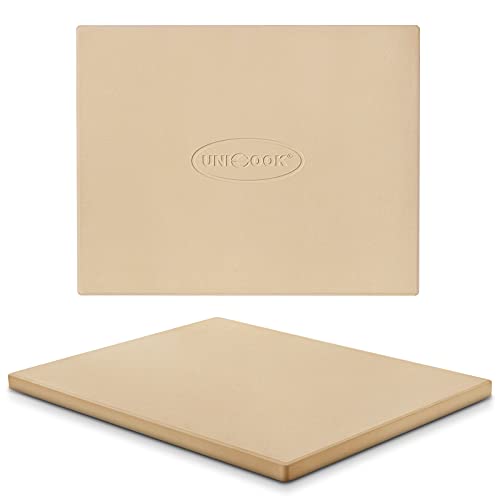
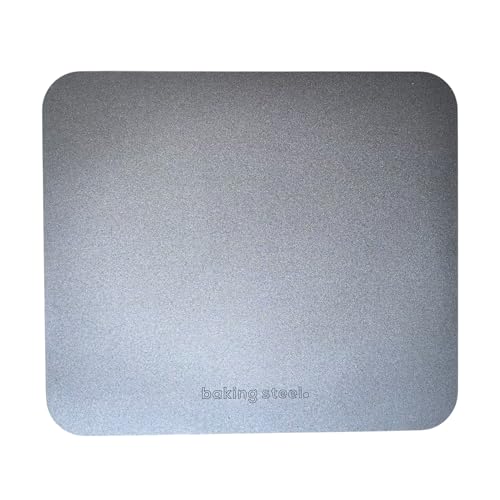
The five tools that do the work in every method on this site: a slab that stores heat, something to launch with, a way to read the surface, and a clean cut.


More ovens worth comparing
Beyond this guide, the highest-rated ovens across every fuel and budget, with a live price check on each.
- Check price on Amazon

- Check price on Amazon
- Check price on Amazon

- Check price on Amazon

- Check price on Amazon

- Check price on Amazon

As an Amazon Associate we earn from qualifying purchases, at no cost to you.
Quick shop: every pick.
Skip the scroll: the whole lineup, with a live price check on each.
- Gozney RoccboxBest Overall for Beginners, The Forgiving WorkhorseGozney · ~$399 (gas; optional wood burner)Check price on Amazon
- Halo Versa 16Best for Timing-Anxious Beginners, It Turns the Pizza for YouHalo · ~$499 (gas, motorized rotating stone)Check price on Amazon
- Cuisinart Indoor Pizza OvenBest Indoor Pick, No Yard RequiredCuisinart · ~$299 (indoor countertop, electric)Check price on Amazon
- Solo Stove Pi PrimeBest Simple Gas Oven, One Knob, No FussSolo Stove · ~$400 (single propane burner)Check price on Amazon
- Ooni Koda 12Best Grab-and-Go Gas Oven, The Lightweight StarterOoni · ~$299 (gas-only simplicity)Check price on Amazon
- Ninja Artisan Outdoor Pizza OvenBest Preset-Driven Oven, Push a Button, Pull a PizzaNinja · ~$300 (electric, multi-mode presets)Check price on Amazon
How we chose.
We rank beginner ovens on the things a first-timer actually feels, not the spec a box leads with. The headline metric is peak FLOOR temperature, the heat under the pizza, which sets the crust, measured with a surface thermometer at the center of the stone after a full preheat, not the air or dome reading manufacturers prefer to print. Then we time HEAT RECOVERY: we launch a cold pizza, watch how far the floor temperature drops, and clock how long it takes to climb back, because that gap is the difference between a great second pie and a soggy one. The forgiving ovens recover in a minute or two; the punishing ones make you wait.
Our signature test is the 60-Second-Pizza Club: an oven earns membership if it can cook a true Neapolitan-style pie, leopard-spotted, set base, puffed cornicione, in 60 to 90 seconds, then do it again immediately without a long reheat. That single test captures floor heat and recovery at once, which is exactly the combination a beginner needs. We weight beginner-specific forgiveness on top: a rotating stone, a one-touch preset, a safe-touch shell, or a simple single-knob burner all reduce the timing skill a launch demands, and we credit them.
Everything is held to the same evidence bar. Specs, prices, temperatures, fuel types, weights, and product images come from our PA-API-verified dataset and manufacturer materials, we never invent a temperature, a price, or an ASIN. Where a box claims a number we can't reproduce on the floor, we say so. No brand paid for inclusion or saw the rankings early, and affiliate commissions never change a score. We describe what these ovens do; we don't promise what your dough will do, because that depends on you.
Key terms
- Peak floor temperature
- The temperature of the cooking stone itself, measured under where the pizza sits, the single most important number in pizza, because the floor sets the crust. It is NOT the same as a manufacturer's advertised 'max temp,' which is usually the dome or air reading. We measure it with a surface thermometer at the center of the stone after a full preheat.
- Heat recovery
- How fast an oven's floor temperature climbs back after a cold pizza lands and steals its heat. Fast recovery is what makes the second, third, and fourth pizza as good as the first, the hallmark of a forgiving, beginner-friendly oven. Heavy insulation (like the Roccbox's) recovers in a minute or two; thin-walled ovens make you wait.
- 60-Second-Pizza Club
- Our signature test: an oven joins if it can cook a true Neapolitan-style pie, set base, leopard-spotted, puffed cornicione, in 60 to 90 seconds, then do it again immediately without a long reheat. It captures floor heat and recovery in one test, which is exactly the combination a beginner needs.
- Cornicione
- The puffed, airy outer rim of a Neapolitan-style pizza, the part that leopard-spots and rises in a hot oven. A high, evenly blistered cornicione is the visual sign that an oven's floor and dome heat are doing their job; a pale, flat rim usually means the floor never got hot enough.
Questions, answered
What is the best pizza oven for a complete beginner?
Our overall pick is the Gozney Roccbox (~$399, gas, ~950°F): its dense insulation gives it the most stable floor and fastest heat recovery on this list, so your bakes stay even and pizza number four is as good as number one, and its safe-touch outer shell forgives a learner's stray hand. If your specific worry is the mid-bake turn, the Halo Versa 16 (~$499) rotates the pizza for you and is the most foolproof pick. If you want the simplest or cheapest start, the Solo Stove Pi Prime (~$400), Ooni Koda 12 (~$299), Ninja Artisan (~$300), and Cuisinart Indoor ($299) each remove a different barrier.
Gas or electric for a first pizza oven?
Gas is the easiest live-fire fuel for a beginner, instant, consistent heat with no fire to manage, and our gas picks (Roccbox, Halo Versa 16, Pi Prime, Koda 12) reach ~850 to 950°F for true fast bakes. Electric (Ninja Artisan, Cuisinart Indoor) tops out lower at ~700°F but adds its own kind of forgiveness: no flame, no fuel, preset-driven timing on the Ninja, and indoor countertop convenience on the Cuisinart. Choose gas if you want the hottest, most authentic bakes outdoors; choose electric if you want point-and-shoot simplicity or have no outdoor space.
Why do you focus on floor temperature instead of the oven's max temperature?
Because your pizza is cooked by the stone it sits on, not the air above it. Manufacturers advertise a 'max temp' that's usually the dome, air, or flame reading, but the crust is set by the FLOOR. Two ovens can both claim '950°F' while one holds 800°F under the pizza and the other sags to 600°F the moment a cold pie lands; the box number is identical and the pizza is not. We measure peak floor temperature and time heat recovery on every oven because that's the physics a beginner actually feels.
Can I really cook a pizza in 60 seconds as a beginner?
Yes, with the hot gas ovens here, the Roccbox, Halo Versa 16, and Koda 12 all reach ~950°F (the Koda hits ~932°F), which is true 60-Second-Pizza Club territory. The catch is that a 60-second bake is fast and unforgiving, which is why beginner-friendly features matter: the Versa 16's rotating stone turns the pizza for you, and the Roccbox's insulation keeps the floor stable. If a 60-second bake sounds stressful, the gentler ~700 to 850°F ovens (Pi Prime, Ninja Artisan, Cuisinart) stretch the bake to give you more reaction time while you learn.
Do I need an outdoor space for a pizza oven?
No. Most high-temperature pizza ovens are gas or live-fire and must be used outdoors with proper clearance, but the Cuisinart Indoor Pizza Oven ($299, electric, ~700°F) is a countertop unit that runs off a standard kitchen outlet and works in any weather, no patio or propane required. At ~700°F it beats a conventional home oven's ~550°F ceiling by 150 degrees, so it makes genuinely better pizza than your range, indoors. The Ninja Artisan is electric too but rated for outdoor use.
How much should a beginner spend on a pizza oven?
The picks on this list run from about $299 to about $499. You can start right around $300, the Cuisinart Indoor ($299), Ooni Koda 12 (~$299), and Ninja Artisan (~$300) are all capable, forgiving entry points. Stepping up to the Roccbox (~$399), the Solo Stove Pi Prime (~$400), or the Halo Versa 16 (~$499) buys you specific forgiveness: dense insulation and a safe-touch shell on the Roccbox, one-knob simplicity on the Pi Prime, a pizza-turning motorized stone on the Versa. Our advice is to buy for the barrier you most want removed, price, fuel simplicity, timing, or space, rather than chasing the highest temperature.
Filed under Buyer's Guide
Part of Best Pizza Ovens · Pizza Oven Gifts
Keep reading.
Pizza Oven Gifts Under $500
Buying a first oven as a present? The most forgiving picks at the price where the value curve peaks.
Pizza Oven Gifts for Dad (2026)
The recipient-shaped gift guide, organised by space, budget and whether he wants a dial or a fire.
How to Choose a Pizza Oven (2026)
The complete buyer's guide: fuel, floor temperature, size, portability, build quality, and our test method.
Gas vs. Wood-Fired Pizza Ovens
Convenience vs. character, settled, which fuel actually makes a better pizza, and for whom.
The Best Pizza Ovens (2026)
Our full ranked shelf across every fuel, size, and budget, tested on floor heat and recovery.
Ooni vs Gozney: Which Brand Wins?
The two giants head to head, same ~950°F ceiling, very different philosophies, one clear way to choose.
Ooni Fyra 12 Review
Ooni's lightest wood-pellet oven reviewed, real live-fire flavor at $349, and what to cross-shop.