Our pick. Ooni
Check price on Amazon →Pizza Stone vs Baking Steel (2026): Which Floor Makes the Better Crust?
The floor is the most important surface in your oven, because the floor is what cooks the crust, and the two contenders behave in opposite ways. Steel conducts heat hard and fast for an aggressive, browning bake; cordierite stone holds heat gently and steadily for a softer, more forgiving one. Then there's the floor your dedicated pizza oven already has. Here's how conduction actually works, which floor suits which style and which oven, and when each one is the right call.
By The Pizza Oven Review DeskUpdated 2026-06-28~9 min readRanked on verified floor heatHow we research
We earn a commission on purchases through our links, at no cost to you. It never decides a ranking. How this works
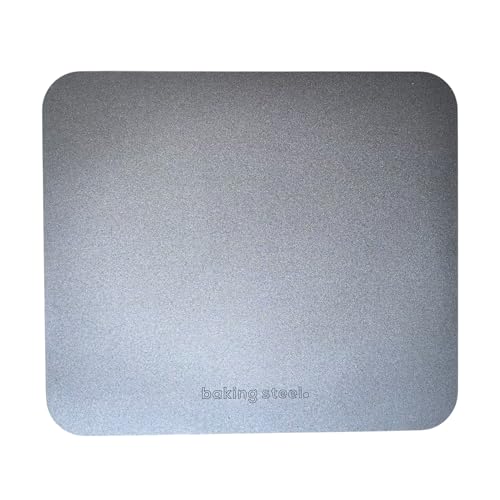
If your pizza is cooked by the floor it sits on, and it is, then the material of that floor is one of the most consequential choices in the whole hobby. Yet most people pick a stone or a steel almost at random, on price or on a vague sense that one is 'better.' They aren't better or worse; they're different tools that do different things, and the difference comes down to a single property of physics: how fast the material moves heat into your dough. Get that one idea, and the entire stone-vs-steel debate resolves itself.
There are really three floors in play, not two. There's the cordierite or ceramic pizza stone that's been the default for decades; there's the baking steel that overtook it for home-oven pizza because it conducts heat far more aggressively; and there's the built-in floor of a dedicated pizza oven, which is usually a thick refractory stone tuned by the manufacturer to the oven's heat. Each is the right answer in a different situation, and a lot of confusion comes from comparing them as if they all lived in the same context. They don't.
This guide explains the conduction principle that underlies everything, then walks through stone, steel, and the oven's own floor, their real strengths, their honest weaknesses, and the styles and setups each one suits. We use our standard lens throughout: peak floor temperature, the 60-Second-Pizza Club, and heat recovery, because those are the terms that actually predict your crust. Nothing here is sponsored, and the thermal behavior we describe is well-established material physics, not numbers we invented.
The short version.
- Your crust is made by conduction from the floor, so the floor's material is one of the most important variables in pizza, and the choice is about heat transfer speed, not 'quality.'
- Baking steel conducts heat far faster than stone, so it browns and crisps a crust aggressively and recovers quickly, the best upgrade for a home oven, and ideal for New York-style pizza.
- Cordierite/ceramic stone conducts more gently and stores heat steadily, giving a softer, more forgiving bake that's traditional for Neapolitan and kinder to high-hydration doughs.
- A dedicated pizza oven already has a tuned refractory floor, usually you should NOT swap it; the manufacturer matched it to the oven's heat, and a steel can over-conduct and scorch at 900°F.
- Steel's weakness is weight and rust; stone's weakness is slower recovery and cracking. Match the floor to your oven and style rather than assuming one wins everywhere.
Our top-rated pizza ovens
Whatever you decide, these are the ovens we recommend, ranked on stated floor heat. Live price check on each.
- Check price on Amazon

- Check price on Amazon

- Check price on Amazon

- Check price on Amazon

- Check price on Amazon

- Check price on Amazon

As an Amazon Associate we earn from qualifying purchases, at no cost to you.
What you'll need.
Prices approximate at time of writing.
The five tools that do the work in every method on this site: a slab that stores heat, something to launch with, a way to read the surface, and a clean cut.


The principle: conduction is everything
Start with the one idea that explains all of it. The base of your pizza, the crisp, the color, the structure, is cooked by conduction: direct heat transfer from the hot floor into the cold dough touching it. (The dome and air handle the top via radiation and convection, but the all-important bottom crust is pure conduction.) So the question that decides your crust isn't just "how hot is the floor?", it's "how fast does the floor dump its heat into the dough?"
That speed is the material's thermal conductivity and how much heat it has stored, and it's where stone and steel split. Steel conducts heat several times faster than ceramic stone. Lay a wet pizza on a 600°F steel and it slams heat into the base, browning and crisping it fast. Lay the same pizza on a 600°F stone and the heat transfers more gently, browning slower and softer. Same temperature, opposite aggression, because the materials move heat at different rates.
Baking steel: the aggressive, fast-recovering floor
Baking steel is the home-oven champion, and the reason is conduction. Because steel dumps heat into the dough so much faster than stone, it effectively makes a modest home oven behave like a much hotter one at the floor, a 550°F kitchen oven with a preheated steel browns and crisps a crust the way a far hotter oven would. That's why steel overtook stone for serious home-oven pizza: it's the single best upgrade for anyone making pizza in a standard oven, and it's covered as the key New-York workaround in our Neapolitan vs. New York guide.
Steel also wins on heat recovery. Its high conductivity and heat capacity mean that after a cold pizza pulls heat out of the surface, the steel pulls it back quickly from the mass below, so your second and third pizzas come out as crisp as the first. For back-to-back baking in a home oven, that fast reset is a real advantage. The trade-offs are physical: a good steel is heavy (often 15 to 25 lb), it has to be seasoned and kept dry or it will rust, and it takes a long preheat (45 to 60 minutes) to fully charge.
Cordierite stone: the gentle, forgiving floor
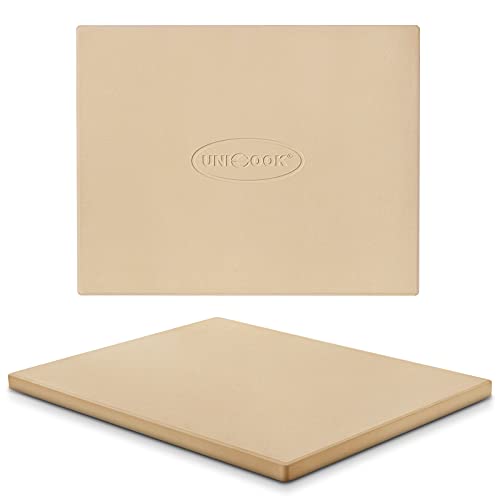
Cordierite (and ceramic) pizza stone is the traditional floor, and its gentler conduction is a feature, not a flaw. Because it moves heat into the dough more slowly than steel, it gives a softer, more even bake that's harder to scorch, which is why it's the classic floor for Neapolitan-style pizza, where you want the base to set and lightly char without the aggressive browning steel delivers. Cordierite in particular is prized for its thermal-shock resistance: it tolerates the rapid heating and the cold-dough launches of high-heat pizza better than cheaper ceramic, which is prone to cracking.
Stone's strengths are forgiveness and simplicity. It's more tolerant of a slightly-too-long bake because it browns slower; it doesn't rust, so there's no seasoning or careful drying; and a good cordierite stone is the natural material for high-temperature ovens. Its weaknesses are the flip side of steel's strengths: slower heat recovery (after a cold pizza, a stone takes longer to climb back, so a fast back-to-back home-oven session can leave later pizzas underbaked), more weight-for-performance, and a real risk of cracking if it's thin, cheap, or thermally shocked.
The third floor: the one your oven already has
Here's the part most stone-vs-steel articles skip: if you own a dedicated pizza oven, you already have a floor, and it's usually the right one. Manufacturers fit their ovens with a thick refractory or cordierite stone specifically tuned to the oven's heat, the Gozney Roccbox, the Ooni Koda 16, and the rest ship with a stone matched to their 900°F-class output. That floor is part of the engineered system, sized and specified so the oven's peak floor temperature and recovery land where they should. In most cases you should not replace it.
The temptation is to drop a baking steel into a dedicated oven for "better browning," and it's usually a mistake. At the 850 to 950°F these ovens reach, steel's aggressive conduction over-browns, it scorches the bottom of a fast Neapolitan bake before the rim sets, the exact failure mode steel is prone to at high heat. The oven's own stone is gentler precisely because the oven is so hot; the two are matched on purpose. Swapping floors in a dedicated oven is for solving a specific problem (a cracked stone, a deliberate style experiment), not a default upgrade.
Side by side: which wins on what
Laid out plainly, here's how the three floors trade off. On browning and crisping speed, steel wins decisively (aggressive conduction), stone is gentler, and a dedicated oven's stone is gentle-but-very-hot. On heat recovery, steel is fastest, a dedicated oven's tuned floor is excellent because of the oven's insulation, and a bare stone in a home oven is the slowest. On forgiveness, stone leads (harder to scorch), steel demands more attention, and the oven's own floor is balanced by design.
On maintenance, stone wins (no rust, no seasoning, just brush and go), while steel needs seasoning and careful drying to avoid rust. On weight and storage, a stone is bulky but a thick steel is genuinely heavy. And on cost, a basic cordierite stone is cheapest, a quality steel costs more, and the oven's floor is already paid for. There's no universal winner, there's a winner for each combination of your oven and your style.
How to use whichever floor you choose
The floor only works if you charge it properly, and the most common mistake is under-preheating. Both stone and steel need a long, full preheat, 45 to 60 minutes in a home oven at max temperature, not the 10 minutes people give them. The floor has to be fully saturated with heat, all the way through its mass, so it can dump that stored energy into the dough on contact. A floor that's hot on top but cold inside crashes the moment a wet pizza lands and gives you a pale, soggy base, and people blame the floor when they really just rushed it.
Position matters too. In a home oven, put the steel or stone on a middle-to-upper rack so the top of the pizza gets enough radiant and convective heat to keep pace with the aggressive floor, especially with steel, where a base that browns fast needs a top that browns fast too (the broiler trick: blast the broiler for the last minute). In a dedicated oven, the floor placement is fixed and tuned, so your job is just the preheat and the launch. Whatever floor you run, verify it with an infrared thermometer before launching, as we describe in what temperature for pizza.
Ready to buy? Start with our top picks
Whatever this guide steered you toward, here's where most readers land, ranked on stated floor heat. Live price check on each.
- Check price on Amazon
- Check price on Amazon
- Check price on Amazon
- Check price on Amazon
- Check price on Amazon
- Check price on Amazon
As an Amazon Associate we earn from qualifying purchases, at no cost to you.
Key terms
- Conduction
- Direct heat transfer from the hot floor into the dough touching it, the mechanism that cooks the all-important bottom crust. How fast a floor material conducts heat into the dough, not just how hot it is, decides how aggressively your crust browns and crisps.
- Baking steel
- A thick steel slab used as an oven floor. Its high thermal conductivity dumps heat into the dough far faster than stone, browning and crisping aggressively and recovering quickly, the best floor upgrade for a home oven, but prone to scorching at the 900°F a dedicated oven reaches.
- Cordierite stone
- A thermal-shock-resistant ceramic floor that conducts heat more gently than steel for a softer, more forgiving, harder-to-scorch bake. It's the traditional choice for Neapolitan and high-heat ovens, and it's rust-free and low-maintenance, but it recovers heat more slowly than steel.
- Heat recovery
- How fast a floor climbs back to baking temperature after a cold pizza pulls heat out of its surface. Steel recovers fastest; a bare stone in a cool home oven is slowest; a dedicated oven's tuned floor recovers well thanks to insulation. Recovery decides whether your later pizzas match the first.
- Refractory floor
- The thick, heat-tuned stone built into a dedicated pizza oven, specified by the manufacturer to match the oven's output. It's part of an engineered system, which is why you usually shouldn't replace it with a steel, steel over-conducts at the high temperatures these ovens reach.
- Preheat saturation
- Heating a floor long enough (typically 45 to 60 minutes in a home oven) that its entire mass, not just the surface, is fully charged with heat. Under-preheating is the most common floor mistake: a surface-hot but core-cold floor crashes the instant a wet pizza lands.
Questions, answered
Is a baking steel or a pizza stone better?
It depends on your oven, not on which is 'better' in the abstract. In a home oven, a baking steel is the superior choice for most people: it conducts heat far faster than stone, so it browns and crisps a crust aggressively even at a modest 550°F and recovers quickly between pizzas, it effectively makes your home oven behave hotter at the floor. A cordierite stone conducts more gently for a softer, more forgiving bake and needs no rust maintenance. But in a dedicated 900°F pizza oven, steel can scorch the bottom before the top sets, so the gentler stone wins there. Match the floor to the heat.
Why does steel cook pizza better than stone in a home oven?
Because of conduction speed. Steel conducts heat several times faster than ceramic stone, so it dumps its stored heat into the cold dough much harder and faster. In a home oven capped around 550°F, far below true pizza temperatures, that aggressive heat transfer compensates for the missing oven heat, browning and crisping the base the way a much hotter oven would. Steel also recovers faster between pizzas. The same property that makes steel brilliant in a cool oven, though, makes it scorch crusts in a 900°F dedicated oven, so steel's advantage is specifically a home-oven advantage.
Should I put a baking steel in my Ooni or Gozney pizza oven?
Usually not. Dedicated pizza ovens ship with a thick refractory or cordierite stone tuned by the manufacturer to the oven's 850 to 950°F output, it's part of an engineered system, sized so the floor temperature and recovery land where they should. Dropping a steel in for 'better browning' typically backfires: at those temperatures steel's aggressive conduction over-browns and scorches the bottom of a fast Neapolitan bake before the rim sets. Keep the stone the oven came with. Swapping floors in a dedicated oven is for solving a specific problem like a cracked stone, not a default upgrade.
Which floor is best for Neapolitan vs New York pizza?
For Neapolitan, a cordierite stone (including the one in a dedicated high-heat oven) is the traditional and better choice, its gentler conduction lets the base set and lightly char at 850 to 950°F without the scorching steel would cause at that heat. For New York, a baking steel in a home oven is ideal: the style bakes at a cooler 600 to 700°F where steel's aggressive browning is exactly what you want, and a home oven plus a preheated steel makes an excellent New York slice without needing a dedicated oven. In short: stone (or your oven's floor) for hot-and-fast Neapolitan, steel for cooler-and-crispier New York.
How long should I preheat a pizza stone or steel?
Far longer than most people do, 45 to 60 minutes in a home oven at maximum temperature. The floor has to be fully saturated with heat through its entire mass, not just hot on the surface, so it can dump that stored energy into the dough on contact. A floor that's surface-hot but core-cold crashes the instant a wet pizza lands and gives you a pale, soggy base, and people wrongly blame the floor when they actually just rushed the preheat. Verify it with an infrared thermometer before launching. No floor, stone or steel, performs on a short preheat.
Does a baking steel rust, and how do I care for it?
Yes, bare steel will rust if it's left wet, which is the main maintenance trade-off versus a stone. Season it with a thin layer of oil baked on (like a cast-iron pan), clean it by scraping and wiping rather than soaking, and dry it thoroughly after any contact with water, never put it through a dishwasher. A cordierite stone, by contrast, needs none of this: it doesn't rust, so you just brush off debris and let it burn clean. If low maintenance matters more to you than steel's aggressive browning, that rust-free simplicity is a real point in stone's favor.
Filed under Explainer
Part of Pizza Oven 101 · Accessories & Technique
Keep reading.
Best Pizza Steel (2026)
Five steels ranked by thickness and fit.
How to Use a Pizza Steel (2026)
Upper rack, 45-minute preheat, broiler finish, and the oil-after-cleaning rule.
How to Use a Pizza Stone (2026)
Cold oven in, an hour of preheat, and never soap.
Cooking Multiple Pizzas Back to Back
Thermal mass decides how many pizzas you can run before the deck fades. The practical consequences.
What Temperature Should a Pizza Oven Be?
Every style's floor target and why the floor, its temperature and its material, is the number that makes the crust.
Neapolitan vs New York Pizza
Why steel suits New York and stone suits Neapolitan, the two styles and the floors and ovens each one needs.
How to Choose a Pizza Oven (2026)
Build quality, insulation, and the tuned floors that ship inside dedicated ovens, the full buyer's framework.
Ooni vs Gozney: Which Brand Wins?
The two giants head to head, same ~950°F ceiling, very different philosophies, one clear way to choose.
Ooni Fyra 12 Review
Ooni's lightest wood-pellet oven reviewed, real live-fire flavor at $349, and what to cross-shop.