Our pick. Ooni
Check price on Amazon →What Temperature Should a Pizza Oven Be? (2026): Every Style's Number
Neapolitan wants 850 to 950°F. New York is happy at 600 to 700°F. Detroit and pan styles bake lower still. The single biggest mistake home cooks make is running one temperature for every pizza, and the second is measuring the air when they should be measuring the floor. Here is the real number for each style, why the FLOOR temperature is the one that makes the crust, and how to measure it with a $20 thermometer.
By The Pizza Oven Review DeskUpdated 2026-06-28~9 min readRanked on verified floor heatHow we research
We earn a commission on purchases through our links, at no cost to you. It never decides a ranking. How this works
There is no single correct temperature for pizza, and that is the first thing nobody tells you. The right number depends entirely on the style you're making: a true Neapolitan pie is built to cook screaming-fast on a near-1,000°F floor in 60 to 90 seconds, while a New York slice wants a calmer 600 to 700°F so the larger pizza has time to crisp through without the rim charring. Run them at the same temperature and one of them fails. Most disappointing home pizza is not a recipe problem, it's a temperature problem, a great dough cooked at the wrong number.
This guide gives you the working temperature for every common style, but it does something more useful first: it teaches you which temperature to even look at. Pizza-oven marketing prints a single big 'max temp,' usually the dome or the air, and treats it as the spec that matters. Your pizza never touches that air. It touches the stone, and the stone's temperature, what we call peak floor temperature, is the number that actually sets your crust. Once you learn to think in floor temperature, the whole category stops being confusing and the style ranges below start making obvious sense.
We'll cover Neapolitan, New York, Detroit and pan, Roman and sourdough, and the home-oven-plus-steel workaround, then close on the practical part: how to measure floor temperature yourself with an inexpensive infrared thermometer, and why that one cheap tool tells you more about your oven than any number on the box. None of this is sponsored, and every style range here is a widely published, well-established figure, not a number we invented to sell you a hotter oven. If you want every figure attributed to its primary source, including the transposed floor and dome temperatures in the two documents that formally define Neapolitan pizza, see our pizza oven temperature and cook time chart.
The short version.
- There is no one 'pizza temperature', Neapolitan needs 850 to 950°F, New York 600 to 700°F, Detroit/pan 500 to 600°F, Roman and sourdough 550 to 650°F. Match the number to the style or the pizza fails.
- Measure the FLOOR, not the air. Your crust is cooked by conduction from the stone, so the stone's temperature is the number that matters, not the 'max temp' a manufacturer prints, which is usually the dome.
- Hotter is only better up to the style's target. Above its sweet spot a pizza scorches on the bottom before the top sets, which is why a too-hot oven ruins New York and Detroit pies.
- A 60-to-90-second Neapolitan bake, our 60-Second-Pizza Club benchmark, requires a floor around 750°F or hotter; almost no home oven reaches it, which is the entire reason dedicated pizza ovens exist.
- A $15 to 25 infrared thermometer is the most valuable pizza tool you can own: it tells you what your floor is actually doing and lets you cook to a number instead of a guess.
Our top-rated pizza ovens
Whatever you decide, these are the ovens we recommend, ranked on stated floor heat. Live price check on each.
- Check price on Amazon

- Check price on Amazon

- Check price on Amazon

- Check price on Amazon

- Check price on Amazon

- Check price on Amazon

As an Amazon Associate we earn from qualifying purchases, at no cost to you.
What you'll need.
Prices approximate at time of writing.
The five tools that do the work in every method on this site: a slab that stores heat, something to launch with, a way to read the surface, and a clean cut.
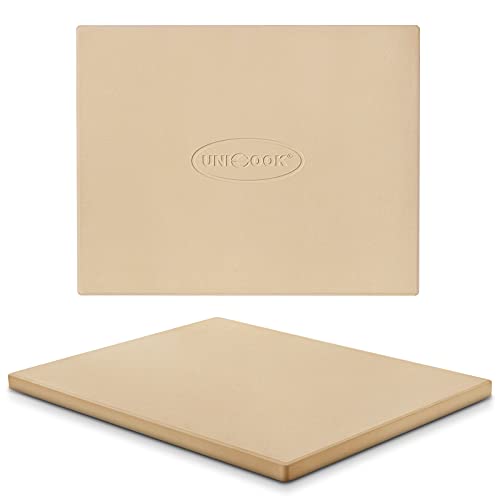


The one rule: measure the floor, not the air
Before any specific number, the principle that makes all of them usable: your pizza is cooked by the stone it sits on, not the air above it. The crust, the crisp base, the structure, the part that makes or breaks the pie, is set by conduction from the floor. The dome and the hot air finish the top, but the base is pure floor heat. So when you ask "what temperature should my oven be?", the honest answer is always "what temperature should the floor be?"
This matters because the temperature a manufacturer advertises is almost never the floor. A four-digit "max temp" on the box is typically the dome, the air, or even the flame tip, the hottest thing they can honestly measure, not the thing that touches your dough. Two ovens both stamped "950°F" can have completely different floor behavior, and only the floor predicts your crust. We unpack this fully in how to choose a pizza oven, but for temperature purposes just hold onto the rule: every number in this guide is a floor target.
Neapolitan: 850 to 950°F, the fastest bake in pizza
Neapolitan is the style that demands the most heat, and it's the reason dedicated pizza ovens exist at all. A true Neapolitan pie, a thin, tender, soft-centered round with a puffed, leopard-spotted rim, is engineered to cook in 60 to 90 seconds on a floor around 850 to 950°F. The Associazione Verace Pizza Napoletana, the body that defines the style, specifies a floor in roughly that band and a bake measured in seconds, not minutes. That speed is the whole point: the dough puffs and chars before it can dry out, leaving the airy, slightly wet crumb that defines the style.
This is also where our signature benchmark lives. The 60-Second-Pizza Club is our shorthand for ovens that can genuinely turn out a leopard-spotted Neapolitan pie in about a minute, and membership requires a floor that reaches and holds roughly 750°F or hotter. Almost no kitchen oven gets there (most top out near 550°F), which is precisely why a gas oven like the Ooni Koda 16 or a heavily insulated one like the Gozney Roccbox is the tool for the job.
New York: 600 to 700°F, the patient slice
New York-style pizza is a different animal and wants a noticeably cooler floor, roughly 600 to 700°F, with a bake of four to eight minutes. The reason is structural: a New York pie is bigger (a full 16-to-18-inch round, sold by the foldable slice), with a slightly thicker, chewier crust that needs time to dry out and crisp all the way through. Blast it at Neapolitan temperatures and the bottom burns while the interior is still raw and the cheese hasn't properly rendered.
This is the clearest proof that "hotter is better" is wrong. For New York, a 950°F floor is actively counterproductive, you want the moderated heat that lets a larger pizza cook evenly from edge to center. Many dedicated ovens can dial down to this range, and a gentler electric oven like the Ninja Artisan (which tops out around 700°F) sits naturally in New York territory. A home oven with a steel, covered later, is also genuinely capable of a good New York slice.
Detroit, pan, and grandma: 500 to 600°F, low and patient
Thick, pan-baked styles want the lowest temperatures of the lot, generally 500 to 600°F. Detroit-style (the rectangular, cheese-to-the-edge, focaccia-crumb pie baked in a steel pan), Sicilian, grandma, and most deep or pan pizzas are all about a tall, airy, fully-cooked crumb with a fried-cheese frico edge. That thickness needs real time in the oven, ten to fifteen minutes or more, so the center cooks through before the outside overbakes.
At Neapolitan or even New York temperatures, a pan pizza is hopeless: the exterior carbonizes long before the dense interior is done. This is the style where a standard home oven is not a compromise but the correct tool, a kitchen oven's 450 to 550°F range is squarely where Detroit and Sicilian want to live, and the metal pan conducts floor heat into the dough exactly the way these styles need. You do not need a 950°F outdoor oven to make excellent Detroit-style pizza; you need a good steel pan and patience. For home-oven timing by style and surface, see how long to cook pizza at 450°F, and for getting a stone to the right heat, pizza stone temperature.
Roman, sourdough, and the in-between styles
Several worthwhile styles live in the middle band, roughly 550 to 650°F. Roman al taglio (the by-the-cut tray pizza with a light, blistered, high-hydration crumb) and Roman tonda (a thin, cracker-crisp round) both want a moderate-to-hot floor with a bake of several minutes, hot enough to crisp, cool enough not to scorch the delicate crumb. Long-fermented sourdough pizzas similarly tend to bake best a touch below Neapolitan temperatures, because the open, wet crumb benefits from a slightly longer, gentler bake that sets the structure without burning the exterior.
The lesson of these in-between styles is that the temperature ladder is continuous, not a set of three boxes. As the crust gets thinner and faster, the floor goes up; as it gets thicker, wetter, or larger, the floor comes down and the bake lengthens. Once you internalize that relationship you can place any new style on the ladder by eye, and dial your oven to it, instead of memorizing a chart.
Why a home oven tops out at 550°F (and the steel workaround)
If you've wondered why you can't just make Neapolitan pizza in your kitchen oven, the answer is a hard ceiling: almost all home ovens max out around 500 to 550°F, a limit set by safety regulations and the oven's insulation and components. That's fine for Detroit, Sicilian, and most pan pizzas, and it's workable for New York, but it's hundreds of degrees short of the 850 to 950°F floor a true Neapolitan bake needs, which is the entire reason dedicated outdoor pizza ovens exist.
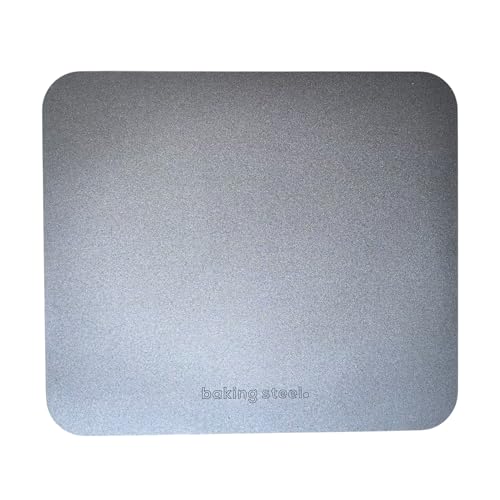
The best home-oven upgrade isn't a hotter oven, it's a better floor. A thick baking steel (covered in depth in our stone vs. steel guide) preheated for 45 to 60 minutes at your oven's max stores and conducts far more heat into the dough than the oven's air temperature alone, effectively giving your 550°F oven a much hotter, more aggressive floor. It won't make you a 60-second Neapolitan pie, but it will make a genuinely excellent New York-style slice, the style that's actually designed for that temperature range.
How to measure your floor temperature (the $20 tool)
Every number in this guide is useless if you can't see your floor temperature, and the tool that shows it costs about $15 to 25: a handheld infrared (laser) thermometer. You point it at the center of the stone after a full preheat, pull the trigger, and it reads the surface temperature instantly. This single cheap gadget tells you more about your oven than any spec on the box, because it measures the one number that actually cooks your pizza.
Use it three ways. First, confirm your floor is at the style's target before you launch, don't trust the preheat time or the dial, trust the reading. Second, watch the recovery: take a reading, launch a pizza, then read the floor again right after you pull it to see how far it dropped and how fast it climbs back. That's heat recovery, and it's the difference between a great fourth pizza and a sad one. Third, map your floor's hot and cold spots by reading several points, most ovens are hotter near the flame, which is exactly why you rotate the pizza mid-bake.
Ready to buy? Start with our top picks
Whatever this guide steered you toward, here's where most readers land, ranked on stated floor heat. Live price check on each.
- Check price on Amazon
- Check price on Amazon
- Check price on Amazon
- Check price on Amazon
- Check price on Amazon
- Check price on Amazon
As an Amazon Associate we earn from qualifying purchases, at no cost to you.
Key terms
- Peak floor temperature
- The temperature of the cooking stone itself, measured at the surface after a full preheat, the number that sets your crust, because the base is cooked by conduction from the floor. Every style target in this guide is a floor temperature, not an air or dome reading, and it is usually lower than a manufacturer's advertised 'max temp.'
- Neapolitan bake window
- The 850 to 950°F floor and 60-to-90-second bake that defines true Neapolitan pizza, as specified by the Associazione Verace Pizza Napoletana. The speed is what creates the puffed, leopard-spotted, soft-centered crust, and it requires a floor most home ovens can't reach.
- 60-Second-Pizza Club
- Our signature benchmark for ovens that can genuinely cook a leopard-spotted Neapolitan pie in about 60 to 90 seconds. Membership requires a floor that reaches and holds roughly 750°F or hotter, the bar that separates dedicated pizza ovens from kitchen ovens.
- Heat recovery
- How fast the floor temperature climbs back to target after a cold pizza is launched and pulls heat out of the stone. You can watch it with an infrared thermometer, and it's what decides whether your second, third, and fourth pizzas come out as well as the first.
- Baking steel
- A thick slab of steel used as an oven floor. Because steel conducts heat far faster than a ceramic stone, a preheated steel gives a home oven a much more aggressive effective floor temperature, the best workaround for the kitchen oven's ~550°F ceiling, and ideal for New York-style pizza.
- Infrared thermometer
- A handheld, no-contact thermometer that reads surface temperature instantly when pointed at the stone. At $15 to 25 it's the most valuable pizza tool most cooks can own, because it lets you cook to a measured floor number instead of guessing from the dial or preheat time.
Questions, answered
What temperature should a pizza oven be for Neapolitan pizza?
Around 850 to 950°F on the floor, for a 60-to-90-second bake. That's the range the Associazione Verace Pizza Napoletana specifies, and the speed is what creates the puffed, leopard-spotted, soft-centered crust that defines the style, the dough chars and rises before it can dry out. It's also why a standard home oven (which tops out near 550°F) can't make true Neapolitan: you need a dedicated oven that clears roughly 750°F on the stone, which is the bar for our 60-Second-Pizza Club. Measure the floor, not the air, to confirm you're in range.
What temperature is best for New York-style pizza?
Roughly 600 to 700°F on the floor, with a four-to-eight-minute bake, noticeably cooler than Neapolitan. A New York pie is larger and has a thicker, chewier crust that needs time to crisp all the way through, so blasting it at 950°F just burns the bottom while the middle stays raw. This is the clearest example of 'hotter is not better': for New York, a moderated floor is the skilled choice. A gentler electric oven or a home oven with a preheated baking steel both sit naturally in this range.
Why does floor temperature matter more than the oven's max temperature?
Because your pizza is cooked by the stone it sits on, not the air above it. The crust, the crisp base and the structure, is set by conduction from the floor, so the floor's temperature is what actually makes or breaks the pizza. Manufacturers print a 'max temp' that's usually the dome, the air, or the flame tip because it reads highest, but your dough never touches that. Two ovens can both claim 950°F while one holds a hot floor under the pizza and the other sags the instant a cold pie lands. That's why every style target is a floor number, and why we track the floor number on every oven.
Can a home oven get hot enough for pizza?
It depends on the style. Almost all home ovens max out around 500 to 550°F, which is too cool for true Neapolitan (which needs 850 to 950°F) but squarely right for Detroit, Sicilian, and most pan pizzas, and workable for New York. The best upgrade isn't a hotter oven, it's a thick baking steel, preheated for 45 to 60 minutes, which conducts far more heat into the dough than the air alone and gives your oven a much more aggressive effective floor. That setup makes genuinely excellent New York and pan pizza; it just won't produce a 60-second Neapolitan pie.
Is a hotter pizza oven always better?
No, only up to your style's target. Above a style's sweet spot, the bottom of the pizza scorches before the top sets, so a too-hot floor actively ruins New York, Detroit, and pan pizzas, all of which want moderate-to-low temperatures and longer bakes. Extreme advertised numbers (some budget ovens claim 1,000°F+) are usually brief air-temperature spikes, not sustained, even stone heat, and a stone that hot burns crusts. What you actually want is a floor that's hot enough for your style and stays stable and recovers fast under load, even and controllable beats a record-setting peak.
How do I measure the temperature of my pizza oven's floor?
Use a handheld infrared (laser) thermometer, about $15 to 25. Point it at the center of the stone after a full preheat and pull the trigger for an instant surface reading. Use it to confirm the floor is at your style's target before launching, to watch how far the floor drops and how fast it recovers after a pizza, and to map hot and cold spots (most ovens run hotter near the flame, which is why you rotate the pie). One caveat: IR readings can be skewed by a shiny or sooty stone and a steep viewing angle, so treat the number as a reliable guide rather than a lab certification, but cooking to a measured floor temperature beats guessing every time.
Keep reading.
How to Make Pizza in a Regular Oven (2026)
The 500°F stone-or-steel method with the broiler finish, every step and number.
Why Is My Pizza Burnt on the Bottom?
When the floor and the dome are out of balance, this is the failure you get, in both directions.
Pizza Oven Temperature and Cook Time Chart
The sourced reference by style, including the conflict between the AVPN and EU Neapolitan specifications.
What It Actually Costs to Run a Pizza Oven
Cost per pizza and per hour by fuel, derived from manufacturer BTU ratings and EIA energy prices, with all the arithmetic shown.
How to Choose a Pizza Oven (2026)
Why FLOOR temperature beats dome 'max temp,' plus fuel, size, insulation, and the full buyer's framework.
Pizza Stone vs. Baking Steel
The floor that makes the crust, cordierite stone vs. steel vs. the oven's built-in floor, and when each wins.
The Best Pizza Ovens (2026)
The ovens that actually reach and hold these numbers, scored on floor heat, the 60-Second Club, and recovery.
Ooni vs Gozney: Which Brand Wins?
The two giants head to head, same ~950°F ceiling, very different philosophies, one clear way to choose.
Ooni Fyra 12 Review
Ooni's lightest wood-pellet oven reviewed, real live-fire flavor at $349, and what to cross-shop.