Our pick. Ooni
Check price on Amazon →Are Pizza Ovens Worth It? (2026): An Honest Cost/Benefit
The honest answer is: for some people, absolutely, and for others, no, and they should buy a $100 baking steel instead. A dedicated pizza oven does one thing a home oven physically cannot: it reaches the 850 to 950°F floor that makes true Neapolitan pizza. Whether that one capability is worth the money, the space, and the learning curve depends entirely on what you actually want to eat. Here's the unsentimental math, who it's for, who it isn't, and the cheaper alternative we'll happily send you to.
By The Pizza Oven Review DeskUpdated 2026-06-28~10 min readRanked on verified floor heatHow we research
We earn a commission on purchases through our links, at no cost to you. It never decides a ranking. How this works
"Are pizza ovens worth it?" is the rare buying question where the seller's honest answer is sometimes "no." Most of the internet that ranks pizza ovens has an incentive to tell you to buy one; we have an incentive to tell you the truth, because a site that recommends a $500 purchase to someone who'll use it twice doesn't get trusted twice. So we'll start from the position that you might not need one, and then show you exactly who does, and why, so you can place yourself honestly.
The case for a dedicated pizza oven rests on a single, genuine, non-negotiable fact: it reaches a floor temperature your kitchen oven cannot. A home oven tops out around 550°F; a true Neapolitan pizza needs an 850 to 950°F floor for its 60-second blistered bake. No workaround closes that gap. If leopard-spotted Neapolitan pizza in your own backyard is the thing you want, a pizza oven is the only path, and it's worth it. If it isn't, if you'd be just as happy with a great New York or Detroit pie, the math changes completely, and a $100 baking steel in the oven you already own does that job.
This guide lays out the real cost (not just the sticker, the tank, the accessories, the space, the learning curve), the genuine benefits, the honest profile of who a pizza oven is and isn't for, and a clear-eyed comparison with the home-oven-plus-steel alternative. We use our standard lens, peak floor temperature, the 60-Second-Pizza Club, heat recovery, because those capabilities are precisely what you're paying the premium to get. Nothing here is sponsored, and we'd rather you skip the purchase than regret it.
The short version.
- A pizza oven is worth it if and only if you specifically want what a home oven physically can't do: a 850 to 950°F floor for true 60-second Neapolitan pizza. That single capability is the whole value proposition.
- If you'd be happy with New York, Detroit, or pan pizza, you do NOT need a dedicated oven, a $50 to 100 baking steel in your existing oven makes those styles excellently for a fraction of the cost.
- The real cost is more than the sticker: budget for a propane tank, a peel, an infrared thermometer, and a cover, plus the outdoor space and the dozen-session learning curve.
- Frequency is the honest test: a pizza oven rewards people who'll use it regularly (entertainers, pizza obsessives, big families); it's an expensive shelf ornament for someone who makes pizza twice a year.
- The sweet spot is real value: a $400 to 700 oven that joins the 60-Second-Pizza Club and recovers fast pays back fastest for a household that actually loves pizza night, and competes with a $25 delivery habit surprisingly quickly.
Our top-rated pizza ovens
Whatever you decide, these are the ovens we recommend, ranked on stated floor heat. Live price check on each.
- Check price on Amazon

- Check price on Amazon

- Check price on Amazon

- Check price on Amazon

- Check price on Amazon

- Check price on Amazon

As an Amazon Associate we earn from qualifying purchases, at no cost to you.
What you'll need.
Prices approximate at time of writing.
The five tools that do the work in every method on this site: a slab that stores heat, something to launch with, a way to read the surface, and a clean cut.


The one thing a pizza oven does that nothing else can
Cut through every pro and con and the entire case for a dedicated pizza oven rests on one capability: it reaches a floor temperature your kitchen oven physically cannot. Home ovens cap out around 500 to 550°F by regulation and design. True Neapolitan pizza, the thin, soft-centered, dramatically leopard-spotted round, needs an 850 to 950°F floor to cook in 60 to 90 seconds, which is what produces that specific puffed, charred, airy crust. The gap between 550°F and 900°F is hundreds of degrees, and there is no kitchen hack that bridges it. If you want that pizza, you need that oven. Full stop.
This is the honest foundation of the whole "worth it" question, because it tells you that the value of a pizza oven is conditional on what you want to eat. The oven isn't generically "better" than your kitchen, it's better at exactly one thing: extreme-heat, fast-bake pizza. For every other pizza style, and for most other cooking, your home oven is fine or even preferable. So the real question isn't "is a pizza oven good?" It's "do I want the specific pizza that only a pizza oven can make?"
The real cost: it's more than the sticker price
The price on the box is not the price of ownership, and an honest cost/benefit has to count the rest. A dedicated oven runs from roughly $250 for a capable entry model to $700 for the sweet spot to well over $1,000 for a showpiece. On top of the oven, budget for the ecosystem: a propane tank and regulator for gas (or a wood supply), a launching peel and a turning peel, an infrared thermometer (the one accessory we consider mandatory, and a cheap gun like the Etekcity Lasergrip 774 reads a stone perfectly well), and a weatherproof cover so an outdoor oven survives the seasons. That's commonly another $75 to 150 before your first pizza.
Then the non-cash costs, which matter just as much. You need outdoor space and safe clearances, a pizza oven is not an apartment-balcony-friendly appliance in most cases (the indoor electric models are the exception). You need storage when it's not in use. And you need to spend the learning curve: roughly a dozen sessions before your launches, turns, and recovery management are reliable, as we walk through in how to use a pizza oven. None of these are dealbreakers for the right buyer, but pretending the cost is just the sticker is how people end up disappointed.
Who a pizza oven is genuinely worth it for
There are clear profiles for whom a dedicated oven is an easy yes. The Neapolitan obsessive: if leopard-spotted, 60-second pizza is the specific thing you crave, nothing else makes it, and the oven is worth every dollar. The entertainer: if you host, a pizza oven is a genuinely brilliant party machine, guests gather around it, everyone gets a custom fresh pie, and a fast-recovering oven lets you feed a crowd one blistering pizza after another. The social value alone justifies it for a lot of hosts.
The frequent-pizza family: if pizza night is a weekly institution, the per-use cost collapses and the oven becomes one of the best-value purchases in the backyard, cheaper than delivery within a year and better than any delivery you can buy. And the hobbyist cook: if you genuinely enjoy the craft, dough fermentation, the fire, dialing in the bake, then the learning curve is the point, not a cost, and the oven is a source of ongoing pleasure rather than a means to an end. For these people the answer is simply yes; the only remaining question is which oven, which our best pizza ovens guide answers.
Who should NOT buy one (and we mean it)
Equally important, and rarer to hear from a pizza-oven site: some people should skip it. The occasional pizza-maker: if you make pizza a few times a year, a dedicated oven is an expensive ornament that lives under a cover. You'll get more joy from a $100 steel you can use any random Tuesday without hauling out a propane tank. The New-York-or-Detroit loyalist: if the pizza you actually love bakes at 600°F or below, a 900°F oven is wasted capability, your kitchen plus a steel makes your favorite pizza better than a pizza oven would.
The space-constrained: if you don't have safe outdoor space, most pizza ovens are a non-starter (and the indoor electric exceptions, while real, are a different and more modest proposition). And the convenience-first cook: if the romance of tending a fire or babysitting a 60-second bake sounds like a chore rather than a pleasure, you will not use the thing, and an honest accounting says don't buy it. There's no shame in any of these, they're just the profiles where the math doesn't work, and we'd rather say so.
The honest alternative: a home oven plus a baking steel
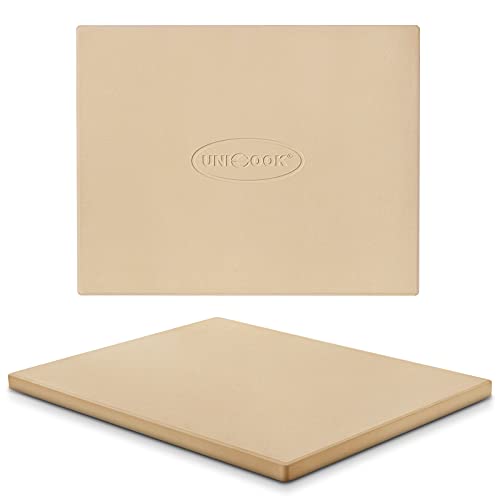
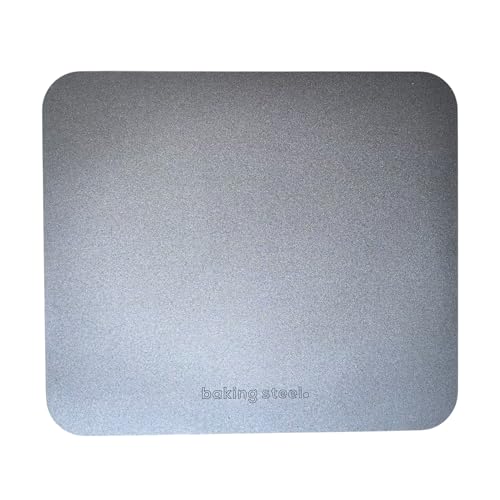
Here's the option a lot of pizza-oven content conveniently omits: for many people, a $50 to 100 baking steel in the oven you already own is the right answer. Because a steel conducts heat so aggressively, a preheated steel turns your 550°F kitchen oven into a floor hot enough to make genuinely excellent New York-style, Roman, and pan pizza, the styles that bake at or below 700°F anyway. It's cheap, it lives in a cupboard, it works in any weather indoors, and it needs no propane, no clearances, and no fire management. For non-Neapolitan pizza, it's not a compromise; it's the correct tool. The one we point people to first is the Original Baking Steel, a quarter-inch slab that stores and dumps heat harder than any stone, with the Unicook cordierite stone as the cheaper, more forgiving alternative.
What the steel can't do is the one thing the whole pizza-oven category exists for: it can't reach the 850°F-plus floor of a 60-second Neapolitan bake. So the decision is clean. If you want Neapolitan, the steel won't get you there and you need the oven. If you don't specifically want Neapolitan, the steel makes your favorite pizza beautifully for a fraction of the price, and the oven is an expensive way to make a pizza you weren't even after. We compare the floors in detail in pizza stone vs. steel.
Ready to buy? Start with our top picks
Whatever this guide steered you toward, here's where most readers land, ranked on stated floor heat. Live price check on each.
- Check price on Amazon
- Check price on Amazon
- Check price on Amazon
- Check price on Amazon
- Check price on Amazon
- Check price on Amazon
As an Amazon Associate we earn from qualifying purchases, at no cost to you.
Key terms
- Peak floor temperature
- The temperature of the cooking stone, which sets the crust. A dedicated pizza oven's ability to reach 850 to 950°F here, versus a home oven's ~550°F ceiling, is the single capability you're paying for, and the only one that makes true Neapolitan pizza possible.
- 60-Second-Pizza Club
- Our benchmark for ovens that cook a leopard-spotted Neapolitan pie in about 60 to 90 seconds and keep doing it. Membership is the concrete thing a pizza oven buys you that no home-oven workaround can, and it's worth the money only if that pizza is what you actually want.
- Heat recovery
- How fast the floor returns to temperature between pizzas. It's central to the 'worth it' case for entertainers, because a fast-recovering oven feeds a crowd one blistering pie after another, turning the oven into a genuinely valuable party machine rather than a one-pizza novelty.
- Total cost of ownership
- The real price of a pizza oven: the sticker plus a propane tank, peels, an infrared thermometer, and a cover (~$100), plus outdoor space and the learning curve. Counting only the sticker is how buyers underestimate the commitment and end up disappointed.
- Baking steel alternative
- A $50 to 100 steel slab that gives a home oven an aggressive effective floor, making excellent New York, Roman, and pan pizza, every style that bakes at or below ~700°F. It's the honest, cheaper answer for anyone who doesn't specifically want Neapolitan or won't use a dedicated oven often.
- Frequency test
- The practical heuristic for whether an oven is worth it: a dedicated oven rewards people who use it regularly (cost-per-session collapses) and punishes occasional users (an expensive covered ornament). If you won't use it often, the steel route almost always wins.
Questions, answered
Are pizza ovens actually worth the money?
For the right person, yes, and for others, honestly no. A dedicated pizza oven does one thing your kitchen can't: reach the 850 to 950°F floor that makes true 60-second Neapolitan pizza, which a home oven (capped near 550°F) physically cannot. If that specific pizza is what you want, or if you'll use the oven regularly for entertaining and family pizza nights, it's well worth it and pays back against a delivery habit within a year. If you'd be just as happy with New York or Detroit pizza, or you'd only use it a few times a year, it isn't worth it, a $100 baking steel in your existing oven is the smarter buy.
Can't I just make good pizza in my regular oven?
For most styles, yes, with one upgrade. A home oven plus a preheated baking steel makes genuinely excellent New York-style, Roman, and pan pizza, because those styles bake at or below 700°F and the steel gives your oven an aggressive effective floor. The one thing your kitchen can't do is true Neapolitan: that needs an 850°F-plus floor for a 60-second blistered bake, and no home-oven workaround closes the hundreds-of-degrees gap. So if you want Neapolitan you need a dedicated oven; for everything else, your oven and a steel are all you need.
How much does a pizza oven really cost to own?
More than the sticker. Ovens run from about $250 (capable entry) to $700 (the sweet spot, where insulation and fast recovery live) to $1,000-plus (showpiece). On top, budget roughly $75 to 150 for a propane tank and regulator, a launching and a turning peel, an infrared thermometer (essentially mandatory), and a weatherproof cover. Then the non-cash costs: outdoor space with safe clearances, storage, and about a dozen sessions of learning curve. A realistic all-in for a good first setup is the oven plus ~$100 of essentials, which still beats a two-pizza-a-week delivery habit fast, if you actually use it.
Who should not buy a pizza oven?
Four profiles, and we mean it. People who make pizza only a few times a year, it'll be an expensive covered ornament, and a $100 steel serves them better. People whose favorite pizza is New York, Detroit, or another sub-700°F style, a 900°F oven is wasted capability for them. People without safe outdoor space, since most ovens aren't apartment- or balcony-friendly (the indoor electric models are a modest exception). And convenience-first cooks for whom tending a fire or a 60-second bake sounds like a chore rather than a pleasure, they simply won't use it. If you're in one of these groups, skip it.
Is a pizza oven worth it just for entertaining?
It can be one of the best reasons to buy one. A pizza oven is a genuinely excellent party machine, guests gather around it, everyone gets a fresh custom pie, and a fast-recovering oven lets you turn out one blistering pizza after another without the floor sagging. That social value alone justifies the cost for a lot of hosts, even setting the pizza quality aside. If you entertain regularly, prioritize an oven with strong heat recovery (so you're not making your guests wait between pies), which is exactly what we test and rank for in our best pizza ovens guide.
What's the cheapest way to make great pizza at home?
A baking steel in the oven you already own, $50 to 100, and the best value in pizza for anyone not chasing Neapolitan. A steel conducts heat far more aggressively than a stone, so preheated for 45 to 60 minutes at your oven's max it makes excellent New York, Roman, and pan pizza, works indoors in any weather, and needs no fuel, clearances, or fire management. Pair it with a cheap peel and an infrared thermometer and you have a complete setup for well under $150. The only style it can't make is true Neapolitan, which is the sole job that actually requires a dedicated oven.
Keep reading.
The Best Pizza Ovens (2026)
If the math says buy, this is where to start, the full ranked field scored on floor heat, the 60-Second Club, and recovery.
Pizza Stone vs. Baking Steel
The $100 alternative, examined, how a steel turns your home oven into a New-York machine, and what it can't do.
How to Choose a Pizza Oven (2026)
Once you've decided it's worth it: fuel, size, insulation, budget tiers, and the signature test method.
Ooni vs Gozney: Which Brand Wins?
The two giants head to head, same ~950°F ceiling, very different philosophies, one clear way to choose.
Ooni Fyra 12 Review
Ooni's lightest wood-pellet oven reviewed, real live-fire flavor at $349, and what to cross-shop.