Our pick. Ooni
Check price on Amazon →Why Is My Pizza Burnt on the Bottom? (And Why the Reverse Happens Too)
A pizza that comes out black underneath and raw on top is telling you one specific thing: your floor is running hot relative to your dome. Turn the flame down, let the dome catch up, and lift the pizza onto a turning peel for the last few seconds so the top can finish. The mirror image, a charred top over a pale doughy base, is the same imbalance running the other way, and it is fixed by preheating the stone longer rather than by touching the flame at all.
By The Pizza Oven Review DeskUpdated 2026-08-08~11 min readRanked on verified floor heatHow we research
We earn a commission on purchases through our links, at no cost to you. It never decides a ranking. How this works
If your pizza is burnt on the bottom and still raw on top, the floor of your oven is hotter than the dome, and the fix is to drop the flame, give the dome time to catch up, and finish the pizza lifted off the stone on a turning peel. That is the whole answer, and it is worth stating before anything else because this failure has a reputation for being mysterious when it is actually one of the most mechanically legible problems in the whole hobby. Nothing is broken. Two heat sources that are supposed to work in balance have drifted out of balance, and you can push them back.
The reason it feels mysterious is that most people think of a pizza oven as a single hot box with one temperature. It is not. The floor cooks the base by conduction, direct contact between hot stone and cold dough, and the dome cooks the top by radiation, infrared energy thrown down from the hot ceiling and the flame. Those are two independent channels of energy into the same pizza, and a good bake is the moment they finish at the same time. When one runs ahead of the other, you get one of exactly two failures: a burnt base with a raw top, or a charred top over a pale, doughy, undercooked base. This page covers both directions, because the diagnosis is the same and only the correction reverses.
We will work through the mechanism first, then the two failure directions with the specific corrections for each, then the measurement habit that makes the whole thing obvious instead of guesswork, and finally why a 60 to 90 second Neapolitan bake and a 4 to 12 minute New York bake are genuinely different physics and cannot be troubleshot with the same instincts. If your oven simply will not reach temperature in the first place, that is a different problem with its own walkthrough in why is my pizza oven not getting hot enough. This page assumes the oven is hot and the balance is wrong.
The short version.
- Burnt base plus raw top means the floor is hot relative to the dome. Turn the flame down, wait for the dome to catch up, and dome the pizza on a turning peel for the last few seconds.
- Charred top plus pale doughy base is the same imbalance reversed. It is a preheat problem, not a flame problem: the stone never soaked long enough, so give it more time and stop opening the door.
- Ooni's own Koda 16 documentation targets a stone of 715 to 850°F (380 to 450°C) and tells owners to get the stone back up into that range between pizzas. That is a floor number, not an air number, and it is the one to measure.
- Gozney publishes 600 to 700°F for New York style and 800 to 900°F for Neapolitan, and the Gozney Arc manual labels anything above 900°F as over temperature. Running a New York pizza at a Neapolitan floor is a guaranteed burnt base.
- The two Neapolitan authorities disagree about which surface should be hotter: the EU regulation specifies a 485°C floor under a 430°C dome, and the AVPN Disciplinare specifies a 380 to 430°C cooking surface under a 485°C dome. We publish both and do not average them.
- A 60 to 90 second bake and a 4 to 12 minute bake are different physics. At 90 seconds the base has almost no time to overcook; at 12 minutes it has plenty, which is why longer bakes want a cooler floor.
Our top-rated pizza ovens
Whatever you decide, these are the ovens we recommend, ranked on stated floor heat. Live price check on each.
- Check price on Amazon

- Check price on Amazon

- Check price on Amazon

- Check price on Amazon

- Check price on Amazon

- Check price on Amazon

As an Amazon Associate we earn from qualifying purchases, at no cost to you.
What you'll need.
Prices approximate at time of writing.
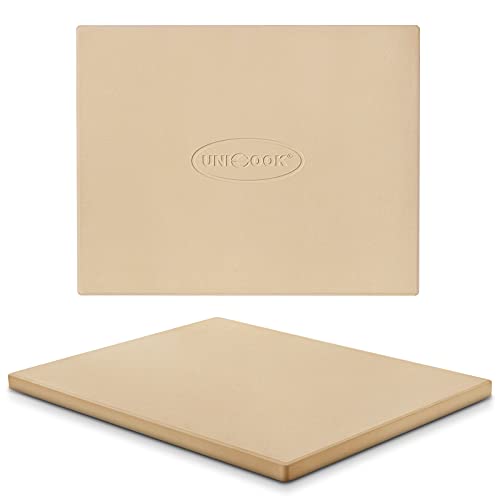
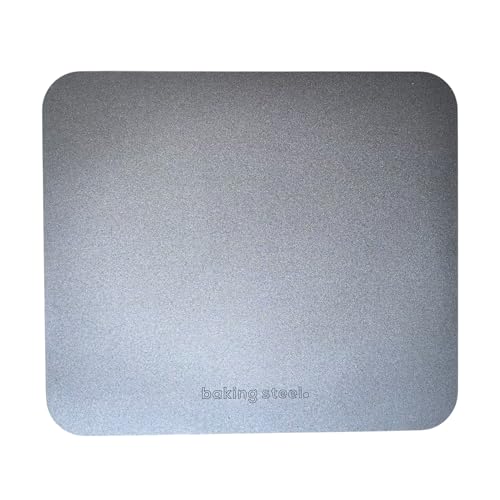
The five tools that do the work in every method on this site: a slab that stores heat, something to launch with, a way to read the surface, and a clean cut.


The mechanism: a pizza oven has two heat sources, not one
Everything on this page follows from one fact. The floor cooks the base by conduction and the dome cooks the top by radiation, and they are independent. Conduction is contact: cold wet dough touches hot stone, and heat pours directly into the base at a rate set by how hot that stone is and how much thermal mass sits behind it. Radiation is line of sight: the hot dome and the flame throw infrared energy downward onto the cheese, the sauce and the rim, with no contact required. A finished pizza is the moment those two processes cross the finish line together.
Once you see it that way, the two failures stop being mysterious and start being arithmetic. If conduction is running faster than radiation, the base is done before the top is, and by the time the top catches up the base is carbon. If radiation is running faster than conduction, the cheese blisters and the rim chars while the base is still pale and floppy. There is no third option, which is why this page has exactly two halves. You are never diagnosing "the oven"; you are diagnosing the ratio between two numbers.
The professional documents make the same point implicitly, and they make it by disagreeing with each other. Commission Regulation (EU) No 97/2010, the legal text behind Pizza Napoletana as a Traditional Speciality Guaranteed, specifies a cooking floor of 485°C under an oven dome of 430°C. The AVPN Disciplinare, 2024 edition, specifies a cooking surface of 380 to 430°C under a dome of 485°C, which is the exact reverse ordering. Two respected authorities, both describing the same pizza, transpose which surface should be hotter. We are not going to relitigate that here; it is documented in full on our pizza oven temperature chart. What matters for you is the implication: even the experts treat the floor and the dome as two separate dials, and so should you.
Direction one: burnt base, raw top (the floor is ahead)
This is the common one, and it usually means you are cooking a slower style on a faster floor. Gozney publishes 600 to 700°F for New York style and 800 to 900°F for Neapolitan, and that gap is not a rounding error, it is the difference between a bake that survives 4 to 12 minutes and a bake that is over in 60 to 90 seconds. Put a New York pizza, which needs several minutes for its thicker base and heavier topping load to cook through, onto a floor set up for Neapolitan, and the base will be black long before the interior is done. That is not a technique failure. That is a mismatch between the style and the deck, and the answer is to bring the floor down to where the style lives.
The corrections, in the order you should try them. Turn the flame down and wait. This is the fix people skip, because dropping the burner feels like it should work instantly and it does not. The stone has already absorbed heat; it now has to shed some, and that takes minutes, not seconds. Turn it down, leave the dome lit so the ceiling stays hot, and re-measure before you launch. Move the pizza to a cooler part of the floor. Compact ovens are asymmetric by design, and the region directly over or beside the burner runs hotter than the rest. If the scorch mark on your base is always in the same place, that is a map of your oven, not a mystery. Dome the pizza, which gets its own section below. And let the stone recover between pizzas, because a deck that has been fed by a burner for twenty minutes without a cold pizza landing on it can drift above where you set it.
One more cause worth naming, because it looks like a burnt base and is not. If the underside is speckled with black bitter grit rather than evenly dark, that is scorched semolina or flour on the stone, not an overcooked crust. It tastes acrid and it transfers to every subsequent pizza. Brush it off with a brush and scraper between pizzas and the bitterness goes away without touching your temperatures at all. We cover that failure and its relatives in why does my pizza taste smoky.
Direction two: charred top, pale doughy base (the dome is ahead)
The mirror image is less discussed and more frustrating, because the instinct it triggers is exactly wrong. You see a blistered, blackening top and you reach for the flame control. Do not. A pale base under a charred top is almost always a preheat problem, and turning the flame down makes it worse, because the flame is also what is charging the stone. You are treating the symptom and starving the cure.
What has actually happened is that the chamber air and the dome came up fast, as they always do, while the stone underneath, which has real thermal mass and heats slowly, is still charging. Launch into that state and radiation is at full strength while conduction is at half. Notice how Ooni frames its own Koda 16 instruction: preheat the stone to 715 to 850°F (380 to 450°C). Not the air. The stone. Manufacturers write the target that way precisely because they know owners judge readiness by how the flame looks.
The three corrections here are patience, discipline and measurement. Preheat the stone longer, which is free and works, and which our heat up timing guide puts realistic numbers around by fuel type. Stop opening the door, because every opening dumps chamber heat that the stone then has to help replace, and the stone is the slow part of the system. Drop the flame only after the floor is up, not before. If your top is charring on an already hot floor, then and only then is a lower flame the right lever, and even then doming is usually the better answer. If the base is not merely pale but genuinely wet, the failure has crossed into a different family, covered in why is my pizza soggy in the middle.
Measure the floor, because everything above depends on one number
You cannot balance two numbers if you only ever see one of them, and the one most people see is the wrong one. A built-in dial typically reports chamber or shell temperature, which moves fast, looks reassuring, and tells you almost nothing about what the base of your pizza is about to touch. The floor is the number that decides whether you get a burnt base, and the only practical way to know it is to point an infrared thermometer at the centre of the stone before you launch. A budget unit such as the Etekcity Lasergrip 774 does the job as well as anything for this purpose; our full picks are in the best infrared thermometer for pizza.
Then compare that reading to your style rather than to your oven's ceiling. Ooni's Koda 16 Getting Started page targets a stone of 715 to 850°F (380 to 450°C) and says a Neapolitan style pizza "will be ready in under 2 minutes" at that floor. Gozney publishes 600 to 700°F for New York and 800 to 900°F for Neapolitan, and its Arc manual labels anything above 900°F as over temperature. That last point deserves emphasis, because both Ooni and Gozney market roughly 950°F as a peak capability, and owners routinely read that number as a cooking target. It is not. It is a ceiling. Cooking a pizza on a floor above the manufacturer's own stated range is a burnt base with extra steps.
Doming: the rescue that fixes a raw top in five seconds
This is the technique that makes the burnt base problem manageable in real time, and it is startlingly simple. Slide a turning peel under the pizza, lift it off the stone, and hold it up toward the dome for a few seconds. The moment the pizza leaves the floor, conduction stops dead: no contact, no heat into the base. Radiation continues at full strength onto the top. You have unilaterally paused one of the two cooking processes while the other runs, which is exactly the correction a raw top over a nearly done base requires.
Do it with a small round turning peel, not with your launching peel. A big flat launch paddle is clumsy in a hot chamber and cannot support a pizza near the ceiling with any control. Any decent small round peel works; the Chef Pomodoro turning peel is a common alternative to Ooni's. The full mechanics of the movement, including how to avoid tearing the pizza while it is still soft, are in how to turn a pizza, and our peel picks are in the best pizza peels.
Two cautions. Doming works on fast bakes and is largely irrelevant on slow ones: at a 4 to 12 minute New York bake there is time for the top to catch up on its own, and lifting the pizza mostly just cools it. And doming is a rescue, not a routine. If you need it on every pizza, your floor to dome ratio is wrong at the source and you should fix the preheat or the flame rather than performing surgery on every pie.
60 to 90 seconds and 4 to 12 minutes are different physics
A lot of bad advice about burnt bases comes from applying Neapolitan instincts to a New York pizza or the reverse, so it is worth being blunt about how different the two bakes are. Both the EU regulation and the AVPN Disciplinare specify a Neapolitan bake of 60 to 90 seconds. New York style, by the figures published on our temperature chart, bakes at 500 to 600°F for 4 to 12 minutes, and commercial deck oven manuals from Bakers Pride specify at least 550°F for baking directly on the deck. That is not a small adjustment. It is a bake that runs somewhere between three and twelve times longer.
The consequence for burnt bases is direct. In 90 seconds, the base simply does not have time to overcook unless the floor is genuinely extreme, which is why Neapolitan tolerates and requires a very hot deck. Over 4 to 12 minutes, the base has enormous time to keep absorbing heat, which is why the same floor that produces a perfect 90 second Neapolitan produces a charcoal disc at minute six. Longer bakes want cooler floors. That is the entire rule. The EU regulation also notes that a correctly baked Neapolitan reaches 60 to 65°C internally, which is a reminder that the target is a cooked interior, not a colour on the outside.
If you are switching between styles, switch your floor target with them and give the stone time to move. A deck cannot go from 850°F to 650°F because you decided to make a different pizza; it needs the flame turned down and real minutes to shed. The style differences in dough, hydration and topping load are laid out in Neapolitan vs New York pizza.
The back to back problem: the floor moves while you are not looking
The last cause is the one that catches people on pizza four rather than pizza one, and it runs in both directions, which is why it belongs on a page about balance. Every cold pizza you launch pulls heat out of the stone directly beneath it. Launch three in quick succession into the same spot and the floor there can be well below where you started, giving you the pale base and charred top failure on a night that began perfectly. Ooni addresses this directly for the Koda 16: between pizzas, make sure the stone gets back up to 715 to 850°F (380 to 450°C) before launching again.
The reverse also happens, and it surprises people. If you have the burner running hard and you take a long break between pizzas, or you keep the flame high while chatting, the deck keeps absorbing heat with nothing drawing it out. The next pizza lands on a floor considerably hotter than the one that worked twenty minutes ago, and burns. In both directions the remedy is identical and takes two seconds: re-measure the floor between pizzas instead of assuming the number held.
How much recovery time you actually need depends on the mass of your stone and your fuel, and it is the single biggest determinant of how many pizzas an evening can produce without a drop in quality. We work through the pacing in cooking multiple pizzas back to back, and the reason the same deck is not uniform from front to back in pizza oven hot spots. Both are worth reading before you host.
How to Diagnose and Fix a Burnt Pizza Base
- 1
Look at the pizza and name the direction
Before you change anything, decide which of the two failures you have. Black or bitter underneath with a top that still looks raw, pale cheese, unmelted, wet sauce, means the floor is ahead of the dome. A blistered or charred top over a pale, floppy, doughy base means the dome is ahead of the floor. These need opposite corrections, so guessing wrong makes it worse.
- 2
Measure the floor, not the air
Point an infrared thermometer at the centre of the stone where the pizza will sit and take the reading. This is the only number that tells you what the base is about to experience. A built-in dial usually reads chamber or shell temperature and will not catch a floor that has run hot or gone cold.
- 3
Compare that number to your style, not to the oven's ceiling
Gozney publishes 600 to 700°F for New York style and 800 to 900°F for Neapolitan. Ooni's Koda 16 documentation targets a stone of 715 to 850°F (380 to 450°C) for its Neapolitan style bake. If you are making a New York pizza on an 850°F floor, you have found your burnt base and no amount of technique will save it.
- 4
If the floor is too hot, turn the flame down and wait
Do not launch immediately after dropping the flame. The stone holds the heat it already absorbed, so it needs time to shed some of it while the dome stays lit. Give it several minutes and re-measure. Rushing this step just produces another burnt base at a slightly lower setting.
- 5
If the dome is too hot, do the opposite: preheat longer and stop opening the door
A pale base under a charred top is a stone that never soaked. Keep the burner going and give the floor more time, then confirm with an infrared thermometer that it has reached the range your oven's maker publishes, 715 to 850°F (380 to 450°C) in the case of the Ooni Koda 16. Every time you open the door you dump chamber heat that the stone then has to help replace.
- 6
Dome the pizza to rescue a raw top mid bake
If the base is nearly done and the top is not, lift the pizza off the floor on a turning peel and hold it up near the dome for several seconds. Conduction into the base stops immediately, radiant heat onto the top keeps going, and the two finish together. This is the single most useful in-oven rescue there is.
- 7
Move to a cooler part of the floor, or launch somewhere new
Almost every compact oven has one burner on one side, so the deck is not uniform. If one region of your stone is scorching, slide the pizza to a cooler region rather than fighting the flame. Mapping where those regions are is a separate job worth doing once.
- 8
Let the stone recover before the next pizza
Between pizzas Ooni tells Koda 16 owners to make sure the stone gets back up to its target before launching again. The reverse case matters too: if you have been running hard, the floor can be hotter than you think when you launch number four. Re-measure between pizzas rather than assuming the number held.
Ready to buy? Start with our top picks
Whatever this guide steered you toward, here's where most readers land, ranked on stated floor heat. Live price check on each.
- Check price on Amazon
- Check price on Amazon
- Check price on Amazon
- Check price on Amazon
- Check price on Amazon
- Check price on Amazon
As an Amazon Associate we earn from qualifying purchases, at no cost to you.
How we chose.
Ooni stone temperature targets, the between pizzas recovery instruction and the turn interval are read from Ooni's own published Koda 16 Getting Started page, and quoted rather than paraphrased where the wording matters. We print no Ooni preheat duration, because Ooni's own Getting Started page states none.
Gozney's 600 to 700°F New York and 800 to 900°F Neapolitan figures, and the Gozney Arc manual's over temperature threshold above 900°F, are the ones already sourced and published on our own /journal/pizza-oven-temperature-chart.
Neapolitan floor and dome figures come from two primary documents that disagree with each other: Commission Regulation (EU) No 97/2010 (the Pizza Napoletana TSG) and the AVPN Disciplinare, 2024 edition. We print both with attribution and do not reconcile them.
New York bake figures (500 to 600°F for 4 to 12 minutes, with commercial deck oven manuals specifying at least 550°F for baking directly on the deck) are carried over from the sourcing already published on our temperature chart page.
We are a research and verification desk, not a test kitchen. Nothing here is presented as the result of physical testing. Where a claim is owner consensus rather than a document, we say so.
Key terms
- Conduction (the floor)
- Heat transferred by direct contact between the hot cooking stone and the base of the dough. It is what cooks and colours the underside, it starts the instant the pizza lands, and it stops the instant the pizza is lifted off the floor. A burnt base is always a conduction problem.
- Radiation (the dome)
- Infrared energy thrown downward from the hot dome and the flame onto the top of the pizza, requiring no contact. It is what melts the cheese and blisters the rim. A charred top over a pale base means radiation is running ahead of conduction.
- Floor to dome ratio
- The relationship between the cooking surface temperature and the dome temperature, which determines whether the base and the top finish together. The two Neapolitan authorities transpose it: the EU regulation specifies a 485°C floor under a 430°C dome, the AVPN Disciplinare specifies a 380 to 430°C surface under a 485°C dome.
- Doming
- Lifting the pizza off the stone on a turning peel and holding it up near the dome for a few seconds. It halts conduction into the base while radiation keeps cooking the top, which is the fastest available rescue for a raw top over an almost finished base.
- Stone soak
- The preheat time the cooking surface needs to absorb heat all the way through, which is set by the mass of your stone and your fuel rather than by a universal number. What is fixed is the target: Ooni asks Koda 16 owners for a stone of 715 to 850°F (380 to 450°C). Skipping the soak is the usual cause of a pale base under a charred top.
- Over temperature
- A floor hotter than the manufacturer intends you to cook on. The Gozney Arc manual labels anything above 900°F as over temperature, and both Ooni and Gozney market roughly 950°F as a peak capability rather than a cooking target. Treating the ceiling as the target produces burnt bases.
Questions, answered
why is my pizza burnt on the bottom
Because the floor of your oven is running hot relative to the dome, so conduction into the base finishes long before radiation has cooked the top. The immediate fixes, in order: turn the flame down and wait several minutes for the stone to shed heat rather than launching straight away, re-measure the floor with an infrared thermometer, move the pizza to a cooler region of the deck, and lift it onto a turning peel for the last few seconds so the top can finish while the base stops cooking. Also check that you are not cooking a slow style on a fast floor: Gozney publishes 600 to 700°F for New York style and 800 to 900°F for Neapolitan, and a New York pizza on a Neapolitan floor will always burn underneath.
pizza burnt on bottom raw on top what do i do
Right now, mid bake, lift it. Slide a turning peel underneath, raise the pizza off the stone and hold it up toward the dome for several seconds. Conduction into the base stops the moment contact is broken while radiant heat keeps working on the cheese and rim, so the two catch up. For the next pizza, fix it at the source: drop the flame, give the stone real minutes to shed heat, re-measure the floor, and launch onto a cooler part of the deck. If it happens on every pizza rather than occasionally, your floor is simply set too high for the style you are cooking.
why is my pizza burnt on top and raw on the bottom
This is the reverse failure and it needs the opposite correction, which is why people get stuck on it. A charred top over a pale doughy base means the dome came up fast while the stone underneath never finished soaking, so radiation is at full strength and conduction is at half. Do not turn the flame down, because the flame is also what charges the stone. Preheat longer, stop opening the door, and confirm the floor with an infrared thermometer before you launch. Ooni asks Koda 16 owners for a stone of 715 to 850°F (380 to 450°C), which is a stone reading, not an air reading. How long that takes depends on your oven and fuel, and our heat up timing guide puts realistic windows around it.
what temperature should my pizza stone be
It depends entirely on the style, not on what your oven can reach. Ooni's Koda 16 documentation targets a stone of 715 to 850°F (380 to 450°C) for its under two minute Neapolitan style bake. Gozney publishes 600 to 700°F for New York style and 800 to 900°F for Neapolitan. For Neapolitan specifically the two governing documents disagree about the floor: the EU regulation specifies a 485°C cooking floor while the AVPN Disciplinare specifies a 380 to 430°C cooking surface. We publish both rather than averaging them. What matters most is that you match the floor to the length of your bake, because 60 to 90 seconds and 4 to 12 minutes are not the same problem.
how do i stop my pizza base burning in an ooni
Measure the stone rather than trusting the flame, and bring it inside Ooni's own published window of 715 to 850°F (380 to 450°C) before launching. If it reads above that, turn the burner down and wait several minutes, because the stone holds the heat it already absorbed and will not drop the instant you turn the knob. Then launch toward a region of the deck that is not directly over the burner, turn the pizza on schedule rather than letting one spot sit over the hottest zone, and dome it on a turning peel if the top needs a few more seconds. Between pizzas, Ooni's own instruction is to let the stone get back up to that range before launching again, which also means checking it has not drifted above it.
does turning the pizza fix a burnt bottom
It helps and it is not the whole answer. Turning stops one part of the base sitting over the hottest region of the deck for the entire bake, which prevents a localised black patch, and Ooni's own Koda 16 instruction is to turn the pizza every 20 to 30 seconds. But if the whole floor is too hot for the style you are cooking, turning simply distributes the burn evenly instead of concentrating it. Fix the floor temperature first, then turn on schedule to handle the unevenness that every compact oven has by design, and dome the pizza if the top still needs time.
Filed under Explainer
Part of Pizza Troubleshooting
Keep reading.
Pizza Oven Temperature and Cook Time Chart
The sourced reference by style, including the AVPN and EU disagreement about which surface should be hotter.
Why Is My Pizza Soggy in the Middle?
The other half of the underbaked base problem, when the floor is not the only thing holding you back.
Pizza Oven Hot Spots and Cold Spots
Why the deck is asymmetric by design, and how to map your own oven before you blame your technique.
How to Turn a Pizza
The turning peel mechanics behind doming, including how to move a soft pizza without tearing it.
Why Is My Pizza Oven Not Getting Hot Enough?
The opposite complaint, worked as a checklist: measurement first, then fuel, then environment.
Neapolitan vs New York Pizza
Why a 60 to 90 second bake and a 4 to 12 minute bake need different floors, doughs and instincts.