Our pick. Ooni
Check price on Amazon →Cooking Multiple Pizzas Back to Back (2026): Why Pizza Four Is Always the Worst
Every pizza you launch strips heat out of the stone, and the fix is to wait for the deck to come back rather than to launch on schedule. Ooni publishes the rule in its own Koda 16 guide: preheat the stone to 715 to 850°F (380 to 450°C), and between pizzas "make sure the stone gets back up to 715°F-850°F (380°C-450°C) before launching". That one instruction is the entire skill of cooking for a group, and almost nobody follows it. Here is the mechanism, the fuel by fuel differences, and a service rhythm that keeps pizza six as good as pizza one.
By The Pizza Oven Review DeskUpdated 2026-08-08~11 min readRanked on verified floor heatHow we research
We earn a commission on purchases through our links, at no cost to you. It never decides a ranking. How this works
The rule is published, it is one sentence long, and it comes from the manufacturer: between pizzas, Ooni's Koda 16 guide says to "make sure the stone gets back up to 715°F-850°F (380°C-450°C) before launching", the same window it tells you to preheat to in the first place. That is the whole answer to why your third and fourth pizzas are worse than your first. You are not launching onto the oven you preheated. You are launching onto a deck that the previous pizza cooled down, and unless you wait for it to come back, every pizza in the queue starts from a lower temperature than the one before it.
What makes this so easy to get wrong is that nothing looks wrong. The flame is still roaring, the dome is still glowing, the dial has not moved. All the visible evidence says the oven is ready, and the only part of the system that is actually cold is the one part you cannot see: the surface of the stone under where the last pizza sat. So people launch on social rhythm instead, one pizza per guest, as fast as the dough can be stretched, and they watch the bakes get progressively paler and slower without ever identifying the cause.
This page is about that mechanism and what to do about it. Why a raw pizza pulls so much energy out of a thin cooking surface, why the damage compounds across a session, how recovery differs between gas, wood, and electric, why thermal mass is the real variable behind all of it, the flame rhythm that experienced cooks use between launches, how to batch a party so you are never waiting on dough, and an honest expectation of what a small oven can and cannot do for eight people. If your problem is a single bad pizza rather than a fading sequence, start instead with why is my pizza burnt on the bottom.
The short version.
- Ooni's own Koda 16 guide is the anchor: preheat the stone to 715 to 850°F (380 to 450°C), and between pizzas make sure the stone gets back up to that same window before launching. Wait for the deck, do not launch on a schedule.
- A raw pizza is a cold, wet mass in direct contact with a thin cooking surface. It pulls energy out of the stone by conduction faster than the flame can put it back, and the EU regulation notes the dough itself only reaches 60 to 65°C internally, so most of that energy goes into evaporating water.
- Pizzas three and four are the worst because the deficit compounds. Each launch takes the deck down, each recovery is incomplete, and by the fourth pizza you are starting from a floor that never got back to where pizza one started.
- Fuel changes recovery, not the physics. Gas recovers on command because you can turn the flame up between pies. Wood recovers on its own schedule, so you feed the fire early rather than when it has already died down. Recovery is the weak point of the electric category.
- Thermal mass is the real variable. A thicker, denser deck sags less when a pizza lands on it and takes longer to climb back, which is why a heavy stone or a steel behaves completely differently from a thin one.
- The standard rhythm is flame at full between launches, then backed off for the bake. Full flame is for recharging the deck, not for cooking the pizza.
- Be honest about capacity: a small single deck oven cannot serve eight people continuously, and pretending otherwise is how a pizza party becomes an hour of apologising.
Our top-rated pizza ovens
Whatever you decide, these are the ovens we recommend, ranked on stated floor heat. Live price check on each.
- Check price on Amazon

- Check price on Amazon

- Check price on Amazon

- Check price on Amazon

- Check price on Amazon

- Check price on Amazon

As an Amazon Associate we earn from qualifying purchases, at no cost to you.
What you'll need.
Prices approximate at time of writing.
The five tools that do the work in every method on this site: a slab that stores heat, something to launch with, a way to read the surface, and a clean cut.


The mechanism: what a raw pizza actually does to your deck
Think about what you are putting on the stone. A raw pizza is a cold, wet mass in full, flat contact with the cooking surface. The EU regulation's own recipe puts a Pizza Napoletana dough ball at 180 to 250 g, while AVPN's own web recipe puts it at 200 to 280 g, a disagreement between two respected authorities that we publish rather than reconcile. Either way, before it is topped it is a couple of hundred grams of dough that is well over half water by the standard Neapolitan ratios, and then you add cold sauce and cold cheese on top of it.
That mass sits directly on the deck, so the heat transfer is conduction, which is the fast one. Radiant heat from the dome warms the top of the pizza across a gap. Conduction through the base has no gap at all, so the stone dumps energy into the dough as quickly as the stone's own material can carry it to the surface. And most of that energy does not go into raising the dough's temperature, it goes into boiling water out of it. The EU regulation notes that the dough reaches only 60 to 65°C internally during the bake, which tells you the interior never even reaches boiling. The energy is being consumed by evaporation at the interface, which is exactly why the deck cools so fast and why a wetter dough cools it faster.
Now note what the deck is. On a portable oven it is a relatively thin slab, chosen so it can be brought up to temperature in a reasonable preheat. That is a deliberate trade. A thin deck heats quickly and it also gives up its surface heat quickly, because there is not much material behind the surface to resupply it. So the pizza lands, the contact patch drops sharply within seconds, and the surrounding stone and the flame have to migrate heat back into that patch before it can do the same job again. That migration is not instant, and it is not helped at all by the fact that the flame is heating the dome and the air rather than pressing heat directly into the deck.
Ooni's rule, and why almost nobody follows it
Ooni states it plainly in the Koda 16 getting started guide. Preheat the stone to 715 to 850°F (380 to 450°C), and between pizzas "make sure the stone gets back up to 715°F-850°F (380°C-450°C) before launching". Two things are worth noticing. First, the recovery target is the same as the preheat target, with no allowance made for it being pizza number four. Second, it is phrased as a check you perform, not a duration you wait. Ooni is not telling you to wait ninety seconds. It is telling you to confirm a number.
Confirming a number requires a tool, which is the practical reason the rule gets ignored. Without an infrared thermometer you have no way to know where the deck is, so you fall back on the only evidence you have, which is that the oven looks hot. It does look hot. It is hot. The dome is at working temperature, the flame is unchanged, and the air in the chamber is fine. None of that tells you anything about the surface of the stone under the last pizza, which is the only surface that matters. A budget gun like the Etekcity Lasergrip reads a deck perfectly well for this job, and our full comparison is in best infrared thermometer for pizza.
The other reason it gets ignored is social. You are cooking for people who are standing there hungry, holding plates, and waiting is visibly doing nothing. So the launch happens on the rhythm of the queue rather than the rhythm of the stone. This is the single behavioural difference between a session where every pizza is the same and a session where quality decays, and it costs nothing to fix except the willingness to say that the next one goes in when the oven is ready.
Why the third and fourth pizzas are always the worst
Pizza one is launched onto a deck that has been soaking heat for the entire preheat, with nothing drawn out of it. It is the best pizza of the night and it sets an expectation nothing else in the session will meet unless you manage recovery. Pizza two goes onto a deck that has had one pizza pulled out of it and some partial recovery time. If the recovery was incomplete, pizza two starts a little lower, takes a little longer, and therefore sits on the stone drawing heat for longer than pizza one did.
That is the compounding mechanism, and it is worth spelling out because it explains why the decay is not linear. A pizza launched onto a cooler deck takes longer to cook. Taking longer means it is in contact with the stone for longer. Being in contact for longer means it extracts more total energy. So an under recovered deck produces a pizza that under recovers the deck further. By the third or fourth pizza the deficit has accumulated to the point where the bake is visibly different: pale, slack base, no leopard spotting underneath, and a top that is now overcooking because the extended time on the stone has given the dome plenty of opportunity to work on it. That pale base and cooked top combination is the classic signature, and if that is what you are seeing, the diagnosis is in why is my pizza soggy in the middle.
There is also a positional component. If you always launch to the same part of the deck, you are always drawing from the same reservoir and never using the rest. On an oven with a pronounced hot arc, rotating your landing spot between pizzas gives the previously used patch longer to recover while you use fresh stone. Mapping where your own oven's hot and cold zones sit is the exercise in pizza oven hot spots, and it pays for itself the first time you cook for a group.
Gas, wood, and electric recover very differently
Gas. You have a dial, and the correct use of it is to turn the flame up between pies and back down for the bake. Between launches, full flame is pouring energy into the dome and the chamber, some of which reaches the deck. During the bake, full flame is mostly a way to scorch the top of your pizza before the base has set. That is the standard rhythm and it is why gas is the most forgiving fuel for feeding a crowd: recovery is something you can command. It is still not instant, and Ooni's instruction to verify the stone temperature applies exactly as written, but the tool for fixing a sagging deck is right there under your hand.
Wood. There is no dial, so recovery happens on the fire's schedule, not yours. The critical habit is to feed the fire early, before you need the heat, not when it has already died down. A fire that has burnt down to a modest coal bed takes real time to come back, and fresh fuel thrown onto it will smoke, cool the chamber briefly, and then flare, none of which is what you want between pizza three and pizza four. Feeding small pieces steadily throughout service keeps the fire in a working state continuously. The full skill is in how to manage a wood fire in a pizza oven, and the fuel side of it is in best wood for pizza oven.
Electric. Recovery is the weak point of the category, and it is worth saying plainly on a site that sells electric ovens. An electric element has a fixed power ceiling, so there is no equivalent of opening the gas up or feeding the fire. When the deck sags, the oven does what it was always doing and no more, and you wait for the element to work through the deficit at whatever rate it is capable of. That is a genuine trade against real advantages, including working indoors and in any weather, and the honest way to buy an electric oven is knowing that back to back service is where it is least comfortable. The broader comparison is in gas vs wood fired pizza oven.
Thermal mass is the variable behind all of it
Underneath the fuel argument sits the real variable: how much material the deck has, and how well that material moves heat. A thicker, denser cooking surface holds a larger reservoir behind every square inch of its surface, so when a pizza lands, the surface temperature falls less. It also takes longer to climb back, because there is more material to bring up. Those two facts are the same fact seen from two directions, and neither one is straightforwardly better.
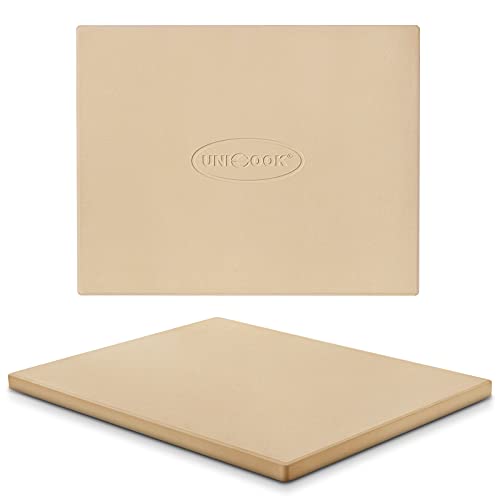
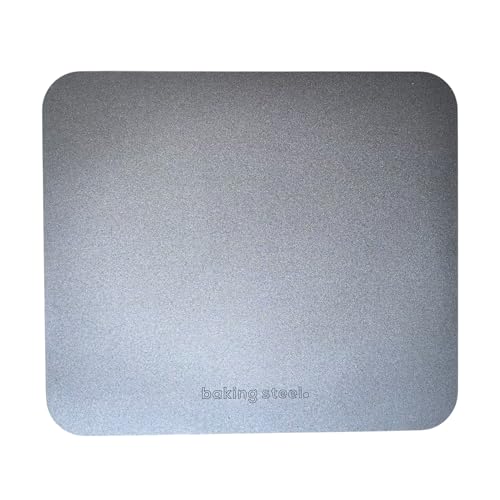
For back to back service the trade usually favours mass. A thin deck recovers quickly in the sense that its surface responds quickly, but it also sags dramatically the moment a cold pizza touches it, so you get a big dip and a fast partial recovery. More mass gives you a smaller dip, which often means you never leave the acceptable window at all and simply keep cooking. This is why a heavier cordierite stone behaves so differently from a thin one, and why a baking steel is a genuinely different animal again: steel conducts heat far more aggressively than stone, so it both delivers more energy into the base and pulls replacement heat through itself faster. The full comparison, including why steel is not automatically the right answer at Neapolitan temperatures, is in pizza stone vs steel and best pizza stones and steels.
Mass also explains why the preheat matters more when you plan to cook a lot. Preheating to a surface reading is not the same as preheating until the whole slab is saturated. A deck whose surface reads correctly but whose core is still climbing has no reservoir, and it will fall off a cliff on pizza two. Giving the oven longer than you think you need before pizza one is the cheapest insurance available for a long session, and the realistic windows are in how long does a pizza oven take to heat up.
Batching a party, and the honest limit of a small oven
Most party failures are logistics rather than heat. The fix is to separate the work into stages and never do two stages at once. Prep every dough ball before the oven is lit. Divided, balled, proofed, covered, ready. A stackable dough pan or a proofing box keeps them covered and in order so nobody is dividing dough at eight in the evening. Then, during service, top only one pizza at a time. A topped pizza waiting on a peel is soaking moisture into the flour under it and getting harder to launch every second it sits, which is how a fine dough becomes a torn one at the oven mouth.
Work in pairs. One person owns the oven and never leaves it: launching, turning per how to turn a pizza, pulling, and reading the deck. The other owns the bench: stretching, topping, and handing over. This split is not about speed, it is about consistency, because the person at the oven never has flour on their hands and never has to choose between turning a pizza and finishing the next one. Both of them should be wearing heat resistant gloves if they are anywhere near the mouth.
And now the honest part. A small single deck oven cannot serve eight people continuously. If you are cooking a Neapolitan style bake at 60 to 90 seconds per pizza, the bake is not the constraint, the recovery is, and every pizza carries a recovery interval behind it. Add a stretch and top cycle to each one and the real throughput of a small oven for a group is nothing like one pizza per minute, no matter what the bake time suggests. The workable answers are to serve in rounds rather than continuously, to cut each pizza into small slices so a single pie feeds several people while the deck recovers, to start earlier than feels necessary, or to buy the larger, heavier oven in the first place if entertaining is the actual use case. That last decision is the subject of how to choose a pizza oven.
A Back to Back Pizza Service Rhythm
- 1
Prep every dough ball before the oven is lit
All balling, all proofing, all portioning happens before service starts. The moment you are cooking, you should have nothing left to do except stretch and top. A tray of ready balls under cover is the difference between a queue that flows and a queue that stalls while somebody divides dough with a hot oven burning fuel.
- 2
Preheat the deck to the manufacturer's window and verify it
Bring the stone up to the temperature target your oven's maker publishes. For the Ooni Koda 16 that is 715 to 850°F (380 to 450°C). Verify it with an infrared thermometer pointed at the centre of the deck rather than trusting the flame or the clock. This reading is your baseline, and every recovery target for the rest of the night is this same number.
- 3
Top only one pizza at a time
Never build the next pizza until the current one is in the oven. A topped pizza sitting on a peel is absorbing moisture into the flour underneath and getting harder to launch by the second. Stretch, top, launch, and only then start the next one. This single habit prevents more failed launches during a party than anything else.
- 4
Run the flame high between launches, lower for the bake
Between pizzas the flame's job is to recharge the deck, so open it up. As the next pizza goes in, back it off to your cooking setting so the top does not scorch before the base is done. Full flame is a recovery tool, not a cooking setting, and treating it that way is the rhythm most experienced cooks converge on.
- 5
Turn the pizza on schedule while it bakes
The bake itself does not change because you are cooking for a crowd. Keep turning as the style demands, every 20 to 30 seconds for a fast Neapolitan bake per Ooni's own instruction. Do not let the pressure of a queue make you leave a pizza still and burn one side of it.
- 6
Pull, then read the deck before you touch the next dough
The instant the pizza comes out, point the infrared thermometer at the spot where it was sitting. That is the number that matters, not the reading from an untouched corner of the stone. If it is below your launch window, the next pizza waits. If it is inside the window, go.
- 7
Use the wait productively rather than launching early
Recovery time is not dead time. It is when you cut and serve the pizza that just came out, restock toppings, and let the person on dough get ahead. The temptation to launch early exists because waiting feels like failure. It is not. It is the only thing keeping pizza six identical to pizza one.
- 8
Work in pairs once you are past three or four pizzas
One person owns the oven, launching, turning, and pulling, and never leaves it. The other owns the bench, stretching and topping. Two people running this split will produce noticeably more consistent pizza than two people both doing a bit of everything, because nobody is turning a pizza with floury hands or leaving the oven unattended.
Ready to buy? Start with our top picks
Whatever this guide steered you toward, here's where most readers land, ranked on stated floor heat. Live price check on each.
- Check price on Amazon
- Check price on Amazon
- Check price on Amazon
- Check price on Amazon
- Check price on Amazon
- Check price on Amazon
As an Amazon Associate we earn from qualifying purchases, at no cost to you.
How we chose.
The recovery rule and the temperature window on this page are quoted verbatim from Ooni's own Koda 16 getting started guide, which specifies preheating the stone to 715 to 850°F (380 to 450°C) and instructs owners to make sure the stone gets back up to that same window before launching the next pizza. We quote and attribute rather than paraphrase.
Bake windows come from primary documents. Commission Regulation (EU) No 97/2010 specifies a 60 to 90 second bake for a Pizza Napoletana TSG and notes the dough reaches 60 to 65°C internally. The AVPN Disciplinare, 2024 edition, also specifies 60 to 90 seconds. Gozney publishes 800 to 900°F for Neapolitan and 600 to 700°F for New York style, and the Gozney Arc manual labels anything above 900°F as over temperature.
Dough ball weights, used here to describe the mass a raw pizza brings to the deck, are published as 180 to 250 g by the EU regulation and 200 to 280 g by AVPN's own recipe page. These two respected authorities disagree, so we publish both rather than averaging them.
Claims about how a particular oven behaves in service are labelled as owner consensus where that is what they are. This is a research and verification desk, not a test kitchen, and nothing here is presented as a physical measurement we took.
Where a page would need a preheat duration in minutes rather than a temperature target, we link our dedicated preheat guide rather than attaching a minute count to a manufacturer that does not publish one.
Key terms
- Heat recovery
- The process of the cooking deck returning to its launch temperature after a pizza has drawn heat out of it. Ooni's Koda 16 guide frames it as a check rather than a wait: make sure the stone gets back up to 715 to 850°F (380 to 450°C) before launching the next pizza.
- Contact patch
- The area of deck directly under a pizza, where conduction pulls heat out of the stone fastest. It is the only part of the deck whose temperature matters for the next launch, which is why you aim the infrared thermometer at where the last pizza sat rather than at an untouched corner.
- Thermal mass
- How much material the cooking surface has to store heat in. More mass means a smaller temperature drop when a cold pizza lands and a slower climb back afterwards. For back to back service the smaller drop usually matters more than the slower climb.
- Conduction
- Direct heat transfer through contact, which is how the deck cooks the base of the pizza and how the pizza cools the deck. It is far more aggressive than the radiant heat that cooks the top, because there is no air gap in the way.
- The recovery rhythm
- Running the flame high between launches to recharge the deck and backing it off during the bake so the top does not scorch before the base sets. Full flame is a recovery setting, not a cooking setting, and treating it as one is what most experienced gas oven cooks converge on.
- Throughput
- How many pizzas an oven can actually deliver per hour in service, which is set by bake time plus recovery time plus the stretch and top cycle, not by bake time alone. A 60 to 90 second bake does not mean a pizza a minute, and assuming it does is how parties stall.
Questions, answered
how to cook multiple pizzas in a pizza oven
Cook to the stone, not to the queue. Preheat the deck to the temperature your manufacturer publishes, and between every pizza confirm it has come back to that same window before you launch again. Ooni's Koda 16 guide states it directly: make sure the stone gets back up to 715 to 850°F (380 to 450°C) before launching. Prep every dough ball before the oven is lit, top only one pizza at a time so nothing sits soaking on a peel, run the flame high between launches and lower during the bake, and work in pairs with one person on the oven and one on the bench. The waiting is the technique, not a failure of it.
why does my pizza oven stone temperature drop between pizzas
Because a raw pizza is a cold, wet mass sitting in direct contact with the deck, and direct contact means conduction, which is the fastest form of heat transfer in the oven. Most of the energy leaving the stone is not raising the dough's temperature, it is boiling water out of the base; the EU regulation notes the dough only reaches 60 to 65°C internally during the bake. A portable oven's deck is deliberately fairly thin so it preheats in a reasonable time, which also means there is limited material behind the surface to resupply the heat you just removed. The flame heats the dome and the air; the deck refills more slowly than most owners expect.
how long to wait between pizzas in an ooni
Ooni does not publish a waiting time, it publishes a temperature check, and that is a meaningful difference. The Koda 16 guide says to make sure the stone gets back up to 715 to 850°F (380 to 450°C) before launching the next pizza. So the answer is not a number of seconds, it is however long your oven takes to get the deck back into that window on that particular evening, which changes with wind, ambient temperature, how wet your dough is, and how many pizzas you have already cooked. Point an infrared thermometer at the spot the last pizza was sitting on and launch when it reads inside the window.
why is my second pizza worse than my first
Pizza one launches onto a deck that has soaked heat for the entire preheat with nothing drawn out of it, so it is the best pizza of the night by default. Pizza two launches onto a deck that has already given up heat to pizza one. If you did not wait for full recovery, pizza two starts lower, therefore bakes slower, therefore sits on the stone longer, therefore takes even more heat out of it. That is the compounding loop that makes pizzas three and four visibly worse: pale, slack bases with tops that are overdone because the extended bake gave the dome more time to work. Verify the deck temperature between every pizza and the loop never starts.
how many pizzas can you cook in a row in a pizza oven
Fewer than the bake time suggests, and the honest answer for a small single deck oven is that it cannot serve eight people continuously. A 60 to 90 second Neapolitan bake sounds like a pizza a minute, but real throughput is bake time plus recovery time plus the time to stretch and top the next one, and recovery is the part nobody budgets for. Practical fixes are to serve in rounds rather than continuously, cut each pizza into smaller slices so one pie feeds several people while the deck comes back, start cooking earlier than feels necessary, or buy a larger, heavier oven in the first place if entertaining is the real use case.
does a thicker pizza stone help when cooking lots of pizzas
Generally yes, for back to back service. A thicker, denser deck has more material behind every square inch of surface, so when a cold pizza lands the surface temperature falls less. It does take longer to climb back, but a smaller dip often means you never leave the acceptable window at all, which is worth more in a session than a fast recovery from a deep drop. Steel behaves differently again, conducting more aggressively than stone in both directions, which is a real advantage at some temperatures and a liability at others. Also make sure your preheat saturates the whole slab, because a deck whose surface reads correctly but whose core is still climbing has no reservoir to draw on.
Keep reading.
Pizza Oven Hot Spots
Map the hot and cold zones of your own deck, then rotate your landing spot between pizzas to spread the load.
Why Is My Pizza Burnt on the Bottom?
The opposite failure: a deck running too hot for the style, and how to tell it apart from a recovery problem.
How to Turn a Pizza
The bake itself, including Ooni's published 20 to 30 second turn interval and the right tool for the job.
Pizza Stone vs Steel
Thermal mass and conductivity compared, the two properties that decide how your deck behaves under a queue.
How Long Does a Pizza Oven Take to Heat Up?
Realistic preheat windows by fuel, and why a saturated deck is what protects you on pizza two.
The Best Infrared Thermometer for Pizza (2026)
The tool that turns Ooni's recovery instruction from an idea into something you can actually check.