Our pick. Ooni
Check price on Amazon →Why Is My Pizza Soggy in the Middle? (And Why the Crust Came Out Pale)
A soggy centre is one of two things: not enough energy going into the base fast enough, or too much water sitting on top of it. Measure the stone first, because a floor below the range your oven's maker publishes will produce a wet centre no matter how good your dough is. Then cut the sauce, drain the mozzarella, and stop letting a topped pizza sit on the peel. A pale crust is a separate signal, and it points at the dome, not the floor.
By The Pizza Oven Review DeskUpdated 2026-08-08~11 min readRanked on verified floor heatHow we research
We earn a commission on purchases through our links, at no cost to you. It never decides a ranking. How this works
A pizza that is soggy in the middle has failed in one of two ways, and you can usually tell which within a second of lifting a slice: either the base never received enough heat fast enough to drive the water out, or there was so much water on top of it that no realistic amount of heat could have won. The first is a floor temperature problem and it is fixed with a thermometer and patience. The second is a topping problem and it is fixed at the bench, before the pizza ever reaches the oven. Everything else on this page is a variation on those two.
It is worth grouping the pale, colourless crust into the same conversation, because owners usually report the two together and the causes overlap only partly. Soggy is about the base. Pale is about the top. A base cooks by conduction, direct contact with the hot stone, and a top browns under radiation thrown down by the dome and the flame. If the middle is wet, look down. If the rim and the cheese are anaemic while the base is fine, look up. Diagnosing those two as one problem is how people end up turning the flame in exactly the wrong direction, which we cover in detail in why is my pizza burnt on the bottom.
We will work the causes in the order they actually occur: a floor that never got there, too much sauce and too much water in the toppings, a pizza that sat topped on the peel while you fussed, a stone that faded because you cooked back to back without letting it recover, a base that is simply too thick in the centre, and the honest one nobody admits to, pulling the pizza early because you were afraid of burning it. Then the pale crust case on its own. Along the way there is a real published disagreement about how thick a Neapolitan centre should be, and we print both sides rather than picking one.
The short version.
- Soggy centre and pale crust are the same family of failure with two different addresses: not enough energy into the base fast enough, or not enough radiant heat onto the top. Diagnose which surface failed before you touch anything.
- Measure the stone, not the air. Ooni asks Koda 16 owners for a stone of 715 to 850°F (380 to 450°C); Gozney publishes 600 to 700°F for New York style and 800 to 900°F for Neapolitan. A floor below your style's range produces a wet centre every time.
- Water is the enemy and most of it is yours: too much sauce, undrained fresh mozzarella, and raw vegetables that release liquid onto the base as they cook.
- A topped pizza sitting on the peel is losing the argument every second. Sauce soaks down into the dough, and the wet spot that results is exactly where the soggy centre appears.
- The two Neapolitan authorities disagree about centre thickness: the EU regulation specifies 0.4 cm plus or minus 10 percent, the AVPN Disciplinare specifies 0.25 to 0.30 cm plus or minus 10 percent. That is a real gap, and a thicker centre is genuinely harder to cook through.
- A pale crust with a cooked base is a dome problem, not a floor problem. More preheat and a lit dome fix it; turning the flame down makes it worse.
Our top-rated pizza ovens
Whatever you decide, these are the ovens we recommend, ranked on stated floor heat. Live price check on each.
- Check price on Amazon

- Check price on Amazon

- Check price on Amazon

- Check price on Amazon

- Check price on Amazon

- Check price on Amazon

As an Amazon Associate we earn from qualifying purchases, at no cost to you.
What you'll need.
Prices approximate at time of writing.
The five tools that do the work in every method on this site: a slab that stores heat, something to launch with, a way to read the surface, and a clean cut.
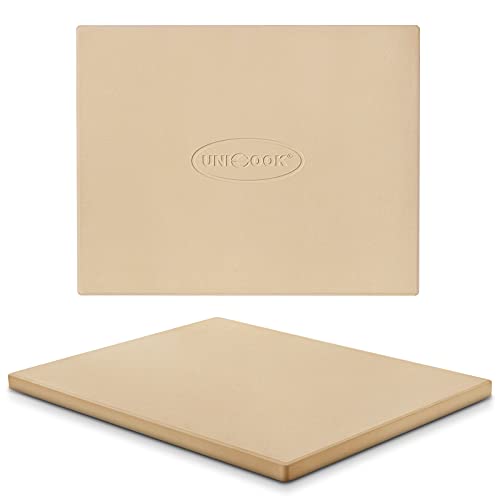
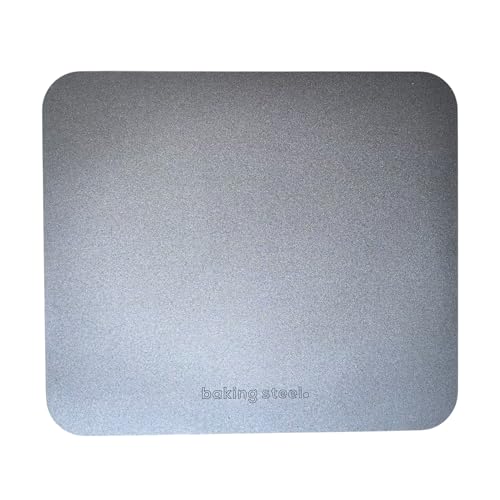


The mechanism: energy in, water out, and which one lost
A raw pizza base is a wet thing sitting on a hot thing. What has to happen in the bake is that enough energy moves from the stone into the dough, fast enough, to boil the water at the interface and drive it out as steam before the structure sets. Win that race and you get a crisp, dry, coloured underside. Lose it and the water stays in, the starch gelatinises into a damp paste, and you get the flop. So a soggy centre is always one of two losses: not enough energy going in, or too much water needing to come out. That is the whole diagnostic tree, and everything below is a branch of it.
The reason the centre specifically is where this shows up is geometry. The rim has no sauce, no cheese and no topping weight on it, so it dries and puffs easily. The centre carries the entire wet load, sits under the thickest part of the topping pile, and, on most home stretched pizzas, is also the thickest part of the dough. Three disadvantages stack in exactly one place. When people say their pizza is soggy in the middle, they are describing the part of the pizza where every variable is worst at once.
It also matters enormously how long your bake is, because the two failure modes behave differently over time. Both the EU regulation and the AVPN Disciplinare specify a Neapolitan bake of 60 to 90 seconds, which is brutally short: there is almost no time for excess water to escape, so a Neapolitan pizza tolerates very little sauce and demands a very hot floor. A New York bake, by the figures published on our temperature chart, runs 500 to 600°F for 4 to 12 minutes, and commercial deck oven manuals from Bakers Pride specify at least 550°F for baking directly on the deck. Those extra minutes are forgiving of moisture in a way 90 seconds never is.
Cause one: the floor never got there
Start here, always, because it is the most common cause and the one people are most confident they have already ruled out. The number that decides whether your base cooks is the temperature of the stone, and almost nobody is actually measuring it. A built in dial reads chamber or shell temperature and moves fast; the stone moves slowly, lags badly, and is the only surface in contact with your dough. A roaring flame over an undercharged stone produces exactly the pizza this page is about: cooked on top, wet underneath.
Point an infrared thermometer at the centre of the stone before you launch. A budget unit like the Etekcity Lasergrip 774 is entirely adequate for this one job, and our picks are in the best infrared thermometer for pizza. Then compare the reading to your style rather than to your oven's marketing. Ooni's Koda 16 guidance is a stone of 715 to 850°F (380 to 450°C). Gozney publishes 600 to 700°F for New York style and 800 to 900°F for Neapolitan. If your floor is under those, you have found the problem and no dough adjustment will paper over it.
If the floor is low, the fix is time and patience rather than more flame, because a stone absorbs heat at the rate its mass allows. Keep the burner going, keep the door shut, and re-measure. If it will not climb at all, that is a different problem with its own diagnostic order, worked through in why is my pizza oven not getting hot enough, and realistic soak windows by fuel type are in how long does a pizza oven take to heat up.
Cause two: too much water sitting on top of the base
If the floor is genuinely in range and the centre is still wet, the water is yours and you put it there. Sauce is the first offender. Most home pizzas carry roughly twice the sauce they should, spread too thick and pushed too close to the rim. On a 60 to 90 second Neapolitan bake, a heavy sauce layer simply cannot boil off, so it soaks downward instead. Use less than feels right, spread it thin with the back of a spoon, and leave the rim clean.
Fresh mozzarella is the second, and it is the one people defend. Fresh mozzarella sits in water and holds a great deal of it internally; every gram of that water ends up on your base. Tear it rather than slicing it, drain it, pat it dry, and if you are serious about it let the torn pieces sit on paper for a while before they go anywhere near dough. This is not a reason to switch to low moisture cheese if you want the real thing; it is a reason to treat the real thing correctly.
Raw vegetables are the third. Mushrooms, peppers, courgette, onion and fresh tomato all release liquid as they heat, and on a short bake that liquid has nowhere to go but into the crust. Slice them thin, salt and drain them, or cook them off in advance. And keep the total topping load down: a heavily loaded pizza is not only wetter, it is heavier, which drags on the launch and increases the odds of it sitting on the peel while you fix it. Our launch guide covers why light building is a technique advantage, not just a taste preference.
Cause three: the pizza sat on the peel too long
This is the cause that produces the most confusing version of the failure, because the wet patch appears in one specific place and looks like an oven defect. Here is what happens. The moment sauce touches raw dough, it starts soaking in. If the pizza is launched within a minute or two, the soaking is superficial and the heat drives it back out. If the pizza sits topped on a peel for five minutes while you hunt for the oregano, the sauce has penetrated properly, the dough underneath it is saturated, and the base sticks to the peel into the bargain. The soggy centre and the sticky launch are the same event.
The fix costs nothing: prep every topping before the dough goes on the peel, build in quick succession, and walk to the oven. Momentum is a technique. If a pizza does get delayed, the honest move is to accept it will be the wet one, or to lift it onto a fresh, freshly dusted peel and launch it immediately rather than continuing to fuss over it.
There is a related handling failure worth naming, because it also concentrates moisture in the centre. Dough that has been over handled and pressed thin only in the middle, with all the gas driven to the rim, gives you a thin damp centre that behaves like a membrane holding sauce rather than a crust supporting it. Stretching technique matters more to sogginess than most people credit, and it is covered properly in how to stretch pizza dough.
Cause four: the stone faded because you cooked back to back
Pizza one is perfect, pizza two is fine, pizza four is wet. This is the most predictable soggy centre there is, and it is pure thermal mass arithmetic. Every cold, wet pizza you launch pulls heat directly out of the stone beneath it, and unlike the chamber air, which the burner replenishes almost instantly, the stone recharges slowly from the inside. Put three pizzas onto the same patch of deck inside ten minutes and that patch is materially colder than where you started, even though the flame looks identical.
Ooni addresses this directly for the Koda 16: between pizzas, make sure the stone gets back up to 715 to 850°F (380 to 450°C) before launching again. That instruction only means something if you are measuring, which is the second reason an infrared thermometer earns its place. Pacing an evening is a real skill and we treat it as one in cooking multiple pizzas back to back.
Thermal mass is also why the surface itself matters. A thicker stone or a steel holds more energy and gives it up faster on contact, which is exactly what a wet base needs in its first few seconds. A thin, light stone comes up quickly and then collapses under the first pizza. If you are running back to back pizzas and losing the floor every time, a heavier cordierite stone or a baking steel is a genuine hardware fix rather than a technique one, and the tradeoffs between the two materials are laid out in pizza stone vs steel.
The pale crust case: look up, not down
Now the other half of the complaint, and the one where the instinct is reliably wrong. A pale, colourless crust with a base that is actually cooked is a dome problem, not a floor problem. Browning on the top of a pizza, the leopard spotting on the rim, the caramelised patches on the cheese, is driven by radiant heat coming down from the hot dome and the flame. If the dome is cool, or if the pizza spent its bake in a part of the chamber the flame does not reach, the top stays anaemic no matter how crisp the base is.
The corrections are the opposite of the ones for a soggy base. Keep the flame up, not down. Turning the burner down to protect the base while complaining about a pale top is fighting yourself. Preheat the whole chamber longer, so the dome as well as the floor is genuinely hot, and stop opening the door, which dumps precisely the radiant environment you need. And turn the pizza, because a compact oven is asymmetric by design and a pizza parked away from the flame browns on one side only. Ooni's own Koda 16 instruction is to turn the pizza every 20 to 30 seconds, and the reason it exists is covered in pizza oven hot spots.
Two more honest notes. Style matters: a New York bake at 500 to 600°F for 4 to 12 minutes browns differently from a 60 to 90 second Neapolitan, and expecting Neapolitan leoparding out of a New York bake is a mismatch rather than a fault. And if the top is charring while the base stays pale, you have crossed into the opposite failure entirely, which has its own page in why is my pizza burnt on the bottom, covering both directions.
How to Fix a Soggy Pizza Base
- 1
Lift a slice and decide what actually failed
Hold a slice by the rim. If the tip flops straight down and the underside is pale and damp, the base failed and this is a floor and moisture problem. If the base is crisp and coloured but the cheese and rim are anaemic, the base is fine and your dome is the problem. Fixing the wrong one wastes the evening.
- 2
Measure the floor before the next launch
Point an infrared thermometer at the centre of the stone where the pizza will sit. Compare that reading to your style, not to your oven's advertised ceiling. Gozney publishes 600 to 700°F for New York style and 800 to 900°F for Neapolitan, and Ooni asks Koda 16 owners for a stone of 715 to 850°F (380 to 450°C).
- 3
If the floor is low, give it more time rather than more flame
A stone has real thermal mass and heats slowly, well behind the chamber air. Keep the burner going, keep the door shut, and re-measure. Turning the flame up does not make the stone absorb heat any faster than it can, and opening the door to check dumps the chamber heat that was doing the charging.
- 4
Cut the sauce back and drain the cheese
Use noticeably less sauce than feels right, spread thin and stopped short of the rim. Drain fresh mozzarella and pat it dry, or tear it and let it sit on paper for a while before it goes anywhere near the dough. Fresh mozzarella carries a lot of water and it all ends up on your base.
- 5
Pre-cook or thin out wet vegetables
Mushrooms, peppers, courgette, onions and fresh tomato all release liquid as they heat, and on a short bake that liquid has nowhere to go but down. Slice them thin, salt and drain them, or cook them off first. Raw wet vegetables piled on a pizza are a soggy centre with a vegetable on top.
- 6
Build fast and launch immediately
Top the pizza in quick succession and go straight to the oven. The longer a sauced pizza sits on the peel, the more the sauce soaks into the dough, and that wet patch is precisely where the soggy centre shows up. Have every topping prepped and within reach before the dough goes down.
- 7
Let the stone recover between pizzas
Every cold pizza pulls heat out of the stone directly beneath it. Ooni's own instruction between Koda 16 pizzas is to make sure the stone gets back up to 715 to 850°F (380 to 450°C) before launching again. Pizza four on a faded deck is the classic soggy one.
- 8
Finish the bake, do not rescue it early
Undercooking to avoid burning is a real and common cause of a wet centre. If you are pulling pizzas early because the base is darkening too fast, the answer is a cooler floor and a longer bake, not a shorter one. A pizza that comes out at the right colour but wet inside came out too soon.
Ready to buy? Start with our top picks
Whatever this guide steered you toward, here's where most readers land, ranked on stated floor heat. Live price check on each.
- Check price on Amazon
- Check price on Amazon
- Check price on Amazon
- Check price on Amazon
- Check price on Amazon
- Check price on Amazon
As an Amazon Associate we earn from qualifying purchases, at no cost to you.
How we chose.
Stone temperature targets come from manufacturers' own published guidance: Ooni's Koda 16 Getting Started page (715 to 850°F, 380 to 450°C, and the same range as the between pizzas recovery target) and Gozney's published style figures as already sourced on our /journal/pizza-oven-temperature-chart.
Centre and rim thickness figures come from two primary documents that disagree: Commission Regulation (EU) No 97/2010, the Pizza Napoletana TSG, and the AVPN Disciplinare, 2024 edition. Both are printed with attribution and neither is averaged.
Bake windows by style (60 to 90 seconds for Neapolitan, 500 to 600°F for 4 to 12 minutes for New York, with Bakers Pride commercial deck manuals specifying at least 550°F for baking directly on the deck) are carried from the sourcing published on our temperature chart page.
We print no preheat duration for any specific oven, because the manufacturer guidance we could verify states a stone temperature target rather than a number of minutes. Realistic timing windows by fuel type live on our dedicated heat up page.
We are a research and verification desk, not a test kitchen. Nothing here is presented as the result of physical testing, and claims that reflect owner consensus rather than a document are labelled as such.
Key terms
- Conduction (the floor)
- Heat moving by direct contact from the cooking stone into the base of the dough. It is what drives water out of the base and crisps it. Anything that reduces contact or reduces stone temperature, a cool floor, a screen, a faded deck, produces a wetter centre.
- Radiation (the dome)
- Infrared energy thrown down from the hot dome and flame onto the top of the pizza. It browns the cheese and blisters the rim, and it requires no contact. A pale crust over a cooked base means radiation was the shortfall, so the fix is more dome heat, not less flame.
- Thermal mass
- How much heat a cooking surface stores and how quickly it delivers it into a cold pizza. A heavy stone or a steel holds more energy and recovers better between pizzas; a thin, light stone comes up fast then collapses under the first launch, which is a common back to back sogginess cause.
- Heat recovery
- How fast the floor returns to its target after a cold pizza has drawn heat out of it. Ooni's Koda 16 instruction between pizzas is to get the stone back up to 715 to 850°F (380 to 450°C) before launching again, which only means something if you are measuring it.
- Centre thickness
- The thickness of the base at the middle of the pizza, the last part to cook and where sogginess appears. The two Neapolitan authorities disagree: Commission Regulation (EU) No 97/2010 specifies 0.4 cm plus or minus 10 percent, while the AVPN Disciplinare specifies 0.25 to 0.30 cm plus or minus 10 percent.
- Pizza screen
- A perforated aluminium disc the pizza bakes on. It reduces direct conduction from the stone, so it is not a fix for a soggy base in a hot pizza oven. Its honest use is as a crutch in weak or unstable ovens, ideally followed by a finish directly on the stone.
Questions, answered
why is my pizza soggy in the middle
Either the base did not get enough heat fast enough, or there was too much water on top of it. Check the first one before anything else: point an infrared thermometer at the centre of the stone and compare the reading to your style, since Gozney publishes 600 to 700°F for New York and 800 to 900°F for Neapolitan, and Ooni asks Koda 16 owners for a stone of 715 to 850°F. If the floor is in range and the centre is still wet, the water is coming from your build: too much sauce, undrained fresh mozzarella, or raw vegetables that release liquid as they cook. A pizza that sat topped on the peel for several minutes before launching is the third common cause, because sauce soaks into raw dough over time.
how do i get a crispy pizza base at home
Get more energy into the base in the first few seconds and give it less water to fight. That means a properly soaked stone measured with an infrared thermometer rather than judged by the flame, a thin layer of sauce that stops short of the rim, fresh mozzarella that has been torn and drained, and vegetables that have been sliced thin or cooked off first. Build the pizza fast and launch it immediately so the sauce has no time to soak in. If you cook several pizzas in a row, let the stone recover between them, and if it keeps collapsing under each launch, a heavier stone or a steel holds more heat and delivers it faster on contact.
why is my pizza crust pale and not browning
Because the top of the pizza is not receiving enough radiant heat, which is a dome problem rather than a floor problem. Browning on the rim and cheese comes from infrared energy thrown down by the hot dome and the flame, so the fixes are to keep the flame up rather than turning it down, preheat the whole chamber for longer so the dome is genuinely hot, stop opening the door and dumping that heat, and turn the pizza so it is not parked away from the flame for the whole bake. Ooni's own Koda 16 instruction is to turn the pizza every 20 to 30 seconds. Also check your expectations against the style: a New York bake at 500 to 600°F over 4 to 12 minutes browns differently from a 60 to 90 second Neapolitan.
does too much sauce make pizza soggy
Yes, and it is usually the single biggest contributor once the floor is right. Sauce is mostly water, and on a Neapolitan bake of 60 to 90 seconds there is simply not enough time for that water to boil off, so it soaks downward into the dough instead. Use noticeably less than feels correct, spread it thin with the back of a spoon, and keep it clear of the rim. Fresh mozzarella compounds it, since it sits in water and holds a lot internally, so tear it, drain it and pat it dry before it goes on. Raw wet vegetables are the third source, and slicing them thin or cooking them off first solves it.
how long should i preheat my pizza stone
Long enough to reach a temperature, not a number of minutes, because the time depends entirely on your oven, your fuel and your stone's mass. The target is what matters: Ooni asks Koda 16 owners for a stone of 715 to 850°F (380 to 450°C), and Gozney publishes 600 to 700°F for New York style and 800 to 900°F for Neapolitan. Point an infrared thermometer at the centre of the stone and wait until the reading is in range for the style you are cooking. Judging by how the flame looks is the most common reason people launch onto an undercharged stone and get a wet middle. Our heat up guide puts realistic windows around this by fuel type.
why is my pizza wet in the middle but cooked on the edges
Because the centre carries every disadvantage at once. It holds all the sauce, cheese and topping weight, it is usually the thickest part of the stretched base, and it is the furthest point from the dry, unloaded rim that puffs and crisps easily. So the centre is where excess moisture and excess thickness both show up. Cut the sauce back, drain the cheese, and check how thick you are leaving the middle: the two Neapolitan authorities disagree on the target, with Commission Regulation (EU) No 97/2010 specifying 0.4 cm and the AVPN Disciplinare specifying 0.25 to 0.30 cm, but a centre thicker than either will fight a short bake. The last cause is undercooking to avoid burning, which leaves the middle wet by definition.
Filed under Explainer
Part of Pizza Troubleshooting
Keep reading.
Why Is My Pizza Burnt on the Bottom?
The opposite imbalance, worked in both directions, including the charred top over a pale base.
Why Is My Pizza Oven Not Getting Hot Enough?
If the floor will not climb at all, this is the checklist to work first: measurement, then fuel, then environment.
Pizza Stone vs Pizza Steel
Thermal mass, conductivity and recovery, the hardware side of a base that keeps coming out wet.
Cooking Multiple Pizzas Back to Back
Why pizza four is the soggy one, and how to pace an evening so the deck never falls behind.
How to Stretch Pizza Dough
Getting the centre thin enough to cook through, without tearing it or driving all the gas to the rim.
Pizza Oven Temperature and Cook Time Chart
Sourced floor and dome targets by style, plus the hydration figures behind a base that browns properly.