Our pick. Baking Steel
Check price on Amazon →Best Pizza Stones and Steels (2026): Ranked & Compared
The single cheapest upgrade that turns a normal home oven into a pizza machine is a preheated cooking surface, and the choice between a stone and a steel decides how crisp your crust gets. We compare both, explain which to buy, and rank the surfaces that make a great base.
By The Pizza Oven Review DeskUpdated 2026-06-28~10 min readRanked on verified floor heatHow we research
We earn a commission on purchases through our links, at no cost to you. It never decides a ranking. How this works
Our top pick.Best Overall
The Original Baking Steel 1/4"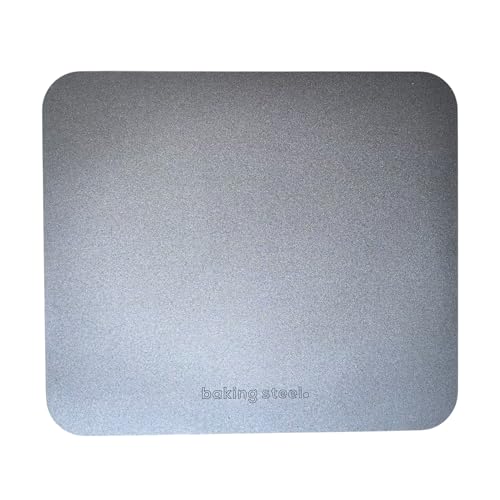
- Our rating.
- 4.8 out of 5
Pre-seasoned quarter-inch steel that holds and transfers heat better than any stone here.
Not sure yet? Compare all 5 picks below ↓
A home oven bakes pizza on the wire rack like it bakes a cake, gently, from the air, with nothing hot underneath to crisp the bottom. That's why a pizza baked straight on a sheet pan comes out pale and bready. A pizza stone or steel fixes this: you preheat the slab for an hour, and when the cold dough hits that screaming-hot surface, it gets a blast of conductive heat that crisps and chars the base the way a real pizza-oven floor does. It is, dollar for dollar, the biggest improvement you can make to home-oven pizza.
The choice is between two materials, and it genuinely matters. Stone (usually cordierite) is the traditional pick, affordable, forgiving, and it gives a softer, more even bake that's great for bread and beginners. Steel is the performance upgrade, denser, it stores and dumps heat far faster than stone, so it crisps and chars a crust harder and quicker, closer to a true pizza oven, but it costs more and weighs a ton. We rank both here and tell you plainly which one suits your pizza, your oven, and your budget.
Standard disclosures up front: no brand paid for placement, and none of these manufacturers has a relationship with this site. Pizza Oven Review is an independent review desk and an Amazon Associate, if you buy through our links we may earn a commission at no extra cost to you, and that never moves a ranking. We judge accessories on build quality, usability, heat-resistance where it matters, and value, and we only feature gear we'd actually hand a reader.
The short version.
- A preheated stone or steel is the cheapest upgrade that turns a normal home oven into a pizza machine, it crisps the base the way a wire rack never can.
- Steel beats stone on performance: it's denser, so it stores and transfers heat faster and harder, charring a crust quicker and closer to a real pizza-oven floor, the Baking Steel is our overall pick.
- Stone wins on value and forgiveness: cordierite is cheaper, lighter, and gives a softer, even bake that's excellent for bread and beginners, the Unicook is the best-value pick.
- Mind the weight and the preheat: a quarter-inch steel can weigh 17+ pounds and both surfaces need a full hour at max temperature before you launch, or the base won't crisp.
- Thermal-shock resistance and thickness matter: a thicker slab holds more heat for back-to-back pies, and a shock-resistant stone survives the brutal temperature swing of a cold pie hitting a 550°F surface.
At a glance.
| Surface | Material | Size / format | Standout | Price | Check price |
|---|---|---|---|---|---|
| Baking Steel Original 1/4" | Steel | 14 x 16 in | Holds & dumps heat best | Check price | Check price on Amazon |
| Unicook Cordierite Stone | Cordierite stone | Rectangular | Thermal-shock resistant | Check price | Check price on Amazon |
| NerdChef Steel Stone | Steel | 14.5 x 16 in | Made-in-USA performance steel | Check price | Check price on Amazon |
| ThermiChef 16x16 Steel 1/4" | Steel | 16 x 16 in, 17.6 lb | Most heat retention (mass) | Check price | Check price on Amazon |
| Old Stone Round 16" | Stone | 16 in round | Classic round stone | Check price | Check price on Amazon |
The 2026 stone-and-steel field at a glance, material, format, and standout pulled from each maker's listing. "Check price" reflects live Amazon pricing.
The Original Baking Steel 1/4"
Baking Steel
Pre-seasoned quarter-inch steel that holds and transfers heat better than any stone here.
Our verdict: The Original Baking Steel is the surface that most closely mimics a real pizza oven inside a home oven. Steel stores and dumps heat far faster than stone, so a cold pie hits it and the base crisps and chars in a rush. At 14 x 16 inches and a quarter-inch thick, pre-seasoned and ready to go, it's the performance pick, and the one we'd buy.
On paper. A pre-seasoned 14 x 16-inch, quarter-inch steel that holds and transfers heat better than stone, the surface that gets a home oven closest to a real pizza-oven floor.
If you want home-oven pizza that crisps like a pizzeria's, buy steel, and this is the steel. The Original Baking Steel is dense and highly conductive, so it stores a huge amount of heat and transfers it into the dough far faster than any stone. The practical result is a base that crisps and chars quickly, with the leoparded underside you only get from a surface that can dump heat in a hurry. At a quarter-inch thick and 14 x 16 inches, it's pre-seasoned and ready, and it doubles as a griddle for searing and breakfast.
The trade-offs are weight and price: steel is heavy, so you set it on a rack and leave it, and it costs more than a stone. It also needs the occasional re-season to keep its non-stick patina, like cast iron. But for the performance, a genuinely crisp, charred base from a standard oven, the Baking Steel is worth every gram and dollar, and it's the surface we recommend first.
Who should buy it.
Buy this if you want the crispest, most pizzeria-like base a home oven can produce and don't mind the weight or the price. It's the pick for serious home pizza cooks, and it doubles as a searing griddle.
What we don't like.
It's heavy, a leave-it-in-the-oven slab, not something you'll move often, and it costs more than a stone. Like cast iron, it needs occasional re-seasoning to keep its patina.
- Material
- Steel (pre-seasoned)
- Size
- 14 x 16 in
- Thickness
- 1/4 in
- Best for
- Crispest home-oven base
- Bonus
- Doubles as a searing griddle
- Price
- Check price
What we like.
- Stores and transfers heat better than any stone here
- Crisps and chars the base like a real oven floor
- Pre-seasoned and ready to use
- Doubles as a griddle for searing
Worth noting.
- Heavy, a leave-it-in slab
- Costs more than a stone
- Needs occasional re-seasoning
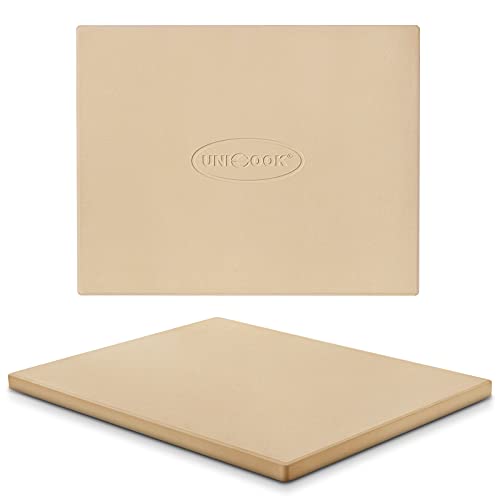
Unicook Cordierite Pizza Stone
Unicook
A heavy-duty cordierite stone with thermal-shock resistance for the oven or grill, the value pick.
Our verdict: The Unicook cordierite stone is the best-value way into a crisp home-oven crust. It's affordable, lighter than steel, thermal-shock resistant so it survives the temperature swings, and works in the oven or on a grill. It bakes a softer, more even crust than steel, forgiving for beginners and excellent for bread.
On paper. A heavy-duty cordierite stone with thermal-shock resistance for oven or grill, the affordable, forgiving way to crisp a base, and the one most beginners should start with.
Not everyone needs steel's aggressive char, and stone is the affordable, forgiving way to a much better base. The Unicook cordierite stone is heavy-duty and thermal-shock resistant, which means it shrugs off the brutal swing of a cold wet pie landing on a 550°F surface without cracking, the failure mode that kills cheap stones. It works in the oven or on a grill, and it gives a softer, even bake that's gentle on the crust and great for bread as well as pizza.
The trade-off versus steel is performance: stone transfers heat more slowly, so it won't char a base as hard or as fast, and you give up some of the leoparding a steel delivers. It also needs a full hour to preheat and should never get a thermal shock from cold water while hot. But for the money, the Unicook is the best-value cooking surface here and the right first stone for most home bakers.
Who should buy it.
Buy this if you want the affordable, forgiving route to a crisp base, you're new to home-oven pizza, or you bake bread as well as pizza. It's the best-value surface and the ideal first stone.
What we don't like.
Stone transfers heat more slowly than steel, so it won't char a base as hard or as fast. It needs a full hour to preheat and can crack if shocked with cold water while hot.
- Material
- Cordierite stone
- Format
- Rectangular
- Feature
- Thermal-shock resistant
- Best for
- Value, beginners, bread
- Use
- Oven or grill
- Price
- Check price
What we like.
- Affordable and lighter than steel
- Thermal-shock resistant, survives the swings
- Even, gentle bake; great for bread
- Works in the oven or on a grill
Worth noting.
- Transfers heat slower than steel, less char
- Needs a full hour to preheat
- Can crack if shocked with cold water hot

NerdChef Steel Stone
NerdChef
A made-in-USA 14.5x16 performance baking steel built for high-heat pizza.
Our verdict: The NerdChef Steel Stone is the premium-steel alternative to our top pick. Made in the USA at 14.5 x 16 inches and built expressly for high-heat pizza, it delivers the same steel advantage, fast, hard heat transfer for a crisp, charred base, with the appeal of domestic manufacturing. If you want a performance steel with provenance, this is it.
On paper. A made-in-USA 14.5 x 16-inch performance baking steel built for high-heat pizza, the steel for the cook who wants a domestic-made slab with serious heat capacity.
Steel is steel's own best argument, and the NerdChef makes it with American manufacturing. The NerdChef Steel Stone is a made-in-USA performance baking steel sized at 14.5 x 16 inches and built for high-heat pizza, meaning it brings the core steel benefit of storing and dumping heat fast for a crisp, leoparded base. For the buyer who cares where their gear is made and wants a premium domestic slab, it's the standout choice.
The trade-offs are the same as any steel: it's heavy, it costs more than a stone, and it benefits from occasional seasoning. Against our top Baking Steel pick, the decision largely comes down to size, price, and your preference for the brand and its provenance, both deliver the steel advantage. For the cook who wants a premium, USA-made performance steel, the NerdChef is the one.
Who should buy it.
Buy this if you want a premium, made-in-USA performance steel and the crisp, charred base steel delivers. It's the pick for the cook who values domestic manufacturing alongside performance.
What we don't like.
Like any steel it's heavy and pricier than a stone, and it benefits from occasional seasoning. The performance advantage over our top Baking Steel pick is small, the choice is mostly brand, size, and price.
- Material
- Steel
- Size
- 14.5 x 16 in
- Origin
- Made in USA
- Best for
- Premium steel buyers
- Use
- High-heat pizza
- Price
- Check price
What we like.
- Made-in-USA performance steel
- Fast, hard heat transfer for a crisp base
- Generous 14.5 x 16-inch surface
- Built expressly for high-heat pizza
Worth noting.
- Heavy and pricier than a stone
- Benefits from occasional seasoning
- Small edge over other quality steels

ThermiChef 16x16 Pizza Steel 1/4"
ThermiChef
A 16x16 quarter-inch steel weighing 17.6 lb, the most mass, and the most stored heat, here.
Our verdict: The ThermiChef 16x16 is the heat-retention champion. At a full 16 x 16 inches and 17.6 pounds, it has more thermal mass than any other surface here, which means it stores more heat, recovers faster between pies, and keeps charring bases when a lighter slab would have faded. If you bake several pizzas in a row, mass is your friend.
On paper. A 16 x 16-inch, quarter-inch cooking steel weighing 17.6 lb, the most mass in this guide, which means the most stored heat and the fastest recovery for back-to-back pies.
The more mass a steel has, the more heat it banks, and the ThermiChef has the most here. At a full 16 x 16 inches and 17.6 pounds, the ThermiChef stores a serious reservoir of heat. That matters most for back-to-back baking: each cold pie steals heat from the surface, and a heavier slab recovers faster and keeps delivering a crisp, charred base across pizza after pizza, where a thinner surface fades. The big square footprint also fits a larger pie than the 14-inch slabs.
The trade-off is the flip side of that mass: at 17.6 pounds it's genuinely heavy to handle, and like every steel it needs a long preheat and the occasional season. It's also more surface than a casual one-pizza cook needs. But for the host who runs a string of pies through a home oven, the ThermiChef is the heat reservoir that keeps every base crisp.
Who should buy it.
Buy this if you bake several pizzas in a row and want maximum heat retention and recovery, or you want the biggest 16-inch surface. It's the pick for hosts who run a string of pies through one oven.
What we don't like.
At 17.6 lb it's the heaviest surface here and awkward to handle, and it needs a long preheat plus occasional seasoning. It's more steel than a casual one-pizza cook needs.
- Material
- Steel
- Size
- 16 x 16 in
- Weight
- 17.6 lb
- Thickness
- 1/4 in
- Best for
- Heat retention, back-to-back pies
- Price
- Check price
What we like.
- Most thermal mass here, banks the most heat
- Recovers fastest for back-to-back pies
- Big 16 x 16-inch surface fits larger pies
- Crisp, charred bases all session long
Worth noting.
- Heaviest surface here at 17.6 lb
- Long preheat and occasional seasoning
- More than a one-pizza cook needs

Old Stone Round Pizza Stone 16"
Old Stone
A long-standing 16-inch round baking stone for crisp home-oven crusts.
Our verdict: The Old Stone Round 16-inch is the classic round stone. A long-standing, proven surface, its 16-inch round shape matches a pizza's geometry and gives the even, gentle bake stone does best. If you prefer a round format and the traditional stone experience over steel's aggressive char, this is the dependable pick.
On paper. A long-standing 16-inch round baking stone for crisp home-oven crusts, the classic round-format stone for cooks who want a traditional, proven surface.
Some cooks just want a round stone, and the Old Stone is the long-standing classic. The Old Stone Round 16-inch has been a staple home-baking surface for years, and its round 16-inch format naturally suits a pizza's shape, no corners to leave unused. Like all stone, it gives an even, gentle bake that crisps the base nicely and is forgiving for beginners and excellent for bread.
The trade-offs are the usual stone ones versus steel: slower heat transfer, so less aggressive char, and the need for a full preheat and care against thermal shock. The round shape, while pizza-friendly, fits a home oven's rectangular rack a little less efficiently than a square slab. But for a cook who wants a traditional round stone with a long pedigree, the Old Stone is the dependable choice.
Who should buy it.
Buy this if you prefer a round-format stone and the traditional, even stone bake over steel's harder char. It's the dependable classic for beginners, bread bakers, and anyone who likes a round surface.
What we don't like.
Like all stone it transfers heat slower than steel, so the char is gentler, and it needs a full preheat and care against thermal shock. The round shape fits a rectangular oven rack a little less efficiently than a square slab.
- Material
- Stone
- Size
- 16 in round
- Best for
- Round format, even bakes
- Use
- Pizza and bread
- Character
- Traditional, proven
- Price
- Check price
What we like.
- Classic, proven round stone with a long track record
- 16-inch round shape matches the pizza
- Even, gentle bake; great for bread
- Forgiving for beginners
Worth noting.
- Slower heat transfer than steel, gentler char
- Needs a full preheat and shock care
- Round shape fits a rectangular rack less efficiently
More ovens worth comparing
Beyond this guide, the highest-rated ovens across every fuel and budget, with a live price check on each.
- Check price on Amazon

- Check price on Amazon

- Check price on Amazon

- Check price on Amazon

- Check price on Amazon

- Check price on Amazon

As an Amazon Associate we earn from qualifying purchases, at no cost to you.
Quick shop: every pick.
Skip the scroll: the whole lineup, with a live price check on each.
- The Original Baking Steel 1/4"Best OverallBaking SteelCheck price on Amazon
- Unicook Cordierite Pizza StoneBest ValueUnicookCheck price on Amazon
- NerdChef Steel StoneBest Premium SteelNerdChefCheck price on Amazon
- ThermiChef 16x16 Pizza Steel 1/4"Best for Heat RetentionThermiChefCheck price on Amazon
- Old Stone Round Pizza Stone 16"Best Round StoneOld StoneCheck price on Amazon
How we chose.
We judge accessories the way you actually use them, not the way a product page flatters them. For a cooking surface, two things decide everything: how much heat it stores and how fast it transfers that heat into the dough. Steel scores far higher on transfer because it's dense and conductive, it dumps heat into the base in a rush, charring and crisping the bottom quickly, which is why steel mimics a real pizza-oven floor better than stone. Stone transfers heat more gently and evenly, which is more forgiving and better for bread, but it won't char a crust as hard. Mass matters too: a thicker, heavier slab stores more energy and recovers faster between pies.
We only feature gear we'd put in a reader's hands. We weigh build quality, usability, heat-resistance where it matters (thermal-shock resistance is the key durability trait, a stone that can't take the swing from a 550°F surface to a cold wet pie will crack), and value, and we're honest about the trade-offs: steel performs better but is heavy and pricey, stone is cheaper and lighter but bakes softer. Every product name, material, and image below comes verbatim from our verified-accessories dataset; where a dimension or weight is the maker's stated figure (like the ThermiChef's 17.6 lb) we cite it as such and never invent one a listing doesn't give.
Key terms
- Pizza stone
- A slab of fired clay or cordierite you preheat in the oven; it stores heat and crisps the base of a pizza. Transfers heat gently and evenly, forgiving, affordable, and great for bread, but it chars a crust less aggressively than steel.
- Baking steel
- A dense steel plate used as a cooking surface. It stores and transfers heat far faster than stone, charring and crisping a crust quickly, the closest a home oven gets to a real pizza-oven floor. Heavier and pricier than stone, and it needs seasoning.
- Thermal mass
- How much heat a surface can store. More mass (a thicker, heavier slab) banks more energy and recovers faster after a cold pie steals heat, which is why a heavy steel keeps the last pie of a session as crisp as the first.
- Heat transfer
- How quickly a surface moves its stored heat into the dough. Steel transfers fast and hard for a quick char; stone transfers more slowly for a gentler, even bake. The single biggest difference between the two materials.
- Thermal-shock resistance
- A material's ability to survive a sudden temperature swing, like a cold, wet pie landing on a 550°F surface, without cracking. The key durability trait for a stone; cheap stones that lack it can split.
Questions, answered
What's the best pizza stone or steel?
For the crispest, most pizzeria-like base, the Original Baking Steel, steel stores and dumps heat faster than any stone, so it chars a crust harder and quicker. If you want the affordable, forgiving route, the Unicook cordierite stone is the best value and ideal for beginners and bread. The NerdChef is the premium made-in-USA steel, the ThermiChef 16x16 has the most thermal mass for back-to-back pies, and the Old Stone Round is the classic round-format stone.
Pizza stone or steel, which is better?
Steel performs better. It's denser and more conductive, so it stores and transfers heat faster and harder, charring and crisping the base closer to a real pizza-oven floor. Stone transfers heat more gently, more forgiving and better for bread, but a softer char. Buy steel if you want maximum crisp and don't mind the weight and price; buy stone if you want the cheaper, lighter, more forgiving option or you bake bread too.
How long do I preheat a pizza stone or steel?
A full hour at your oven's maximum temperature, every time. This is the single most common mistake: the air in the oven heats up in minutes, but the slab itself needs a long soak to store enough energy to crisp the base. Launch onto an under-heated surface and the bottom comes out pale and bready no matter how hot the air reads. Set the oven to max, give the surface a true hour, and only then launch.
How heavy is a pizza steel, and where do I store it?
Quite heavy, a quarter-inch steel can weigh 17 pounds or more (the ThermiChef 16x16 is 17.6 lb). Because of that, most people leave a steel on a low oven rack permanently rather than moving it in and out, where it also helps stabilize the oven's temperature. A stone is lighter but still substantial. Either way, plan to give the surface a home in the oven rather than the cupboard.
Will a pizza stone crack, and how do I prevent it?
Stones can crack, almost always from thermal shock, a sudden temperature swing. The fixes are simple: choose a thermal-shock-resistant cordierite stone (like the Unicook), preheat and cool it gradually rather than blasting a cold stone to max, and never run cold water over a hot stone to clean it. Let it cool fully, then scrape and wipe. Steel doesn't have this failure mode, which is one of its quiet advantages.
Do I need a stone or steel if I already have a pizza oven?
No, a dedicated outdoor pizza oven already has a built-in cooking floor, so a separate stone or steel is for turning a regular indoor home oven into a pizza machine. If you bake pizza in your kitchen oven, a stone or steel is the essential upgrade. If you only cook in a proper pizza oven, your money is better spent on a peel, a thermometer, or a turning peel instead.
Filed under Buyer's Guide
Part of Accessories & Technique
Keep reading.
Best Pizza Steel (2026)
Steels only, ranked by thickness and footprint.
Best Pizza Stone for the Grill (2026)
The stones that survive a lid-down flame.
How to Use a Pizza Steel (2026)
The steel method: upper rack, broiler finish, oil after cleaning.
How to Clean a Pizza Stone (2026)
The care routine that keeps a stone for a decade.
Why Is My Pizza Soggy in the Middle?
Thermal mass is half the answer to a soggy base. Here is the other half.
Pizza Oven Price Index: What Actually Moves
Our own 16 day tracking study: gas ovens changed price 10.3% of the time, thermometers 75.0%. Do not wait for a deal on the oven.
Pizza Oven Temperature and Cook Time Chart
The sourced reference by style, including the conflict between the AVPN and EU Neapolitan specifications.
The Best Pizza Ovens (2026)
The whole field across every fuel type, gas, wood, multi-fuel, and electric, ranked by peak floor temp and heat recovery.
Best Pizza Oven Accessories (2026)
One best pick from every accessory category, the peel, turning peel, thermometer, cutter, stone or steel, gloves, and kit worth owning.
Pizza Stone vs. Steel
The full head-to-head on heat transfer, char, weight, and price, and exactly which surface suits your pizza.
Ooni vs Gozney: Which Brand Wins?
The two giants head to head, same ~950°F ceiling, very different philosophies, one clear way to choose.
Ooni Fyra 12 Review
Ooni's lightest wood-pellet oven reviewed, real live-fire flavor at $349, and what to cross-shop.