Our pick. Ooni
Check price on Amazon →Pizza Oven Temperature and Cook Time Chart: The Sourced Reference
The two documents that formally define Neapolitan pizza state the floor and dome temperatures in opposite order. The AVPN puts the cooking surface at 380 to 430°C and the dome at 485°C. The EU regulation puts the floor at 485°C and the dome at 430°C. Below: the full temperature and cook-time chart by style with every figure attributed, plus why your infrared thermometer and your oven's gauge will never agree.
By The Pizza Oven Review DeskUpdated 2026-08-0817 minRanked on verified floor heatHow we research
We earn a commission on purchases through our links, at no cost to you. It never decides a ranking. How this works
Neapolitan pizza bakes in 60 to 90 seconds on a floor somewhere between 380°C and 485°C (716°F to 905°F), and the reason that range is so wide is that the two documents which formally define the style disagree about which surface is hotter. The Associazione Verace Pizza Napoletana's Disciplinare specifies a cooking surface of approximately 380 to 430°C with a dome of approximately 485°C. Commission Regulation (EU) No 97/2010, which registered Pizza Napoletana as a Traditional Speciality Guaranteed, specifies a baking temperature on the cooking floor of approximately 485°C with a dome temperature of approximately 430°C. The two figures are transposed. They agree only on the bake time and the 35 cm maximum diameter.
We have not seen that documented anywhere else, and it matters practically: if you set your floor to 485°C because you read the EU number, and your dome runs at 430°C, you are running the opposite thermal profile to the one the AVPN describes. Both are defensible; neither is a typo. This page publishes both, with attribution, and refuses to pick.
Everything else here follows the same standard. Every temperature is attributed to a named source, none is written from memory, and where authorities disagree the range is published along with the disagreement. Roman al taglio hydration, for example, is either 69% or 82% depending on which respected source you ask, and we say so rather than averaging them into a number nobody published.
Below: the full chart by style near the top, then how to decide what to actually set, then the AVPN and EU conflict in full, then the part most guides skip entirely, which is why a deck reading and an air reading are different physical measurements and why your infrared thermometer disagrees with the gauge on the front of your oven.
The short version.
- The AVPN and the EU regulation state the Neapolitan floor and dome temperatures in opposite order: AVPN says floor 380 to 430°C and dome 485°C; the EU says floor 485°C and dome 430°C. Both specify 60 to 90 seconds and a 35 cm maximum.
- AVPN's own website recipe page states a third figure, 430 to 480°C, matching neither of its own PDFs. Cite the Disciplinare, not the web page.
- New York style has no governing body. Commercial deck oven manuals put it at 500 to 600°F, with Bakers Pride specifying at least 550°F for baking directly on the deck.
- Detroit style is genuinely contested at 450 to 500°F: the Detroit Style Pizza Co. says around 475°F, its founder said 450°F, and King Arthur says 500°F.
- Frozen pizza has no single temperature. Manufacturer-printed instructions cluster at 400°F (DiGiorno, Tombstone) and 425°F (Amy's, Screamin' Sicilian), with Totino's at 450°F.
- An infrared thermometer measures surface temperature only. It cannot read air temperature, and it cannot read through the flame or the door opening.
- Emissivity is why the same stone reads differently on different guns. Published values for fire brick run from 0.380 to 0.930 depending on the specific material and temperature. We could not find a published emissivity value for cordierite anywhere, so we do not print one.
- Ooni and Gozney both market 950°F, and both point users at lower numbers in their own operating documents. Gozney's Arc manual labels anything above 900°F as over temperature.
Our top-rated pizza ovens
Whatever you decide, these are the ovens we recommend, ranked on stated floor heat. Live price check on each.
- Check price on Amazon

- Check price on Amazon

- Check price on Amazon

- Check price on Amazon

- Check price on Amazon

- Check price on Amazon

As an Amazon Associate we earn from qualifying purchases, at no cost to you.
What you'll need.
Prices approximate at time of writing.
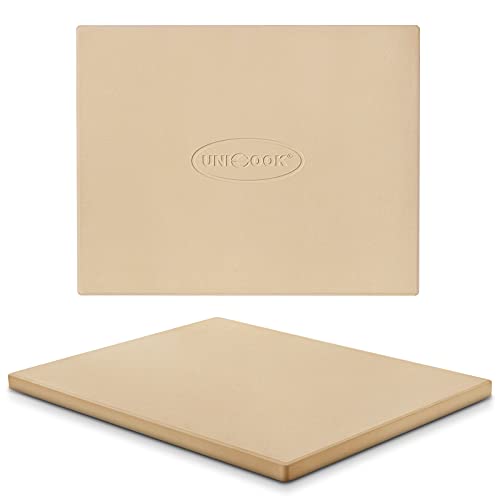
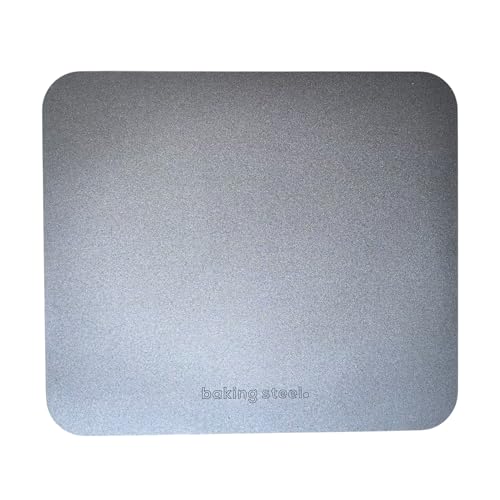
The five tools that do the work in every method on this site: a slab that stores heat, something to launch with, a way to read the surface, and a clean cut.


The chart: temperature, time, and hydration by style
Deck means the cooking surface the pizza sits on. Dome or air means the space above it. Where a source does not distinguish the two, the cell says so rather than guessing. Hydration is baker's percentage.
| Style | Deck / floor | Dome / air | Bake time | Hydration | Source |
|---|---|---|---|---|---|
| Neapolitan (AVPN) | 380 to 430°C 716 to 806°F | 485°C 905°F | 60 to 90 sec | 55.6 to 62.5% derived from ratio | AVPN International Regulations (Disciplinare), 2024 |
| Neapolitan (EU TSG) | 485°C 905°F | 430°C 806°F | 60 to 90 sec | 55.6% flour absorption 55 to 62 | Commission Regulation (EU) No 97/2010 |
| New York | 500 to 600°F 260 to 316°C 550°F typical | not specified separately | 4 to 12 min | 57 to 62% | Bakers Pride and Marsal deck oven manuals; Chicago Brick Oven; King Arthur |
| Detroit / pan | 450 to 500°F 232 to 260°C sources genuinely differ | not specified separately | 12 to 15 min | 71 to 75% | Detroit Style Pizza Co. (475°F); founder via PMQ (450°F); King Arthur (500°F) |
| Roman / al taglio | 450 to 500°F 232 to 260°C | not specified separately | 20 to 25 min | 69% or 82% sources differ sharply | America's Test Kitchen (82%, 450°F, 20 to 25 min); The Perfect Loaf (69%, par-baked) |
| Sicilian | 450°F 232°C | not specified separately | par-bake 10 to 12 min, then 15 to 20 min | 73.5% | King Arthur Baking |
| Grandma | 500°F 260°C | not specified separately | 12 to 15 min | 62.6% | King Arthur Baking |
| Frozen | 400 to 450°F 204 to 232°C read the box | conventional oven air temp | 12 to 25 min | n/a | Manufacturer-printed instructions: DiGiorno and Tombstone 400°F, Amy's and Screamin' Sicilian 425°F, Totino's 450°F |
Two things in that chart are worth reading twice. First, the two Neapolitan rows are the same style described by two governing documents that transpose the floor and dome figures. Second, look at the bake times: the spread from Neapolitan to Roman al taglio is 60 seconds to 25 minutes, a factor of 25. Style is not a topping choice. It is a completely different thermal event, and it is why an oven that is superb at one style can be genuinely bad at another.
To read any of these numbers on your own oven you need a surface thermometer, because no oven's built-in gauge measures the deck. That is the subject of a section below, and the ranked picks are in best infrared thermometer for pizza.
So what should you actually set? The decision framework
The chart is a reference. This is how to use it.
1. Decide by bake time, not by temperature. Temperature is the input; bake time is the thing you can actually observe and the thing that defines the style. If you want a 60 to 90 second Neapolitan you need a floor in the 700s or above and an oven that can hold it, which in practice means a live-fire or high-output gas oven from best outdoor pizza ovens or the dedicated shortlist in best pizza oven for Neapolitan pizza. If you want a 6 to 10 minute New York pie, you need 550°F held steady, which almost any oven can do and a home oven with a steel can very nearly do.
2. Match the floor to the style before you worry about the dome. The floor sets the bottom crust and the oven spring; the dome sets the top and the leoparding. Get the floor right first. This is also the practical resolution of the AVPN and EU conflict: both documents describe a floor and dome within about 55°C of each other at very high heat, and in a real oven you set the floor and the dome follows.
3. If your pizza burns on the bottom before the top is done, your floor is too hot relative to your dome, not too hot absolutely. The fix is to let the flame heat the air for a few minutes with the floor recovering, or to turn the pizza sooner. If the top is done and the base is pale, the floor is too cool, and no amount of extra flame will fix it because the flame heats the dome. This asymmetry is the single most common reason a new oven produces disappointing pizza and it is diagnosed in why is my pizza oven not getting hot enough.
4. For anything at or below 550°F, the stone or steel matters more than the oven. New York, Detroit, Roman, Sicilian, and Grandma all sit in the range a domestic oven reaches. What a domestic oven lacks is thermal mass in the floor, which is exactly what a baking steel or a cordierite stone supplies. Which of the two you want depends on the style: see pizza stone vs steel and best pizza stones and steels.
5. Pick the oven for the style you will actually cook most weeks. An electric countertop oven capped at 700 to 850°F is excellent for New York, Detroit, and frozen and cannot do a true 60 second Neapolitan; see best electric pizza ovens, best indoor pizza ovens, and best countertop pizza oven. A 950°F live-fire oven does Neapolitan beautifully and will incinerate a Detroit pan if you are not careful. The full field is ranked in best pizza ovens, and the style rivalry itself is covered in Neapolitan vs New York.
The Neapolitan conflict, in full
This is the finding, so here is all of it in one place.
The AVPN International Regulations (Disciplinare), 2024 edition specifies a base cooking temperature of approximately 380 to 430°C and a dome temperature of approximately 485°C, with a cooking time of 60 to 90 seconds and a maximum diameter of 35 cm. The dough is specified as 1 litre of water to 1,600 to 1,800 g of flour, which is 55.6% to 62.5% hydration in baker's terms, though the document itself never states a percentage. The finished pizza has a rim of 1 to 2 cm and a centre of 0.25 to 0.30 cm with a tolerance of 10%. The dough is described as needing to feel moist, non-sticky, soft and plastic.
Commission Regulation (EU) No 97/2010, which registered Pizza Napoletana as a Traditional Speciality Guaranteed, specifies a baking temperature on the cooking floor of the oven of approximately 485°C and a temperature at the oven dome of approximately 430°C, with a baking time of 60 to 90 seconds and a diameter not exceeding 35 cm. Its dough is 1 litre of water to 1.8 kg of W 220 to 380 flour, which is 55.6% hydration, with a flour absorption specification of 55 to 62. Its centre thickness is 0.4 cm with a 10% tolerance, which also differs from the AVPN's 0.25 to 0.30 cm. It additionally specifies internal temperatures during the bake: dough reaching 60 to 65°C, tomatoes 75 to 80°C, and mozzarella 65 to 70°C.
| Specification | AVPN Disciplinare 2024 | Commission Regulation (EU) No 97/2010 | Agree? |
|---|---|---|---|
| Cooking floor | 380 to 430°C (716 to 806°F) | 485°C (905°F) | No, transposed |
| Dome | 485°C (905°F) | 430°C (806°F) | No, transposed |
| Bake time | 60 to 90 seconds | 60 to 90 seconds | Yes |
| Maximum diameter | 35 cm | 35 cm | Yes |
| Hydration | 55.6 to 62.5% (derived from 1 L : 1,600 to 1,800 g) | 55.6% (1 L : 1.8 kg), absorption 55 to 62 | Compatible |
| Centre thickness | 0.25 to 0.30 cm | 0.4 cm | No |
A third figure exists and should not be used. AVPN's own website recipe page states a temperature of 430 to 480°C, which matches neither of AVPN's own PDF specifications. If you are citing the AVPN, cite the Disciplinare.
One more sourcing detail for anyone quoting Fahrenheit: the 2024 Disciplinare contains no Fahrenheit figures at all. The 2022 edition does, and it is the edition that prints 485°C as 905°F. Any Fahrenheit number attributed to the 2024 document is somebody's conversion, including ours.
Deck versus dome, and why your thermometer disagrees with your oven
This is the section most temperature guides skip, and it is the one that explains almost every confused reading people get.
An infrared thermometer measures surface temperature only. ThermoWorks states plainly that infrared thermometers only measure surface temperatures and not internal temperature, and that they do not see through glass, liquids, or other transparent surfaces. Fluke says the same: they measure surface temperature, not internal temperature. Point one into your oven's mouth and it will read whatever solid surface is in its line of sight, which is usually the stone. It is not reading the air, and it cannot.
An oven's built-in gauge measures something else. Gozney's Arc manual describes its display as showing the temperature from within the oven, notably not the stone. A dial or probe mounted in the dome or door is sitting in hot air, and hot air in a pizza oven can be hundreds of degrees different from the floor beneath it. The two instruments are not in disagreement. They are measuring different things. Expecting them to match is like expecting a thermometer in your loft to match one in your oven.
Emissivity is the second reason readings differ, and it is the one that trips people up with a specific gun. An infrared thermometer infers temperature from emitted radiation, and how much a surface emits depends on the material. ThermoWorks gives a memorable example: aim an infrared gun at a stainless steel pot of boiling water and you might read closer to 100°F than the actual 212°F, because polished metal has very low emissivity. Fluke puts it the same way: low emissivity causes the thermometer to under-report the actual temperature.
Published emissivity values for oven floor materials, from a standard engineering table, show how wide the spread is:
| Surface | Emissivity | Note |
|---|---|---|
| Red brick, rough | 0.930 at 20°C | High emitter, reads close to true |
| Concrete | 0.94 | High emitter |
| Silica brick | 0.80 to 0.85 | Common refractory |
| Fire brick | 0.750 at 1000°C | Typical oven floor material |
| Refractory brick | 0.380 at 1000°C | Very different from fire brick, same family of names |
| Polished aluminium | 0.095 at 100°C | Why a peel or a tray gives nonsense readings |
| Polished copper | 0.02 to 0.05 | Effectively unreadable by infrared |
We could not find a published emissivity value for cordierite, the material most pizza oven stones are actually made of, in any engineering table we could obtain, so we are not printing one. What we can tell you is that manufacturers have solved this for you: Ooni sells an infrared thermometer it describes as automatically calibrated for use with cordierite Ooni pizza stones, with adjustable emissivity and a 10:1 distance-to-spot ratio, and Gozney's own infrared thermometer recommends a 750 to 930°F target range for a stone floor. If you are using a general-purpose gun with a fixed emissivity setting on a cordierite stone, your reading has an unknown offset.
Distance-to-spot ratio is the third factor. ThermoWorks explains it cleanly: a 12:1 ratio measures the temperature of a 1 inch diameter circle from 12 inches away. Stand further back and the gun averages a much larger area, including the cooler edges of the stone, the oven wall, and anything visible through a gap. Fluke's guidance is to get close enough that the area being measured is smaller than or equal to your target. For reading the centre of a pizza stone through a small mouth, a high ratio matters. The Klein, Etekcity, Surpeer, and Fluke options are compared in our thermometer guide; the Surpeer IR-2732 is the high-ratio option and the Klein Tools IR1 the budget one.
Practical summary: trust the infrared reading on the stone for the floor, trust the built-in gauge for the air, and never expect them to agree. If you own an oven with no gauge at all, which is most portable gas ovens, the infrared reading on the stone is the only number you have, and it is the more useful of the two anyway.
What manufacturers claim versus what they tell you to do
Here is a gap worth knowing about before you chase a number on a box.
Almost no manufacturer says whether its headline maximum is a stone temperature or an air temperature. Ooni's Koda 16 and Karu 12 are both marketed at 950°F / 500°C with no surface specified. Gozney's Roccbox says in excess of 950°F, and the Arc and Arc XL spec rows say 950°F, again with no surface specified. The Ooni Volt 2 is 850°F, the Ninja Artisan 700°F, both unlabelled.
The one exception is Breville, whose Smart Oven Pizzaiolo manual separates deck temperature from top temperature in its manual mode table and lists the Neapolitan setting as 700 to 750°F deck for 2 minutes. That is the only mainstream manufacturer document we found that treats the two as distinct numbers, which is a real point in the Pizzaiolo's favour for anyone who cares about controlling both.
And the operating guidance runs lower than the marketing. Ooni markets the Koda 16 at 950°F, and Ooni's own getting-started guide for that oven tells you to make sure the stone gets back up to 715 to 850°F (380 to 450°C) between pizzas. Gozney markets the Arc at 950°F, and the Arc manual labels anything above 900°F as over temperature, too hot, while listing its own style targets:
| Style | Gozney Arc manual target |
|---|---|
| Neapolitan | 800 to 900°F |
| Roman | 700 to 800°F |
| New York | 600 to 700°F |
| Above 900°F | Over temp, too hot |
Note how well those numbers agree with the independent sources in the chart at the top: Gozney's 600 to 700°F for New York sits inside the 500 to 600°F commercial deck range at the higher end, and its 800 to 900°F for Neapolitan sits inside the AVPN's floor and dome band. The manufacturers' own operating documents are more useful than their marketing, and they broadly agree with the style specifications. The 950°F figure is a peak capability, not a cooking target.
The practical takeaway is that if you are cross-shopping on maximum temperature alone, you are comparing numbers that the manufacturers themselves tell you not to cook at. See how hot does a pizza oven get for the capability question and what temperature for pizza for the plain-language version of this chart.
Dough hydration and how the oven changes it
Hydration is the water in a dough as a percentage of the flour weight, always with flour at 100%. King Arthur's explanation of baker's math is the standard reference, and it notes that fats do not count toward hydration.
The pattern across the styles in the chart is clear and it maps directly onto bake time:
| Style | Hydration | Bake time | Why they go together |
|---|---|---|---|
| Neapolitan | 55.6 to 62.5% | 60 to 90 sec | Low hydration, extreme heat. There is no time to drive off water, so there cannot be much of it |
| New York | 57 to 62% | 4 to 12 min | Similar dough, far longer bake, which is what produces the drier, foldable crust |
| Grandma | 62.6% | 12 to 15 min | Pan bake, moderate hydration, no par-bake |
| Detroit | 71 to 75% | 12 to 15 min | High hydration needs a long moderate bake to set the open crumb |
| Sicilian | 73.5% | par-bake plus 15 to 20 min | Very wet dough par-baked first so the base sets before topping |
| Roman al taglio | 69% or 82% | 20 to 25 min | The wettest and the longest bake. Sources genuinely differ on how wet |
Hydration and oven temperature are inversely related, and the mechanism is evaporation time. Water has to leave the dough before the crust can set. In a 90 second Neapolitan bake there is almost no time for that, so the dough has to start relatively dry. In a 25 minute al taglio bake there is plenty of time, so the dough can start at 80% and still finish crisp. Putting an 80% hydration dough into a 900°F oven produces a pizza that is charred outside and raw inside; putting a 55% dough into a 450°F oven for 25 minutes produces a cracker.
The Roman al taglio disagreement is worth flagging rather than smoothing over. America's Test Kitchen states 82% explicitly, having settled on that figure deliberately. The Perfect Loaf uses 69% and par-bakes. The style's reputation for 80%-plus hydration is real but not universal, and we would not tell you al taglio simply is a two-stage bake, because respected sources split on that too.
Flour choice interacts with all of this, because a stronger flour absorbs more water at the same feel. The EU regulation specifies W 220 to 380 flour with an absorption of 55 to 62 for exactly this reason. Our best flour for pizza dough guide covers what W ratings mean in practice, and how to stretch pizza dough covers what a correctly hydrated dough should feel like.
Frozen pizza and food safety
There is no single frozen pizza temperature, and the assumption that there is causes a lot of mediocre frozen pizza. We pulled the numbers from the manufacturers' own product pages.
| Brand and product | Printed temperature | Printed time |
|---|---|---|
| DiGiorno (across most of the line) | 400°F | 15 to 25 min by crust |
| Tombstone Original Thin Crust | 400°F | 17 min |
| Amy's Cheese Pizza | 425°F | 12 to 14 min |
| Screamin' Sicilian Holy Pepperoni | 425°F | 17 to 19 min |
| Totino's Party Pizza | 450°F | 12 to 14 min |
| Red Baron | 400 to 425°F | varies by crust and by rack versus pan |
A 50°F spread across mainstream brands is not a rounding error, and the bake times differ by a factor of two. Read the box. Bare centre rack is the default across every brand we checked; a pan or sheet always adds time and is framed as producing a softer crust. Red Baron is the one brand that changes the temperature by cooking method as well as by crust.
On internal temperature: the brands themselves print different targets, with Tombstone specifying 165°F and Red Baron and Totino's specifying 160°F. The authoritative US government figure is 165°F (74°C), which FoodSafety.gov's safe minimum internal temperatures chart gives for leftovers and any reheated food, and which USDA's Food Safety and Inspection Service repeats for reheating leftovers. No US government page names pizza specifically, so 165°F applies to your leftover pizza as a leftover rather than as pizza-specific guidance. FSIS also defines the danger zone as 40 to 140°F and advises never leaving food out of refrigeration for over 2 hours, or 1 hour above 90°F, which is the rule that actually matters at a pizza party.
A dedicated pizza oven handles frozen pizza well but usually needs to be run cooler than its natural setting, because a frozen base cannot absorb 900°F floor heat without burning before the middle thaws. That is covered in best pizza oven for frozen pizza, and reheating specifically in how to reheat pizza in the oven.
What we could not verify, and did not publish
Naming the gaps is part of the point of a reference page. Here is everything we went looking for and did not get.
An emissivity value for cordierite. Cordierite is the material most pizza stones are made from, and it does not appear in any published emissivity table we could obtain. We printed values for fire brick, silica brick, refractory brick, and metals, and left cordierite out rather than borrow a nearby number.
Serious Eats figures, of any kind. The domain blocked every attempt to read it. Nothing from that source appears on this page, in either direction.
Modernist Pizza's New York temperature and hydration figures. Not available online. We are not attributing a New York number to Modernist.
Tom Lehmann's widely quoted New York figures. The sources that host them returned errors. The commonly repeated 500 to 515°F at four and a half minutes may well be right; we could not confirm it, so the New York row cites deck oven manuals instead.
Bake times from commercial deck oven manuals. Bakers Pride and Marsal both publish recommended temperatures and neither publishes a bake time. The New York bake time range comes from other sources.
Whether the Ninja Artisan's 700°F is a stone or an air figure. Not published.
DiGiorno's own safe internal temperature. Secondary sources claimed both 160°F and 165°F and neither figure appeared on a DiGiorno page. We cite the government figure instead.
Newman's Own baking instructions. The brand publishes none we could find, so it is absent from the frozen table rather than represented by a guess.
The claim that the Gozney Arc's built-in gauge reads the stone. This appears on review sites but not in Gozney's manual, which describes the display as showing the temperature from within the oven. We treated it as unverified.
Ready to buy? Start with our top picks
Whatever this guide steered you toward, here's where most readers land, ranked on stated floor heat. Live price check on each.
- Check price on Amazon
- Check price on Amazon
- Check price on Amazon
- Check price on Amazon
- Check price on Amazon
- Check price on Amazon
As an Amazon Associate we earn from qualifying purchases, at no cost to you.
How we chose.
Sourcing standard: no temperature on this page was written from memory or copied from another buying guide. Style-defining figures were extracted from the primary documents themselves, and manufacturer figures come from the manufacturer's own product page or manual.
Why that mattered here: our first pass at the Neapolitan specifications, using summarised readings of the AVPN and EU documents, produced figures the raw source text contradicted. The floor and dome inversion between the two documents only surfaced when we went back to the primary texts and read them directly. Any page on this topic that has not done that is likely repeating one document's numbers under the other's name.
Where sources conflict we publish the range and name the conflict rather than reconcile it. This applies to Neapolitan floor and dome (AVPN versus EU), Detroit temperature (450 versus 475 versus 500°F), and Roman al taglio hydration (69% versus 82%).
Celsius and Fahrenheit: the AVPN 2024 Disciplinare contains no Fahrenheit figures at all, so any Fahrenheit equivalent for AVPN specifications is a conversion. The 2022 edition does print Fahrenheit and is the source for 485°C being stated as 905°F. Conversions here are rounded to the nearest degree.
Hydration is stated as baker's percentage, water as a share of flour weight. The AVPN does not state a hydration percentage: it specifies a ratio of 1 litre of water to 1,600 to 1,800 g of flour, which works out to 55.6% to 62.5%. That derivation is ours and we label it as such.
Style temperatures without a governing body (New York, Detroit, Roman, Sicilian, Grandma) are drawn from commercial deck oven manufacturer manuals, test kitchens, and named style originators. These are authoritative but not definitional, and we mark them accordingly. Nobody owns the words 'New York style'.
How to cite this: Pizza Oven Review, "Pizza Oven Temperature and Cook Time Chart: The Sourced Reference," August 8, 2026, https://pizzaovenreview.com/journal/pizza-oven-temperature-chart. Published under a Creative Commons Attribution 4.0 licence. Reuse freely, including commercially, with attribution.
This page is reviewed and republished whenever a governing document is revised or a manufacturer changes a published specification.
Companion reference: our pizza oven database lists the manufacturer-stated peak floor temperature for every oven we track, model by model, with a marker recording whether the figure came from a manufacturer page or only from a retail listing. Thirty-four of the 66 ovens publish no peak temperature at all.
Key terms
- Deck temperature
- The temperature of the cooking surface the pizza sits on, measured with an infrared thermometer pointed at the stone. It sets the bottom crust and the oven spring, and it is the number that actually determines your bake time. No oven's built-in gauge measures it.
- Dome or air temperature
- The temperature of the space above the pizza, which sets the top and the leoparding on the rim. This is what an oven's built-in gauge measures. It can be hundreds of degrees different from the deck, and in the AVPN specification it is the hotter of the two.
- Emissivity
- How efficiently a surface emits infrared radiation, on a scale from 0 to 1. An infrared thermometer infers temperature from emitted radiation, so a low-emissivity surface reads far cooler than it is. Fire brick is about 0.750 and polished aluminium about 0.095, which is why pointing a gun at a metal peel gives a nonsense reading.
- Distance-to-spot ratio
- How large an area an infrared thermometer averages at a given distance. A 12:1 ratio reads a 1 inch circle from 12 inches away. Standing further back averages in the cooler edges of the stone and the oven walls, which is the most common cause of a reading that seems too low.
- Baker's percentage (hydration)
- Water expressed as a percentage of flour weight, with flour always at 100%. Neapolitan runs 55.6% to 62.5%; Detroit runs 71% to 75%; Roman al taglio runs 69% to 82% depending on the source. Higher hydration requires a longer, cooler bake because the water needs time to leave.
- Traditional Speciality Guaranteed (TSG)
- An EU designation protecting a traditional recipe or production method rather than a geographic origin. Pizza Napoletana was registered as a TSG by Commission Regulation (EU) No 97/2010, which is why there is a legal specification for it separate from the AVPN's own private standard, and why the two can disagree.
Questions, answered
What temperature should a pizza oven be?
It depends entirely on the style, and the spread is enormous. Neapolitan needs a floor between 380°C and 485°C (716°F to 905°F) for a 60 to 90 second bake, though the two governing documents disagree about whether the floor or the dome is the hotter of the two. New York style wants 500 to 600°F for 4 to 12 minutes, with commercial deck oven manuals specifying at least 550°F. Detroit wants 450 to 500°F for 12 to 15 minutes. Roman al taglio wants 450 to 500°F for 20 to 25 minutes. Frozen pizza follows the printed instructions, which run 400 to 450°F depending on brand.
What temperature is Neapolitan pizza cooked at?
The two authorities give different answers, which is worth knowing if you are citing either. The Associazione Verace Pizza Napoletana's Disciplinare specifies a cooking surface of approximately 380 to 430°C (716 to 806°F) and a dome of approximately 485°C (905°F). Commission Regulation (EU) No 97/2010 specifies the reverse: a cooking floor of approximately 485°C and a dome of approximately 430°C. Both specify a bake of 60 to 90 seconds and a maximum diameter of 35 cm. AVPN's own website recipe page gives a third figure, 430 to 480°C, which matches neither of its own PDFs.
What temperature for New York style pizza?
500 to 600°F, most commonly targeted at 550°F, for a bake of roughly 4 to 12 minutes. There is no governing body for New York style, so the best available sources are commercial deck oven manufacturers: the Bakers Pride Y-600 and Y-800 manual specifies that baking directly on the deck requires at least 550°F, and Marsal's gas deck oven manual gives 500 to 600°F for pizza. Gozney's own Arc manual targets 600 to 700°F for New York in its ovens. A home oven at 500°F with a preheated steel gets close.
How long does a pizza take to cook in a pizza oven?
Anywhere from 60 seconds to 25 minutes depending on style, which is a factor of 25. A true Neapolitan is 60 to 90 seconds per both governing documents. New York is 4 to 12 minutes. Detroit and Grandma are 12 to 15 minutes. Sicilian is a 10 to 12 minute par-bake plus 15 to 20 minutes. Roman al taglio is 20 to 25 minutes. Frozen pizza is 12 to 25 minutes depending on the brand and crust.
Why does my infrared thermometer read differently from my pizza oven's gauge?
Because they measure different things and neither is wrong. An infrared thermometer measures surface temperature only, which in a pizza oven means the stone. A built-in gauge sits in the air, and Gozney's Arc manual describes its display as showing the temperature from within the oven rather than the stone. Air and floor in a pizza oven can differ by hundreds of degrees. A second factor is emissivity: infrared readings depend on the surface material, and a gun set for the wrong emissivity under-reports. Trust the infrared reading for the floor and the gauge for the air.
What emissivity should I set for a pizza stone?
We are not going to give you a number, because no published emissivity table we could obtain lists cordierite, which is what most pizza stones are made of. For reference, published values put fire brick at about 0.750 at 1000°C, silica brick at 0.80 to 0.85, and rough red brick at 0.930, so cordierite is likely in that general neighbourhood, but that is inference rather than a source. The practical answer is to use a thermometer calibrated for the job: Ooni sells one it describes as automatically calibrated for use with its cordierite stones.
Is 900 degrees too hot for a pizza oven?
According to Gozney, yes. The Gozney Arc manual labels anything above 900°F as over temperature, too hot, while listing its own targets as 800 to 900°F for Neapolitan, 700 to 800°F for Roman, and 600 to 700°F for New York. Ooni markets the Koda 16 at 950°F while its own getting-started guide tells you to get the stone back to 715 to 850°F between pizzas. The headline maximum on a pizza oven is a peak capability, not a cooking target, and both major brands say so in their own documents.
What temperature do you cook a frozen pizza at?
Whatever the box says, because there is no common temperature. Manufacturer-printed instructions we checked run 400°F for DiGiorno and Tombstone, 425°F for Amy's and Screamin' Sicilian, and 450°F for Totino's Party Pizza, with Red Baron varying by crust and by whether you use a rack or a pan. Bake times run 12 to 25 minutes. Every brand defaults to a bare centre rack; a pan adds time and gives a softer crust. For reheating leftover pizza, the US government figure is a safe minimum internal temperature of 165°F.
What hydration should pizza dough be?
It depends on how hot and how long you are baking, because hydration and temperature are inversely related. Neapolitan runs 55.6% to 62.5%, derived from the AVPN's specified ratio of 1 litre of water to 1,600 to 1,800 g of flour, because a 90 second bake gives water no time to leave. New York runs 57% to 62%, Grandma 62.6%, Detroit 71% to 75%, Sicilian 73.5%, and Roman al taglio either 69% or 82% depending on which respected source you follow. Longer, cooler bakes support wetter dough.
Filed under Explainer
Part of Pizza Oven 101 · Accessories & Technique · Pizza Dough Fundamentals
Keep reading.
Why Is My Pizza Burnt on the Bottom?
The floor and dome numbers on this page, applied to the failure they cause when they get out of balance.
What Temperature for Pizza?
The plain-language companion to this chart: what to set, in practice, without reading two regulations first.
How Hot Does a Pizza Oven Get?
The capability question rather than the target question, and why the number on the box is not a cooking temperature.
Best Infrared Thermometer for Pizza
The only instrument that reads the deck. Ranked on distance-to-spot ratio, range, and adjustable emissivity.
Pizza Oven Running Costs
The other computed reference: cost per pizza and per hour by fuel, from manufacturer BTU ratings and EIA energy prices.
Pizza Oven Price Index
Our own 16 day price-tracking study. Ovens barely move; thermometers change price 75% of the time.
Best Pizza Oven for Neapolitan Pizza
The ovens that actually hold a floor hot enough for the 60 to 90 second bake both governing documents specify.
Neapolitan vs New York Pizza
Two styles, 500 degrees and 10 minutes apart. What the thermal difference does to the crust.
Best Electric Pizza Ovens (2026)
Capped at 700 to 850°F, which covers every style in this chart except a true Neapolitan.