Our pick. Ooni
Check price on Amazon →Neapolitan vs New York Pizza (2026): The Two Styles, and Which Oven Each Needs
They look similar in a photo and could not be more different in the kitchen. Neapolitan is a fast, blistered, soft-centered round that cooks in 60 seconds at near-1,000°F. New York is a big, foldable, chewy slice that bakes for minutes at a much calmer heat. The dough is different, the temperature is different, the bake time is different, and crucially, the oven you should buy is different. Here's how to tell them apart, and how to pick the right oven for the one you actually want to eat.
By The Pizza Oven Review DeskUpdated 2026-06-28~10 min readRanked on verified floor heatHow we research
We earn a commission on purchases through our links, at no cost to you. It never decides a ranking. How this works
Neapolitan and New York are the two pizzas most home cooks are chasing, and the two most often confused. From above they can look like cousins, a round, a red sauce, melted cheese, but they are built on opposite philosophies. Neapolitan is a Naples original: a soft, thin, intensely fast pizza cooked in about a minute on a blistering floor, eaten with a knife and fork because the wet center won't support itself. New York is what Italian immigrants made of it on this side of the Atlantic: a larger, sturdier, foldable slice with a chew and a crisp that comes from a longer, cooler bake. They are both excellent and they are not interchangeable.
The reason this distinction matters for a buyer, and the reason it lives on a pizza-oven site rather than a recipe blog, is that the two styles want different ovens. The thing that defines Neapolitan is extreme floor heat: roughly 850 to 950°F on the stone, which no kitchen oven reaches and which is the entire purpose of a dedicated high-heat oven. New York's defining trait is the opposite restraint: a moderated 600 to 700°F floor that lets a bigger pizza cook through evenly, a temperature a home oven with a good steel can genuinely hit. Buy the wrong oven for your style and you'll spend money fighting your equipment.
This guide walks through the real differences, dough and hydration, temperature and bake time, the shape and the eating experience, and then does the practical part: matches each style to the oven that suits it, using our signature lens of peak floor temperature, the 60-Second-Pizza Club, and heat recovery. We close with a plain recommendation for the very common cook who wants to make both. Nothing here is sponsored, and every characteristic we describe is a well-established feature of these long-documented styles, not something we invented.
The short version.
- Neapolitan = a fast, soft, blistered round cooked in 60 to 90 seconds at an 850 to 950°F floor; New York = a big, chewy, foldable slice baked several minutes at a calmer 600 to 700°F floor. Opposite philosophies, not variations.
- The dough differs: Neapolitan is a simple, lower-oil, tender dough built for a flash bake; New York adds a little oil and sugar for a sturdier, browning crust that survives a longer, cooler bake.
- Neapolitan demands a dedicated high-heat oven that joins the 60-Second-Pizza Club (floor ~750°F+), a home oven physically cannot make it. New York is achievable in a home oven with a preheated baking steel.
- For Neapolitan, heat recovery is critical because you're running fast back-to-back bakes; for New York, raw floor heat matters less and even, moderated heat matters more.
- If you want both, buy for Neapolitan, a good high-heat oven dials DOWN to New York temperatures, but a New-York-capable home setup can never dial UP to Neapolitan.
Our top-rated pizza ovens
Whatever you decide, these are the ovens we recommend, ranked on stated floor heat. Live price check on each.
- Check price on Amazon

- Check price on Amazon

- Check price on Amazon

- Check price on Amazon

- Check price on Amazon

- Check price on Amazon

As an Amazon Associate we earn from qualifying purchases, at no cost to you.
What you'll need.
Prices approximate at time of writing.
The five tools that do the work in every method on this site: a slab that stores heat, something to launch with, a way to read the surface, and a clean cut.
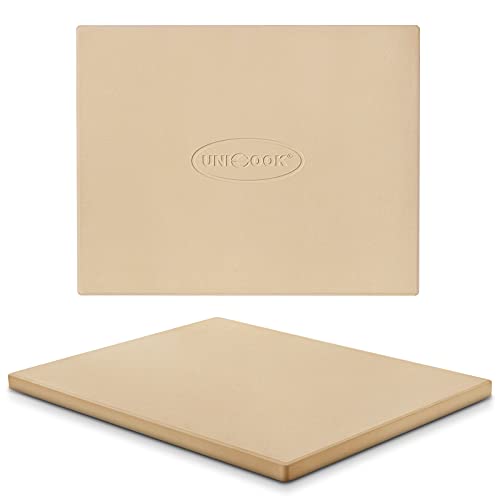
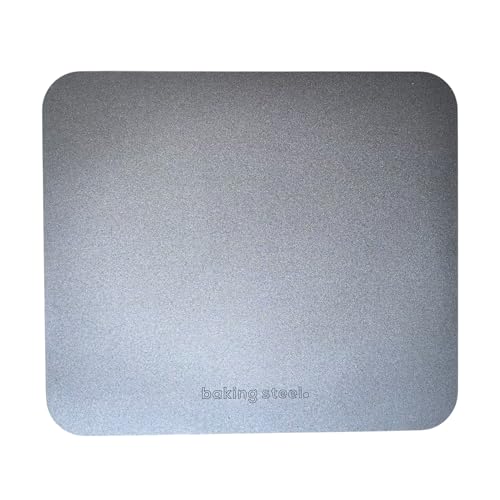


The quick version: two pizzas, two philosophies
Here's the whole distinction in one breath. Neapolitan is a Naples-born pizza built for speed: a thin 10-to-12-inch round, a soft and slightly wet center, a dramatically puffed and leopard-spotted rim, cooked in 60 to 90 seconds on a near-1,000°F floor and eaten fresh, often with a fork. New York is its American descendant built for portability: a large 16-to-18-inch round sliced into big triangles, a crust that's thin in the middle but with a real chew and a crisp underside, baked for several minutes at a much cooler temperature and folded in half to eat on the move.
Everything else, the dough recipe, the oven, the technique, follows from those two design goals. Neapolitan optimizes for a blistering flash bake that leaves the crumb tender and airy. New York optimizes for a sturdy, foldable, evenly-cooked slice that holds up to toppings and travel. Once you see them as solving two different problems, the differences below stop being trivia and start being a buying guide.
The dough: simple-and-soft vs. enriched-and-sturdy
The doughs are genuine cousins but tuned for opposite bakes. Classic Neapolitan dough is austere by design: type "00" flour, water, salt, and yeast, no oil, no sugar in the traditional formula. It's a moderately hydrated, soft, extensible dough meant to puff fast and stay tender in a 60-second bake. Because the bake is so quick, the dough doesn't need any help browning; the screaming heat does that work in seconds.
New York dough makes two telling additions: a little oil and often a little sugar. The oil produces a sturdier, slightly crisper crust that can survive a longer bake and hold a heavier load of toppings without going limp; the sugar helps the crust brown and color over the several minutes it spends at a lower temperature, where it otherwise wouldn't develop much color. New York dough is also often given a longer cold ferment, which builds the deeper flavor and the characteristic chew. The result is a dough engineered for endurance rather than for a flash.
Temperature and bake time: the defining split
This is the difference that decides which oven you buy, so we'll be exact. Neapolitan cooks at roughly 850 to 950°F on the floor in 60 to 90 seconds. The bake is measured in seconds, the rim blisters into leopard spots, and the center stays soft because it's out of the oven before it can dry. This is the temperature the Associazione Verace Pizza Napoletana specifies, and it's the entire reason high-heat ovens exist, it's also our 60-Second-Pizza Club benchmark, which requires a floor that holds around 750°F or hotter.
New York bakes at roughly 600 to 700°F on the floor for four to eight minutes. The cooler, longer bake is not a downgrade, it's a requirement. A New York pie is bigger and sturdier, and it needs time to dry out and crisp all the way through without the bottom scorching. Run a New York pizza at Neapolitan temperatures and you get a carbonized base over a raw middle; run a Neapolitan pizza at New York temperatures and you get a pale, leathery disc instead of a blistered, airy one. The temperatures are not preferences. They're built into the styles.
Shape, size, and the eating experience
The styles diverge in the hand as much as in the oven. Neapolitan is personal and immediate: a single 10-to-12-inch round per person, eaten the moment it leaves the oven while the center is still soft and steaming. The traditional way to eat it is with a knife and fork, or folded into the Neapolitan a portafoglio ("wallet") fold, because the wet, tender center genuinely can't hold itself flat. It's a sit-down, eat-it-now pizza.
New York is communal and portable: a large round cut into big triangular slices, each one sturdy enough to fold lengthwise and eat with one hand walking down a street. The crisp underside and the oil-enriched crust are what make the fold possible, a Neapolitan slice folded the same way would collapse. This portability is the whole cultural identity of the New York slice, and it's a direct consequence of the sturdier dough and the cooler, crispier bake.
Which oven for Neapolitan: high heat and fast recovery
Neapolitan is the demanding one, and it sets a hard floor on your equipment: you need a dedicated oven that reaches and holds an 850 to 950°F floor, a member of the 60-Second-Pizza Club. A kitchen oven physically cannot do this, full stop. The right tools are purpose-built high-heat ovens: a gas oven like the Ooni Koda 16 for push-button convenience, or a heavily insulated one like the Gozney Roccbox whose dense build keeps the floor stable through a fast session.
For Neapolitan, heat recovery is the spec to prioritize after raw floor temperature. Because each pizza cooks in about a minute, you're launching back-to-back at speed, and every cold pie pulls heat out of the stone. An oven that recovers fast, a well-insulated one, or a gas oven whose flame never stops pouring heat back into the floor, keeps your fourth pizza as blistered as your first. A thin-walled oven that flashes hot then sags will give you one great pie and a string of disappointing ones. This is exactly why we test recovery, not just peak temperature, on every oven.
Which oven for New York: moderated, even heat
New York is the forgiving one, and it opens up cheaper options. Because it bakes at 600 to 700°F, you have two good paths. The first is a home oven plus a thick baking steel: preheat the steel for 45 to 60 minutes at your oven's max (~550°F) and it conducts enough heat into the dough to make a genuinely excellent New York slice. This is the smart, low-cost route for anyone whose heart is set on New York rather than Neapolitan, no dedicated oven required, as we cover in pizza stone vs. steel.
The second path is a dedicated oven that dials down well, or a naturally moderate one. A gentler electric oven like the Ninja Artisan tops out around 700°F, right in New York territory, and trades the Neapolitan ceiling for no-flame, preset-driven ease. For New York, what matters is even, moderated heat across a larger floor so the bigger pizza cooks uniformly, not the screaming peak temperature Neapolitan demands. Raw recovery matters less here too, because the longer bake means you're not running a frantic back-to-back relay.
Want to make both? Buy for Neapolitan
Plenty of cooks want to make both styles, and there's a clean rule for them: buy the oven that can make Neapolitan, because it can always dial down to New York, but a New-York-capable setup can never dial up to Neapolitan. Heat is the one-way constraint. A dedicated high-heat oven that hits 950°F can be run at 650°F for a New York pie with no trouble; a home oven capped at 550°F or a 700°F electric can never reach the 850°F-plus floor a true Neapolitan needs.
So if you genuinely want the full range, the high-heat oven is the purchase that keeps every option open. The honest caveat: a small high-heat oven is usually a 12-inch chamber, which makes a New York pie smaller than the classic 18-inch behemoth, fine for most home cooks, but worth knowing. If you mostly want big New York slices and only occasionally dream of Neapolitan, the steel-in-the-home-oven route plus the occasional restaurant Neapolitan may be the more sensible spend. But for one oven that does both, high heat wins by default.
Ready to buy? Start with our top picks
Whatever this guide steered you toward, here's where most readers land, ranked on stated floor heat. Live price check on each.
- Check price on Amazon
- Check price on Amazon
- Check price on Amazon
- Check price on Amazon
- Check price on Amazon
- Check price on Amazon
As an Amazon Associate we earn from qualifying purchases, at no cost to you.
Key terms
- Neapolitan pizza
- A Naples-style pizza, thin, soft-centered, 10-to-12-inch round with a puffed, leopard-spotted rim, cooked in 60 to 90 seconds on an 850 to 950°F floor. Its simple, oil-free '00'-flour dough and flash bake make it the style that requires a dedicated high-heat oven.
- New York pizza
- A large (16 to 18 inch), foldable American slice with a chewy, crisp-bottomed crust, baked four to eight minutes at a moderated 600 to 700°F floor. Its oil-and-sugar-enriched dough is built to survive a longer, cooler bake and hold up to folding and travel.
- 60-Second-Pizza Club
- Our benchmark for ovens that can cook a leopard-spotted Neapolitan pie in about 60 to 90 seconds, which requires a floor holding roughly 750°F or hotter. It's the dividing line that tells you whether an oven can make Neapolitan at all, New York doesn't require membership.
- Heat recovery
- How fast the floor returns to baking temperature after a cold pizza is launched. It's critical for Neapolitan, where you run fast back-to-back one-minute bakes, and far less important for New York, where the longer bake means you're not racing the stone.
- Cold ferment
- A long, cold (refrigerated) rise often used for New York dough to build deeper flavor and the characteristic chew. It's part of what gives a New York slice its structure and taste, distinct from the shorter ferment typical of Neapolitan dough.
- Baking steel
- A thick steel slab that conducts heat far faster than a ceramic stone, giving a home oven a much hotter effective floor. Preheated in a ~550°F kitchen oven, it makes an excellent New York pizza, but it still can't reach the 850°F-plus floor true Neapolitan requires.
Questions, answered
What's the main difference between Neapolitan and New York pizza?
They're built on opposite philosophies. Neapolitan is a small (10 to 12 inch), thin, soft-centered round with a puffed, leopard-spotted rim, cooked in 60 to 90 seconds on an 850 to 950°F floor and eaten fresh, often with a fork. New York is a large (16 to 18 inch), foldable slice with a chewier, crisp-bottomed crust, baked four to eight minutes at a much cooler 600 to 700°F. The dough differs too: Neapolitan is a simple oil-free '00'-flour dough built for a flash bake, while New York adds oil and sugar for a sturdier crust that survives a longer, cooler bake. Different heat, different time, different oven.
Can I make Neapolitan pizza in a regular home oven?
No, and this is the cleanest dividing line in pizza. True Neapolitan needs an 850 to 950°F floor for a 60-second bake, and almost all home ovens max out around 550°F, hundreds of degrees short. No baking steel or workaround closes that gap; a steel just gives your home oven a hotter effective floor, which is great for New York but still far below Neapolitan temperatures. If leopard-spotted, 60-second Neapolitan is your goal, you need a dedicated high-heat oven that joins our 60-Second-Pizza Club. A home oven, though, makes genuinely excellent New York-style pizza.
Which oven should I buy for New York-style pizza?
You have two good options, and neither needs to be expensive. The cheapest is a thick baking steel in the oven you already own, preheat it 45 to 60 minutes at your oven's max and it conducts enough heat to make an excellent New York slice. The other is a naturally moderate dedicated oven, like a 700°F-class electric, which sits right in New York's temperature band with no-flame, preset ease. What matters for New York is even, moderated heat across a larger floor, not the screaming peak temperature Neapolitan demands, too much heat actually ruins a New York pie by burning the bottom before the middle cooks.
I want to make both styles, what oven should I get?
Buy the oven that can make Neapolitan, because heat is a one-way constraint: a dedicated high-heat oven that hits 950°F can easily dial down to 650°F for a New York pie, but a home oven or a 700°F electric can never dial up to the 850°F-plus floor Neapolitan needs. The one caveat is size, many high-heat ovens are 12-inch chambers, so your New York pies will be smaller than the classic 18-inch. If you mostly want big New York slices, a steel in your home oven may make more sense, but for one oven that genuinely does both, high heat wins.
Why does New York pizza bake at a lower temperature than Neapolitan?
Because it's a bigger, sturdier pizza that needs time to cook through. A New York pie is 16 to 18 inches with a thicker, oil-enriched crust, so it requires a longer (four-to-eight-minute) bake at a cooler 600 to 700°F floor to dry out and crisp all the way through without the bottom scorching. Neapolitan is small and thin and is designed to flash-cook in about a minute at 850 to 950°F, leaving the center soft. If you swapped their temperatures, the New York pie would burn on the bottom while raw in the middle, and the Neapolitan would come out pale and leathery instead of blistered and airy.
Is Neapolitan or New York pizza better for beginners?
New York is friendlier to learn, mostly because of the equipment and the timing. It bakes at a temperature a home oven with a baking steel can reach, so you don't need to buy a dedicated oven, and the four-to-eight-minute bake gives you far more margin than Neapolitan's frantic 60-second window, there's time to react before anything burns. Neapolitan requires a high-heat oven and punishes a slow launch or a missed turn because the bake is so fast. Many cooks start with New York in their home oven, get their dough and launch dialed, and only then invest in a high-heat oven for Neapolitan.
Keep reading.
What Temperature Should a Pizza Oven Be?
Every style's floor target, Neapolitan, New York, Detroit and more, and why the floor, not the dome, makes the crust.
Pizza Stone vs. Baking Steel
The steel that turns a home oven into a New-York machine, and why the floor material decides your crust.
How to Choose a Pizza Oven (2026)
Fuel, size, insulation, and the full buyer's framework, including which ovens dial down well for both styles.
Ooni vs Gozney: Which Brand Wins?
The two giants head to head, same ~950°F ceiling, very different philosophies, one clear way to choose.
Ooni Fyra 12 Review
Ooni's lightest wood-pellet oven reviewed, real live-fire flavor at $349, and what to cross-shop.