Our pick. Ooni
Check price on Amazon →How to Stretch Pizza Dough (2026): A Pizza-Oven Owner's Guide
Stretching dough is the one skill that decides whether your pizza oven earns its keep. A well-stretched base (thin, even, with a puffy rim) is exactly what a ~900°F floor is built to cook in 60 to 90 seconds. Too thick or uneven and the middle gums up while the edge chars. This is the honest, practical walkthrough: the dough to start with, how to press and stretch without a rolling pin, the mistakes that wreck a launch, and how to get a round, even disk onto the peel and into the fire.
By The Pizza Oven Review DeskUpdated 2026-06-29~11 min readRanked on verified floor heatHow we research
We earn a commission on purchases through our links, at no cost to you. It never decides a ranking. How this works
Most pizza-oven disappointment isn't the oven's fault: it's the dough. A pizza oven does one extraordinary thing: it hits a floor temperature around 900°F and cooks a pizza in 60 to 90 seconds. But that speed is unforgiving. It bakes whatever you hand it, fast, and a base that's too thick or wildly uneven doesn't get a chance to dry out in the middle before the edge is done. The result is the classic frustration: a charred rim around a gummy, undercooked center. The fix almost never lives in the oven's controls. It lives in how you stretch.
So this guide treats stretching as the core pizza-oven skill it actually is. A well-stretched base is thin and even across the middle, with the outer inch or so left puffy to become the cornicione (the rim). That geometry is precisely what a hot oven wants: a thin, even field that flashes to done in seconds, ringed by a rim of gas-filled dough that puffs and leopard-spots. Get the stretch right and the oven does the rest. Get it wrong and no amount of preheating saves the pizza.
Nothing here is sponsored, and we're not going to hand you fabricated gram-by-gram measurements as if they were gospel. Dough varies by flour, hydration, and kitchen, and anyone who pretends otherwise is selling certainty they don't have. What follows is general, honest, repeatable guidance: start with the right dough, flour your surface, press out the rim, stretch with gravity instead of a rolling pin, dodge the common mistakes, and launch with confidence. Do it a dozen times and it becomes muscle memory, which is the whole point.
The short version.
- Start with properly proofed, room-temperature dough. Cold dough fights back and snaps; dough rested out of the fridge for about an hour relaxes and stretches without tearing.
- Never use a rolling pin. It crushes the gas out of the rim and flattens the cornicione: exactly the puff a ~900°F oven exists to create. Press and stretch by hand instead.
- Press from the center out to form the disk, leaving the outer ~1 inch untouched and puffy. That rim is what becomes the leopard-spotted cornicione in a hot oven.
- Stretch with gravity, not force: drape the disk over the backs of both hands and let it widen as you rotate, or pull it gently on a floured counter. Keep it round and even, about 12 to 14 inches to suit your oven.
- An even, thin, well-stretched base is the whole reason a pizza oven can cook a pizza in 60 to 90 seconds. Uneven thickness gums the center; too much flour burns at high heat; an over-thin middle tears on launch.
Our top-rated pizza ovens
Whatever you decide, these are the ovens we recommend, ranked on stated floor heat. Live price check on each.
- Check price on Amazon

- Check price on Amazon

- Check price on Amazon

- Check price on Amazon

- Check price on Amazon

- Check price on Amazon

As an Amazon Associate we earn from qualifying purchases, at no cost to you.
What you'll need.
Prices approximate at time of writing.
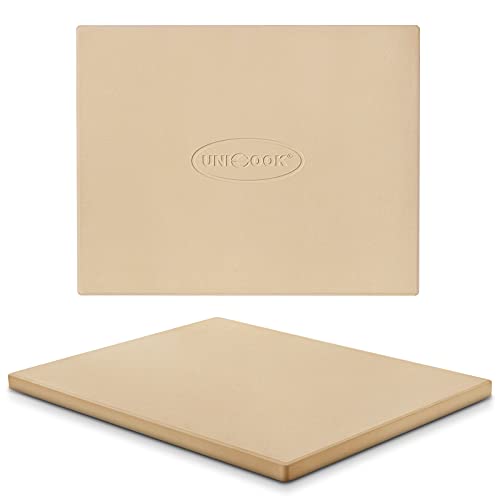
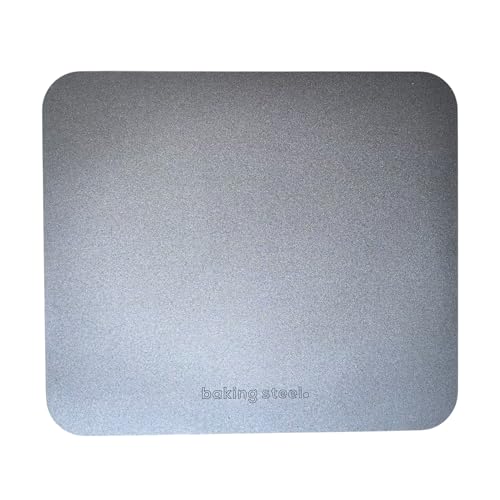
The five tools that do the work in every method on this site: a slab that stores heat, something to launch with, a way to read the surface, and a clean cut.


Start with the right dough: proofed and at room temperature
Stretching is downstream of dough. The single biggest reason dough won't cooperate is that it's cold and under-rested. Gluten is elastic when it's cold and warm, but it only relaxes enough to stay stretched once the dough has come up to room temperature. Pull a ball straight from the fridge and it behaves like a rubber band, you stretch it, it snaps back, you fight it, and you end up tearing it or forcing it thin in patches. The cure is patience: take your dough balls out of the fridge roughly an hour before you bake (longer in a cold kitchen, less in a warm one) and let them sit, covered, ideally in a dough proofing box, until they're relaxed and slightly puffy.
The dough itself matters too. A base that stretches well and bakes well in a hot oven needs developed gluten, built through proper mixing and an unhurried proof, and an honest amount of hydration. Well-developed, adequately hydrated dough is extensible: it wants to spread thin and even, which is exactly what a ~900°F floor needs, and a pizza-specific Italian 00 like Caputo Pizzeria is milled for exactly that job. Under-proofed or stiff, dry dough resists, springs back, and ends up thick and tight. You don't need lab precision here, you need dough that has rested enough that it feels soft, slack, and willing when you poke it.
Flour your surface and hands, keep the disk moving
Before you touch the dough, set up so it can't stick. Dust your work surface and your hands with a little flour, or better for high heat, with semolina, its coarse grains act like tiny ball bearings and let the dough glide. The keyword is little. Sticking is the enemy because a dough disk glued to the counter tears the moment you try to lift or stretch it, but so is over-flouring, for a reason that becomes vivid the instant the pizza hits the oven (more on that below). You want just enough to keep things moving, and no more.
The habit that prevents most sticking problems is simple: keep the disk moving. As you press and shape, rotate the dough a quarter-turn between motions and lift it occasionally to make sure it isn't anchored to the surface. A disk that's constantly turning and lifting never has time to grab. This also keeps your shaping even, rotating naturally distributes your pressing around the whole round instead of letting you flatten one side while neglecting another, which is half the battle in keeping the base an even thickness.
The press, build the rim from the center out
Now shape it. Lay the relaxed ball on your floured surface and press down with your fingertips starting from the center and working outward, pushing the dough flat as you go. The goal is to flatten the middle into an even disk while deliberately leaving the outer inch or so untouched. That outer ring stays thicker and full of gas, and it's what becomes the cornicione, the puffy, blistered rim that defines a properly baked pizza. You're not trying to make a uniform-thickness pancake; you're making a thin field with a raised border.
This is the moment to make the rule absolute: never use a rolling pin. A rolling pin presses the carbon-dioxide gas right out of the dough, including out of that rim you're trying to protect, and it gives you a flat, dense, cracker-like disk with no puff anywhere. In a ~900°F oven the rim is supposed to balloon and leopard-spot in seconds, a rolled-out base physically cannot do that because the gas it needs is already gone. Your hands press the center thin while preserving the gas in the rim; a pin destroys exactly the thing the oven is built to reward.
The stretch, let gravity widen it evenly
Pressing gets you a disk; stretching gets you to size. The cleanest method uses gravity instead of force. The knuckle or draping method: lift the disk and drape it over the backs of both hands (knuckles, not fingertips, so you don't poke through), then gently move your hands apart and rotate the dough, letting its own weight pull it wider as it hangs. Gravity does the stretching; your hands just guide and turn. Because the dough rotates continuously, it widens evenly all the way around instead of thinning out in one spot, which is the whole goal.
If draping feels precarious, the countertop pull is a fine alternative: keep the disk flat on the floured surface and gently pull it outward from underneath the edge with both hands, rotating a quarter-turn after each pull so the stretching stays balanced around the round. Either way, the principles are the same, gentle, even, and rotating. Aim for a round disk roughly 12 to 14 inches across, sized to fit comfortably on your oven's stone with room to launch. Keep checking that the center isn't getting dramatically thinner than the rest; even thickness across the field is what cooks uniformly in 60 to 90 seconds.
Common mistakes, tearing, gummy spots, too much flour
Three failures account for most ruined pies, and all three trace back to the stretch. Tearing happens when you over-stretch or thin the center too far, leaving a fragile spot that splits, usually right as you're trying to launch, dumping sauce on the stone. The fix is prevention (don't push the middle to translucency) and, if it does tear, a quick patch: pinch the edges of the hole back together and press gently, or lay a small scrap of dough over it. A patched disk launches fine; a torn one mid-launch does not.
Uneven thickness is the gummy-center culprit. If part of your base is noticeably thicker than the rest, that thick patch can't dry out and cook through in the seconds a hot oven gives it, so it comes out doughy and wet while thinner areas are done. The cure is shaping discipline, rotate constantly, press evenly, and feel for thick spots before you top it. Too much flour is the third, and it's specific to high heat: excess flour or semolina on the underside of the dough burns at ~900°F, leaving acrid black scorch marks on your crust and smoke in your oven. Use the minimum that prevents sticking and brush off any obvious excess before launching.
Get it onto the peel and launch with confidence
A perfect stretch dies on the peel if you fumble the handoff. First, flour or semolina the peel, lightly but thoroughly, so the dough will slide, and a perforated launching peel helps by letting the excess fall through instead of packing into paste. Then build fast. The longer a topped pizza sits on the peel, the more moisture seeps through and glues it down, so transfer the stretched disk to the peel and add sauce, cheese, and toppings quickly. Before you commit, give the peel a gentle shake, the pizza should slide freely. If it's stuck, lift the edge and puff a little semolina underneath until it moves.
The launch itself is a single confident motion, not a hesitant one. Angle the peel low to the stone, line up where you want the pizza to land, and pull the peel back with a quick, decisive jerk so the pizza slides off and stays put, tentative launches fold pizzas in half. A well-stretched, evenly thin, round base is what makes this easy: even dough slides predictably, where a lopsided or torn disk catches and bunches. We walk through the full mechanics, peel angle, the shake test, the jerk, in how to launch a pizza, and how the launch fits into a full bake in how to use a pizza oven.
Ready to buy? Start with our top picks
Whatever this guide steered you toward, here's where most readers land, ranked on stated floor heat. Live price check on each.
- Check price on Amazon
- Check price on Amazon
- Check price on Amazon
- Check price on Amazon
- Check price on Amazon
- Check price on Amazon
As an Amazon Associate we earn from qualifying purchases, at no cost to you.
Key terms
- Cornicione
- The puffy outer rim of a pizza. You create it by pressing the center thin while leaving the outer ~1 inch untouched and full of gas, so it balloons and leopard-spots in a hot oven. A rolling pin destroys it by pressing the gas out.
- Extensibility
- The dough's willingness to stretch and stay stretched rather than spring back. It comes from well-developed gluten, adequate hydration, and, critically, letting the dough warm to room temperature, which relaxes the gluten so it spreads thin and even instead of fighting you.
- Knuckle / draping method
- Stretching the dough by draping it over the backs of both hands and letting gravity widen it as you rotate. Because the dough hangs and turns, it thins evenly all the way around, the opposite of forcing it thin in one spot and tearing the center.
- Even thin base
- A consistently thin field across the middle of the pizza, ringed by a puffy rim. It's the geometry a ~900°F floor needs to cook a pizza in 60 to 90 seconds without leaving a gummy center, the whole reason careful stretching matters for pizza-oven owners.
- The shake test
- Giving the loaded peel a gentle shake before launching to confirm the pizza slides freely. If it's stuck, a torn or over-flatten launch is coming; lift the edge and add a little semolina underneath until the pizza moves before you commit to the jerk.
- Semolina dusting
- Using coarse semolina instead of fine flour on the bench and peel. The grains act like ball bearings for a clean slide and resist scorching better at high heat, though even semolina burns if you use too much, so apply the minimum that prevents sticking.
Questions, answered
Why does my pizza dough keep springing back when I try to stretch it?
Almost always because it's too cold and under-rested. Cold gluten is tight and elastic, so a ball straight from the fridge snaps back the moment you stretch it. Take your dough out about an hour before you bake (longer in a cold kitchen) and let it sit covered until it's relaxed and slightly puffy, a gentle fingertip dent should spring back slowly, not instantly. Room-temperature, well-proofed dough is extensible: it spreads thin and stays there instead of fighting you. If even rested dough resists hard, it may be under-proofed or too low in hydration.
Can I use a rolling pin to stretch pizza dough?
No, and this matters more for a hot pizza oven than almost anywhere else. A rolling pin presses the carbon-dioxide gas out of the dough, including out of the outer rim, leaving a flat, dense, cracker-like disk. In a ~900°F oven the rim is supposed to balloon and leopard-spot in seconds, but it can't if the gas is already gone. Shape by hand instead: press from the center outward to thin the middle while leaving the outer inch untouched and puffy, then stretch with gravity. Hands preserve the gas the oven needs; a pin destroys it.
How thin should I stretch pizza dough for a pizza oven?
Thin and even across the center, with the outer ~1 inch left puffy for the rim, sized to about 12 to 14 inches to fit your oven's stone with launching room. The center should be evenly thin, not so thick that it stays gummy in the 60-to-90-second bake, and not stretched to translucency, which tears on launch. Even thickness matters more than maximum diameter: an even 12-inch disk bakes uniformly, while a ragged 15-incher with a paper-thin middle and thick patches comes out part-raw, part-burnt. Aim for even and round before you aim for big.
Why does my pizza tear when I stretch it?
Tearing comes from over-stretching or thinning the center too far, leaving a fragile spot that splits, often right at launch, which dumps your sauce onto the stone. Prevent it by not pushing the middle to translucency and by stretching gently and evenly with rotation rather than yanking one area. If it does tear before you've topped it, patch it: pinch the edges of the hole back together and press gently, or lay a small scrap of dough over the gap. A patched disk launches fine. The other cause is cold, tight dough, let it warm to room temperature first so it stretches without fighting.
Why is the middle of my pizza gummy and undercooked?
Two usual causes, both fixable in the stretch. First, uneven thickness: a patch that's noticeably thicker than the rest can't dry out and cook through in the few seconds a ~900°F oven gives it, so it comes out doughy while thinner areas finish. Rotate and press evenly, and feel for thick spots before topping. Second, overloading with sauce or wet toppings adds moisture the fast bake can't drive off. A home oven hides these flaws because it cooks slowly; a pizza oven exposes them because it cooks fast. An even, thin, well-stretched base is what lets the high heat crisp the center instead of leaving it raw.
Should I use flour or semolina to stop the dough sticking?
Either works, but semolina is the better choice near a hot oven, on both the bench and the peel. Its coarse grains act like tiny ball bearings for a clean slide and resist scorching better than fine flour. The key with both is restraint: use the minimum that prevents sticking, because excess flour or semolina on the underside of the dough burns at ~900°F, leaving acrid black scorch marks and smoke. Keep the disk moving as you shape it so it never grabs the surface, give the loaded peel a shake to confirm it slides, and brush off any obvious excess before you launch.
Filed under Explainer
Keep reading.
Why Does My Pizza Dough Spring Back?
The dough is elastic, not broken. Why the cure is a rest, and why P/L ratio makes springback a measurable flour property.
Why Does My Pizza Dough Tear?
How to tell an underproofed tear from an overproofed one, which is the diagnostic most guides skip.
How to Launch a Pizza (2026)
The handoff your stretch is building toward, peel angle, the shake test, and the confident jerk that lands the pizza without folding it.
How to Use a Pizza Oven (2026)
Where the stretch fits in the full bake: preheating, launching, turning, and managing recovery for a clean 60-to-90-second pizza.
The Best Pizza Making Kits (2026)
Peels, cutters, thermometers, and dough tools bundled, the gear that turns a good stretch into a clean launch and an even bake.
Ooni vs Gozney: Which Brand Wins?
The two giants head to head, same ~950°F ceiling, very different philosophies, one clear way to choose.
Ooni Fyra 12 Review
Ooni's lightest wood-pellet oven reviewed, real live-fire flavor at $349, and what to cross-shop.