Our pick. Ooni
Check price on Amazon →Why Does My Pizza Dough Spring Back? (2026)
Dough that shrinks back is elastic because the gluten is still tight, and the cure is a rest, not more force. Gluten strands held under tension pull themselves back toward their relaxed length the moment you let go, and the only thing that lets them settle at the new length is time. That balance between stretchiness and snap is measurable, which is why Commission Regulation (EU) No 97/2010 specifies a P/L ratio of 0.50 to 0.70 for Pizza Napoletana flour and Mulino Caputo publishes P/L 0.50/0.60 for its Pizzeria flour. Springback is partly a flour property, not only a technique problem.
By The Pizza Oven Review DeskUpdated 2026-08-08~11 min readRanked on verified floor heatHow we research
We earn a commission on purchases through our links, at no cost to you. It never decides a ranking. How this works

Our pick.
Zojirushi Virtuoso Plus BB-PDC20Best Overall. From Best Bread Machines for Pizza Dough (2026).
If your dough keeps shrinking back to a smaller circle every time you stretch it, the dough is elastic because the gluten is still tight, and the fix is a rest rather than more force. This is one of the few kitchen problems where doing nothing is genuinely the correct action. Gluten strands that are stretched but not yet relaxed behave like a loaded spring: they store the tension you put into them and release it the instant you stop pulling, which is why the disk you just widened to 12 inches is 9 inches again by the time you have turned around for the sauce. Pull harder and you load the spring harder. Wait ten minutes and the problem largely dissolves on its own.
The mechanism is worth understanding, because it also tells you which of the causes applies to you. Under tension, gluten strands slowly slide past one another and re-form their cross-links at the new, longer length, a process that takes minutes and that only proceeds when the dough is warm and unloaded. Rush it and you get springback. Allow it and you get extensibility. The genuinely interesting part, and the thing almost nobody connects, is that the trade-off between those two properties is a measured quantity in Italian milling: it is the P/L ratio, and both the legal specification for Pizza Napoletana and Caputo's own product page print a target for it. Your springback may be partly written on the flour bag.
This page is the elasticity half of a pair. Its twin, why does my pizza dough tear, covers the opposite failure, a net that gives way instead of pulling home, and the two share several causes with opposite symptoms. If you want the shaping motion itself rather than the diagnosis, start with how to stretch pizza dough. Everything numerical below is quoted from a document you can go and read, and where two authorities disagree we print both and say so rather than quietly picking one.
The short version.
- Springback is elasticity, and the cure is time, not force. Gluten strands under tension return to their relaxed length until they have had minutes to slide and re-form at the new length.
- It is measurable. The Italian P/L ratio quantifies exactly this trade-off, and the EU regulation specifies P/L 0.50 to 0.70 for Pizza Napoletana flour, while Caputo publishes P/L 0.50/0.60 for its Pizzeria flour. Springback is partly a flour property.
- Cold dough is the most common single cause. The EU regulation gives a fermentation temperature of 25°C and a four to six hour second rise at room temperature after balling, so warm and rested is the specified state, not a nicety.
- Dough temperature is a real variable you can measure with a probe thermometer, rather than guess at from how the kitchen feels. Measuring it turns 'it seemed cold' into a number you can repeat.
- Too strong a flour for the job fights you. King Arthur publishes bread flour at 12.7 percent protein against all-purpose at 11.7 percent, and notes that gluten strands become longer and stronger with development, leading to more chewiness and toughness.
- Stretch in stages: widen a little, set it down covered, come back in ten minutes. Three short stretches with rests beat one long fight, every time.
Our top-rated pizza ovens
Whatever you decide, these are the ovens we recommend, ranked on stated floor heat. Live price check on each.
- Check price on Amazon

- Check price on Amazon

- Check price on Amazon

- Check price on Amazon

- Check price on Amazon

- Check price on Amazon

As an Amazon Associate we earn from qualifying purchases, at no cost to you.
What you'll need.
Prices approximate at time of writing.
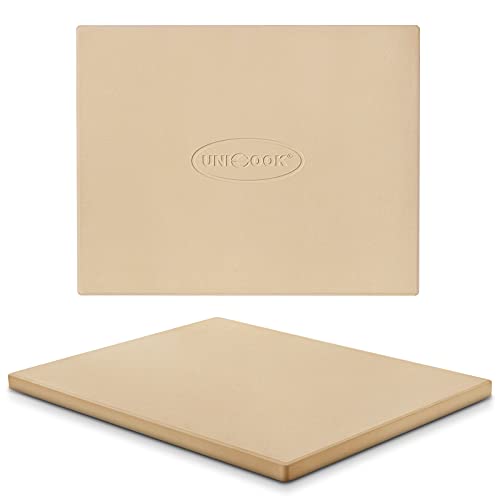
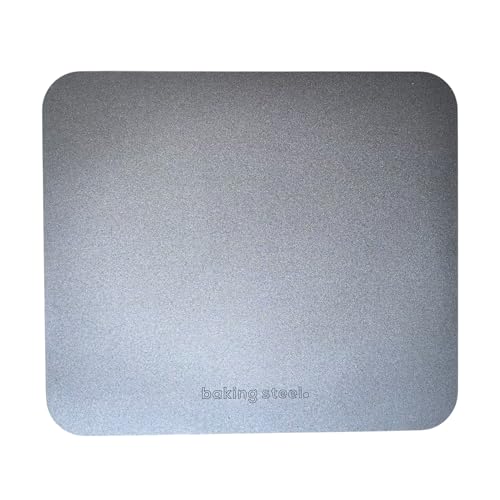
The five tools that do the work in every method on this site: a slab that stores heat, something to launch with, a way to read the surface, and a clean cut.


The short answer, and the mechanism behind it
Dough springs back because gluten is elastic, and elastic means it stores the energy you put into it and gives it back. When you stretch a disk, you are pulling long protein strands past one another and putting the cross-links between them under load. Let go before those links have had time to break and re-form at the new spacing, and they simply pull the sheet home, exactly like a rubber band. Hold the stretch and the links slowly rearrange, the tension bleeds away, and the dough settles at the new size. That slow rearrangement is what bakers call relaxation, and it is measured in minutes, not seconds.
This is why the cure is a rest and not more force. Pulling harder does not accelerate relaxation; it just raises the stored tension, so the rebound gets stronger and, past a point, the sheet fails and you get the other problem entirely, covered in why does my pizza dough tear. The two failures sit at opposite ends of the same axis. Too much elasticity and not enough extensibility gives you springback. Too little structure and the sheet gives way. What you actually want is the middle: a dough that widens willingly and then stays widened.
Springback is a measurable flour property: the P/L ratio
Here is the connection almost nobody makes. That balance between springiness and stretchiness is not a vague quality bakers argue about; in Italian milling it is a published number. Flour is tested on an alveograph, which inflates a disk of dough into a bubble until it bursts and records two things: P, the tenacity, meaning the pressure the dough resists with, and L, the extensibility, meaning how far the bubble stretches before it goes. The ratio of the two, P/L, is precisely the springback-versus-stretchiness trade-off you are feeling with your hands. A high P/L flour is tenacious and rebounds. A low P/L flour is extensible and slack.
And it is specified. Commission Regulation (EU) No 97/2010 requires P/L 0.50 to 0.70 for the flour used in Pizza Napoletana, alongside W 220 to 380, absorption 55 to 62 percent, stability 4 to 12 minutes, falling number 300 to 400, dry gluten 9.5 to 11 g percent and protein 11 to 12.5 g percent. Mulino Caputo publishes P/L 0.50/0.60 for its Pizzeria flour, along with W 260/280 and protein 12.50 percent, which sits neatly inside the regulation's window. In other words, the flours designed for this job are deliberately milled toward the extensible end, because a hand-stretched, thin Neapolitan base needs a dough that will go where you put it and stay there.
The practical implication is liberating: if you are fighting relentless springback with a general purpose flour, some of that fight is the flour and not you. Swapping to a pizza-specific 00 flour milled to a published P/L changes the feel of the dough in a way no amount of technique does. One honesty note: Caputo's page for its Cuoco flour returned an error when we went to read it, so we print no W value, P/L or protein figure for Cuoco at all rather than guess.
Cause one, the dough is cold, and why you should measure that
Temperature is the single biggest lever on how fast gluten relaxes, and cold dough barely relaxes at all on the timescale you have at the bench. Take a ball from the fridge, stretch it, and it will rebound essentially all the way, then keep rebounding through rest after rest, because the relaxation you are waiting for is happening far too slowly at refrigerator temperature. Warm the same ball through and the identical technique works. This is why how to stretch pizza dough puts a room-temperature ball at the very top of its list.
The specification agrees. The EU regulation gives a fermentation temperature of 25°C for the process and puts the entire second rise, four to six hours after the dough is divided into balls, at room temperature. Warm and rested is the described state of a ball that is about to be stretched, not a bonus. Keep the balls covered while they come up, in a proofing box or a lidded stackable dough tray, because a dried surface skin has its own tension and will resist and tear independently of the dough underneath it.
The upgrade that costs the least and helps the most here is simply to measure. Dough temperature is a real, repeatable number, unlike your impression of how warm the kitchen is, and a thin instant read probe thermometer pushed into the side of a spare ball turns a vague feeling into something you can write down and repeat next weekend. Once you are tracking it, you stop guessing about whether the balls have had long enough, and you start noticing the obvious pattern: the sessions where everything stretched easily were the warmer ones.
Cause two, not enough bench rest after balling
Dividing and balling is itself a work step. When you cut a bulk dough into pieces and round each one into a tight ball, you deliberately put the gluten under tension, that is the whole point, because the tension is what gives the ball a smooth skin and holds its shape. A freshly balled dough is therefore at its most elastic, and stretching it immediately is stretching it at the worst possible moment. It will rebound hard, and it will rebound hard no matter how good your flour is.
The regulation builds a long recovery into the schedule for exactly this reason: after the two hour first rise, the dough is divided into balls and then gets four to six hours at room temperature before it is opened. AVPN's published recipe frames the whole thing differently, giving total leavening as minimum 8 and maximum 24 hours. Those two figures do not reconcile and we are not going to pretend they do; what they agree on is the shape of the answer, which is that a balled dough wants hours of unloaded time, not minutes. Our cold ferment versus same day dough page goes through what each document actually specifies.
If you have reballed a dough because the first shape went wrong, treat that as resetting the clock rather than as a free do-over. A reballed dough is a freshly tensioned dough, and it needs its own rest before it will open again. The same applies to dough that has been handled roughly on the way to the bench, dragged across a dry surface, or squeezed while being moved. Lifting balls with a bench scraper instead of grabbing and pulling them keeps that unnecessary tension out of the dough in the first place; the rest of the bench kit is in best pizza dough tools.
Cause three, an overworked dough or too strong a flour for the job
There is such a thing as too much gluten development for the pizza you are making, and it shows up first as springback. King Arthur puts the principle plainly: the higher the protein content, the stronger the flour, and gluten strands become longer and stronger the more the gluten develops, which leads to more chewiness and toughness in the final product. Chewiness and toughness are desirable qualities in a bagel and a nuisance in a base you are trying to open to 12 inches by hand.
The published ladder makes the choice concrete. King Arthur publishes pastry flour at 8 percent protein, cake at 10 percent, all-purpose at 11.7 percent, bread flour at 12.7 percent, whole wheat at 13.2 percent and high-gluten at 14.2 percent. If you are making a thick, chewy pan pizza, bread flour's extra strength is the point. If you are hand-stretching a thin Neapolitan base for a very hot oven, a bread flour dough will fight you noticeably more than a flour milled toward the extensible end, and a high-gluten flour will fight you a lot more. The EU regulation's own window for Pizza Napoletana flour, protein 11 to 12.5 g percent, sits below bread flour rather than above it, which tells you something. The whole ladder is broken down on our pizza flour protein content page and the shopping decision is in best flour for pizza dough.
Over-mixing compounds the same effect. The regulation specifies 20 minutes of kneading at low speed, and low speed is doing real work in that sentence: a long, gentle mix develops a well-ordered gluten network, while a short, violent one at high speed can leave dough both tight and hot. If your mixer runs fast and your dough comes out of the bowl warm and rubbery, back the speed off before you change anything else. Reaching for a dedicated 00 pizza flour is the other half of the same fix.
The fix that actually works: stretch in stages, with rests
Every cause above resolves into the same practical method, and it is almost embarrassingly simple: do not try to reach final size in one go. Press the disk out from the centre, leaving the outer inch untouched for the rim. Take the first stretch to roughly two thirds of the diameter you want. Then put the disk down, cover it, and leave it for about ten minutes while you prepare toppings. Come back and finish it. The second stretch will meet noticeably less resistance and, crucially, will hold, because the ten minutes did the relaxation that no amount of pulling could.
Three things make this work better. First, work on a lightly floured or semolina-dusted surface so the disk glides rather than gripping and pulling against itself; a disk stuck to the bench is being stretched from both sides at once. Second, rotate constantly, so the tension you are adding keeps moving around the sheet instead of accumulating in one arc. Third, cover the resting disk. An uncovered disk skins over in ten minutes and the skin brings its own tightness, which defeats the purpose.
Practise this on a schedule where the dough is genuinely ready and the method feels like magic. Practise it on a cold, freshly balled dough and it will still be a struggle, which is the point: the staged stretch is a way of finishing the last bit of relaxation at the bench, not a way of skipping the hours the dough was supposed to get. Once the base opens easily and stays open, everything downstream gets easier too, including the handoff covered in how to launch a pizza, because an evenly opened base slides predictably off a peel and a rebounding one does not.
How to Stretch Dough That Springs Back, in Stages
- 1
Stop fighting it and let go
The moment the dough starts pulling back faster than you can widen it, stop. Continued pulling loads the gluten further and makes the rebound stronger, and it is also the fastest route to a tear. Lay the disk flat on a lightly floured bench and take your hands off it. Nothing you do with your hands in the next ten minutes will help as much as not doing anything.
- 2
Measure the dough temperature, do not guess it
Slide a thin probe into the side of a spare ball and read the number. Dough temperature is a real, repeatable variable, unlike how warm the kitchen feels to you. The EU regulation specifies a fermentation temperature of 25°C for Pizza Napoletana, which gives you a sensible reference point for what a relaxed, ready ball should be sitting near rather than a hard target you must hit.
- 3
Bring it up to room temperature, covered, if it is cold
A dough ball straight from the fridge is tight all the way through, and cold gluten will not relax no matter how long you pull on it. Leave the balls covered in a proofing box or a lidded tray until they feel soft and slightly slack and a fingertip dent fills back in slowly. Cover them, because a dried skin resists stretching on its own and tears at the boundary between skin and interior.
- 4
Press out the base, then stop
With the ball relaxed, press from the centre outward with your fingertips to form a disk, deliberately leaving the outer inch untouched so it stays gassy and becomes the rim. Press only; do not try to reach final diameter yet. Pressing puts far less tension into the sheet than stretching does, so it is the part of the job you can finish in one go.
- 5
Take the first stretch to about two thirds of final size
Drape the disk over the backs of both hands, knuckles up, move your hands apart slowly, and rotate so the load travels around the sheet. Stop well short of the size you want, around two thirds of final diameter. You are not trying to finish; you are trying to load the gluten a modest amount and then give it something to relax into.
- 6
Rest it covered for ten minutes and walk away
Set the partly stretched disk down on a lightly floured bench or a semolina-dusted peel, cover it with a cloth or an upturned tray, and leave it. This is the step that does the actual work: during those minutes the strands slide past one another and re-form at the longer length, so the same disk that was rebounding will now hold its new size. Use the time to prep toppings.
- 7
Finish in a second, short stretch
Come back and take the disk out to full size. It should now widen with noticeably less resistance and stay where you put it. If it still fights at this point, that is a signal rather than a failure: rest it once more, and if a third stretch still rebounds hard, the cause is upstream, either a very strong flour, an overworked dough, or a ball that was reballed too recently.
- 8
Check the diameter against the ball you started with
Before you blame springback, check you are not asking a small ball to cover a big pizza, which feels identical in the hands. The EU regulation gives dough balls of 180 to 250 g and AVPN's published recipe gives 200 to 280 g, both for a pizza of at most 35 cm. A ball well under those weights stretched to a large diameter will resist and then tear rather than simply spring back.
Ready to buy? Start with our top picks
Whatever this guide steered you toward, here's where most readers land, ranked on stated floor heat. Live price check on each.
- Check price on Amazon
- Check price on Amazon
- Check price on Amazon
- Check price on Amazon
- Check price on Amazon
- Check price on Amazon
As an Amazon Associate we earn from qualifying purchases, at no cost to you.
How we chose.
The P/L range of 0.50 to 0.70, the W range of 220 to 380, the 25°C fermentation temperature, the 20 minute low speed knead and the two hour plus four to six hour rise schedule are quoted from Commission Regulation (EU) No 97/2010, the Pizza Napoletana TSG, read directly from EUR-Lex.
The P/L 0.50/0.60, W 260/280 and protein 12.50 percent figures for Caputo Pizzeria are from Mulino Caputo's own product page for that flour. We print no W value, P/L or protein figure for Caputo Cuoco because the manufacturer page we tried to read returned an error, and we will not invent one.
Flour protein percentages are King Arthur Baking's published figures from its article on protein percentage in flour, dated 25 September 2023, along with its own stated principle that higher protein means a stronger flour.
Total leavening of minimum 8 and maximum 24 hours is from AVPN's published recipe page. It does not agree with the EU regulation's six to eight hours, so we print both and attribute each rather than averaging them.
This is a research and verification desk. We do not run physical baking trials and nothing here is presented as one. Where a claim is practitioner consensus rather than a published specification, we say so.
Key terms
- Elasticity
- The dough's tendency to return to its previous shape after being stretched, caused by gluten cross-links storing and releasing tension. It is what makes a disk shrink back to a smaller circle the moment you let go. Rest converts it into extensibility, because the links break and re-form at the new length.
- Extensibility
- The dough's willingness to stretch and stay stretched. It is the counterweight to elasticity, and it is what you are waiting for when you rest a springy dough. Warm, well-rested, adequately hydrated dough milled from a flour at the extensible end of the range is extensible.
- P/L ratio
- An alveograph measurement of a flour's tenacity, P, against its extensibility, L. It quantifies exactly the springback trade-off you feel by hand. Commission Regulation (EU) No 97/2010 specifies P/L 0.50 to 0.70 for Pizza Napoletana flour, and Mulino Caputo publishes P/L 0.50/0.60 for its Pizzeria flour.
- W value
- The alveograph measure of overall flour strength, essentially the work needed to blow the dough bubble. The EU regulation specifies W 220 to 380 for Pizza Napoletana flour; Caputo publishes W 260/280 for Pizzeria. A higher W flour tolerates longer fermentation but also tends to feel tighter under the hands.
- Bench rest
- Unloaded time given to a dough between work steps so the gluten can relax at its new length. Balling puts the dough under tension deliberately, so a freshly balled dough is at its springiest; the EU regulation allows four to six hours at room temperature after balling before the base is opened.
- Staged stretch
- Opening the base in two or three short stretches separated by ten minute covered rests, rather than in one long fight. Each rest lets the gluten settle at the new diameter, so the following stretch meets less resistance and the disk holds its size instead of rebounding.
Questions, answered
why does my pizza dough keep shrinking back
Because the gluten is still tight and elastic, so it stores the tension you put into it and releases it as soon as you let go. The cure is a rest, not more force: pulling harder simply loads the strands further and makes the rebound stronger. Lay the disk down, cover it, and leave it for about ten minutes so the cross-links can break and re-form at the longer length, then finish the stretch. If it rebounds through repeated rests, the usual reasons are that the dough is still cold, that it was balled too recently, or that the flour is stronger than the job needs. The EU regulation for Pizza Napoletana gives a fermentation temperature of 25°C and four to six hours at room temperature after balling.
pizza dough springs back when i stretch it, how do i fix it
Stretch it in stages. Press the disk out from the centre leaving the outer inch untouched for the rim, take the first stretch to about two thirds of your target diameter, then set it down covered for ten minutes and go do something else. Come back and finish it. The rest is doing the actual work, because gluten relaxation takes minutes and cannot be hurried by pulling. Also check that the ball is genuinely at room temperature rather than fridge-cold, since cold gluten relaxes far too slowly to help you at the bench, and check the ball is big enough for the diameter you want. The EU regulation gives balls of 180 to 250 g and AVPN's recipe gives 200 to 280 g, both for a pizza of at most 35 cm.
how long should i rest pizza dough before stretching
Long enough that it is warm and slack rather than cold and tight, and a covered ten minute rest partway through the stretch on top of that. The published schedules are considerably longer than most home recipes suggest. Commission Regulation (EU) No 97/2010 specifies a two hour first rise and then four to six hours at room temperature after the dough is divided into balls, so six to eight hours in total, while AVPN's published recipe frames total leavening as minimum 8 and maximum 24 hours. Those two authorities disagree and we print both rather than averaging. The practical test is a fingertip poke: the dent should fill back in slowly, not snap back instantly.
is springy pizza dough a flour problem
Partly, and this is the connection most guides miss. Italian milling measures the trade-off directly as the P/L ratio, where P is tenacity and L is extensibility, taken from an alveograph test. Commission Regulation (EU) No 97/2010 specifies P/L 0.50 to 0.70 for Pizza Napoletana flour, and Mulino Caputo publishes P/L 0.50/0.60 for its Pizzeria flour, which means flours intended for hand-stretched pizza are deliberately milled toward the extensible end. Protein matters too: King Arthur publishes bread flour at 12.7 percent against all-purpose at 11.7 percent, and the regulation's own window for Pizza Napoletana flour is 11 to 12.5 g percent, below bread flour. A stronger flour will fight you more for the same technique.
does cold pizza dough spring back more
Yes, markedly, and it is the most common single cause. Gluten relaxation is a slow rearrangement of cross-links, and at refrigerator temperature it happens far too slowly to be any use to you at the bench, so a cold ball rebounds through rest after rest. Bring the balls up to room temperature fully, covered so they do not skin over, before you try to open them. The EU regulation specifies a fermentation temperature of 25°C and puts the whole four to six hour second rise at room temperature, so warm is the described state rather than an optional nicety. Rather than guessing from how the kitchen feels, push an instant read probe into a spare ball and read the actual number.
should i measure the temperature of my pizza dough
It is one of the highest value habits available to a home pizza maker, because dough temperature is a real, repeatable variable and your impression of the kitchen is not. A thin instant read probe slid into the side of a spare ball gives you a number you can record and reproduce, which turns a vague sense that the dough seemed cold into something you can actually control from session to session. Commission Regulation (EU) No 97/2010 specifies a fermentation temperature of 25°C for Pizza Napoletana, which gives you a published reference point rather than a hard target. Once you track dough temperature you will usually notice the sessions where the dough opened easily were simply the warmer ones.
Filed under Explainer
Keep reading.
Why Does My Pizza Dough Tear?
The opposite failure on the same axis: a net that gives way instead of pulling home, and how to tell underproofed from overproofed.
How to Stretch Pizza Dough (2026)
The shaping motion itself: pressing the rim, the draping stretch, and the even, thin geometry a hot floor needs.
Pizza Flour Protein Content
King Arthur's published ladder from 8 to 14.2 percent against the EU regulation's 11 to 12.5 g percent window for Napoletana flour.
Cold Ferment vs Same Day Pizza Dough
Why cold dough has to come up to room temperature before it will open, and what each governing document actually specifies.
Best Flour for Pizza Dough
Which bag to reach for, including the published W, P/L and protein figures where the miller actually prints them.
Best Pizza Dough Tools
Scrapers, trays and proofing boxes: the bench kit that keeps unnecessary tension out of the dough before you ever stretch it.