Our pick. Ooni
Check price on Amazon →Pizza Flour Protein Content: The Published Numbers, and the Two We Could Not Get
King Arthur publishes a protein ladder running from 8 percent for pastry flour to 14.2 percent for high-gluten, and Commission Regulation (EU) No 97/2010 specifies Pizza Napoletana flour at 11 to 12.5 g percent protein. But the Italian system specifies strength, not just protein, which is why an American protein number alone cannot tell you what a flour will do. Below: both specifications in full, Caputo's own figures, and two numbers we went looking for and could not find.
By The Pizza Oven Review DeskUpdated 2026-08-08~11 min readRanked on verified floor heatHow we research
We earn a commission on purchases through our links, at no cost to you. It never decides a ranking. How this works

Our pick.
Antimo Caputo Pizzeria FlourBest Overall Pizza Flour. From Best Flour for Pizza Dough (2026).
King Arthur Baking publishes the protein percentage of its own flours, and the ladder runs from 8 percent for pastry flour to 14.2 percent for high-gluten, with all-purpose at 11.7 and bread flour at 12.7. Commission Regulation (EU) No 97/2010, which registered Pizza Napoletana as a Traditional Speciality Guaranteed, specifies its flour at 11 to 12.5 g percent protein, which sits between American all-purpose and American bread flour. Those are the two published ladders, they are printed in full below, and between them they answer most of what people mean when they ask what protein flour to use for pizza.
They also expose the real problem, which is that the two systems are not measuring the same thing. The EU specification does not stop at protein. It also specifies W 220 to 380, a P/L of 0.50 to 0.70, absorption of 55 to 62 percent, stability of 4 to 12 minutes, a falling number of 300 to 400 and dry gluten of 9.5 to 11 g percent. W is a measure of flour strength, which is not the same quantity as protein content, and it is the number Italian mills lead with. An American bag gives you one figure where an Italian specification gives you seven, and that is why two flours with the same protein percentage can behave completely differently in a dough.
Two numbers are missing from this page on purpose, and we would rather say so than fill the gaps. King Arthur publishes no protein percentage for its own '00' Pizza Flour anywhere we could find, and the Mulino Caputo product page for Cuoco returned a 404 on our fetch, so we print no W value, P/L or protein figure for that flour. Both of those are real gaps in the published record, and a page that quietly produced numbers for them would be making them up.
The short version.
- King Arthur publishes its own protein ladder: pastry 8 percent, cake 10 percent, all-purpose 11.7 percent, bread flour 12.7 percent, whole wheat 13.2 percent, high-gluten 14.2 percent. Note the oddity that its pastry flour is lower than its cake flour, which is not the order most people assume.
- Commission Regulation (EU) No 97/2010 specifies Pizza Napoletana flour at 11 to 12.5 g percent protein, which sits between American all-purpose and American bread flour.
- The Italian system specifies strength, not just protein. The same EU specification gives W 220 to 380, P/L 0.50 to 0.70, absorption 55 to 62 percent, stability 4 to 12 minutes, falling number 300 to 400 and dry gluten 9.5 to 11 g percent.
- Mulino Caputo publishes its own figures for Caputo Pizzeria, the blue bag: W 260/280, P/L 0.50/0.60, protein 12.50 percent. All three sit inside the EU specification.
- '00' is a grind fineness, not a protein or strength grade. It describes how finely the flour is milled and says nothing on its own about how strong the flour is, which is the single most common misconception about pizza flour.
- Two figures we could not source and therefore do not print: a protein percentage for King Arthur's own '00' Pizza Flour, and any W value, P/L or protein figure for Caputo Cuoco.
Our top-rated pizza ovens
Whatever you decide, these are the ovens we recommend, ranked on stated floor heat. Live price check on each.
- Check price on Amazon

- Check price on Amazon

- Check price on Amazon

- Check price on Amazon

- Check price on Amazon

- Check price on Amazon

As an Amazon Associate we earn from qualifying purchases, at no cost to you.
What you'll need.
Prices approximate at time of writing.
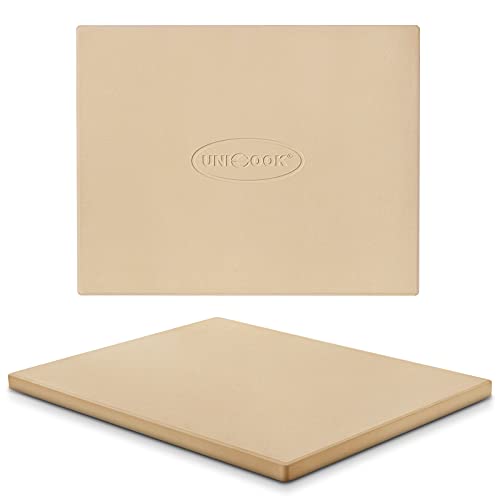
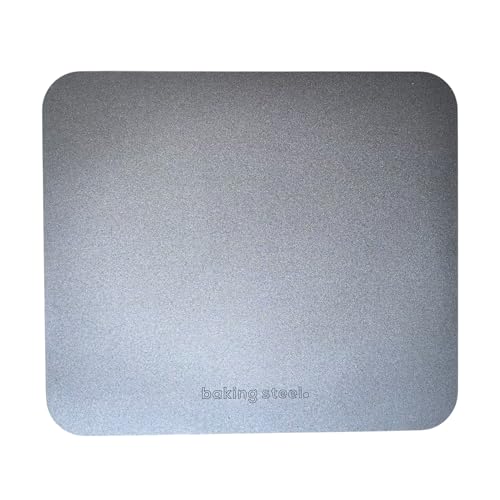
The five tools that do the work in every method on this site: a slab that stores heat, something to launch with, a way to read the surface, and a clean cut.


King Arthur's published protein ladder
King Arthur Baking publishes protein percentages for its own flours, which makes it one of the few American millers you can cite rather than estimate. This is its ladder, from its own article on why protein percentage in flour matters, published 25 September 2023.
| Flour | Protein | Source |
|---|---|---|
| Pastry flour | 8% | King Arthur Baking |
| Cake flour | 10% | King Arthur Baking |
| All-Purpose | 11.7% | King Arthur Baking |
| Bread flour | 12.7% | King Arthur Baking |
| Whole wheat | 13.2% | King Arthur Baking |
| High-gluten | 14.2% | King Arthur Baking |
Read the top two rows again, because they are the surprise. King Arthur's pastry flour is 8 percent protein and its cake flour is 10 percent, so the pastry flour is the weaker of the two. Most people assume cake flour is the softest thing on the shelf and would put it at the bottom of any ladder. On King Arthur's own published figures it is not. That is exactly the sort of thing you only learn from a miller's own numbers, and it is a good reminder that flour names are marketing categories rather than measurements.
King Arthur's framing of what the ladder means is simple: it says that the higher the protein content, the stronger the flour. Its explanation of the mechanism is that gluten strands get longer and stronger as the gluten develops, and that this produces more chewiness and more toughness in the finished product. So protein is a proxy for potential gluten, and gluten is what gives a crust its chew and its resistance. More protein is not better, it is chewier and tougher, which is a desirable thing in a New York slice and an undesirable one in a pastry.
Its style guidance, from its own article on which flour is best for pizza published 13 March 2024, follows the ladder: all-purpose for a classic crust with a crispy bottom and a little chew, bread flour for thick chewy pan pizzas with puffy crusts and a hearty chew, and its '00' Pizza Flour for Neapolitan style, which it describes as giving a crispy bubbly exterior and a puffy airy interior. Where to spend is covered in best flour for pizza dough.
The EU specification: seven numbers, not one
Now the same question asked by a legal instrument. Commission Regulation (EU) No 97/2010 does not simply name a protein percentage for Pizza Napoletana flour, it specifies the flour as a set of measured properties.
| Property | Specification | What it describes |
|---|---|---|
| W | 220 to 380 | Flour strength, roughly how much work the gluten will take before it gives out |
| P/L | 0.50 to 0.70 | The balance between resistance and extensibility, whether the dough pushes back or stretches |
| Absorption | 55 to 62% | How much water the flour will take up as a share of its own weight |
| Stability | 4 to 12 minutes | How long the dough holds together under mixing before it starts to break down |
| Falling number | 300 to 400 | Enzyme activity in the flour, which affects how the starches behave during fermentation and bake |
| Dry gluten | 9.5 to 11 g% | The measured gluten itself rather than the protein it is inferred from |
| Protein | 11 to 12.5 g% | The single figure an American bag would print |
The whole point of that table is the last row. Protein is one of seven properties the regulation cares about, and on its own it is the least informative of them. Line it up against King Arthur's ladder and the Pizza Napoletana protein band of 11 to 12.5 g percent straddles American all-purpose at 11.7 percent and stops short of bread flour at 12.7 percent. If protein were the whole story, you could bake a specification compliant Neapolitan out of a bag of supermarket all-purpose, and the reason you cannot is everything else in that table.
W is the figure that does the work Italians expect it to do. It is a measure of strength, of how much mixing and fermentation the flour will tolerate before the structure gives out, and it is why an Italian bag leads with W where an American bag leads with protein. A flour can hit 12.5 percent protein and still be too weak for a long ferment if its W is low, because the protein is present but the gluten it forms is not robust. This is the single most useful thing to understand about pizza flour labelling: an American protein number alone does not tell you what a flour will do.
Two of the other rows connect directly to decisions elsewhere on this site. Absorption of 55 to 62 percent is the physical reason the regulation's own dough sits at 55.6 percent hydration, which is worked through in pizza dough hydration explained. And stability of 4 to 12 minutes is worth reading next to the same regulation's instruction to knead for 20 minutes at low speed, a mixing time discussed in pizza dough salt and yeast ratios.
What Caputo actually publishes
Mulino Caputo publishes specifications for its flours on its own product pages, in the Italian format, which makes it directly comparable to the EU table above.
| Flour | W | P/L | Protein | Source |
|---|---|---|---|---|
| Caputo Pizzeria ('00', blue) | 260/280 | 0.50/0.60 | 12.50% | Mulino Caputo product page |
| Caputo Cuoco (red) | Not published here. The manufacturer's product page returned a 404 on our fetch, so we print no figures for this flour. | No source obtained | ||
Put the Pizzeria row next to the regulation and the fit is exact. W 260/280 sits comfortably inside the specified band of 220 to 380. P/L 0.50/0.60 sits inside 0.50 to 0.70. Protein 12.50 percent sits inside 11 to 12.5 g percent, right at the top of it. That is what a flour built to a specification looks like when you check it against the specification, and it is why the blue bag is the default recommendation for high heat Neapolitan work. If you are baking often enough that an 11 lb bag disappears in a month, the same flour comes in a 55 lb sack.
Note also that Caputo's protein figure of 12.50 percent is only marginally below King Arthur's bread flour at 12.7 percent. Two flours, almost the same protein content, used for very different pizzas and very different bakes. That comparison, more than anything else on this page, is the argument for reading the strength figure rather than the protein figure.
The two numbers we went looking for and could not find
This section exists because refusing is the point. Both of these are real gaps in the published record, and naming them is more useful than papering over them.
Gap one: King Arthur publishes no protein percentage for its own '00' Pizza Flour. King Arthur publishes protein figures for pastry, cake, all-purpose, bread, whole wheat and high-gluten flour, and it recommends its '00' Pizza Flour by name for Neapolitan style pizza. But it does not attach a protein percentage to that product on its protein article, on its pizza flour article, or on its shop page. We looked at all three. Given how forthcoming King Arthur is with the rest of its range, the absence is conspicuous, and it means the one flour in its lineup marketed specifically for pizza is the one you cannot place on its own ladder. We are not going to estimate it from the category, because a '00' designation does not imply a protein figure.
Gap two: no W value, P/L or protein figure for Caputo Cuoco. As above, the manufacturer's own product page returned a 404 when we fetched it. Numbers for Cuoco circulate widely and are probably close to correct, but we cannot verify them at the source, so they do not appear here.
The general principle both gaps illustrate is worth stating plainly, because it applies well beyond flour: a number with no traceable publisher behind it is a rumour, no matter how many sites repeat it. That is the same standard we apply on our temperature chart, where we also decline to print an emissivity value for cordierite because we could not find one published anywhere.
What '00' actually means, and what it does not
Here is the misconception that costs people the most money. '00' is a grind fineness. It is not a protein grade and it is not a strength grade. The Italian numbering system describes how finely the flour has been milled and how much of the bran and germ has been removed, and '00' is the finest, most refined grade in that system. It describes the texture of the powder, not the behaviour of the dough.
Which means the sentence "I bought '00' flour, so my dough will be Neapolitan" does not follow. Two flours can both be '00' and have completely different W values, different absorption and different protein. Caputo Pizzeria is a '00' flour published at W 260/280 and 12.50 percent protein. A '00' flour milled for pastry work would carry the same designation and behave nothing like it. The grade tells you the mill's screen, and everything you actually care about is the rest of the specification.
That is why Commission Regulation (EU) No 97/2010, which is defining Neapolitan pizza in law, specifies W, P/L, absorption, stability, falling number, dry gluten and protein, and does not lean on a grind designation to carry the meaning. And it is why a bag that gives you only a '00' on the front and nothing on the back is telling you the least useful fact about itself.
What the fine grind genuinely does contribute is a smooth, silky dough surface and a fine crumb, which is part of the texture people associate with the style. That is a real property and a good reason to want it. It is just not a substitute for knowing the flour's strength.
Matching flour to your oven, not to a recipe
The reason protein and strength matter at all is that they decide how much punishment the dough can take, and the punishment comes from the bake. So the flour decision is downstream of the oven decision.
For a 60 to 90 second bake, the time both the AVPN and the EU regulation specify for Neapolitan, you want a flour built for it. The regulation's own answer is W 220 to 380 and 11 to 12.5 g percent protein, and Caputo Pizzeria's published W 260/280 and 12.50 percent protein land inside that. This is the bake that needs a very hot floor, which in practice means the kind of oven ranked in best pizza oven for Neapolitan pizza, and Ooni's own guidance for the Koda 16 is to bring the stone to 715 to 850°F, which is 380 to 450°C, and to expect a Neapolitan style pizza in under 2 minutes.
For a 4 to 12 minute bake, which is what our temperature chart attributes to New York style at 500 to 600°F, with commercial deck oven manuals specifying at least 550°F for baking directly on the deck and Gozney publishing 600 to 700°F for the style, King Arthur's own recommendations apply directly: all-purpose at 11.7 percent for a classic crust with a crispy bottom and a little chew, or bread flour at 12.7 percent for a thicker, chewier, puffier result. The style comparison itself is in Neapolitan vs New York pizza.
Two knock on effects to keep in view when you swap flours. First, absorption changes with the flour, so a hydration figure that worked on one bag can leave the next one slack, which is why the EU specification pins absorption at 55 to 62 percent and why the AVPN gives a flour range of 1,600 to 1,800 g per litre rather than a single figure. Second, a weaker flour tears more readily when stretched thin, so if you have started opening holes in the centre of your discs after changing bags, the flour is a legitimate suspect alongside the handling issues in why does my pizza dough tear and the technique in how to stretch pizza dough.
One flour on this page is not for the dough at all. Semolina is a coarse durum flour used to dust the peel, where its larger grains roll under the dough instead of absorbing moisture and gripping it the way a fine '00' does. Using your expensive pizza flour as peel dust is a common and expensive mistake, and the launch method is in how to launch a pizza.
How to Choose a Pizza Flour by Oven Temperature and Bake Time
- 1
Establish what your oven actually does
Flour choice follows the bake, so start by knowing your floor temperature and how long a pizza sits in the oven. Ooni's own guidance for the Koda 16 is to get the stone to 715 to 850°F, which is 380 to 450°C, and to expect a Neapolitan style pizza in under 2 minutes. A domestic oven with a steel is a different machine entirely. The temperatures and bake times by style are all on our temperature chart.
- 2
For a 60 to 90 second bake, use a flour specified for it
Both the AVPN and Commission Regulation (EU) No 97/2010 specify a bake of 60 to 90 seconds, and the regulation pairs that with a flour of W 220 to 380 and 11 to 12.5 g percent protein. Caputo Pizzeria, the blue bag, publishes W 260/280 and protein 12.50 percent, which sits inside that specification. King Arthur names its own '00' Pizza Flour for Neapolitan style, though it publishes no protein figure for it.
- 3
For a 4 to 12 minute bake, an American flour is the natural fit
New York style is published at 500 to 600°F for 4 to 12 minutes, with commercial deck oven manuals specifying at least 550°F for baking directly on the deck, and Gozney publishes 600 to 700°F for the style. King Arthur names all-purpose, at 11.7 percent protein, for a classic crust with a crispy bottom and a little chew, and bread flour, at 12.7 percent, for thick chewy pan pizzas and puffy crusts.
- 4
Read the strength figure, not only the protein figure
If the bag gives a W value, use it, because it tells you how much work the gluten will take before it gives out in a way a protein percentage does not. The EU specification's band is W 220 to 380. If the bag only gives protein, treat that as a partial description and expect to learn the rest from how the dough behaves.
- 5
Check absorption against the hydration you intend to run
The EU specification calls for absorption of 55 to 62 percent, which is the physical reason its own dough sits at 55.6 percent hydration. A flour that cannot absorb the water you plan to add will go slack no matter how carefully you weighed it, so pick the flour and the hydration together rather than in sequence.
- 6
Change one flour at a time and keep everything else fixed
When you swap flours, hold hydration, salt, yeast, dough ball weight and bake constant for at least one session. Flour is the variable with the most knock on effects in a dough, and changing it alongside anything else leaves you unable to attribute the result to either.
Ready to buy? Start with our top picks
Whatever this guide steered you toward, here's where most readers land, ranked on stated floor heat. Live price check on each.
- Check price on Amazon
- Check price on Amazon
- Check price on Amazon
- Check price on Amazon
- Check price on Amazon
- Check price on Amazon
As an Amazon Associate we earn from qualifying purchases, at no cost to you.
How we chose.
Protein percentages for American flours come from King Arthur Baking's own published article on protein percentage in flour, dated 25 September 2023. Its style guidance comes from its own article on which flour is best for pizza, dated 13 March 2024. We use the miller's own published figures for its own flours rather than third party summaries.
The Pizza Napoletana flour specification comes from Commission Regulation (EU) No 97/2010, read directly. It is a legal instrument and it specifies seven separate flour properties, not one.
The Caputo Pizzeria figures come from Mulino Caputo's own product page for that flour. Manufacturer specifications are taken from the manufacturer, never from a retailer listing or a recipe blog.
Two refusals are published as findings rather than hidden. King Arthur does not publish a protein percentage for its own '00' Pizza Flour on either of the articles above or on its shop page, and we looked. The Caputo Cuoco product page returned a 404 when we fetched it, so no specification figures for that flour appear anywhere on this page. We would rather print a gap than a guess.
We ran no physical tests and operate no lab. This is a research and verification desk. Every number here is a figure a miller or a regulator published about its own product, and the guidance is an explanation of what those published properties mean.
Key terms
- Protein percentage
- The share of a flour's weight that is protein, and a proxy for how much gluten it can form. King Arthur publishes 8 percent for pastry flour up to 14.2 percent for high-gluten. Useful but partial: it is one of seven properties the EU specification for Pizza Napoletana flour names.
- W value
- The Italian measure of flour strength, roughly how much work the gluten will take before it gives out. Commission Regulation (EU) No 97/2010 specifies W 220 to 380; Mulino Caputo publishes W 260/280 for Caputo Pizzeria. It is a different quantity from protein content, which is why two flours with similar protein can behave differently.
- P/L
- The ratio between a dough's resistance and its extensibility, or whether it pushes back or stretches. The EU regulation specifies 0.50 to 0.70 for Pizza Napoletana flour, and Mulino Caputo publishes 0.50/0.60 for Caputo Pizzeria.
- '00'
- A grind fineness in the Italian milling system, describing how finely the flour is milled and how much bran and germ is removed. It is not a protein grade and not a strength grade. Two '00' flours can have entirely different W values, absorption and protein.
- Stability
- How long a dough holds together under mixing before it begins to break down, specified by the EU regulation at 4 to 12 minutes. Worth reading against the same regulation's instruction to knead for 20 minutes at low speed.
- Dry gluten
- The measured gluten content of a flour, specified by the EU regulation at 9.5 to 11 g percent, as distinct from the protein percentage that gluten is usually inferred from. American bags publish the inference; the Italian specification publishes both.
Questions, answered
what protein flour for pizza dough
Between roughly 11 and 12.7 percent for most pizza, but the protein figure alone is not the whole answer. Commission Regulation (EU) No 97/2010 specifies Pizza Napoletana flour at 11 to 12.5 g percent protein, and Mulino Caputo publishes 12.50 percent for Caputo Pizzeria. On King Arthur's own published ladder that band straddles all-purpose at 11.7 percent and stops just short of bread flour at 12.7 percent. The catch is that the EU specification also fixes W at 220 to 380, P/L at 0.50 to 0.70 and absorption at 55 to 62 percent, so a flour can hit the protein figure and still be too weak for the dough. Read the strength figure where the bag gives one.
what is the protein content of 00 flour
It depends entirely on the flour, because '00' is a grind fineness rather than a protein grade. Mulino Caputo publishes 12.50 percent protein for Caputo Pizzeria, a '00' flour, alongside W 260/280 and P/L 0.50/0.60. But another '00' milled for a different purpose could carry a very different protein figure and the same designation. We also have to note a gap: King Arthur publishes no protein percentage for its own '00' Pizza Flour on its protein article, its pizza flour article or its shop page, and we looked at all three, so we do not print a figure for it.
is bread flour or 00 flour better for pizza
They suit different bakes, and King Arthur's own guidance splits them that way. It recommends bread flour, which it publishes at 12.7 percent protein, for thick chewy pan pizzas with puffy crusts and a hearty chew, and it recommends its '00' Pizza Flour for Neapolitan style, describing a crispy bubbly exterior and a puffy airy interior. The deciding factor is bake time: a 60 to 90 second Neapolitan bake, the figure both the AVPN and the EU regulation specify, is a different thermal event from the 4 to 12 minute bake published for New York style. Match the flour to the oven you actually have rather than to a recipe you liked the look of.
what does 00 mean in flour
It is the finest grade in the Italian milling system, describing how finely the flour is ground and how much of the bran and germ has been removed. It is a statement about the texture of the powder, not about the strength or protein content of the flour, and that is the most common misconception in pizza flour shopping. Commission Regulation (EU) No 97/2010 does not rely on the designation at all: it specifies W 220 to 380, P/L 0.50 to 0.70, absorption 55 to 62 percent, stability 4 to 12 minutes, falling number 300 to 400, dry gluten 9.5 to 11 g percent and protein 11 to 12.5 g percent. The fine grind does contribute a silky dough and a fine crumb, which is a real benefit, just not a measure of strength.
what is the w value of caputo flour
Mulino Caputo publishes W 260/280 for Caputo Pizzeria, the blue bag, along with P/L 0.50/0.60 and protein 12.50 percent, on its own product page. All three figures sit inside the flour specification in Commission Regulation (EU) No 97/2010, which calls for W 220 to 380, P/L 0.50 to 0.70 and protein 11 to 12.5 g percent. For Caputo Cuoco, the red bag, we print nothing: the manufacturer's own product page returned a 404 when we fetched it, and we do not publish specification figures we cannot verify at the source, even though numbers for it circulate widely.
can i use all purpose flour for pizza
Yes, and King Arthur recommends its own all-purpose, published at 11.7 percent protein, for a classic crust with a crispy bottom and a little chew. That figure sits inside the 11 to 12.5 g percent protein band that Commission Regulation (EU) No 97/2010 specifies for Pizza Napoletana flour, which surprises people. What all-purpose does not give you is the rest of that specification, particularly the W 220 to 380 strength band, so it is better suited to the 4 to 12 minute bakes published for New York style than to a 60 to 90 second bake at very high heat, where the dough has to survive a long ferment and an aggressive stretch.
Filed under Explainer
Part of Pizza Dough Fundamentals
Keep reading.
Best Flour for Pizza Dough
Which bag to actually buy once you know what W, absorption and protein do, matched to oven and style.
Pizza Dough Hydration Explained
Why the EU specification's 55 to 62 percent absorption is the physical cap on how much water your flour can hold.
Pizza Dough Salt and Yeast Ratios
The other two baker's percentages, with both published figures and a thirtyfold disagreement on yeast.
How Much Dough Per Pizza
Dough ball weight by size, derived from the EU regulation with the arithmetic shown and the area column printed.
Pizza Oven Temperature and Cook Time Chart
The bake times that decide the flour, every figure attributed, including the AVPN and EU floor and dome conflict.
Neapolitan vs New York Pizza
Two styles, two flours, two completely different thermal events, and how to tell which one your oven is built for.