The collection.
Pizza Dough Fundamentals

Our pick.
Antimo Caputo Pizzeria FlourBest Overall Pizza Flour. From Best Flour for Pizza Dough (2026).
- Guides.
- 14
- Brands reviewed.
- 20
- Paid placements.
- 0
- Updated.
- Aug 2026
The brief.
The dough side of a pizza oven, done to the same standard as the hardware side. Every percentage and every gram on these pages is traced to Commission Regulation (EU) No 97/2010, the AVPN, King Arthur, or Mulino Caputo, or else it is our own arithmetic with the working shown.
Where the authorities disagree, and on dough they disagree more than you would expect, we publish both figures and name the conflict rather than quietly picking one.
01Start here. Explainer
Pizza Dough Hydration Explained: The Sourced Numbers, and What Each Band Does
Neapolitan dough runs 55.6 to 62.5 percent hydration, a figure derived from the AVPN's specified ratio of 1 litre of water to 1,600 to 1,800 g of flour, while Commission Regulation (EU) No 97/2010 fixes a single 55.6 percent by specifying 1 litre of water to 1.8 kg of flour. Hydration is nothing more mysterious than water weight divided by flour weight. Below: the division itself, a sourced hydration table by style, and the part that actually helps, which is what each band does to your bake.
Read the guide~11 min read
The full collection.
Explainer · ~10 min read
How Much Dough Per Pizza: The Weight Table, With the Arithmetic Shown
Roughly 1.2 to 1.7 g of dough per square inch of finished pizza, which puts a 12 inch pizza at about 137 to 190 g. That band is our own arithmetic, derived from Commission Regulation (EU) No 97/2010, which specifies dough balls of 180 to 250 g for a pizza of no more than 35 cm. Below: the full table by size with the area column visible so you can check the working, plus the disagreement between the EU regulation and the AVPN's own recipe.
Explainer · ~11 min read
Pizza Dough Salt and Yeast Ratios: Both Published Figures, and the Thirtyfold Gap
Commission Regulation (EU) No 97/2010 specifies 50 to 55 g of sea salt and a flat 3 g of brewer's yeast per litre of water. The AVPN's own website recipe specifies 40 to 60 g of salt and 0.1 to 3 g of fresh yeast, which is a thirtyfold range for the yeast inside one document family. Below: both figures converted to baker's percentages with the division shown, what salt is actually doing, and why the yeast range is that wide.
Explainer · ~11 min read
Pizza Flour Protein Content: The Published Numbers, and the Two We Could Not Get
King Arthur publishes a protein ladder running from 8 percent for pastry flour to 14.2 percent for high-gluten, and Commission Regulation (EU) No 97/2010 specifies Pizza Napoletana flour at 11 to 12.5 g percent protein. But the Italian system specifies strength, not just protein, which is why an American protein number alone cannot tell you what a flour will do. Below: both specifications in full, Caputo's own figures, and two numbers we went looking for and could not find.
Explainer · ~12 min read
Cold Ferment vs Same Day Pizza Dough (2026): What the Rules Actually Say
Neither governing authority for Neapolitan pizza endorses the long cold ferment the internet treats as gospel. Commission Regulation (EU) No 97/2010 specifies a two hour first rise plus a four to six hour second rise, six to eight hours in total at a specified 25°C, which is a same day dough. AVPN's own published recipe says minimum 8 and maximum 24 hours. Neither document describes 48 or 72 hours in a refrigerator. That does not make cold fermentation wrong, but it does mean it is practitioner consensus rather than specification, and this page is honest about which is which.
Explainer · ~11 min read
How to Stretch Pizza Dough (2026): A Pizza-Oven Owner's Guide
Stretching dough is the one skill that decides whether your pizza oven earns its keep. A well-stretched base (thin, even, with a puffy rim) is exactly what a ~900°F floor is built to cook in 60 to 90 seconds. Too thick or uneven and the middle gums up while the edge chars. This is the honest, practical walkthrough: the dough to start with, how to press and stretch without a rolling pin, the mistakes that wreck a launch, and how to get a round, even disk onto the peel and into the fire.
Explainer · ~11 min read
Why Does My Pizza Dough Tear When I Stretch It? (2026)
Dough that tears is almost always underdeveloped, underproofed or too cold, and the fix is time rather than force. A gluten net that has not been built, has not been allowed to relax, or is still chilled has nothing to give when you pull on it, so it splits instead of spreading. Commission Regulation (EU) No 97/2010 is a useful anchor for how much time the dough actually wants: 20 minutes of kneading at low speed, a two hour first rise, then four to six hours of second rise at room temperature. This is the diagnostic walkthrough, in the order the causes actually occur.
Explainer · ~11 min read
Why Does My Pizza Dough Spring Back? (2026)
Dough that shrinks back is elastic because the gluten is still tight, and the cure is a rest, not more force. Gluten strands held under tension pull themselves back toward their relaxed length the moment you let go, and the only thing that lets them settle at the new length is time. That balance between stretchiness and snap is measurable, which is why Commission Regulation (EU) No 97/2010 specifies a P/L ratio of 0.50 to 0.70 for Pizza Napoletana flour and Mulino Caputo publishes P/L 0.50/0.60 for its Pizzeria flour. Springback is partly a flour property, not only a technique problem.
Buyer's Guide · ~12 min read
Best Flour for Pizza Dough (2026): Caputo vs King Arthur, Verified Live
The $6 to $65 question under every pizza on this site: which flour. We ranked six live-verified bags, from the $33.97 Caputo Pizzeria 11 pounder that Neapolitan purists buy on repeat to King Arthur's $6.18 American-grown 00, and matched each to the oven temperature it actually performs at.

Buyer's Guide · ~11 min read
Best Kitchen Scales for Baking (2026): Gram Precision for Real Dough
A cup of flour can vary by 25 percent; 2 grams of yeast cannot. We ranked six live-verified scales from $9.98 to about $63 for dough work: the 0.1 gram precision that makes yeast and salt repeatable, the bakers math scale that computes percentages for you, and the honest budget picks.
Buyer's Guide · ~9 min read
Best Pizza Dough Tools (2026): Ranked & Compared
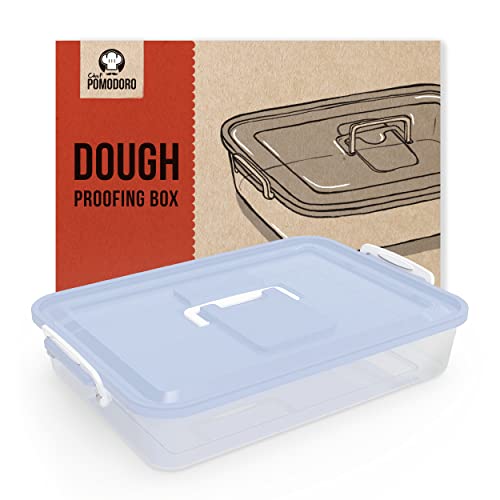
A 900°F oven can't fix bad dough. The crust that pros chase, light, blistered, properly fermented, is made on the counter, in a proofing box, hours before the oven gets involved. These are the unglamorous tools that actually decide your pizza: proofing boxes, bench scrapers, and dough pans. We ranked five, judged on build, usability, and value.

Buyer's Guide · ~14 min read
Best Stand Mixers for Pizza Dough (2026): KitchenAid Tiers vs Bosch vs Spiral
Pizza dough is the hardest thing most home mixers ever touch: stiff, low-hydration, and long-kneaded. We ranked seven live-verified machines from $139.99 to $799.00 on the only test that matters, gluten development in a real pizza batch, and explain when a $399.95 KitchenAid is plenty and when a spiral mixer earns its price.

Buyer's Guide · ~12 min read
Best Bread Machines for Pizza Dough (2026): The Set-and-Forget Dough Cycle
The most underrated dough machine is not a mixer. A bread machine's dough cycle kneads and runs the first proof unattended while you are at work, and the field runs from $74.99 to the $454.95 Zojirushi. Six live-verified machines, ranked purely on how well they make pizza dough.
Explainer · 17 min
Pizza Oven Temperature and Cook Time Chart: The Sourced Reference
The two documents that formally define Neapolitan pizza state the floor and dome temperatures in opposite order. The AVPN puts the cooking surface at 380 to 430°C and the dome at 485°C. The EU regulation puts the floor at 485°C and the dome at 430°C. Below: the full temperature and cook-time chart by style with every figure attributed, plus why your infrared thermometer and your oven's gauge will never agree.
Our top-rated pizza ovens
Whatever you decide, these are the ovens we recommend, ranked on stated floor heat. Live price check on each.
- Check price on Amazon

- Check price on Amazon

- Check price on Amazon

- Check price on Amazon

- Check price on Amazon

- Check price on Amazon

As an Amazon Associate we earn from qualifying purchases, at no cost to you.
Keep exploring.
All reviews & guidesPizza Oven 101
Start here: how pizza ovens work, what to look for, and how to bake your first great pie.
ExploreBest Pizza Ovens
Our rankings, by fuel, by price, by use-case. The shortlist for every kind of buyer.
ExploreGas Pizza Ovens
Crank the dial, hit temperature in 15 minutes, bake on demand, the convenience class.
ExploreWood-Fired & Multi-Fuel
Real fire, real flavor, the wood and multi-fuel ovens, and how to run them.
ExploreElectric & Indoor
No propane, no smoke, no backyard required, the countertop class.
ExplorePizza Oven Gifts
Who it is for, what you can spend, and the one present that is genuinely worth buying at each budget.
ExploreAccessories & Technique
The peels, stones, and skills that turn a hot oven into great pizza.
ExplorePizza Troubleshooting
One page per failure. Burnt base, soggy centre, cold spots, smoke, and the dough that fights back.
ExploreComparisons & Head-to-Heads
Every pizza oven matchup, settled, brand vs brand and model vs model, on the same spine.
ExploreBrand & Budget Oven Reviews
Every brand you'll meet on the shelf or the search bar, reviewed straight: the sleepers, the rebadges, and the ones to skip.
Explore