Our pick. Ooni
Check price on Amazon →How Long Does a Pizza Oven Take to Heat Up? (2026)
Short answer: most portable gas ovens reach a pizza-ready ~900°F floor in roughly 15 to 25 minutes; wood and multi-fuel ovens usually want a bit longer because you have to build and establish the fire (often 20 to 30+ minutes); and indoor electric ovens like the Ooni Volt 2, Breville Pizzaiolo, and Ninja Artisan typically preheat in around 20 minutes on a preset. But the number that actually matters isn't the air, it's the floor. The burner heats the air fast, and the cooking stone lags well behind it. Launch before the stone is soaked and you get a pale, soggy bottom. Here's how long it really takes, why the floor is the wait, and exactly how to know it's ready.
By The Pizza Oven Review DeskUpdated 2026-06-29~11 min readRanked on verified floor heatHow we research
We earn a commission on purchases through our links, at no cost to you. It never decides a ranking. How this works
"How long does a pizza oven take to heat up?" is the question every new owner asks on their first night, usually while standing over a roaring burner wondering why the first pizza came out pale on the bottom. The honest answer is a range, not a stopwatch promise: most portable gas ovens reach a pizza-ready floor in roughly 15 to 25 minutes, wood and multi-fuel ovens generally want a bit longer because you have to build and establish a fire first (commonly 20 to 30-plus minutes), and indoor electric ovens tend to preheat in around 20 minutes on a preset. Anyone quoting you an exact per-model minute count is guessing, preheat depends on weather, fuel, and the oven's mass.
We say ranges and mean it. This is a buying-and-using site, and the fastest way to lose your trust would be to invent a precise "7 minutes" figure that falls apart the first cold, windy evening you actually cook. So we'll give you realistic windows, tell you the variables that move them, and, most importantly, point you at the one measurement that ends the guesswork entirely. Nothing here is sponsored; the only thing we're selling is getting your first pizza right.
The core idea, and our signature lens across this whole site, is that peak floor temperature is the real wait. A pizza oven's burner heats the air inside the chamber in a couple of minutes, but the cooking stone, the floor your pizza actually sits on, soaks up heat much more slowly. The air being hot tells you almost nothing; the floor being hot is everything, because the floor is what crisps and chars the base in the 60-to-90-second window that defines a great bake. Get the floor to temperature and the rest takes care of itself.
The short version.
- Give it a range, not a clock: most portable gas ovens reach a ~900°F-plus pizza-ready floor in roughly 15 to 25 minutes; wood/multi-fuel often takes longer (build the fire first, ~20 to 30+ min); indoor electric ovens usually preheat in around 20 minutes on a preset.
- The floor (stone) is the real wait, not the air. A burner heats the chamber air in minutes, but the cooking stone needs time to soak up to its ~900°F working temperature, and the floor is the number that matters.
- The only reliable readiness check is an infrared thermometer pointed at the stone. The flour test and visual cues are useful backups, but the IR reading is what removes the guesswork.
- Cold or windy weather, bigger ovens with more thermal mass, low fuel, and opening the door all stretch preheat out, sometimes well past the typical window.
- Let the oven fully soak before pizza #1, then mind heat recovery between pies: gas recovers the floor in seconds, while wood needs active tending to bring the stone back up before the next launch.
Our top-rated pizza ovens
Whatever you decide, these are the ovens we recommend, ranked on stated floor heat. Live price check on each.
- Check price on Amazon

- Check price on Amazon

- Check price on Amazon

- Check price on Amazon

- Check price on Amazon

- Check price on Amazon

As an Amazon Associate we earn from qualifying purchases, at no cost to you.
What you'll need.
Prices approximate at time of writing.
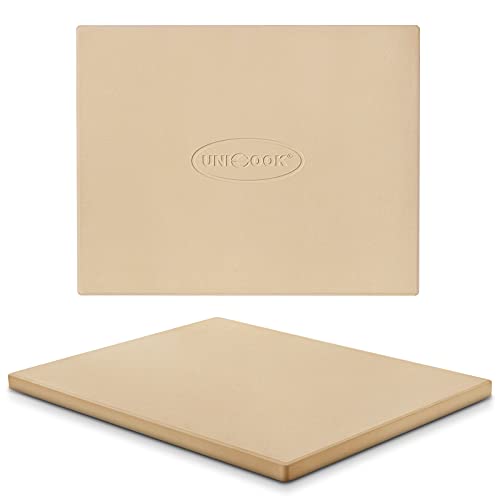
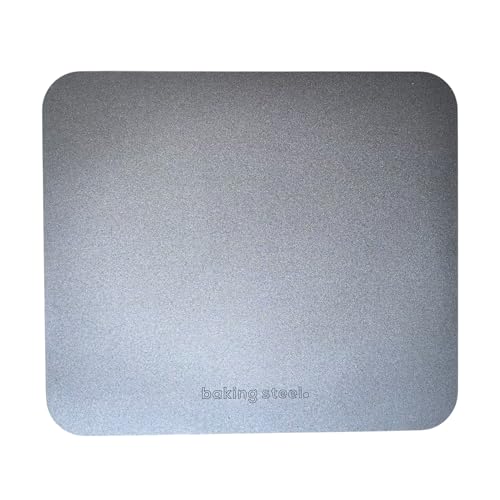
The five tools that do the work in every method on this site: a slab that stores heat, something to launch with, a way to read the surface, and a clean cut.


The quick answer: realistic preheat windows by fuel type
Here's the practical answer, given as honest ranges because that's what preheat actually is. Portable gas ovens, the most common kind, like the Ooni Koda 16 or Gozney Roccbox, reach a pizza-ready floor in roughly 15 to 25 minutes. The burner brings the air up fast; the bulk of that window is the stone catching up. These ovens run a peak floor in the 930 to 950°F range when fully soaked, which is exactly where Neapolitan pizza wants to bake.
Wood and multi-fuel ovens generally want a bit longer, often 20 to 30-plus minutes, because the clock doesn't really start until you've built and established the fire, lighting, getting a clean burn going, and letting the flames roll across the ceiling all take time a gas knob skips. Once established, multi-fuel ovens also reach the same ~950°F territory. Indoor electric ovens, the Ooni Volt 2 (peak ~850°F), the Breville Smart Oven Pizzaiolo, the Ninja Artisan, typically preheat in around 20 minutes via their presets, trading a little raw ceiling temperature for the convenience of a dial and a countertop you can use in any weather.
Why the floor (the stone) is the real wait
This is the single most important thing to understand about preheating, and it's where most pale-bottom first pizzas go wrong: the air heats fast, but the floor heats slow. A burner can fill the chamber with 700°F air in two or three minutes, and it's tempting to read that as "ready." It isn't. The cooking stone, a dense slab of cordierite or refractory material, has real thermal mass, and it absorbs heat far more gradually than the air around it. Launch a pizza when the air is hot but the stone is still lagging, and the top will blister beautifully while the bottom stays pale, slack, and soggy.
The floor is the number that matters because the floor is what cooks the crust. Conductive heat from the stone is what crisps and chars the base in the first 60 to 90 seconds, the whole reason a dedicated oven exists. A stone that hasn't soaked to roughly 900°F simply can't deliver that, no matter how dramatic the flames look overhead. So the right mental model isn't "wait until it's hot", it's "wait until the stone is hot," which always takes longer than the air and is the part the timer ranges above are really measuring. This is our signature spine across the site: peak floor temperature is the figure that decides everything, and getting it there is the entire preheat.
How to know it's actually ready
There is exactly one reliable way to know your oven is preheated, and it's not a timer or a guess: point an infrared thermometer at the center of the stone and read the surface temperature. An IR gun reads the floor directly and instantly, so instead of hoping 20 minutes was enough you simply look for your target number, around 850 to 900°F-plus for Neapolitan, lower for other styles. It's the cheapest accessory that makes the biggest difference, and it's the one tool we consider mandatory for getting preheat right. The purpose-built Ooni infrared thermometer is the no-think pick, and a budget gun like the Etekcity Lasergrip reads a stone nearly as well. See our best infrared thermometer for pizza guide for which to buy and how to aim it.
If you don't have one yet, two backups help. The flour test: toss a small pinch of flour onto the center of the stone, at pizza temperature it should darken and char within a few seconds, not just slowly toast. And visual cues: on a gas or wood oven, the crown of the dome typically clears from sooty black back to a clean, pale, almost-white color when the chamber is up to temperature, the so-called "clearing" point. These are genuinely useful, but they're approximate. The flour test tells you the stone is hot-ish; the IR thermometer tells you it's 870°F, which is the difference between hoping and knowing.
What makes preheat take longer
The ranges above assume reasonable conditions. Several things stretch them, sometimes dramatically. Cold and wind are the biggest: a chilly, breezy evening pulls heat out of the oven faster than the burner can pour it in, and a windward opening can add ten minutes or more to a preheat that would've been quick in still summer air. Thermal mass is the next: bigger and heavier ovens have more stone and more steel to bring up to temperature, so a large 16-inch or showpiece oven simply takes longer to soak than a compact 12-inch portable, the trade-off for holding heat better once it's there.
Low fuel quietly sabotages preheat too: a propane tank running low (or chilled outdoors, which drops its pressure) can't feed the burner at full output, so the oven climbs slowly or stalls below target, if preheat is dragging for no obvious reason, suspect the tank. And opening the door or lid during preheat dumps hot air every time you peek, resetting your progress; on lidded portables especially, every check costs you. The fix for all of these is the same: don't trust the clock, read the stone, and give it the extra time the conditions demand rather than launching early into a floor that isn't there yet.
The launch-and-recovery rhythm
Preheat isn't a one-time event, it sets up a rhythm that runs all night. Pizza #1: let the oven fully soak before the first launch. The temptation after 15 minutes is to go for it, but the first pizza is the one most likely to disappoint precisely because people rush it. Confirm the stone is at temperature with your IR thermometer, then launch, and that first good bake tells you the oven is genuinely dialed in.
After that, the question becomes heat recovery: every pizza you cook pulls heat out of the stone, so the floor needs to climb back to temperature before the next launch. This is where fuel type matters most. Gas recovers in seconds, the burner is still running, so the floor reheats almost as fast as you can stretch the next dough, which is why gas ovens are so forgiving for feeding a crowd. Wood needs tending: there's no knob, so you actively manage recovery by adding fuel and giving the flames a minute to bring the stone back up before you launch again. Neither is wrong, but they're different jobs, gas is point-and-shoot recovery, wood is hands-on. We walk through the full workflow in how to use a pizza oven.
Quick tips to preheat efficiently
A few habits shave time off preheat and keep it predictable. Start with full fuel: a fresh or full propane tank feeds the burner at full output, and a properly built fire establishes faster than a stingy one, low fuel is the most common cause of a preheat that drags. Block the wind: position the oven so its mouth faces away from the breeze, or set up a simple windbreak; on a gusty night this alone can save you ten minutes. Keep the door or lid closed while it heats, every peek dumps hot air and resets progress, so be patient and let it soak undisturbed.
And the habit that matters most: measure, don't guess. Use the typical window as your cue to start checking, then read the stone with an infrared thermometer rather than launching on a timer. If the conditions are cold, windy, or the oven is large, simply budget more time up front rather than fighting an under-heated floor all night. Preheat done right is unglamorous, full fuel, blocked wind, closed door, and a thermometer, but it's the difference between a pale, frustrating first pizza and a blistered one that makes the whole oven worth it. When you're choosing an oven, fast, stable heat-up and strong recovery are exactly what we weigh in our best pizza ovens guide.
Ready to buy? Start with our top picks
Whatever this guide steered you toward, here's where most readers land, ranked on stated floor heat. Live price check on each.
- Check price on Amazon
- Check price on Amazon
- Check price on Amazon
- Check price on Amazon
- Check price on Amazon
- Check price on Amazon
As an Amazon Associate we earn from qualifying purchases, at no cost to you.
Key terms
- Peak floor temperature
- The surface temperature of the cooking stone, which is what actually crisps and chars the base of your pizza. It heats far slower than the chamber air, so reaching it, roughly 900°F on a Neapolitan-class oven, is the real wait in any preheat, and the number that decides whether your bottom comes out blistered or pale.
- Thermal mass
- The amount of stone and steel an oven has to bring up to temperature. More mass means a longer preheat but better heat retention once soaked, which is why a large 16-inch oven takes longer to heat up than a compact 12-inch portable.
- Stone soak
- The process of the cooking floor absorbing enough heat to reach its working temperature. The air can be hot in minutes while the stone is still soaking, launching before the soak is complete is the classic cause of a pale, soggy bottom.
- Infrared (IR) thermometer
- A handheld tool that reads the stone's surface temperature instantly and from a distance. It's the only reliable way to confirm an oven is preheated, turning "is it ready?" from a guess into a two-second reading, and the same tool you use to track heat recovery between pizzas.
- Heat recovery
- How fast the floor returns to temperature after a pizza pulls heat out of it. Gas recovers in seconds because the burner is still running; wood requires active tending to bring the stone back up before the next launch. Strong recovery is what lets an oven feed a crowd one pie after another.
- Clearing point
- On gas and wood ovens, the moment the dome's interior crown clears from sooty black back to a pale, near-white color as it reaches temperature. It's a useful visual cue that the chamber is hot, though only an IR reading off the stone confirms the floor itself is ready.
Questions, answered
How long does a pizza oven take to heat up?
It depends on the fuel, but as honest ranges: most portable gas ovens reach a pizza-ready ~900°F floor in roughly 15 to 25 minutes; wood and multi-fuel ovens usually take a bit longer, often 20 to 30-plus minutes, because you have to build and establish the fire first; and indoor electric ovens like the Ooni Volt 2, Breville Pizzaiolo, and Ninja Artisan typically preheat in around 20 minutes on a preset. These are windows, not promises, cold weather, wind, a large oven, or low fuel can all push them longer. The reliable move is to use the range as a cue to start checking, then confirm with an infrared thermometer pointed at the stone rather than trusting a timer.
Why is my pizza oven's first pizza coming out pale on the bottom?
Almost always because you launched before the stone was fully soaked. The burner heats the chamber air in a couple of minutes, but the cooking floor has real thermal mass and lags well behind it, so the oven can feel hot while the stone is still climbing. A pizza launched onto an under-heated floor blisters on top (from the hot air and flame) but stays pale and soggy on the bottom (because the stone can't conduct enough heat to crisp it). The fix is to wait for the floor, not the air: read the stone with an infrared thermometer and don't launch until it's at your target, around 850 to 900°F for Neapolitan.
How do I know when my pizza oven is ready to cook?
The only reliable way is to point an infrared thermometer at the center of the stone and read the surface temperature, when it hits your target (roughly 850 to 900°F-plus for Neapolitan, lower for other styles), it's ready. If you don't have an IR thermometer, two backups help: the flour test (a pinch of flour on the stone should char within a few seconds, not slowly toast) and the visual "clearing" cue (the dome's crown turns from sooty black to pale near-white when the chamber is up to temperature). The backups are approximate; the IR reading is what turns guessing into knowing.
Does weather affect how long a pizza oven takes to preheat?
Significantly. Cold and especially wind are the biggest culprits, a breezy, chilly evening pulls heat out of the oven faster than the burner can replace it, and a windward opening can add ten minutes or more to a preheat that would've been quick in still summer air. Cold also chills a propane tank, dropping its pressure so the burner can't run at full output. On a cold or windy night, assume the upper end of the preheat range or beyond, point the oven's mouth away from the wind (or set up a windbreak), start with a full tank, and read the stone rather than the clock.
Do I have to wait for the oven to reheat between pizzas?
Yes, that's heat recovery, and how long it takes depends on your fuel. Every pizza pulls heat out of the stone, so the floor needs to climb back to temperature before the next launch. With gas, recovery is nearly instant: the burner is still running, so the floor reheats almost as fast as you can stretch the next dough. With wood, you manage recovery actively, add fuel and give the flames a minute to bring the stone back up before launching again. A fast-recovering oven is what lets you feed a crowd one blistering pizza after another, and the same infrared thermometer you used for preheat tells you when the floor is back up and ready.
Can I speed up my pizza oven's preheat?
You can make it as fast and predictable as the conditions allow with four habits: start with full fuel (a full propane tank or a properly built fire reaches output faster), keep the oven's mouth out of the wind or use a windbreak, leave the door or lid closed while it heats so you're not dumping hot air, and use the typical window as a cue to start checking with an infrared thermometer rather than launching on a timer. What you can't do is rush the stone, the floor has thermal mass and will take the time it takes. If conditions are cold, windy, or the oven is large, budget more time up front rather than launching early into an under-heated floor.
Keep reading.
Cooking Multiple Pizzas Back to Back
Preheat is only the first heat-up. The reheat between every pizza is the one that ruins pizza night.
The Best Infrared Thermometer for Pizza (2026)
The one accessory that ends preheat guesswork, how to read the stone and which IR gun to buy.
How to Use a Pizza Oven (2026)
The full workflow after preheat: launching, turning, and managing heat recovery between pies.
How Hot Does a Pizza Oven Get?
Where the peak floor numbers come from, and what 'hot enough' actually means by style.
Ooni vs Gozney: Which Brand Wins?
The two giants head to head, same ~950°F ceiling, very different philosophies, one clear way to choose.
Ooni Fyra 12 Review
Ooni's lightest wood-pellet oven reviewed, real live-fire flavor at $349, and what to cross-shop.