Our pick. Ooni
Check price on Amazon →How to Manage a Wood Fire in a Pizza Oven (2026): Fuel, Airflow, and the Live Flame
A wood fire is not a setting, it is a heat source you have to keep feeding, and the single biggest determinant of whether it works is the moisture in the wood. The US EPA's Burn Wise programme states it directly: "Wood burns best at a moisture content of less than 20 percent," and it tells you to "season wood for at least six months." Everything else, building the fire, pushing it to the side, feeding small and often, managing the ash bed, is downstream of starting with dry fuel. Here is the whole skill, plus an honest comparison with a gas burner.
By The Pizza Oven Review DeskUpdated 2026-08-08~12 min readRanked on verified floor heatHow we research
We earn a commission on purchases through our links, at no cost to you. It never decides a ranking. How this works

Our pick.
Ooni Karu 2 ProBest Overall Wood-Fired / Multi-Fuel. From Best Wood-Fired Pizza Ovens (2026).
The answer to almost every wood fired pizza oven problem is the fuel. Before technique, before airflow, before how you stack the kindling, the variable that decides whether your fire roars or sulks is how much water is still inside the wood. The US EPA's Burn Wise programme puts a number on it: "Wood burns best at a moisture content of less than 20 percent," and its guidance on getting there is equally plain, "Season wood for at least six months." Wet wood does not simply burn worse, it spends the fire's own energy boiling off its water before it can release any useful heat, which is why a fire built from underseasoned logs smokes, smoulders, and never gets the dome clear.
That is the difference between wood and gas in one sentence. A gas oven's heat output is a dial: you set it, it holds, and it does the same thing tomorrow. A wood fire's heat output is the product of what you put in it, how much air it is getting, and how recently you fed it, and all three of those change minute by minute across a session. That is not a criticism of wood. It is the job description. Once you accept that you are managing a fire rather than operating an appliance, the skill becomes learnable and repeatable, and the fire stops being a source of anxiety in the middle of a dinner party.
This page covers the whole session: building the fire, the difference between the heating phase and the cooking phase, why you push the fire to the side and keep a small live flame rather than a bonfire while you cook, why you feed small pieces often instead of large logs occasionally, airflow as the third leg of the system, managing the ash bed so fresh fuel can breathe, and reading the flame to know where you are. Then we compare it honestly with a gas burner, because we sell both and the right answer genuinely depends on what you want out of the evening. For which species to burn, see best wood for pizza oven.
The short version.
- The EPA's Burn Wise programme states that wood burns best at a moisture content of less than 20 percent, and that you should season wood for at least six months. Fuel moisture is the single biggest determinant of whether your fire works.
- The EPA also lists what never goes in: coated, painted or pressure treated wood, plywood, particle board, ocean driftwood, and wet or rotted wood. This is a safety and health rule, not a flavour preference.
- A session has two phases. The heating phase runs a big fire to saturate the dome and the deck. The cooking phase runs a small, live flame pushed to one side, because you now need light and a rolling flame, not raw output.
- Feed small pieces often, not large logs occasionally. A big log dropped onto a working fire smothers it, smokes, cools the chamber, and then flares late. Small, frequent additions keep the fire in a steady state.
- Airflow is the third leg. A fire needs oxygen, so do not overload the fuel tray and keep the chimney and vents doing what the manual intends. A choked fire smokes and a smoky fire flavours the pizza badly.
- Manage the ash bed. Some ash insulates and holds coals, but too much buries the air supply and fresh fuel cannot breathe. Rake it back rather than letting it build under the fire.
- Gas is a dial and wood is a relationship. Gas recovers on command and gives you no flavour. Wood recovers on its own schedule and gives you flavour you cannot get any other way. Both are legitimate answers.
Our top-rated pizza ovens
Whatever you decide, these are the ovens we recommend, ranked on stated floor heat. Live price check on each.
- Check price on Amazon

- Check price on Amazon

- Check price on Amazon

- Check price on Amazon

- Check price on Amazon

- Check price on Amazon

As an Amazon Associate we earn from qualifying purchases, at no cost to you.
What you'll need.
Prices approximate at time of writing.
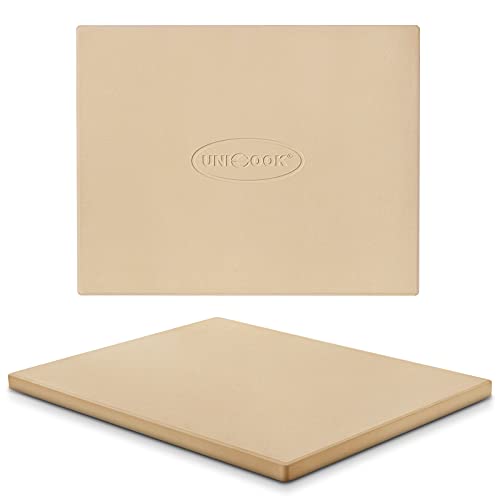
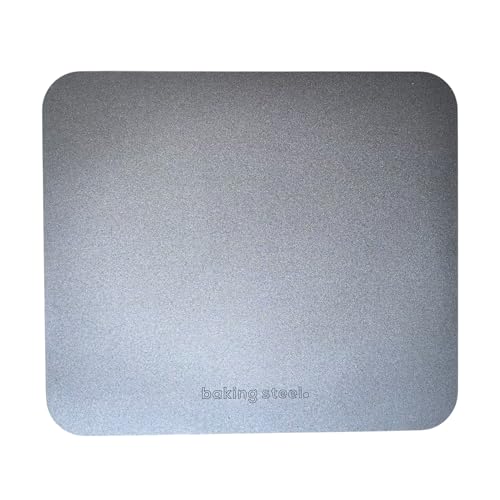
The five tools that do the work in every method on this site: a slab that stores heat, something to launch with, a way to read the surface, and a clean cut.


The fuel decides everything: under 20 percent moisture
Start here, because nothing downstream can rescue bad fuel. The US EPA's Burn Wise programme states that "Wood burns best at a moisture content of less than 20 percent," and its practical instruction for getting there is to "season wood for at least six months." The reason is physical rather than aesthetic. Water in the wood has to be driven off before the wood can reach the temperature at which it releases its volatiles and burns cleanly, and the energy to do that boiling comes out of the fire itself. So a wet log is not a slightly worse log, it is a heat sink that your fire has to pay for before it gets anything back.
The symptoms are recognisable once you know what you are looking at. A fire built on underseasoned wood produces a lot of white smoke, hisses at the cut ends, blackens the dome without clearing it, and never seems to reach the temperature it should. Owners in that situation usually conclude the oven is underpowered, buy a bigger fire, and make the smoke worse. The actual fix is the woodpile. If you do not know what your stack is at, a wood moisture meter costs very little and settles the question in seconds against the EPA's own threshold, which is a far better use of money than another bag of kindling.
The EPA is equally clear about what never goes in an oven or a stove: never burn coated, painted or pressure treated wood, plywood, particle board, ocean driftwood, or wet or rotted wood. That list is a health and safety instruction, not a flavour opinion. Treated timber and manufactured boards carry chemicals and adhesives you do not want in the smoke that is touching your food, and ocean driftwood carries salts that produce genuinely harmful combustion products. There is no version of this where a bit of scrap plywood is fine because the fire is hot. Which species you should burn, and why kiln dried hardwood is the default recommendation, is the subject of best wood for pizza oven.
Two phases: heating the oven, then cooking in it
The most useful mental model for a wood session is that the fire does two completely different jobs, and the mistake most new owners make is running the first job's fire during the second job. The heating phase is about raw output. You are trying to push enough energy into the dome and the deck that the whole structure is saturated, so you build the fire up progressively and let it roll flame across the ceiling. A big fire is correct here, and this is the only part of the evening where it is.
The visual signal that the phase is ending is the clearing of the dome. Soot deposited on the chamber crown burns off as the structure comes up to temperature, and the ceiling goes from sooty black back to a pale, almost white colour. That transition is a genuinely reliable cue that the chamber is hot, and it is the traditional signal cooks have used long before anyone had a thermometer. It is still worth confirming with an infrared thermometer pointed at the deck, because the clearing tells you about the dome while the pizza is going to sit on the floor, and those are not the same surface. Realistic preheat expectations by fuel are in how long does a pizza oven take to heat up.
The cooking phase has a different goal entirely. Now the structure is holding the heat, and the fire's job is to provide a live flame licking along the ceiling above the pizza, plus enough continuing output to keep the deck topped up. That is a much smaller fire. Run a heating phase fire while cooking and the top of the pizza scorches long before the base sets, which is a failure people routinely misdiagnose as a dough problem. It is worth remembering that the published targets are not extreme: the EU regulation specifies a cooking floor of 485°C with a dome of 430°C, while the AVPN Disciplinare specifies a cooking surface of 380 to 430°C with the dome at 485°C, and those two authorities transpose the figures, which we document rather than reconcile in the pizza oven temperature chart.
Push it to the side, and keep a small live flame
Once you are cooking, the burning wood and coals get raked to one side of the chamber, clearing a landing area for the pizza on the deck. This is the arrangement almost every wood oven is designed around, and it is why these ovens are asymmetric by nature: the fire is on one side, the pizza is on the other, and the flame travels across the ceiling between them. That asymmetry is exactly why you have to keep turning the pizza, which is the subject of how to turn a pizza.
The target during cooking is a small, live flame, not a blaze and not a pile of glowing coals with nothing above them. Live flame matters for two reasons. It provides the rolling radiant heat across the ceiling that puts colour on the top of the pizza in the same 60 to 90 seconds the EU regulation and the AVPN both specify for the bake. And it provides light, which is not a trivial point, because a chamber lit only by coals makes it genuinely difficult to see whether your rim has taken colour. A fire that has collapsed to coals will still hold the deck for a while, but the tops of your pizzas will start coming out pale and you will find yourself doming every one of them to compensate.
Getting the size right is a judgement you build over a few sessions, and the fastest way to build it is to watch the pizza rather than the fire. If the top is running ahead of the base, the fire is too big or too close. If the base is running ahead of the top, the fire is too small and you need to feed it. That feedback loop is more useful than any rule about how many splits to add, because it accounts for your oven, your wood, and the weather on the night.
Feed small and often, not large and occasionally
This is the habit that separates a fire that behaves from a fire that lurches. A working fire wants small additions at short intervals. Drop a single large log onto an established fire and you get a predictable sequence: the log smothers the flame it landed on, the chamber cools slightly, the log begins driving off its own moisture and smokes, and then several minutes later it catches properly and the fire flares harder than you wanted. You have just introduced a cold spell followed by an overshoot into the middle of your service, and both of them land on somebody's pizza.
Small splits added every few minutes never cause that. Each one is small enough to catch quickly, so the fire never dips and never spikes, and the output stays roughly where you set it. The corollary is that you feed ahead of need. The moment to add wood is while the fire is still working well, not when it has visibly sagged, because a sagging fire plus a fresh log is exactly the smother and flare cycle described above. Experienced wood cooks feed on a rhythm rather than in response to a problem, and that is the single most useful thing to copy from watching one work.
This matters most between pizzas, which is when the deck is trying to recover from the last launch. A wood oven has no dial to open up, so the only lever you have is what you already put in the fire several minutes ago. That is the real meaning of the phrase that wood recovers on its own schedule, and it is why the discipline of feeding early pays off exactly when you are under pressure. The full mechanics of deck recovery, including why pizzas three and four are usually the worst, are in cooking multiple pizzas back to back.
Airflow and the ash bed: the two things beginners never touch
Airflow is the third leg of the system, alongside fuel and heat, and it is the one nobody thinks about because it is invisible. A fire needs oxygen, and in a pizza oven that oxygen arrives through the mouth and leaves through the chimney or vents, drawn by the temperature difference. Anything that interrupts that path throttles the fire. The most common self inflicted version is overloading the fuel tray or the fire area: pack it tight with wood and there is no air between the pieces, so instead of a clean fire you get a smouldering mass producing smoke and very little heat. Wood needs space around it to burn.
The second version is the chimney and the vents. Whatever your oven's manual says about damper positions, vent settings, or chimney caps during heating versus cooking, follow it, because the manufacturer designed the draw around those settings. A restricted chimney produces the same symptom as packed fuel: smoke that lingers in the chamber instead of leaving it, which then deposits on your food. If your pizzas are coming out tasting of campfire rather than of wood, the cause is almost always incomplete combustion from either wet fuel or poor airflow, and it is diagnosed in why does my pizza taste smoky.
The ash bed is the other neglected control. Ash is not purely a nuisance: a modest layer under the fire insulates the deck below it and helps hold coals alive. But it accumulates, and once it is deep it buries the coals and cuts off the air arriving from underneath, so fresh fuel laid on top sits in a dead zone and smoulders. The remedy is simply to rake it back periodically during a long session so new wood sits on live coals with air around it. An oven brush and scraper is the right tool for this, and a long handled 26 inch oven brush keeps your hands well out of the mouth while you do it. Full ash removal is a cold oven job, covered in how to clean a pizza oven.
Reading the flame, and the honest comparison with gas
Once the mechanics are in place, the last skill is diagnostic: knowing where you are by looking. A tall, lively, bright flame licking along the ceiling with little visible smoke is a fire burning cleanly on dry fuel with enough air, and it is where you want to be during cooking. A lazy, low, smoky flame means either wet fuel or insufficient air, and adding more wood will make it worse rather than better; rake the ash, open the airflow, and check the moisture of what you are burning. Glowing coals with no flame at all means the fire has been left too long without feeding, so the deck will hold for a while but the tops of your pizzas will start coming out pale. And a roaring fire during the cooking phase is not a triumph, it is an overcooked pizza top waiting to happen.
Now the comparison, and we will be fair about it because this site sells both. Gas is a dial and wood is a relationship. A gas burner does exactly the same thing every time you turn it to the same position, it recovers on command because you can simply open it up between pizzas, and it demands nothing from you except that you remember to check the tank. That reliability is a real feature and not a consolation prize. If your goal is to feed a group on a weeknight with the least possible friction, gas is straightforwardly the better tool, and the throughput advantage under a queue is significant.
Wood gives you two things gas cannot. The first is flavour: real wood smoke touching the dough is a genuine, distinctive difference that no gas burner produces, and no amount of dial precision substitutes for it. The second is the experience of tending a fire, which some people find is the entire point of owning the oven and others find is a chore they resent by the third pizza. That is a preference, not a fact, and it is the honest question to ask yourself before buying. What wood asks in return is attention: it recovers on its own schedule rather than yours, it varies with your fuel and the weather, and it will not forgive being ignored for ten minutes in the middle of service. The full head to head, including multi fuel ovens that let you have both, is in gas vs wood fired pizza oven.
Running a Wood Fired Pizza Oven Session From Cold
- 1
Check your fuel before you check anything else
Use seasoned hardwood at a moisture content of less than 20 percent, which the EPA describes as wood burns best, and which normally means at least six months of seasoning. Never burn coated, painted or pressure treated wood, plywood, particle board, ocean driftwood, or wet or rotted wood. If you are unsure about a stack, measure it rather than guessing.
- 2
Build a small fire at the centre or back of the deck
Start with a modest stack of kindling and small splits where the oven's design intends, usually toward the centre or rear so the flame can travel along the ceiling. Light it and let it establish properly before you add anything substantial. A fire that is rushed at this stage will smoke for the next twenty minutes.
- 3
Build the fire up gradually through the heating phase
Add progressively larger splits as the fire takes, keeping the flame rolling across the dome. This is the only phase where you want a genuinely big fire, because you are trying to saturate the dome and the deck rather than cook anything. Do not skip straight to full size logs on a young fire.
- 4
Wait for the dome to clear
As the chamber comes up to temperature, the soot deposited on the dome burns off and the crown turns from black back to a pale, near white colour. That clearing is the classic visual signal that the chamber is genuinely hot. It is a strong cue, but confirm the deck itself with an infrared thermometer before you launch anything.
- 5
Push the fire to the side and switch to the cooking phase
Rake the burning wood and coals to one side of the chamber, leaving a clear landing area for the pizza. From here on the fire's job changes: you want a small live flame licking along the ceiling, not a bonfire. Too much fire at this point cooks the top before the base is done.
- 6
Feed small pieces regularly, ahead of need
Add a small split every few minutes to keep the flame alive, rather than waiting for the fire to sag and then dropping a large log on it. Feed early. A fire kept in a steady working state needs nothing dramatic, while a fire allowed to die back takes real time to recover and will smoke while it does.
- 7
Rake the ash bed back so fresh fuel can breathe
As ash accumulates it buries the coals and cuts off the air supply from underneath. Periodically rake it back or aside with a brush or scraper so new fuel sits on live coals with air around it. A little ash under the fire is useful insulation; a thick bed is a fire smothering itself.
- 8
Cook, turn, and read the fire between pizzas
Launch, turn the pizza as the style demands, and use the gaps to look at the fire rather than at your phone. Between pizzas is when you feed, rake, and let the deck recover. Confirm the deck has come back to your launch temperature before the next pizza goes in.
- 9
Shut down safely and let it die out completely
At the end of the session stop feeding the fire and let it burn down. Never move, cover, or store an oven with live embers in it, and let ash cool completely before disposing of it. Cleaning the ash out is a job for a cold oven, not a warm one.
Ready to buy? Start with our top picks
Whatever this guide steered you toward, here's where most readers land, ranked on stated floor heat. Live price check on each.
- Check price on Amazon
- Check price on Amazon
- Check price on Amazon
- Check price on Amazon
- Check price on Amazon
- Check price on Amazon
As an Amazon Associate we earn from qualifying purchases, at no cost to you.
How we chose.
The fuel moisture figure, the seasoning period, and the list of materials never to burn are quoted verbatim from the US EPA's Burn Wise best wood burning practices guidance and attributed to it. We do not paraphrase a regulator's numbers into our own words.
Temperature targets come from primary documents rather than folklore. Commission Regulation (EU) No 97/2010 specifies a cooking floor of 485°C and a dome of 430°C with a 60 to 90 second bake. The AVPN Disciplinare, 2024 edition, specifies a cooking surface of 380 to 430°C and a dome of 485°C, the exact reverse ordering, and also 60 to 90 seconds. We publish both and do not average them.
Where a manufacturer publishes a relevant ceiling we cite it as theirs. Gozney publishes 800 to 900°F for Neapolitan and 600 to 700°F for New York style, and the Gozney Arc manual labels anything above 900°F as over temperature.
Fire management technique is presented as craft practice and owner consensus, clearly labelled as such. We ran no fires and took no measurements; this is a research and verification desk, not a test kitchen.
Where a reader would want a preheat duration, we link our dedicated preheat guide rather than attaching a minute count to a manufacturer that does not publish one.
Key terms
- Seasoned wood
- Wood that has been dried until its moisture content is low enough to burn cleanly. The US EPA's Burn Wise guidance states that wood burns best at a moisture content of less than 20 percent and advises seasoning wood for at least six months. Below that threshold the fire spends its energy producing heat rather than boiling water.
- The heating phase
- The first part of a wood session, where you build the fire up progressively to saturate the dome and the deck with heat. It is the only stage where a genuinely large fire is correct, and it ends when the dome clears and the deck reads at your launch temperature.
- The cooking phase
- The second part of the session, with the fire raked to one side and reduced to a small live flame licking along the ceiling. The structure now holds the heat and the fire's job is to provide rolling radiant heat, light to see by, and enough continuing output to keep the deck topped up.
- Dome clearing
- The moment the soot on the chamber crown burns off and the ceiling turns from black back to a pale, near white colour, signalling that the structure has come up to temperature. A reliable traditional cue, though it describes the dome rather than the deck, so confirm the floor with an infrared thermometer.
- Ash bed
- The layer of ash that accumulates beneath the fire. A modest layer insulates and helps hold coals alive, but a thick bed buries the coals and cuts off the air arriving from underneath, so fresh fuel smoulders instead of catching. Rake it back periodically during a long session.
- Feeding ahead of need
- Adding small splits on a rhythm while the fire is still working well, rather than waiting for it to sag and then dropping a large log on it. Prevents the smother, smoke, and late flare cycle that puts a cold spell and an overshoot into the middle of your service.
Questions, answered
how to keep a fire going in a pizza oven
Feed it small pieces on a rhythm rather than large logs occasionally, and feed ahead of need rather than waiting for it to sag. A small split added every few minutes catches quickly and keeps output steady, while a big log dropped on a working fire smothers it, smokes while it dries out, and then flares late. Keep the fuel dry, since the EPA states wood burns best at a moisture content of less than 20 percent, and keep the air moving by not packing the fire area tight and by leaving the chimney and vents set the way the manual intends. Rake the ash back periodically so fresh fuel sits on live coals with air around it.
what moisture content should firewood be for a pizza oven
Less than 20 percent. The US EPA's Burn Wise guidance says directly that wood burns best at a moisture content of less than 20 percent, and its practical advice for getting there is to season wood for at least six months. Below that threshold the fire's energy goes into producing heat instead of boiling water out of the fuel, so the oven reaches temperature faster and produces far less smoke. If you do not know what your stack is at, an inexpensive wood moisture meter answers the question in seconds and is more useful than buying more wood.
what wood should you never burn in a pizza oven
The EPA's list is explicit: never burn coated, painted or pressure treated wood, plywood, particle board, ocean driftwood, or wet or rotted wood. This is a health and safety rule rather than a matter of taste. Treated timber and manufactured boards carry chemicals and adhesives that end up in the smoke touching your food, and ocean driftwood carries salts that produce harmful combustion products when burnt. A hot fire does not make any of these safe. Stick to clean, seasoned hardwood, and see our guide to the best wood for a pizza oven for which species to choose.
should the fire be on the side while cooking pizza
Yes. Once the oven is up to temperature, rake the burning wood and coals to one side to clear a landing area for the pizza on the deck. That is the arrangement these ovens are designed around, with the fire on one side and the flame travelling across the ceiling to the other. During cooking you want a small live flame rather than a blaze, because live flame gives you rolling radiant heat on the top of the pizza and light to see the rim by, while a large fire at this stage scorches the top before the base has set. It also means the chamber is asymmetric, which is why you have to keep turning the pizza.
why is my wood fired pizza oven smoking so much
Almost always wet fuel or restricted airflow, and often both. Persistent white smoke with hissing at the cut ends means there is still water in the wood, which the fire has to boil off before it can burn cleanly, so check your stack against the EPA's 20 percent threshold. Lazy dark smoke usually means the fire is not getting enough air: the fuel area is packed too tight for oxygen to move between the pieces, the ash bed has buried the coals, or the chimney and vents are not set the way the manual intends. A well established fire on dry wood with good draw produces surprisingly little visible smoke.
is a wood fired pizza oven better than gas
Neither is better, they are different tools and we sell both. Gas is a dial: the same setting gives the same output every time, it recovers on command because you can open the flame up between pizzas, and it asks nothing of you but a full tank. Wood is a relationship: it recovers on its own schedule, it varies with your fuel and the weather, and it will not forgive being ignored mid service. What wood gives back is flavour that no gas burner can produce, plus the experience of tending a fire, which some owners consider the entire point and others find a chore by the third pizza. Choose wood for flavour and the ritual, gas for consistency and throughput, multi fuel if you genuinely want both.
Keep reading.
The Best Wood for a Pizza Oven (2026)
Which species to burn, why kiln dried hardwood is the default, and what the EPA says never goes in the fire.
Gas vs Wood Fired Pizza Oven
The honest head to head: a dial versus a relationship, recovery on command versus recovery on its own schedule.
Cooking Multiple Pizzas Back to Back
Why feeding the fire early matters most between pizzas, and how to verify the deck has actually recovered.
Why Does My Pizza Taste Smoky?
The acrid pizza problem traced back to wet fuel and restricted airflow rather than to the wood species.
How to Clean a Pizza Oven
Ash removal, stone care, and why full ash clearing is a cold oven job rather than an end of night one.
Pizza Oven Temperature Chart
Published floor and dome targets by style, including where the EU regulation and the AVPN openly disagree.