Our pick. Ooni
Check price on Amazon →How to Turn a Pizza (2026): How Often, With What, and Why
Ooni's own Koda 16 guide gives you the number: "use your peel to take the pizza out and turn it every 20-30 seconds." The reason is that a high heat pizza oven is deliberately asymmetric, with one burner or one fire on one side, so the edge nearest the flame chars while the edge nearest the mouth stays pale. Turning is not a flourish, it is how you make an uneven oven cook evenly. Here is how often to turn, which tool to use, and the two motions that do it without dragging the toppings off.
By The Pizza Oven Review DeskUpdated 2026-08-08~10 min readRanked on verified floor heatHow we research
We earn a commission on purchases through our links, at no cost to you. It never decides a ranking. How this works
The number you came for is Ooni's, published in the manufacturer's own Koda 16 getting started guide: "use your peel to take the pizza out and turn it every 20-30 seconds." That is not a rule of thumb somebody invented on a forum, it is the instruction that ships with one of the most widely owned high heat ovens in the world, and it exists for a structural reason. A portable pizza oven is not a symmetrical box. It has a single burner along one wall, or a single wood fire banked to one side, and an open mouth at the front where heat escapes. The pizza is therefore sitting in a temperature gradient from the moment it lands.
That gradient is the whole story. The arc of crust nearest the flame is taking direct radiant heat off the flame and off the hottest part of the dome, and at Neapolitan temperatures it can go from raw to leopard spotted to carbon in well under a minute. The arc of crust nearest the mouth is facing an opening into cool outdoor air and is the coldest real estate in the chamber. Leave the pizza still and you get exactly what the geometry promises: one side black, one side pale, and a cook who blames the dough. Turning the pizza is how you take a fixed asymmetry in the oven and average it out across the rim.
This page is only about the turn. We cover why the asymmetry exists, the two turning motions and when each is right, why the small round turning peel is the correct tool and the big launching peel is not, how the schedule changes completely between a 60 to 90 second Neapolitan bake and a 4 to 12 minute New York bake, how to dome a pizza to finish a pale top, what to do when it welds itself to the stone mid bake, and how to turn without your toppings ending up in a heap on one side. If you have not launched it yet, start with how to launch a pizza and come back.
The short version.
- Ooni's Koda 16 guide says to take the pizza out and turn it every 20 to 30 seconds. That instruction is written for the fast Neapolitan style bake that oven is sold on, where the whole cook is under two minutes by Ooni's own description.
- You turn because the oven is asymmetric on purpose: one burner or one fire on one side, and an open mouth at the front. The flame side chars and the mouth side stays pale, and turning is the only thing that averages them out.
- There are two motions. Lifting the pizza onto a small turning peel and setting it back down rotated is the safe one. Nudging and spinning it in place on the stone is faster and is what you graduate to.
- Use a small round turning peel, not your launching peel. A 12 to 16 inch launching paddle cannot get under a pizza inside a hot chamber without shoving the pizza across the stone or scraping the deck.
- The schedule is style dependent, and this is where people get confused. A 60 to 90 second Neapolitan bake needs a turn every 20 to 30 seconds. A New York bake at 500 to 600°F runs 4 to 12 minutes and needs turning far less often.
- If the top is pale when the base is done, dome the pizza: lift it on the turning peel and hold it up near the roof for a few seconds. Do not solve a pale top by leaving the base on the stone longer.
Our top-rated pizza ovens
Whatever you decide, these are the ovens we recommend, ranked on stated floor heat. Live price check on each.
- Check price on Amazon

- Check price on Amazon

- Check price on Amazon

- Check price on Amazon

- Check price on Amazon

- Check price on Amazon

As an Amazon Associate we earn from qualifying purchases, at no cost to you.
What you'll need.
Prices approximate at time of writing.
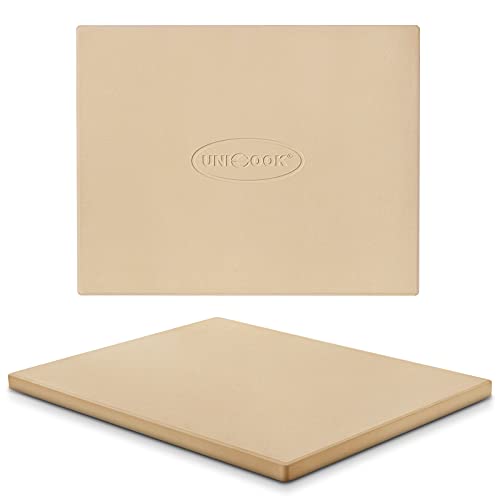
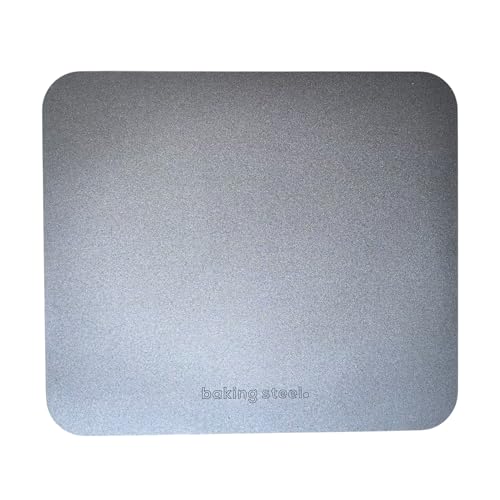
The five tools that do the work in every method on this site: a slab that stores heat, something to launch with, a way to read the surface, and a clean cut.


Why you turn at all: the oven is asymmetric on purpose
Start with the machine. A portable gas oven has one burner running along one wall or across the back. A wood or multi fuel oven has one fire banked to one side or at the rear. Neither is a symmetrical heat source, and neither is trying to be. The design goal is to get a large flame rolling across the ceiling so the dome radiates down onto the top of the pizza, and the simplest way to do that is to put all the fuel on one side and let the flame travel. The consequence, entirely by design, is that the chamber has a hot end and a cool end.
Then there is the mouth. Every one of these ovens is open at the front, and that opening faces the outdoor air. It is the single largest heat leak in the appliance and it sits exactly where you have to put the pizza. So the pizza is not just closer to the flame on one side, it is also closest to a hole in the wall on the other. That is a genuine gradient across a piece of dough that might be 12 inches across, and at these temperatures a gradient of a couple of hundred degrees across a foot of stone is not unusual. If you want to see it for yourself, point an infrared thermometer at the deck near the mouth and then at the deck near the burner and read the two numbers. We go through that exercise properly in pizza oven hot spots.
So the question is not really why you turn. It is what else you could possibly do. You cannot move the burner. You cannot close the mouth. The pizza is the only part of the system you are allowed to move, so you move the pizza. Turning is the operator compensating, several times a minute, for a fixed asymmetry that the manufacturer built in deliberately because the alternative, an evenly heated chamber, does not put a rolling flame over your cornicione.
The number: every 20 to 30 seconds, and what it actually applies to
Ooni's Koda 16 getting started guide is explicit. It tells owners to "use your peel to take the pizza out and turn it every 20-30 seconds" and describes the result in the same breath: "Your Neapolitan-Style pizza will be ready in under 2 minutes." Read those two sentences together, because they are a matched pair. The interval is short because the total bake is short. Under two minutes at Neapolitan temperature means you have somewhere between three and five turns available in the entire cook, and each one has to move the pizza far enough to matter.
It is worth being precise about what that instruction is and is not. It is a manufacturer's published instruction for a specific oven cooking a specific style. It is not a law of physics and it is not an industry standard. We looked for a comparable published figure from Gozney for how often to turn a pizza and could not find one, so we do not print one and we do not pretend Ooni's number has been ratified by anybody else. What we can say is that owner consensus across single burner ovens running a sub two minute bake lands in the same territory, which is unsurprising, because the same geometry produces the same problem.
Notice also what Ooni's phrasing implies about method. The guide says take the pizza out and turn it, which describes lifting the pizza clear on a peel rather than spinning it on the deck. That is the conservative instruction, and it is the right one to give a new owner. Both methods are legitimate and we cover both below, but if you are following the manufacturer's wording literally, you are lifting.
The two motions: lift and set down, or nudge and spin
Method one, the lift. Slide the turning peel under the leading edge of the pizza, lift it just clear of the stone, rotate the peel about a quarter turn, and set it straight back down. The pizza never leaves the chamber and never rises more than an inch or two. This is the method to learn first because it is forgiving: the pizza is fully supported the whole time, so nothing can crumple, and if you misjudge the rotation you simply do it again. The cost is that it takes a second or two longer and a lifted pizza is briefly out of contact with the deck.
Method two, the spin. Put the edge of the turning peel against the outside of the rim and give it a short, firm push sideways, so the pizza rotates on the stone. Nothing is lifted. Done well it is quick, it barely disturbs the toppings, and the base stays in contact with the deck the whole time. Done badly it shoves the pizza across the oven, or the peel goes through the rim instead of against it. The spin wants two conditions: a base that has already set, so the dough is rigid enough to transmit the push, and a deck with enough residual flour or semolina under the pizza to let it slide. On the very first turn, when the base is still soft, the lift is the safer choice.
Most cooks end up mixing them. First turn by lifting, because the pizza is still fragile and may be lightly stuck. Subsequent turns by spinning, because it is faster and the pizza is now a rigid disc. Both are done with your hand near a very hot opening, which is why heat resistant gloves belong on before the first pizza goes in and not after the first burn. Reaching into the mouth of a 900°F chamber with bare hands is the most common way people hurt themselves on these ovens, and we go through the rest of the hazards in pizza oven safety tips.
Why the turning peel is the right tool and the launching peel is the wrong one
People try to turn with the peel already in their hand, which is usually the big launching paddle, and it does not work. A launching peel is 12 to 16 inches across the blade because it has to carry a raw, floppy, topped pizza without it draping over the sides. That width is exactly what makes it useless inside the oven: the blade is nearly as wide as the chamber, so you cannot angle it under one edge of the pizza without the far corner hitting a wall, and you cannot rotate it once it is in there. What actually happens is that you push the pizza across the deck into the back wall, or you scrape a load of burnt flour along in front of the blade and deposit it under your crust.
A small round turning peel is a different tool for a different job. The head is typically around seven to nine inches, small enough to go under one part of the pizza and pivot freely, and it is round so there are no corners to catch on the chamber walls or to spear the rim. The long handle keeps your hand out of the mouth. The head is usually perforated so excess flour falls back to the deck instead of riding along with the pizza. A nine inch turning peel gives a bit more support under a larger pie if you are cooking near the 35 cm maximum diameter that both the EU regulation and the AVPN specify for a Neapolitan pizza.
This is why the standard kit is two peels, not one. A wooden launching peel or a perforated launching peel to get the raw pizza in, and a small round metal turning peel to work it once it is cooking. If you own one peel and it is a big paddle, buying a turning peel is the single highest impact accessory purchase you can make after a thermometer. Our full breakdown of the two peel system is in best pizza peels.
The schedule changes completely between Neapolitan and New York
This is the part that confuses people who bought a high heat oven and then cook New York style in it. They read Ooni's 20 to 30 second instruction, apply it to a 10 minute bake, and end up opening the oven twenty five times.
| Style | Published bake window | Turning rhythm |
|---|---|---|
| Neapolitan | 60 to 90 seconds (EU Reg 97/2010 and AVPN Disciplinare 2024); Ooni describes its Koda 16 Neapolitan bake as under 2 minutes | Ooni: every 20-30 seconds, so roughly 3 to 5 turns in the whole bake |
| New York | 4 to 12 minutes at 500 to 600°F (Gozney publishes 600-700°F for New York style) | Far less often. A handful of turns spread across several minutes, driven by what the rim is doing |
The reason is not arbitrary. At Neapolitan floor temperatures, the EU regulation specifies a cooking floor of 485°C with a dome of 430°C, while the AVPN Disciplinare specifies a cooking surface of 380 to 430°C with the dome at 485°C, and those two respected authorities transpose the figures, which we document rather than reconcile in the pizza oven temperature chart. Either way, the arc of rim facing the flame is accumulating color within seconds. Twenty seconds of extra exposure on one side is visible. At 500 to 600°F for a New York bake, twenty seconds is nothing, and the cost of opening the mouth to turn is now the dominant effect, because every opening dumps heat out of the chamber and slows the bake you are already committed to.
So the honest rule is: turn frequency should scale with how fast color develops, not with a number you read once. Fast, hot, short bake means frequent turns. Slower, cooler, longer bake means occasional turns. If you are running a high heat oven at New York temperatures, you are deliberately operating it outside the regime Ooni's instruction was written for, and the instruction does not transfer. The style differences are laid out in full in Neapolitan vs New York pizza, and the oven side of that decision is in best pizza oven for New York pizza.
Doming, sticking, and turning without losing your toppings
Doming is the technique for the pizza whose base is done and whose top is not. Instead of leaving it on the stone and hoping, lift the pizza on the turning peel and hold it a few inches under the roof of the oven for a few seconds. The dome is the hottest radiating surface in the chamber, and holding the pizza up near it finishes cheese and rim color quickly while taking the base off the deck entirely, which stops the bottom cooking further. Watch it the entire time. Doming is measured in seconds, not tens of seconds, and it is very easy to go from pale to scorched. If you find yourself doming every pizza, the real problem is usually a floor that is running hotter than the dome, which is the diagnosis in why is my pizza burnt on the bottom.
Sticking mid bake happens when a wet spot in the dough, or a bare patch of deck with no flour under it, welds the base to the stone before it has set. Do not try to spin a stuck pizza, you will tear it. Instead, slide the turning peel in flat and low from the free edge, keeping the blade against the stone, and work it under the stuck section with short pushes rather than one big shove. Once it is free, lift it clear, and if the deck under it is bare, set it down slightly offset onto cleaner stone. The prevention is at the bench: enough semolina under the dough and a shake test before you launch, which is the whole subject of how to launch a pizza.
Keeping the toppings on comes down to three habits. First, do not tilt. Toppings slide when the peel is not level, so lift flat and set down flat. Second, favor the spin over the lift once the base has set, because a pizza that never leaves the deck never has a chance to shed anything. Third, do not over top in the first place: a heavily loaded pizza is heavier, wetter, and more mobile on the peel, and it is also the pizza most likely to be underdone in the middle, which is its own problem covered in why is my pizza soggy in the middle. A restrained pizza turns cleanly, and it is also the one the EU regulation is describing when it specifies a finished pizza of maximum 35 cm with a centre thickness of 0.4 cm and a rim of 1 to 2 cm.
How to Turn a Pizza in a High Heat Pizza Oven
- 1
Have the turning peel in your hand before you launch
The turn starts about 20 seconds after the launch, which is not enough time to go looking for a tool. Set the small round turning peel down within arm's reach of the oven mouth before you carry the pizza over, along with your gloves. Fumbling for the peel is the most common reason a first pizza burns on one side.
- 2
Launch toward the back and leave yourself room
Aim the launch so the pizza lands with a little clearance all the way around rather than jammed against the back wall. You need a gap to slide the turning peel under the leading edge, and a pizza pressed against the back of the chamber is both hard to get under and sitting in the hottest part of the oven.
- 3
Watch the flame side, not the clock
The clock is a backstop, the rim is the instrument. The arc of crust nearest the burner or fire is where color appears first. When that arc has taken on real color and is a step ahead of the rest of the rim, it is time to turn, and on a Neapolitan bake that will land somewhere near Ooni's stated 20 to 30 second interval.
- 4
Slide the peel under the leading edge
Approach flat and low. Put the tip of the turning peel on the stone and push it under the edge of the pizza in one short, decisive movement, so the peel goes under the crust rather than into it. A hesitant approach folds the rim over the tip of the peel. Keep the peel level so nothing tips.
- 5
Lift just clear, rotate, and set it back down
Lift the pizza only a centimetre or two off the stone, rotate the peel roughly a quarter turn, and set it straight back down. Do not lift it high and do not tilt it. Small lift, small rotation, back on the deck. This is the beginner motion and it is the one to use until the turn feels automatic.
- 6
Or nudge and spin it in place once you are confident
The faster method never lifts the pizza at all. Place the edge of the turning peel against the side of the rim and give it a short push tangentially, so the pizza spins on the stone like a coin on a table. It is quicker, it disturbs the toppings less, and it works best on a well floured deck and a pizza whose base has already set.
- 7
Repeat until the rim is evenly colored all the way around
Keep turning at the interval the bake demands, every 20 to 30 seconds for a fast Neapolitan bake, far less often for a longer, cooler New York bake. The finish line is a rim that has taken the same color right around the circumference, not a set number of turns.
- 8
Dome the pizza if the top is lagging
If the base is done but the top is still pale, lift the pizza on the turning peel and hold it a few inches below the roof of the oven for a few seconds, watching it constantly. The dome is radiating heat downward and will finish the top fast. Bring it down the moment the color arrives.
Ready to buy? Start with our top picks
Whatever this guide steered you toward, here's where most readers land, ranked on stated floor heat. Live price check on each.
- Check price on Amazon
- Check price on Amazon
- Check price on Amazon
- Check price on Amazon
- Check price on Amazon
- Check price on Amazon
As an Amazon Associate we earn from qualifying purchases, at no cost to you.
How we chose.
The turn interval on this page is quoted from Ooni's own Koda 16 getting started guide, which instructs owners to take the pizza out and turn it every 20 to 30 seconds and describes a Neapolitan style pizza as ready in under two minutes. We quote the manufacturer verbatim and attribute it rather than paraphrasing a number into existence.
The bake windows come from primary documents. Commission Regulation (EU) No 97/2010, the Pizza Napoletana TSG, specifies a 60 to 90 second bake on a cooking floor of 485°C with a dome of 430°C. The AVPN Disciplinare, 2024 edition, also specifies 60 to 90 seconds but publishes the cooking surface at 380 to 430°C with the dome at 485°C, the exact reverse of the EU ordering. We publish both and do not average them; the full comparison lives on our temperature chart page.
The New York figures are Gozney's published guidance of 600 to 700°F for New York style against 800 to 900°F for Neapolitan, alongside commercial deck oven guidance of at least 550°F for baking directly on the deck and a working window of 4 to 12 minutes.
We could not find any published Gozney figure for how often to turn a pizza, so we do not print one and do not imply that Ooni's 20 to 30 seconds is an industry standard. It is Ooni's instruction for Ooni's oven, and it happens to match owner consensus for any single burner oven running a sub two minute bake.
This is a research and verification desk. Nothing here is a physical test result. Where a claim is owner consensus rather than a published specification, we label it as owner consensus.
Key terms
- Turning peel
- A small round metal peel, typically around seven to nine inches across the head, on a long handle, used to rotate the pizza during the bake and to lift it out at the end. Round so it can pivot inside the chamber without catching, and usually perforated so excess flour falls back to the deck rather than travelling under the crust.
- The hot arc
- The section of the chamber nearest the burner or fire, where radiant heat is highest and crust color develops fastest. Its opposite is the cool arc at the oven mouth, where the chamber is open to outside air. Turning exists to give every part of the rim an equal share of time in the hot arc.
- Doming
- Lifting the pizza on a turning peel and holding it a few inches below the oven roof to finish a pale top with radiant heat from the dome, while simultaneously taking the base off the stone. Measured in seconds and watched constantly, because it goes from pale to scorched very quickly.
- The spin
- The advanced turning motion, in which the edge of the turning peel is pushed tangentially against the rim so the pizza rotates on the stone without ever being lifted. Faster than lifting and gentler on toppings, but it needs a base that has already set and enough flour under the pizza to let it slide.
- Cornicione
- The raised outer rim of a Neapolitan pizza. The EU Pizza Napoletana TSG specifies a rim of 1 to 2 cm against a centre thickness of 0.4 cm, and it is the rim, not the centre, that you read for color when deciding whether it is time to turn.
- Bake window
- The published time a style is supposed to take. Both the EU regulation and the AVPN Disciplinare specify 60 to 90 seconds for a true Neapolitan pizza, while a New York bake at 500 to 600°F runs 4 to 12 minutes. The bake window, not a fixed rule, is what sets your turning interval.
Questions, answered
how often should i turn a pizza in a pizza oven
For a fast Neapolitan style bake, Ooni's own Koda 16 getting started guide instructs owners to use the peel to take the pizza out and turn it every 20 to 30 seconds, and describes the pizza as ready in under two minutes. That works out to roughly three to five turns across the whole bake. For a longer, cooler bake, turn far less often. A New York style pizza at 500 to 600°F runs 4 to 12 minutes, and turning it every 20 seconds would mean opening the oven mouth two dozen times and dumping heat each time. Use the rim as the instrument: when the arc nearest the flame is clearly ahead of the rest, turn.
how often to turn pizza in ooni
Ooni publishes the answer for the Koda 16: take the pizza out and turn it every 20 to 30 seconds. That instruction is written for the Neapolitan style bake the oven is sold on, which Ooni describes as ready in under two minutes. If you are cooking a lower temperature style in the same oven, the instruction does not transfer, because color develops much more slowly and every opening of the mouth costs you deck temperature. We could not find a comparable published turning figure from Gozney, so we do not present 20 to 30 seconds as an industry standard. It is Ooni's instruction for Ooni's oven.
why do you have to turn a pizza in a pizza oven
Because the oven is asymmetric on purpose. A portable pizza oven has one burner along one wall or one fire banked to one side, and an open mouth at the front that faces cool outdoor air. That means there is a permanent hot arc and a permanent cool arc inside the chamber, and a pizza left still will char on the side facing the flame while staying pale on the side facing the mouth. You cannot move the burner and you cannot close the mouth, so you move the pizza. Turning is how you give every part of the rim an equal share of time in the hot spot.
what peel do you use to turn a pizza
A small round turning peel, typically around seven to nine inches across the head on a long handle, not the large launching paddle you used to get the pizza in. A launching peel is 12 to 16 inches wide because it has to carry a raw pizza, and that width means it cannot pivot inside the chamber. Trying to turn with it usually shoves the pizza across the deck into the back wall or scrapes burnt flour along under the crust. The round head of a turning peel has no corners to catch, and the perforations let excess flour drop back to the stone. Most cooks run both: a wooden or perforated peel to launch, a round metal peel to turn.
how do you turn a pizza without messing up the toppings
Three habits. Keep the peel level, because toppings slide the moment you tilt, so lift flat and set down flat. Once the base has set, switch from lifting to spinning: put the edge of the turning peel against the outside of the rim and push it tangentially so the pizza rotates on the stone without ever leaving it. And do not over top the pizza in the first place, since a heavily loaded pie is wetter, heavier, and more mobile. Bigger, fewer rotations also beat lots of small nudges, because each handling event is a chance to disturb something.
what do i do if the pizza sticks to the stone while cooking
Do not try to spin it, you will tear it. Slide the turning peel in flat and low from a free edge, keeping the blade in contact with the stone, and work it under the stuck section with several short pushes rather than one hard shove. Once it releases, lift it clear and, if the deck underneath is bare, set it down slightly offset onto cleaner stone. The real fix is upstream: mid bake sticking usually means there was not enough semolina under the dough at launch, or a wet spot in the base welded to the stone before it set. Shake test the loaded peel before every launch.
Keep reading.
Pizza Oven Hot Spots
Map the hot arc and the cool arc in your own oven with an infrared thermometer, the reason turning exists.
How to Launch a Pizza
The step before this one: peel choice, semolina, the shake test, and the one committed motion that lands it flat.
Cooking Multiple Pizzas Back to Back
Why pizza three and four disappoint, and Ooni's published rule for what the stone must read before you launch again.
Why Is My Pizza Burnt on the Bottom?
When turning is not the problem and the floor is simply running too hot for the style you are cooking.
The Best Pizza Peels (2026)
The two peel system explained, launching peels versus turning peels and which sizes actually fit your oven.
Pizza Oven Temperature Chart
Floor and dome targets by style, including where the EU regulation and the AVPN Disciplinare openly disagree.