Our pick Ooni Koda 16
Check price on AmazonHow Long to Cook Pizza at 450°F (2026): Times for Every Crust, Plus 425, 475 and 500
A homemade pizza at 450°F takes 12 to 15 minutes on a tray, 8 to 10 on a preheated stone, and 6 to 8 on a baking steel. Frozen pizza runs 12 to 18 depending on the box. Here are the consensus times for every crust style and surface, what changes at 425, 475, and 500, and the three doneness cues that matter more than the clock.
We earn a commission on purchases through our links, at no cost to you. It never decides a ranking. How this works

Quick answer
- Homemade pizza at 450°F: 12-15 minutes on a sheet pan, 8-10 on a preheated stone, 6-8 on a preheated baking steel.
- Thin crust: subtract 2-3 minutes. Deep dish or pan pizza: 20-25 minutes, often started at 425°F. Frozen: 12-18 minutes per the box, ideally on a preheated stone.
- The stone or steel must preheat for 45-60 minutes at 450°F before the pizza goes on; the oven air reaches temperature in 15 minutes but the slab does not.
- Going hotter helps: 475°F cuts about 2 minutes and 500°F about 3, and both produce a crisper base. Use the highest setting your oven offers for a thin or Neapolitan-style pie.
- Doneness cues beat the clock: bubbling cheese with brown spots, a golden edge, and a browned underside. A pale bottom means more time or, next time, a stone or steel.
Short answer: a standard homemade pizza at 450°F takes about 12 to 15 minutes on a sheet pan, 8 to 10 minutes on a properly preheated pizza stone, and 6 to 8 minutes on a baking steel. Thin crust runs a few minutes faster; deep dish and pan pizza run 20 to 25 minutes. A frozen pizza at 450°F takes 12 to 18 minutes, and the box is usually right. Pull it when the cheese is bubbling with browned spots, the crust edge is golden, and the underside, lifted with a spatula, is brown rather than pale.
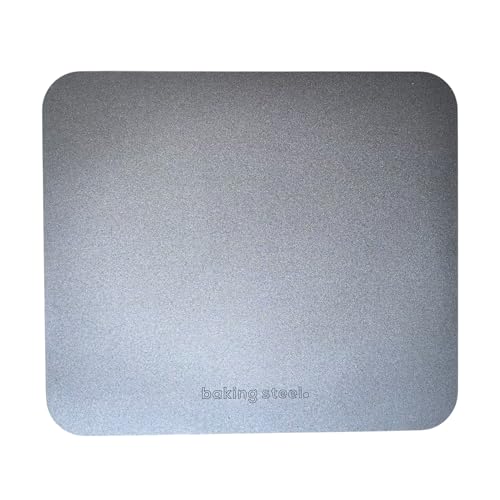
Why the surface matters more than the temperature: 450°F is the ceiling of most home ovens, which is far below the 700°F-plus of a real pizza oven, so the thing standing between you and a crisp base is how much heat gets into the dough from underneath. A thin sheet pan gives almost none; a stone stores heat and gives a lot; a steel stores more and transfers it faster. That is why the same pizza takes twice as long on a tray as on a steel, and why the tray version comes out with a paler, softer bottom no matter how long you leave it.
Our numbers are the consensus of the home-baking community, cross-checked across the sources we track; we are a research and verification desk, not a test kitchen. Ovens lie by 25°F or more in either direction, doughs vary in hydration and thickness, and the cues below outrank any timer.
What you'll need
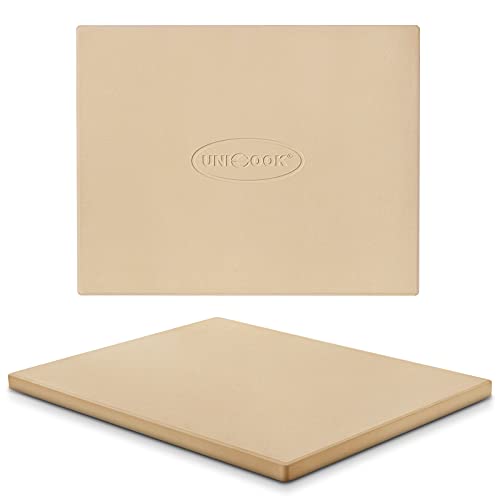
The five tools that do the work in every method on this site: a slab that stores heat, something to launch with, a way to read the surface, and a clean cut.


In this guide
- 1.The 450°F chart: times by crust and surface
- 2.425 vs. 450 vs. 475 vs. 500: what the extra heat buys you
- 3.The preheat is the part everyone skips
- 4.Doneness: the three cues that outrank the timer
- 5.Frozen pizza at 450°F, and the tray vs. rack vs. stone question
- 6.How to bake homemade pizza at 450°F
- 7.Key terms
- 8.FAQ
The 450°F chart: times by crust and surface
All times assume the oven has fully preheated and, for stone and steel, that the slab has soaked for 45-60 minutes. Standard hand-tossed, homemade (12-14 inch): sheet pan 12-15 minutes, pizza stone 8-10, baking steel 6-8. Thin crust or New York style: sheet pan 10-12, stone 6-8, steel 5-7. Neapolitan-style (high hydration, thin center): stone 7-9, steel 5-7; skip the tray, which cannot crisp it. Deep dish, Chicago style: 20-25 minutes in its pan, lower rack. Sicilian, Detroit, or sheet-pan pizza: 15-20 minutes in its pan, middle rack. Frozen pizza: 12-18 minutes, use the box time, placed directly on a preheated stone or on the rack for the crispest base.
Why the range is so wide: the pizza's own thickness and moisture decide how long heat needs to reach the center, and the surface decides how fast the base crisps. A wet, thick, heavily topped pie at 450°F on a tray is the slowest combination in the chart; a thin dough on a preheated steel is the fastest. The oven rack position matters too: the lower-middle rack is the consensus for a stone or steel (closest to the bottom element without scorching), the middle rack for a pan pizza, and the top rack only for finishing a pie whose cheese is lagging.
425 vs. 450 vs. 475 vs. 500: what the extra heat buys you
Most recipes say 450°F because it is the highest round number most ovens reliably hit, but hotter is almost always better for pizza. At 425°F, add 2-3 minutes to every time above; it is the right choice only for deep dish and heavily loaded pies that need time for the center to cook before the top burns. At 475°F, subtract about 2 minutes and expect a noticeably crisper, more blistered crust. At 500°F (or 550°F if your oven offers it), subtract about 3 minutes; this is where a thin or Neapolitan-style pizza starts to resemble a pizzeria pie, with leopard-spotted edges and a base that crackles. On a steel at 500°F a thin pizza can be done in 5 minutes.
The rule the baking community has converged on: use the highest setting your oven has for thin pizzas, and 450°F for everything else. The reason high heat works is that it sets the crust's outside fast, trapping steam inside for oven spring while the base crisps before the toppings can dry out. The exception is a thick or wet pie, where 500°F burns the edge before the middle sets; those want 425-450°F and time. For the full picture of what temperature each style wants, including real pizza ovens at 700°F-plus, see our pizza temperature guide and the oven temperature chart.
The preheat is the part everyone skips
An oven's thermostat reads the air, which reaches 450°F in 10-15 minutes. A pizza stone or steel is a slab of mass that needs far longer to saturate: the consensus is 45 minutes minimum, an hour for a thick stone. Put a pizza on a stone that has only had the oven's 15-minute preheat and you get the worst of both worlds, a slab that pulls heat out of the dough instead of pushing it in, and a base that comes out paler than it would have on a plain tray. This single mistake is behind most "my pizza stone doesn't work" complaints.
If you want to stop guessing, an infrared thermometer reads the slab surface in a second: at a 450°F oven setting, the stone should read roughly 430-450°F before the pizza launches, and if it reads 350°F it needs another twenty minutes. Steel saturates faster than stone, about 30-45 minutes, because it conducts heat through itself quickly. Our guide to pizza stone temperature and preheat times goes deeper, and how to use a pizza stone covers launch, rotation, and care.
Doneness: the three cues that outrank the timer
Every time in this guide is a starting point; the pizza tells you when it is done. Cue one, the cheese: fully melted and bubbling across the whole surface, with at least a few browned spots. Melted-but-flat cheese means the pie needs another minute or two. Cue two, the edge: golden brown, with darker blistered spots if the oven runs hot. A pale edge is underdone; a uniformly dark brown edge with a pale center means the oven is too hot for that dough. Cue three, the underside: lift an edge with a spatula or peel and look. You want brown, with some char spotting on a stone or steel. A pale, soft underside is the signature of a tray bake or an unsaturated stone.
If the top is done and the bottom is pale, you have a surface problem that more time will not solve without drying the toppings; next time, preheat a stone or steel. If the bottom is done and the top is pale, move the rack up one position or finish 60-90 seconds under the broiler, the home-oven stand-in for a pizza oven's dome heat. Rotating the pizza 180 degrees at the halfway mark, with a turning peel or a big spatula, evens out the hot spots every home oven has.
Frozen pizza at 450°F, and the tray vs. rack vs. stone question
Most frozen pizzas are formulated for 400-450°F and 12-18 minutes, and the box is usually right about time. Where the box is conservative is the surface: it will tell you a sheet pan is fine, and it is, but directly on the oven rack produces a visibly crisper base, and directly on a preheated stone produces the best frozen pizza your oven can make, often 2 minutes faster than the box says. The one caution with a stone is thermal shock from a frozen disc landing on a 450°F slab; a cordierite stone like the Unicook handles it, a cheap ceramic one may not, and a steel does not care.
For a frozen deep dish or rising-crust pizza, follow the box and use the middle rack on a tray; these need the slower, more even cook and will burn on a stone. For a thin-crust frozen pie, 450°F on a preheated stone or rack for 10-12 minutes is the move, and 475°F cuts another minute with a crisper result. Do not thaw first; a thawed frozen pizza goes soggy on the way to the oven. If you bake frozen or homemade pizza every week, the right stone or steel is the single upgrade that changes the result most, for less than the cost of three delivery pies.
How to bake homemade pizza at 450°F
- 1
Preheat with the stone or steel inside
Put the stone or steel on the lower-middle rack of a cold oven and set it to 450°F (or higher for thin crust). Wait 45-60 minutes for the slab to saturate, not just the air.
- 2
Build the pizza on a floured peel
Stretch the dough, top it lightly, and assemble on a peel dusted with flour or semolina so it slides. Work fast so the dough does not stick.
- 3
Launch onto the hot surface
Slide the pizza onto the stone or steel with a quick pull of the peel. On a sheet pan, just place the pan on the rack.
- 4
Bake and rotate
Bake 6-8 minutes on steel, 8-10 on stone, 12-15 on a pan. Rotate 180 degrees halfway to even out hot spots.
- 5
Check the three cues
Pull when the cheese bubbles with brown spots, the edge is golden, and the underside is browned. Rest 2 minutes before slicing.
Ready to buy? Start with our top picks
Whatever this guide steered you toward, here's where most readers land. Live price check on each.
- Check price on Amazon

- Check price on Amazon

- Check price on Amazon

- Check price on Amazon

- Check price on Amazon

- Check price on Amazon

As an Amazon Associate we earn from qualifying purchases, at no cost to you.
Key terms
- Preheat saturation
- The 45-60 minutes a stone or steel needs at temperature before it can crisp a base. The oven air is ready in 15 minutes; the slab is not.
- Oven spring
- The rapid rise a crust makes in its first minutes in a hot oven as trapped water turns to steam. High heat maximizes it, which is why 475-500°F gives a puffier, lighter edge than 425°F.
- Underside check
- Lifting an edge of the pizza to look at the base. The single most reliable doneness cue, and the one that tells you whether your surface is doing its job.
Frequently asked questions
How long does homemade pizza take at 450 degrees?
About 12-15 minutes on a sheet pan, 8-10 minutes on a preheated pizza stone, and 6-8 minutes on a preheated baking steel, for a standard hand-tossed pie. Thin crust runs 2-3 minutes faster; deep dish takes 20-25 minutes. The stone or steel needs 45-60 minutes of preheat before the pizza goes on, and the pizza is done when the cheese bubbles with brown spots, the edge is golden, and the underside is browned.
How long do you cook frozen pizza at 450?
12-18 minutes, and the box time is usually right. For a crisper base, bake it directly on the oven rack or on a preheated pizza stone instead of a sheet pan; on a stone it is often done 2 minutes early. Do not thaw first. Frozen deep-dish and rising-crust pizzas should follow the box exactly on a tray on the middle rack.
Is 450 hot enough for pizza?
It is the minimum for a good home-oven pizza and fine for most styles; 475-500°F is better for thin crust and Neapolitan-style pies, producing a crisper, more blistered crust a few minutes faster. The bigger factor than the exact temperature is the surface: a preheated stone or steel at 450°F makes a far better pizza than a sheet pan at 500°F. Use 425°F only for deep dish and heavily loaded pies that need time for the center to cook.
How do I know when pizza is done?
Three cues, in order of reliability: the underside is browned (lift an edge to check), the edge of the crust is golden with some darker spots, and the cheese is fully melted and bubbling with browned patches. If the top is done and the bottom is pale, the fix is a stone or steel next time, not more oven time. If the bottom is done and the top is pale, finish 60-90 seconds under the broiler.
Filed under Explainer · Part of Pizza Oven 101
The Bake, free weekly
Price drops worth knowing about, technique that matters, and every new review.