Our pick Ooni Koda 16
Check price on AmazonPizza Stone Temperature (2026): How Hot It Should Be, How Long to Preheat, and How to Check
A pizza stone should be as hot as your oven can make it, 475 to 550°F for most home ovens, and it takes 45 to 60 minutes to get there even though the oven beeps at 15. Here is the temperature each pizza style wants, the preheat time by stone thickness, how to check the surface with an infrared thermometer, and why a stone that feels hot is not the same as a stone that is ready.
We earn a commission on purchases through our links, at no cost to you. It never decides a ranking. How this works

Quick answer
- Target: the stone surface within 25°F of the oven setting. At 500°F, a stone reading 475°F-plus is ready; at 450°F, 430°F-plus.
- Preheat time: 45 minutes for a half-inch stone, a full hour for three-quarter inch or thicker, starting from a cold oven. Steel needs 30-45 minutes.
- By style: Neapolitan and thin crust want the stone at 500-550°F; standard homemade at 450-500°F; deep dish and heavy pies at 425-450°F.
- An infrared thermometer is the only way to know the surface temperature; the oven's beep measures air, not stone. Point it at the center of the stone from a foot away.
- Between pizzas the surface drops 50-100°F; give it 5-10 minutes to recover before the next launch.
Short answer: set the oven to its maximum, 500°F to 550°F on most, 450°F at minimum, put the stone in cold, and preheat for 45 to 60 minutes. The stone surface should read within about 25°F of the oven setting before a pizza goes on; at a 500°F setting, that means 475°F or better on an infrared thermometer. Neapolitan-style and thin-crust pizzas want the stone as hot as possible; thicker and heavily topped pies bake better with the stone at 450°F so the top does not burn before the center sets.
Why the stone's temperature matters more than the oven's: a home oven cannot reach the 700 to 900°F of a real pizza oven, so everything a stone does for your pizza comes from heat it has stored and can dump into the base on contact. A stone at 350°F, which is what you get after the oven's own 15-minute preheat, does not crisp a crust; it draws heat out of the dough and produces a paler base than a bare tray. A stone at 500°F, saturated through its full thickness, crisps the base in the first minute and drives the oven spring that gives a puffy, blistered edge. Same stone, same oven, completely different pizza.
Our numbers are the consensus of the home-baking community, cross-checked across the sources we track; we are a research and verification desk, not a test kitchen. Stone thickness, material, and your oven's honesty about its own temperature all move the numbers, which is why the infrared thermometer section below is the most useful part of this guide.
What you'll need
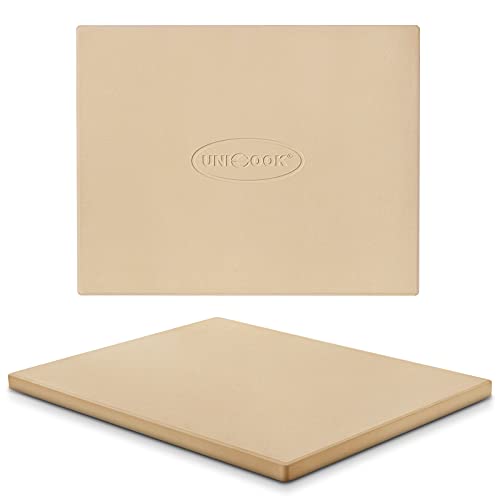
The five tools that do the work in every method on this site: a slab that stores heat, something to launch with, a way to read the surface, and a clean cut.


In this guide
- 1.The target temperature by pizza style
- 2.How long to preheat, by stone thickness and material
- 3.How to check the stone's real temperature
- 4.Recovery between pizzas and the back-to-back problem
- 5.Temperature mistakes that ruin the bake or the stone
- 6.How to get a pizza stone to the right temperature
- 7.Key terms
- 8.FAQ
The target temperature by pizza style
Neapolitan-style and thin crust: as hot as the oven goes, 500-550°F. These doughs are thin and wet and need a violent blast of base heat to set and blister in 5-7 minutes before the toppings dry out. Standard homemade and New York style: 450-500°F, 8-10 minutes; 500°F if your oven reaches it honestly. Frozen pizza: 450°F, directly on the stone, and it will finish faster than the box says. Deep dish, Sicilian, and heavily loaded pies: 425-450°F, because a scorching stone burns the base of a thick pizza before the center cooks; these benefit from a stone more for evenness than for char.
The logic is the same in every case: you want the base to finish at the same moment as the top. A thin pizza's top cooks fast, so the base needs maximum stone heat to keep up. A thick pizza's center takes 20 minutes to set, so the base needs a gentler stone or it chars while the middle waits. Our pizza temperature guide lays out every style, and the 450°F timing chart pairs each with bake times on stone, steel, and tray.
How long to preheat, by stone thickness and material
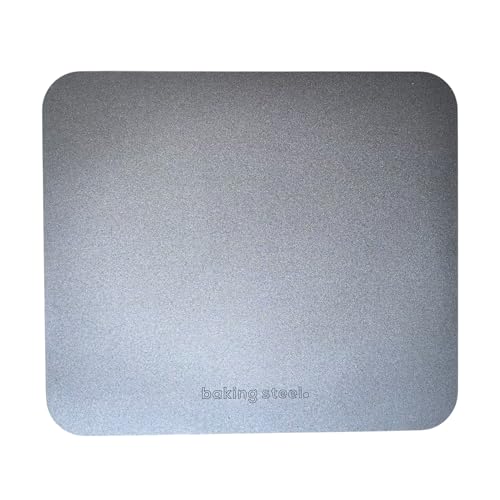
The oven's air reaches its setting in 10-15 minutes; the stone does not. A stone is a slab of mass that heats from the outside in, and it is not ready until the heat has reached its core, or it will pull heat back out of the surface the moment a cold pizza lands. The consensus timings, all from a cold start: a thin quarter-inch to half-inch stone, 30-45 minutes; a standard half-inch to three-quarter-inch cordierite stone, 45-60 minutes; a thick three-quarter-inch-plus or double-stacked stone, a full hour or more. A baking steel conducts heat through itself far faster and saturates in 30-45 minutes, one of the reasons steel wins our stone vs. steel comparison for impatient bakers.
Material matters less than thickness for preheat, but it matters for what you can do with the hot stone. Cordierite, the material of the Unicook and most good stones, tolerates thermal shock and can take a frozen pizza at 500°F. Plain ceramic and clay stones crack more easily and should never meet a frozen disc or a splash of water while hot. And every material, without exception, goes into the oven cold; a room-temperature stone into a 500°F oven is the leading cause of the crack that ends a stone's life.
How to check the stone's real temperature
The only reliable way is an infrared thermometer: open the oven, point it at the center of the stone from about a foot away, and read the surface in a second. The Etekcity Lasergrip is the budget standard the community has settled on, accurate enough for this job and cheap enough to be a no-brainer; the Ooni thermometer is the higher-end pick if you also own an outdoor oven that hits 900°F. Read the center, not the edge: stones heat from the outside in, and the center lags. When the center matches the edge and both are within 25°F of the oven setting, the stone is saturated.
Without a thermometer, the proxies are weaker but real. Time is the main one: the full hour, every bake. The flour test: flick a pinch of flour onto the stone; if it browns in about 10 seconds the stone is in the 475°F-plus range, if it takes 30 seconds or more it is not ready. The first pizza: a pale underside after 10 minutes means the stone was not saturated, which is useful for next time but a poor way to find out. Our infrared thermometer rankings cover the options if you want the guesswork gone permanently.
Recovery between pizzas and the back-to-back problem
Every pizza launched onto a stone pulls heat out of it, and a saturated stone at 500°F drops to roughly 400-450°F on the surface by the time the first pie comes off. That is why the second and third pizzas in a row come out paler than the first unless you wait: the consensus is 5-10 minutes of recovery between launches, with the oven still at maximum. An infrared thermometer turns this from a guess into a number; launch the next pie when the center reads back above 475°F. For a party with six pizzas to bake, this is the single biggest determinant of whether pizza four is as good as pizza one.
Steel recovers faster than stone because it moves heat through itself quickly, so for high-volume baking a steel is the better tool; a thick stone holds more total heat and drops less per launch, so it beats a thin one. If you bake back-to-back often, two things help: a thicker stone, and running the broiler for 2-3 minutes between pizzas with the oven door closed, which blasts the surface back up faster than the bake element alone. Our stones and steels rankings note thickness and recovery for each pick, and how to use a pizza stone covers launching, rotating, and cleaning.
Temperature mistakes that ruin the bake or the stone
Trusting the oven beep. It measures air. The stone is ready 30-45 minutes after the beep, not at it. Cold stone into a hot oven. Thermal shock, cracked stone. Cold start, always. Launching a frozen pizza onto a hot ceramic stone. Same shock in reverse; cordierite handles it, ceramic may not. Stone too hot for a thick pizza. A 550°F stone chars the base of a deep dish before the center sets; drop to 425-450°F for heavy pies. Water on a hot stone. Never, for cleaning or any other reason; it flashes to steam inside the pores and can split the slab.
Reading the edge instead of the center. The edge heats first and reads hot while the center is still 50°F behind; always check the middle. Ignoring the oven's own dishonesty. Many home ovens run 25°F or more off their dial in either direction; an infrared read of the stone is also a free calibration of the oven. Opening the door repeatedly during preheat. Every open dumps the air temperature and stalls the stone. Set it, walk away, come back in an hour.
How to get a pizza stone to the right temperature
- 1
Start cold
Place the stone on the lower-middle rack of a cold oven. Never put a cold stone into a hot oven.
- 2
Set the oven to maximum
500-550°F for thin crust and Neapolitan style, 450-500°F for standard pizza, 425-450°F for deep dish.
- 3
Wait 45-60 minutes
Ignore the preheat beep; it measures air. A half-inch stone needs 45 minutes, a thicker one a full hour. Steel needs 30-45.
- 4
Check the center with an infrared thermometer
Point it at the middle of the stone from a foot away. Ready when the center reads within 25°F of the oven setting.
- 5
Recover between pizzas
Wait 5-10 minutes between launches, or until the center reads back above 475°F at a 500°F setting.
Ready to buy? Start with our top picks
Whatever this guide steered you toward, here's where most readers land. Live price check on each.
- Check price on Amazon

- Check price on Amazon

- Check price on Amazon

- Check price on Amazon

- Check price on Amazon

- Check price on Amazon

As an Amazon Associate we earn from qualifying purchases, at no cost to you.
Key terms
- Saturation
- The state where a stone is at temperature through its full thickness, not just on the surface. Only a saturated stone crisps a base instead of pulling heat out of the dough.
- Infrared thermometer
- A point-and-read surface thermometer. The only practical way to know a stone's real temperature, and a free calibration check on the oven's dial.
- Recovery
- The 5-10 minutes a stone's surface needs to climb back to temperature after a launch. The reason the third pizza in a row bakes worse than the first without a pause.
Frequently asked questions
How hot should a pizza stone be?
As hot as your oven can make it for most pizzas: 500-550°F for thin crust and Neapolitan style, 450-500°F for standard homemade pizza, and 425-450°F for deep dish and heavily topped pies. The stone surface should read within about 25°F of the oven setting on an infrared thermometer before you launch.
How long does a pizza stone take to heat up?
45 minutes to an hour from a cold start, depending on thickness: about 45 minutes for a half-inch stone, a full hour for three-quarter inch or thicker. The oven's preheat beep at 15 minutes measures the air, not the stone. A baking steel heats faster, 30-45 minutes.
Can you put a pizza stone in a preheated oven?
No. A cold stone going into a hot oven is the most common cause of cracked stones, through thermal shock. Always place the stone in a cold oven and let it heat up with the oven. The same rule applies in reverse: let the stone cool completely in the oven before moving it.
How do you know when a pizza stone is ready?
An infrared thermometer pointed at the center of the stone is the only reliable check: ready when the center reads within 25°F of the oven setting. Without one, give it the full hour, or flick a pinch of flour on the surface; if it browns in about 10 seconds the stone is hot enough, if it takes 30 seconds it is not.
Filed under Explainer · Part of Pizza Oven 101
The Bake, free weekly
Price drops worth knowing about, technique that matters, and every new review.