Our pick. Ooni
Check price on Amazon →What Size Pizza Oven Do I Need? (2026): 12 vs 14 vs 16 (and 20)
Cooking-floor size is the first real decision in buying a pizza oven, and bigger is not automatically better. A 12-inch oven is the lightest, cheapest, most portable class and makes a perfect personal-to-medium pie. A 14-inch is the do-everything middle. A 16-inch is the entertainer's party-pie size, and Ooni's 20-inch Koda 2 Max is a feed-a-crowd showpiece. Here's how to match the floor to how many you cook for, your space, and your budget, with the real weights and prices, not vibes.
By The Pizza Oven Review DeskUpdated 2026-06-29~11 min readRanked on verified floor heatHow we research
We earn a commission on purchases through our links, at no cost to you. It never decides a ranking. How this works
"What size pizza oven do I need?" is the question that quietly determines almost everything else about your buy, the weight you'll haul, the fuel you'll burn, the price you'll pay, and the pizza you'll actually make. It's also the question where the instinct to "just go big" most often backfires. A bigger cooking floor is genuinely better for some people and a pure liability for others, and the honest answer depends entirely on how many you cook for and where you'll cook.
We rank and recommend pizza ovens for a living, and nothing here is sponsored, when we send you to a smaller oven because it's the smarter buy for you, that's the whole point of the site. So this guide is built around your decision, not the most expensive box. We'll walk the four real size classes, 12, 14, 16, and 20 inch, with the specific weights and prices from our verified dataset, and tie each one to the buyer it actually fits.
One physics fact runs underneath the whole choice, and it's our standard lens: a bigger cooking floor is a bigger thermal mass to heat, so it takes more fuel and a longer preheat to reach peak, and, critically, more energy to hold peak and recover between pizzas once you start launching pies. That's not a reason to fear size; it's the reason size has to be matched to use. A 20-inch floor feeding a crowd is brilliant; the same floor making one personal pizza a week is paying a fuel-and-weight tax for nothing. The size and weight figures behind each class come from the pizza oven database, which also computes what each oven costs per square inch of pizza.
The short version.
- 12-inch is the personal-to-medium pie and the most portable, lightest, cheapest class, Ooni Koda 12 is just 20.4 lb. It suits singles, couples, and anyone who prizes grab-and-go portability above all.
- 14-inch is the do-everything middle: a meaningfully bigger pie and more bench room to launch and turn, with only a modest weight penalty (Ooni Koda 2 is 35.3 lb). For most households it's the sweet spot.
- 16-inch is the true party-pie and family size, more room to launch and rotate a big pie, but heavier and pricier (Gozney Arc XL is 56 lb at about $1,000). Buy it if you cook for a crowd or want full-size pies.
- 20-inch (Ooni Koda 2 Max, 95 lb, ~$1,299) is a showpiece for serious entertaining, dual zones to run two pizzas at once, and overkill for anyone who isn't regularly feeding a party.
- Match the floor to how many you cook for, your space and portability needs, and your budget. Remember the trade: a bigger floor means more fuel and a longer preheat to reach and hold peak, plus more energy to recover between pies.
Our top-rated pizza ovens
Whatever you decide, these are the ovens we recommend, ranked on stated floor heat. Live price check on each.
- Check price on Amazon

- Check price on Amazon

- Check price on Amazon

- Check price on Amazon

- Check price on Amazon

- Check price on Amazon

As an Amazon Associate we earn from qualifying purchases, at no cost to you.
What you'll need.
Prices approximate at time of writing.
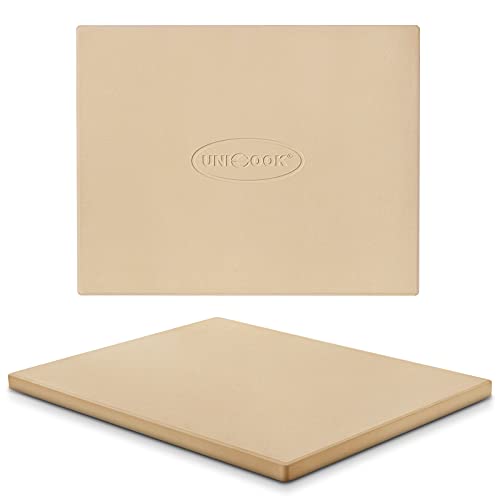
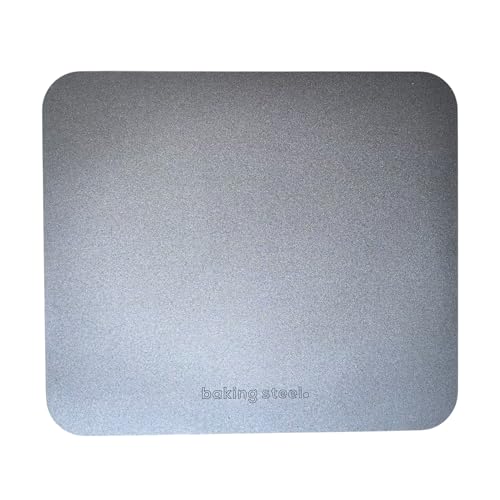
The five tools that do the work in every method on this site: a slab that stores heat, something to launch with, a way to read the surface, and a clean cut.


The quick answer: match the floor to the crowd
If you want the decision in one paragraph, here it is. 12-inch suits singles and couples and anyone who wants maximum portability and the lowest price, it's the lightest, cheapest, most grab-and-go class. 14-inch is the do-everything middle: a bit more pie and more bench room to work, without much weight penalty, which makes it the default sweet spot for most buyers. 16-inch is the entertainer's and family's party-pie size, true full-size pies and more room to launch and turn, at the cost of real weight and a higher price. And 20-inch, which in practice means Ooni's Koda 2 Max, is the showpiece: a feed-a-crowd floor for someone who entertains seriously.
The reason this maps so cleanly is that cooking-floor size is really a proxy for how many people you're cooking for and how much you're willing to carry and spend. Size doesn't make a pizza better, every class here can hit the same ~950°F floor, it makes a pizza bigger, and gives you more elbow room to launch, turn, and recover. So the right question isn't "what's the best size," it's "what's the right size for me," and that's a question about your table and your space, not about the oven.
12-inch: the lightest, cheapest, most portable class
The 12-inch class is the entry point to the whole category, and for a lot of people it's also the finish line. A 12-inch floor makes a genuine personal-to-medium pizza, comfortably one generous pie at a time, and it does so in the lightest, most portable, most affordable package on the market. This is the size you carry to a campsite, slide into a small patio, or stash on a shelf between uses. If portability or budget is your top priority, you start here.
The weights make the case. The Ooni Koda 12 is just 20.4 lb at ~$299, the lightest serious oven we track, and the multi-fuel Ooni Karu 12 (26.4 lb, ~$249) sits right alongside it and is now the cheapest of the group, while the gas Gozney Tread (29.8 lb, ~$500) has climbed to the top of the 12-inch class. The Gozney Roccbox (44 lb, ~$399) is a denser, more insulated 12-inch built like a tank, while round-design options like the Solo Stove Pi and gas Pi Prime (around 30 lb, $400 to $424) round out the field. Every truly portable, carry-it-anywhere oven we recommend lives in this 12-inch class, it's no coincidence.
14-inch: the do-everything sweet spot
The 14-inch class is the one we point most buyers toward, because it captures most of the upside of going bigger while paying almost none of the penalty. Two extra inches of floor doesn't sound like much, but it meaningfully increases pizza size and, just as important, gives you more bench room around the pie to launch cleanly and turn confidently. For anyone who has fought a too-small floor with a peel, that extra working space is worth more than the extra diameter alone.
And the weight cost of stepping up is modest. The Ooni Koda 2 is a 14-inch gas oven at 35.3 lb (~$499), only about 15 lb heavier than the 12-inch Koda 12, and still movable by one person, with a G2 burner and a built-in thermometer. Gozney's 14-inch Arc (47.5 lb, ~$800) brings a rolling flame and a wide glass door for the same class. Neither is a featherweight, but neither is a fixture you can't reposition, and both deliver a pie that comfortably suits a couple or a small family without jumping to true party-pie weight and cost.
16-inch: the entertainer's true party-pie size
Sixteen inches is where you cross into full-size, true party-pie territory. A 16-inch floor makes a proper large pizza, the kind that feeds a family or anchors a party in a single launch, and it gives you the most room of any common class to slide the pie in, rotate it, and manage the bake. If you cook for a crowd, or you simply want pizzas at the scale you'd order out, this is your floor. The capability is genuine; so is the cost of it.
The trade is weight, price, and fuel. The Ooni Koda 16 runs 40.1 lb at about $498; the Gozney Arc XL is a heftier, full-capacity 16-inch at 56 lb and about $1,000; and the multi-fuel Ooni Karu 2 Pro (61.7 lb, ~$849) adds wood and a big glass door. Rotating-stone options like the Halo Versa 16 (41 lb, ~$499) ease the turning, and the value end of the class includes the Bertello Grande (50 lb, ~$549), Pizzello 16in (50 lb, ~$260), and VEVOR 16in (46 lb, ~$259). All sit at 40 to 60 lb, these are ovens you place and leave, not carry, and they ask for more fuel and a longer preheat to bring that bigger floor to peak and hold it.
20-inch: the Koda 2 Max showpiece
At the top sits a category of one: Ooni's Koda 2 Max, a 20-inch gas oven that weighs 95 lb and lists at about $1,299. This is not a step up in pizza size so much as a step into a different kind of cooking. The headline isn't just the giant floor, it's the dual independent heat zones, which let you run two pizzas at once or hold one side hot while you prep the other. For serious entertaining, that's the difference between feeding a crowd in a steady stream and making everyone wait their turn.
It is, unapologetically, a showpiece, and the spec sheet tells you who it isn't for. At 95 lb it's effectively a fixture, you site it once and leave it, and at about $1,299 it costs roughly four Koda 12s. The biggest floor we track is also the biggest thermal mass to bring to peak, so it demands the most fuel and the longest preheat of anything here, and it rewards you only if you're regularly filling it. For a household making one or two pizzas at a time, this is capability you'd pay for and never use; for someone who throws real pizza parties, it's the oven that finally keeps up with the guest list.
How to decide: a three-part test
Bring it together with three questions, in order. First, how many do you cook for? One or two means a 12 or 14 is plenty; a family or regular guests pushes you to 16; a true crowd, often, is the only reason to reach for the 20-inch Koda 2 Max. This is the single biggest driver, pizza size, not pizza quality, is what the inches buy you, since every class here can hit the same blistering floor. Second, what's your space and portability need? If you'll carry the oven or store it small, the 12-inch class (20.4 to 44 lb) is the only one that truly moves; the 16- and 20-inch ovens (40 to 95 lb) are place-and-leave fixtures.
Third, what's your budget, including running cost? Sticker price broadly climbs with size (roughly $250 to $500 for capable 12s and 14s, and anywhere from about $260 to $1,000 for a 16 depending on build, with $1,299 for the 20), though the cheapest 16-inch ovens now undercut plenty of 12s, so size alone no longer sets the price at the budget end. What does climb reliably with size is the cost to feed the oven. Our signature reminder applies: a bigger floor is a bigger thermal mass, so it burns more fuel and takes a longer preheat to reach peak, and more energy to hold peak and recover between pies. A right-sized oven you heat efficiently beats an oversized one you half-fill. When the three answers point to the same class, you're done; when they conflict, let the first question, how many you cook for, break the tie.
Ready to buy? Start with our top picks
Whatever this guide steered you toward, here's where most readers land, ranked on stated floor heat. Live price check on each.
- Check price on Amazon
- Check price on Amazon
- Check price on Amazon
- Check price on Amazon
- Check price on Amazon
- Check price on Amazon
As an Amazon Associate we earn from qualifying purchases, at no cost to you.
Key terms
- Cooking-floor size
- The diameter of the oven's stone, quoted in inches (12, 14, 16, 20), the headline number that sets the largest pizza you can make. It governs pizza size and working room, not peak heat: every class we track can reach roughly the same ~950°F floor.
- 12-inch class
- The lightest, cheapest, most portable size, a personal-to-medium pie. Includes the 20.4-lb Ooni Koda 12, Karu 12, Roccbox, Solo Stove Pi/Pi Prime, and Gozney Tread. The only class that's genuinely carry-anywhere portable.
- 14-inch class
- The do-everything middle, a meaningfully bigger pie and more bench room with only a modest weight penalty. The 35.3-lb Ooni Koda 2 and the Gozney Arc define it. The default recommendation for most buyers.
- 16-inch class
- True full-size, party-pie territory, the Ooni Koda 16 (40.1 lb), Gozney Arc XL (56 lb), Karu 2 Pro, Halo Versa 16, plus value Bertello/Pizzello/VEVOR 16-inchers. Heavier and pricier, sized for entertainers and big families.
- 20-inch showpiece
- Ooni's Koda 2 Max, a 20-inch, 95-lb, ~$1,299 gas oven with dual independent heat zones for running two pizzas at once. A feed-a-crowd fixture for serious entertaining, and overkill for everyone else.
- Thermal-mass trade-off
- Our signature sizing rule: a bigger cooking floor is a bigger mass to heat, so it needs more fuel and a longer preheat to reach peak, and more energy to hold peak and recover between pizzas. The reason size has to be matched to how many you cook for.
Questions, answered
What size pizza oven do I need?
Match the floor to how many you cook for. If you cook for one or two and value portability or a low price, a 12-inch oven (like the 20.4-lb Ooni Koda 12) is plenty. If you want one oven that handles most nights well, the 14-inch class (the 35.3-lb Ooni Koda 2) is the do-everything sweet spot. If you host or feed a family full-size pies, step up to 16-inch (Ooni Koda 16 or the 56-lb Gozney Arc XL). And if you throw real pizza parties and want two pies at once, the 20-inch Ooni Koda 2 Max is the showpiece. Bigger floors make bigger pizzas, not better ones, every class hits roughly the same 950°F.
Is a 12-inch pizza oven too small?
Not for most people. A 12-inch floor makes a genuine personal-to-medium pizza, comfortably one generous pie per bake, and the class is the lightest, cheapest, and most portable on the market (the Ooni Koda 12 is just 20.4 lb). It's ideal for singles, couples, small spaces, and anyone who wants to carry the oven. The only real limit is throughput: feeding a group means cooking more rounds, since you make one pie at a time. If you regularly cook for a crowd, that's the signal to size up, otherwise a 12-inch is the smarter, cheaper, more portable buy.
What's the difference between 12, 14, and 16 inch pizza ovens?
It's mostly pizza size, working room, weight, and price. A 12-inch makes a personal-to-medium pie and is the lightest and cheapest (Koda 12, 20.4 lb, ~$299). A 14-inch makes a bigger pie with noticeably more bench room to launch and turn, for a modest weight bump (Koda 2, 35.3 lb, ~$499), the do-everything middle. A 16-inch makes true full-size party pies with the most launching room, and is heavier, though not automatically pricier any more (Koda 16, 40.1 lb, ~$498; Gozney Arc XL, 56 lb, ~$1,000; but the VEVOR 16in is about $259). All three reach roughly the same 950°F floor, the inches change how big the pizza is and how many you can comfortably serve, not how hot it gets.
Do I need a 20-inch pizza oven?
Almost certainly not, unless you entertain seriously and often. The 20-inch class is effectively one oven, Ooni's Koda 2 Max, a 95-lb, ~$1,299 gas showpiece whose real draw is dual independent heat zones for running two pizzas at once. That's a genuine advantage when you're feeding a crowd in a steady stream, but it's wasted on a household making one or two pies at a time. It's the heaviest and most expensive option we track, and the biggest floor takes the most fuel and the longest preheat to reach and hold peak. Buy it only if you'll regularly fill it; otherwise a 14- or 16-inch does the job for far less.
Does a bigger pizza oven use more fuel?
Yes. A bigger cooking floor is a bigger thermal mass to heat, so it takes more fuel and a longer preheat to reach peak temperature, and, once you're cooking, more energy to hold peak and to recover between pizzas. That's our standard sizing lens, and it's why size should track how many you actually cook for. A right-sized oven you heat efficiently and fill each bake beats an oversized one you preheat at length and then half-fill. If running cost matters to you, lean toward the smallest floor that comfortably serves your table.
What size pizza oven is best for a family?
For most families, a 16-inch oven hits the mark, because it makes true full-size pies that feed several people in a single launch and gives you room to manage a big pizza on the peel. Good picks in the class include the Ooni Koda 16 (40.1 lb, ~$498) and the heftier Gozney Arc XL (56 lb, ~$1,000). If your family is small or your budget and space are tighter, a 14-inch (Ooni Koda 2, 35.3 lb) covers most family pizza nights with less weight and cost. Only step up to the 20-inch Koda 2 Max if you regularly host beyond the family and want two pizzas running at once.
Keep reading.
The Best Pizza Ovens (2026)
Once you've settled on a size, this is the full ranked field, picks in every class scored on floor heat, recovery, and value.
Best Pizza Oven for Large Pizzas
The 16-inch and up case examined, which big-floor ovens actually make great full-size party pies, and what they weigh.
Best Portable Pizza Ovens
The carry-anywhere 12-inch class, ranked, the lightest ovens we trust, from the 20.4-lb Koda 12 on down.
Ooni vs Gozney: Which Brand Wins?
The two giants head to head, same ~950°F ceiling, very different philosophies, one clear way to choose.
Ooni Fyra 12 Review
Ooni's lightest wood-pellet oven reviewed, real live-fire flavor at $349, and what to cross-shop.