Our pick. Ooni
Check price on Amazon →Pizza Oven vs. Regular Oven (2026): The 400°F Gap That Decides It
Do you need a dedicated pizza oven, or can you just use your kitchen oven? The whole answer comes down to one number. A pizza oven reaches a ~900 to 950°F floor; a home oven is capped near 550°F by design and regulation. That ~400°F gap is not a detail, it's the entire story, and no kitchen hack closes it. Here's exactly what that gap does, what your regular oven is genuinely great at, and the honest line that tells you which side you're on.
By The Pizza Oven Review DeskUpdated 2026-06-29~11 min readRanked on verified floor heatHow we research
We earn a commission on purchases through our links, at no cost to you. It never decides a ranking. How this works
"Do I need a pizza oven, or can I just use my regular oven?" is one of the most-asked questions in home pizza, and most of the pages answering it have a reason to push you toward the expensive option. We don't. We rank pizza ovens for a living, and we'll still tell you to keep your kitchen oven and buy a $100 steel if that's the honest answer for the pizza you actually want. Nothing here is sponsored; we'd rather you skip a purchase than regret one.
The comparison rests on a single number that does all the work. A dedicated pizza oven reaches a peak floor temperature around 900 to 950°F. A home oven tops out near 550°F, not because manufacturers are lazy, but because of design and safety regulation that caps the self-clean-free range there. That difference of roughly 400°F isn't a nuance you can tune away; it's a hard wall. Whether you need a pizza oven comes down entirely to whether the pizza you want lives above or below that wall.
This guide walks the one decisive fact, what the heat gap physically does to a pizza, what your regular oven is genuinely excellent at (and how a cheap baking steel transforms it), the speed-and-recovery difference, and an honest decision matrix that will tell some of you to keep your kitchen oven. We use our standard lens throughout, peak floor temperature, the 60-Second-Pizza Club, heat recovery, because those three capabilities are exactly what the ~400°F gap is made of.
The short version.
- The whole comparison is one number: a dedicated pizza oven hits a ~900 to 950°F floor; a home oven is capped near 550°F by design and regulation. That ~400°F gap is the entire story, and no kitchen hack closes it.
- True Neapolitan pizza needs roughly 850°F+ for a 60 to 90 second leopard-spotted bake. At 550°F you physically cannot make that pizza, the dough dries out long before it chars.
- Your regular oven is genuinely great at every style that bakes at or below ~700°F, and a $50 to 100 baking steel turns it into an excellent New York, Roman, pan, and Detroit machine.
- Speed and recovery split them too: a pizza oven bakes in ~60 to 90 seconds and fires pie after pie; a home oven takes 8 to 12 minutes and the stone or steel sags noticeably between pizzas.
- The honest line: want true Neapolitan, entertain, or run frequent pizza nights → buy a dedicated oven. Want New York or Detroit, or make pizza occasionally → keep your oven and add a ~$100 steel.
Our top-rated pizza ovens
Whatever you decide, these are the ovens we recommend, ranked on stated floor heat. Live price check on each.
- Check price on Amazon

- Check price on Amazon

- Check price on Amazon

- Check price on Amazon

- Check price on Amazon

- Check price on Amazon

As an Amazon Associate we earn from qualifying purchases, at no cost to you.
What you'll need.
Prices approximate at time of writing.
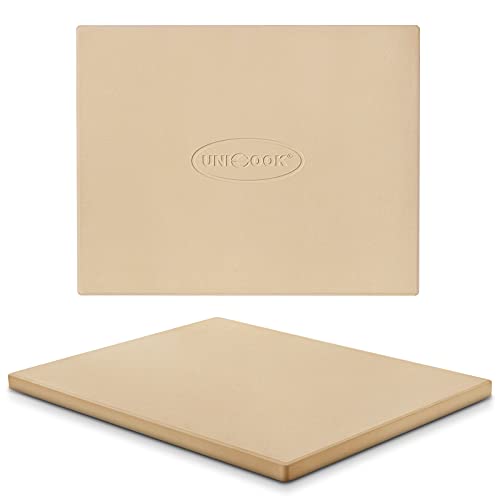
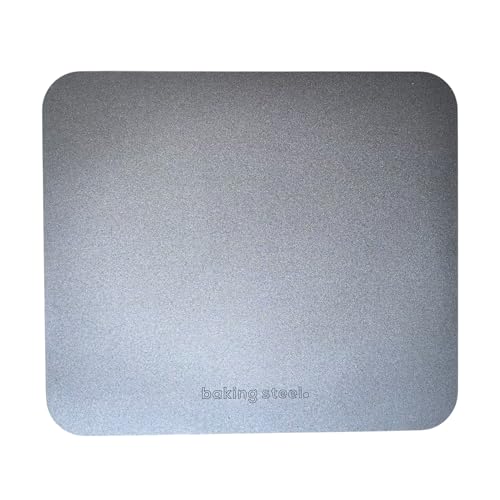
The five tools that do the work in every method on this site: a slab that stores heat, something to launch with, a way to read the surface, and a clean cut.


The one decisive fact: a ~400°F gap nothing closes
Strip away every other consideration and the pizza-oven-versus-regular-oven question reduces to a single number. A dedicated pizza oven reaches a peak floor temperature of roughly 900 to 950°F, the models we track run from ~850°F on the gentler indoor electrics (the Ooni Volt 2) up to ~950°F across the mainstream gas and multi-fuel field (the Ooni Koda 16), with a couple of budget wood-burners pushing past 1,000°F. A home oven, by contrast, is capped near 550°F. That ceiling isn't an accident or a cost-cutting choice; it's baked into how kitchen ranges are designed and regulated for safe indoor use. You cannot dial past it.
So the real gap between the two appliances is about 400°F, and that is the whole story. It is not the kind of difference you close with a clever trick. People try: cranking the broiler, preheating for two hours, leaving the door cracked. None of it gets a 550°F oven to behave like a 900°F one, because the limit is structural, not a matter of patience. Once you accept that the gap is fixed, the entire decision becomes simple: figure out which side of ~700°F the pizza you want lives on, and your answer falls out automatically.
What the heat gap actually does to a pizza
Numbers only matter if they change the food, so here is what the ~400°F gap physically does. True Neapolitan pizza, the thin, soft-centered, dramatically leopard-spotted round, is defined by an extreme-heat, fast bake: roughly 850°F and up, cooking in 60 to 90 seconds. At that heat the crust puffs and chars before the interior can dry, leaving a pizza that is simultaneously airy, blistered, and tender. The speed is not a flourish; it's the mechanism. The whole texture of Neapolitan pizza exists because it cooks that fast at that temperature.
Now run the same dough at 550°F, your home oven's ceiling. The pizza needs 8 to 12 minutes to bake through, and in those extra minutes the dough steadily dries out. By the time the top would char, the crumb has gone crisp and biscuit-like instead of soft and airy, and you never get the leopard-spotting because the heat was never high enough to blister the surface fast. This isn't a skill problem or a recipe you haven't found yet. At 550°F you physically cannot make a true Neapolitan pizza, the dough dries before it chars, every time, for everyone. That single fact is what the ~400°F gap costs you, and it's the only thing a dedicated oven uniquely buys back.
What your regular oven IS good at (and the $100 fix)
Here's the part the pizza-oven internet tends to skip: your regular oven is genuinely excellent at most pizza. Every style that bakes at or below ~700°F is squarely in a home oven's range, New York, Roman, pan, and Detroit all live there. These aren't consolation pizzas; they're some of the best pizza on earth, and your kitchen makes them properly. The 550°F ceiling that ruins Neapolitan is simply not a problem for styles that were never meant to bake at 900°F in the first place.
The one upgrade that transforms a regular oven is a baking steel, a $50 to $100 slab that conducts heat far more aggressively than the air around it or a ceramic stone. Preheated 45 to 60 minutes at your oven's max, a steel gives the bottom of your pizza an effective floor hot enough to brown and crisp the crust fast, which is exactly what New York and Roman crusts want. It lives in a cupboard, works indoors in any weather, and needs no propane, clearances, or fire management. For sub-700°F styles, a steel isn't a compromise on a pizza oven, it's the correct tool, and it costs about a fifth of a mid-range dedicated oven. We compare it to a ceramic stone in detail in pizza stone vs. steel.
Speed and recovery: pie after pie vs the sagging stone
Beyond raw temperature, the two appliances feel completely different in use, and it comes down to speed and heat recovery. A dedicated oven bakes a pizza in 60 to 90 seconds, the membership card for what we call the 60-Second-Pizza Club, and then, crucially, returns to temperature fast enough to launch the next pie almost immediately. With a well-insulated oven you can feed a crowd one blistering pizza after another without waiting, which is precisely why a pizza oven is such a strong entertaining machine. The fire is doing constant work to keep that floor saturated with heat.
A home oven works the opposite way. Each pizza takes 8 to 12 minutes, and because the whole system is capped at 550°F with no live flame replenishing the floor, the stone or steel sags noticeably between pizzas. Pull a hot pie out, slide a cold one in, and you've dumped heat into raw dough that the oven now has to claw back, so the second pizza often bakes slower and paler than the first, and you end up waiting several minutes between bakes for the steel to recover. It's fine for a family making two or three pizzas across an evening. It is not the back-to-back-pie experience a dedicated oven delivers, and if you regularly cook pizza for a crowd, that recovery difference is the day-to-day reason the dedicated oven earns its space.
The honest decision: who needs a pizza oven, who doesn't
Put it all together and the choice is clean, because it's governed by that one ~400°F number. Buy a dedicated pizza oven if you specifically want true Neapolitan pizza (nothing else makes the ~850°F, 60-second bake), if you entertain and want a machine that fires pie after pie for a crowd, or if pizza night is a frequent enough institution that the cost-per-use collapses. For these people the dedicated oven isn't a luxury, it does a job your kitchen physically cannot, and it does it constantly enough to be worth it. When you're in this group, the only remaining question is which oven, which our best pizza ovens guide answers.
Keep your regular oven (and add a steel) if the pizza you actually love is New York, Detroit, Roman, or pan, all sub-700°F styles your kitchen makes beautifully, or if you only make pizza occasionally and a 95-pound covered appliance would mostly gather dust. There's no shame in this side of the line; it's just where the math points for a lot of people, and we'd rather say so than sell you a 900°F oven to make a 600°F pizza. The honest test is simple: picture the pizza you most want, place it above or below ~700°F, and you have your answer. If you're still weighing the broader cost/benefit, we lay it all out in are pizza ovens worth it.
Ready to buy? Start with our top picks
Whatever this guide steered you toward, here's where most readers land, ranked on stated floor heat. Live price check on each.
- Check price on Amazon
- Check price on Amazon
- Check price on Amazon
- Check price on Amazon
- Check price on Amazon
- Check price on Amazon
As an Amazon Associate we earn from qualifying purchases, at no cost to you.
Key terms
- Peak floor temperature
- The temperature of the cooking floor, which sets the crust. A dedicated pizza oven reaches ~900 to 950°F here; a home oven is capped near 550°F by design and regulation. That ~400°F gap is the single fact that decides whether you need a pizza oven at all.
- The ~400°F gap
- The structural difference between a pizza oven's ~900 to 950°F floor and a home oven's ~550°F ceiling. It's permanent, no preheat, broiler trick, or hack closes it, so the whole pizza-oven-vs-regular-oven question reduces to whether your pizza needs the top of that range.
- 60-Second-Pizza Club
- Our benchmark for ovens that bake a leopard-spotted Neapolitan pie in about 60 to 90 seconds and keep doing it. A 550°F home oven can never join, it needs 8 to 12 minutes per pie, which is the day-to-day expression of the heat gap.
- Heat recovery
- How fast the floor returns to temperature between pizzas. A dedicated oven's live flame recovers fast enough to fire pie after pie; a home oven's stone or steel sags between bakes, so the second pizza runs slower and paler than the first.
- Baking steel
- A $50 to 100 steel slab that conducts heat aggressively, giving a home oven an effective floor hot enough for excellent New York, Roman, pan, and Detroit pizza, every style that bakes at or below ~700°F. It's the honest, cheaper alternative to a dedicated oven for non-Neapolitan pizza.
- Sub-700°F styles
- New York, Detroit, Roman, and pan pizza, the styles that bake at or below ~700°F and live squarely within a home oven's reach. If your favorite pizza is one of these, a regular oven plus a steel makes it properly and a 900°F dedicated oven is wasted capability.
Questions, answered
Can I just use my regular oven to make pizza?
For most styles, yes, and well. A home oven tops out near 550°F, which is plenty for New York, Detroit, Roman, and pan pizza, all of which bake at or below ~700°F. Add a $50 to 100 baking steel preheated at your oven's max and your kitchen makes those styles genuinely excellently. The one thing a regular oven physically cannot do is true Neapolitan, which needs an ~850°F floor for a 60-second blistered bake, that's the sole job that requires a dedicated pizza oven.
What's the actual difference between a pizza oven and a regular oven?
One number: peak floor temperature. A dedicated pizza oven reaches roughly 900 to 950°F; a home oven is capped near 550°F by design and safety regulation. That ~400°F gap is structural and can't be closed with preheating, the broiler, or any hack. It buys two things a regular oven can't deliver, the ~850°F floor that makes true 60-second Neapolitan pizza, and the fast recovery that lets you bake pie after pie for a crowd. For every pizza style that bakes below ~700°F, the gap doesn't matter and your regular oven is fine.
Why can't a home oven get as hot as a pizza oven?
It's a design and regulation limit, not a flaw you can tune around. Kitchen ranges are built and certified to operate safely indoors, and that caps the standard bake range near 550°F. A dedicated pizza oven is a different, outdoor-rated (or specially insulated indoor) appliance built specifically to run a floor at 900 to 950°F. So the ~400°F gap is structural, cracking the door, running the broiler, or preheating for hours won't get a 550°F oven to behave like a 900°F one.
Will a baking steel let my regular oven make Neapolitan pizza?
No, and this is the key limit to understand. A baking steel makes your home oven dramatically better at New York, Roman, pan, and Detroit pizza, because those bake at or below ~700°F and a steel gives the crust an aggressive effective floor. But the steel can't raise your oven past its ~550°F air-temperature ceiling, and true Neapolitan needs ~850°F for a 60 to 90 second bake. So a steel is the perfect ~$100 upgrade for sub-700°F styles, and a dedicated oven remains the only path to real Neapolitan.
Is a pizza oven faster than a regular oven?
Dramatically. A dedicated oven bakes a pizza in about 60 to 90 seconds and recovers fast enough to fire the next pie almost immediately, the back-to-back cadence that makes it such a strong entertaining machine. A home oven takes 8 to 12 minutes per pizza, and because nothing is replenishing the floor heat, the stone or steel sags between bakes, so the second pizza often runs slower and paler than the first. For one or two pies an evening the home oven is fine; for feeding a crowd, the recovery difference is the practical reason a dedicated oven wins.
Do I really need a pizza oven, or should I keep my kitchen oven?
Picture the pizza you most want and place it above or below ~700°F. If it's leopard-spotted true Neapolitan, or you entertain and want pie-after-pie speed, or pizza night is a frequent institution, buy a dedicated oven, because your kitchen physically can't do that ~850°F, 60-second bake. If it's New York, Detroit, Roman, or pan, or you only make pizza occasionally, keep your kitchen oven and add a ~$100 baking steel, which makes those styles beautifully for about a fifth of the cost of a mid-range dedicated oven. The ~400°F gap is the only thing you're deciding around.
Keep reading.
How to Make Pizza in a Regular Oven (2026)
How close a 500°F kitchen oven can get, and the method that gets it there.
The Best Pizza Ovens (2026)
If your pizza lives above ~700°F, this is where to start, the full ranked field scored on floor heat, the 60-Second Club, and recovery.
Pizza Stone vs. Baking Steel
The ~$100 upgrade that transforms your regular oven, why a steel beats a stone, and exactly what it can and can't do.
Are Pizza Ovens Worth It? (2026)
The honest cost/benefit once you know the heat gap, who a dedicated oven is genuinely worth it for, and who should keep their money.
Ooni vs Gozney: Which Brand Wins?
The two giants head to head, same ~950°F ceiling, very different philosophies, one clear way to choose.
Ooni Fyra 12 Review
Ooni's lightest wood-pellet oven reviewed, real live-fire flavor at $349, and what to cross-shop.