Our pick Ooni Koda 16
Check price on AmazonHow to Make Pizza in a Regular Oven (2026): The 500°F Method That Works
A kitchen oven tops out around 500°F, half what a pizza oven reaches, and it can still turn out a pizza with a crisp, spotted base and a blistered rim. The method is a preheated stone or steel, a hot rack position, a lightly topped pie, and the broiler at the finish. Here is every step and every number.
We earn a commission on purchases through our links, at no cost to you. It never decides a ranking. How this works
Quick answer
- Max temperature, always: 500°F minimum, 550°F if your oven goes there. Lower settings make bread, not pizza.
- A stone or steel is the upgrade that matters most. Preheat it 45-60 minutes; the oven's beep means the air is hot, not the slab.
- Thin dough, light toppings, sauce to within an inch of the edge. A heavy pie steams its own base in a home oven.
- Bake 6-8 minutes at 500°F on a stone (5-7 on a steel), rotate once, broil the last 60-90 seconds to brown the top.
- No stone or steel? Preheat an inverted heavy sheet pan for 30 minutes and bake on that. Second best, and far better than a cold pan.
Short version: put a pizza stone or baking steel in the oven, set it to the highest temperature it offers (500°F to 550°F), and preheat a full 45 to 60 minutes. Stretch the dough thin, build the pizza on a floured peel or a sheet of parchment, top it lightly, and launch it onto the hot surface. Bake 6 to 8 minutes at 500°F, rotating once, and switch the broiler on for the final minute to brown the top. Rest it 2 minutes, cut, eat. Without a stone or steel, an inverted heavy sheet pan preheated the same way is the fallback; it will not match a slab, but it beats a cold pan by a mile.
Why the method looks like this: a real pizza oven bakes a Neapolitan pie in 90 seconds because the floor is 750°F and the dome is hotter. A kitchen oven cannot get there, so every step compensates. The preheated slab supplies the floor heat that crisps the base; the high rack and the broiler supply the top heat a dome would; the thin stretch and light topping keep the bake short enough that the crust stays tender inside instead of drying into a cracker. It is not a pizza-oven pizza. Done right, it is a very good New York or home-style pie.
Our guidance is the consensus of the home-baking community, cross-checked across the sources we track; we are a research and verification desk, not a test kitchen. If you are weighing whether an actual pizza oven is worth the money after reading this, our guide to pizza ovens versus regular ovens makes that comparison honestly.
What you'll need
The five tools that do the work in every method on this site: a slab that stores heat, something to launch with, a way to read the surface, and a clean cut.


In this guide
The setup: temperature, surface, rack
Temperature. Turn the dial as far as it goes. Most home ovens stop at 500°F or 550°F, and pizza wants every degree; the 425°F on the back of a dough-ball bag is a compromise written for people without a stone. At 500°F a thin pizza bakes in 6 to 8 minutes, short enough for the crust to stay soft inside while the base crisps. At 400°F the same pizza takes 15 minutes and dries out before it browns. Our temperature guide has the number for every style, and the timing chart covers ovens that cannot pass 450°F.
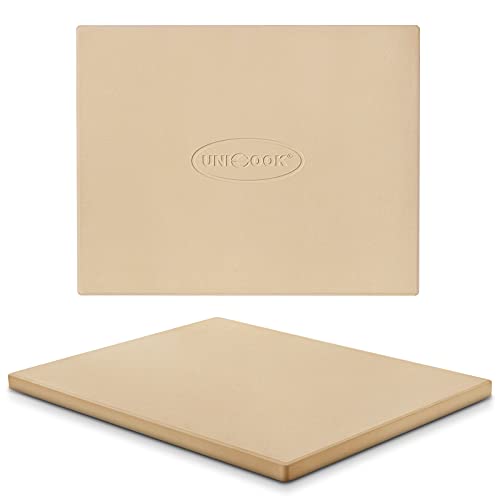
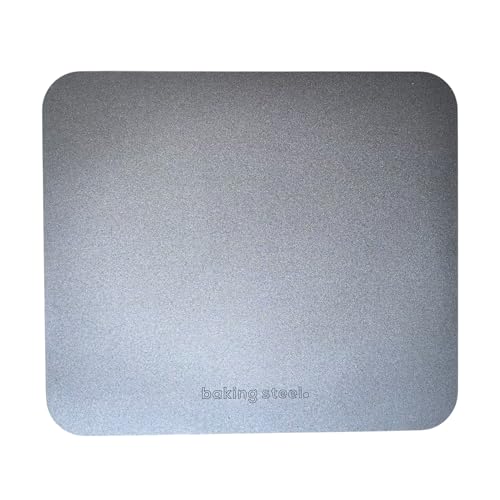
Surface. The single biggest upgrade to home-oven pizza is a slab that stores heat and dumps it into the dough on contact, which is what a cold pan cannot do. A cordierite stone (around $29 at time of writing) does it well; a baking steel does it faster and crisper, at a higher price and weight. Either one needs 45 to 60 minutes of preheat after the oven reaches temperature, because the oven's thermostat reads the air and the slab lags far behind. Our stone vs. steel comparison picks between them, and our rankings pick the specific slab.
Rack. For a stone, the lower-middle rack: close to the bottom element for base heat. For a steel, the upper third, 6 to 8 inches under the broiler, because a steel crisps the base so fast the top needs broiler proximity to keep up. For a sheet pan, middle rack. The stone method and the steel method each have a full guide; this page is the combined one.
The dough and the stretch
Home-oven pizza rewards a dough that is stretched thin, a quarter inch or less across the middle with a slightly thicker rim, because a short bake cannot cook a thick center through before the base burns. Use 250 to 280 grams of dough for a 12-inch pizza; our dough weight guide has the numbers for every size. Let refrigerated dough come up to room temperature for an hour first; cold dough fights back and tears. Stretch on a floured counter with your fingertips, pushing air toward the rim rather than flattening it, then drape it over your knuckles and let gravity open the middle. Never use a rolling pin on a dough you want to blister; it crushes the gas out. If the dough springs back or tears, our troubleshooting guides on spring-back and tearing explain why and fix it. The full technique is in how to stretch pizza dough.
Store-bought dough balls, pizzeria dough, and a same-day homemade dough all work. A cold-fermented dough (2 to 3 days in the fridge) browns better and tastes better in a home oven, because the slower fermentation leaves more sugar for the Maillard reaction at a mere 500°F; it is the cheapest upgrade after the stone. Higher-protein bread flour gives the chew a New York slice is known for; 00 flour, the Neapolitan standard, is built for 900°F ovens and tends to come out pale at home.
Building and launching the pizza
Build the pizza on a peel dusted with semolina or flour, or on a sheet of parchment if you have no peel or have been burned by a stuck launch before. Work fast: the longer a topped pizza sits, the more the dough absorbs the dusting and grips the peel. Sauce thinly, to within an inch of the edge. Cheese in a single sparse layer. Toppings sparingly, and pre-cook anything wet (mushrooms, sausage, fresh vegetables) so it does not release water onto the base. An overloaded pizza is the most common home-oven failure: it steams its own base and the center comes out soggy. Our soggy-middle guide covers the fixes.
Before topping, shake the peel to confirm the dough slides. To launch, rest the front edge of the peel at the far edge of the stone or steel, tilt, and pull the peel back toward you in one motion while the pizza slides off. Hesitation causes folds; commit. A perforated metal peel sheds the excess flour so it does not scorch on the slab. With parchment, launch paper and all and pull the paper out with tongs after 2 minutes once the base has set. The launch guide walks through the motion in detail.
The bake, the broiler, and the doneness cues
On a preheated stone at 500°F, a thin pizza takes 6 to 8 minutes; on a steel, 5 to 7; on an inverted sheet pan, 8 to 10. Every home oven has a hot side, so rotate the pizza 180 degrees at the halfway mark with a spatula or turning peel. For the last 60 to 90 seconds, switch to broil: this is the home-oven substitute for a pizza oven's dome heat, and it is what gives the cheese its browned patches and the rim its spotting. Stay at the oven door; a broiler takes a pizza from spotted to black in 30 seconds. Ovens whose broiler only runs with the door cracked still work; prop it and watch.
Doneness lives in three places: the underside is browned with char spots (lift an edge with a spatula to check), the rim is golden with blisters, the cheese is bubbling and beginning to brown. If the base is always done before the top, move the slab up a rack or lean harder on the broiler. If the top is done before the base, the slab was not preheated long enough or the rack is too high; an infrared thermometer confirms the surface is actually at temperature before the next one. Our burnt-bottom guide covers the opposite problem. Rest the pizza 2 minutes on a rack or board before cutting so the cheese sets, then cut with a wheel or a rocker blade rather than a knife that drags.
What a regular oven cannot do, and when that matters
The honest ceiling: a home oven makes an excellent New York, tavern, Detroit (in a pan), or home-style pizza, and a merely decent Neapolitan. Neapolitan pizza is defined by a 60 to 90 second bake at 750°F to 900°F that leaves the rim puffy, leopard-spotted, and soft inside; at 500°F the same dough bakes for 7 minutes and comes out crisper, flatter, and drier, closer to a good New York slice than to Naples. If that difference is the one you care about, no rack position fixes it, and our guide to pizza ovens vs. regular ovens lays out what a $300 to $500 outdoor oven changes and whether it is worth it for how often you bake.
For everyone else, the stone-or-steel method above closes most of the gap for about $30 to $140, and the countertop electric pizza ovens that reach 750°F to 850°F indoors are the middle step for readers who want Neapolitan results without going outside. Our are pizza ovens worth it guide is the place to decide.
How to make pizza in a regular oven
- 1
Preheat the slab at max
Put a stone (lower-middle rack) or steel (upper third) in a cold oven, set it to 500-550°F, and wait 45-60 minutes. No slab: invert a heavy sheet pan on the middle rack and preheat 30 minutes.
- 2
Stretch the dough thin
250-280 g of room-temperature dough for a 12-inch pizza, stretched by hand to a quarter inch with a thicker rim. No rolling pin.
- 3
Build light, on a peel or parchment
Dust the peel with semolina, sauce thinly to an inch from the edge, one sparse layer of cheese, toppings sparingly and pre-cooked if wet.
- 4
Launch and bake
Slide the pizza onto the hot surface in one motion. Bake 6-8 minutes on a stone, 5-7 on a steel, rotating 180 degrees halfway.
- 5
Broil to finish, rest, cut
Switch to broil for the last 60-90 seconds and watch it. Rest 2 minutes on a rack, then cut with a wheel or rocker.
Ready to buy? Start with our top picks
Whatever this guide steered you toward, here's where most readers land. Live price check on each.
- Check price on Amazon

- Check price on Amazon

- Check price on Amazon

- Check price on Amazon

- Check price on Amazon

- Check price on Amazon

As an Amazon Associate we earn from qualifying purchases, at no cost to you.
Key terms
- Oven spring
- The rapid puff of the dough's rim in the first minute of baking as trapped gas expands. Stronger with a hotter surface and a thin, lightly topped pizza.
- Leopard spotting
- The small dark blisters on a pizza's rim and base that signal fast, hot baking. A broiler finish is how a home oven gets them.
- Maillard reaction
- The browning reaction between sugars and proteins in the crust. Slower at 500°F than in a pizza oven, which is why cold-fermented dough, with more available sugar, browns better at home.
Frequently asked questions
What temperature do you cook pizza at in a regular oven?
The highest setting your oven offers, usually 500°F or 550°F. At 500°F a thin pizza on a preheated stone bakes in 6 to 8 minutes. Lower temperatures lengthen the bake and dry the crust out before it browns.
Can you make good pizza without a pizza stone?
Yes, with a preheated inverted sheet pan: flip a heavy rimmed pan upside down on the middle rack, preheat it 30 minutes at max, and bake on that. It will not crisp like a stone or steel, but it is a large improvement over a cold pan. A cast-iron skillet preheated the same way works for a single smaller pizza.
How long do you cook homemade pizza in the oven?
6 to 8 minutes at 500°F on a preheated stone, 5 to 7 on a steel, 8 to 10 on an inverted sheet pan. Rotate once halfway and switch to broil for the last 60 to 90 seconds. Pull it when the underside is browned and the cheese is bubbling.
Should you use the broiler for pizza?
For the final 60 to 90 seconds, yes. A home oven lacks the overhead dome heat of a pizza oven, and the broiler supplies it: browned cheese and a spotted rim. Watch it continuously; it burns fast.
Why is my homemade pizza soggy in the middle?
Almost always too much topping, too much sauce, or a slab that was not fully preheated. Top lightly, pre-cook wet ingredients, and give the stone or steel the full 45 to 60 minutes so it crisps the base on contact.
Filed under Explainer · Part of Pizza Oven 101
Keep reading
Best Cast Iron Pizza Pan (2026)
The pan route to a crisp base.
Best Detroit Style Pizza Pan (2026)
The tall-sided pans for the cheese wall.
Pizza Oven vs Regular Oven
What an actual pizza oven changes, and whether it is worth it for how often you bake.
Best Pizza Stones and Steels (2026)
The slab is the upgrade that matters most; these are the ones worth buying.
What Temperature Should a Pizza Oven Be?
Every style's number, including what to do when your oven cannot reach it.
The Bake, free weekly
Price drops worth knowing about, technique that matters, and every new review.