Our pick. Ooni
Check price on Amazon →Where to Put a Pizza Oven (2026): Placement & Safety
Almost every pizza oven is an outdoor appliance, a gas or wood-fired one runs at 900°F, throws heat off its shell and chimney, and (for the wood and charcoal models) emits smoke and live embers. That makes placement a safety decision, not a decorating one. Here's where a pizza oven actually belongs: the clearances that keep your house from catching, the kind of surface that can hold the weight, why wind is the enemy of your peak floor temperature, the truth about covered patios and balconies, and the only ovens you can safely run indoors. Read this before you buy, because the right oven for your space is the one your space can actually hold.
By The Pizza Oven Review DeskUpdated 2026-06-29~11 min readRanked on verified floor heatHow we research
We earn a commission on purchases through our links, at no cost to you. It never decides a ranking. How this works
The first question most people ask after "which pizza oven should I buy?" is "where am I going to put it?", and it deserves more care than it usually gets. A dedicated pizza oven is not a grill that happens to make pizza. The gas and multi-fuel models reach an 850 to 950°F floor, and that heat radiates off the exterior shell and, especially, the chimney or flue. The wood- and charcoal-burning ones add smoke and live embers to the mix. Put one in the wrong spot and you're not risking a bad pizza; you're risking your siding, your fence, or worse. So treat placement as the safety call it is.
The single most important rule is the simplest: with a tiny, clearly-defined exception, a pizza oven is an outdoor appliance. Gas, wood, charcoal, pellet, multi-fuel, all of them are built to run in open air, and none belong inside a house or a closed garage. The only ovens designed to run indoors are the countertop electric models, and we name every one of them below so there's no confusion. Everything else needs sky above it and clearance around it. This guide walks through the clearances, the surface, the wind, the roof question, storage, and the apartment/balcony reality, and ends with a short safety checklist you can run before your first fire.
A note on honesty and on what we won't do: nothing here is sponsored, and any Amazon links we use may earn us a small commission at no extra cost to you, but a commission never moves a recommendation, and it certainly never moves a safety call. We also deliberately do not publish a single "X inches of clearance" number as if it were a universal law, because it isn't, clearances vary by oven, fuel, and shell design. Where exact distances matter, we tell you to follow your oven's manual and your local fire code, and we mean it.
The short version.
- Treat a pizza oven as an outdoor appliance. Gas, wood, charcoal, pellet, and multi-fuel ovens must never run indoors or in a closed garage, the heat, smoke, and embers make that genuinely dangerous. The only indoor-safe options are countertop electric ovens.
- The indoor-safe exceptions, by name from our dataset: the Ooni Volt 2, the Breville Smart Oven Pizzaiolo, the Ninja Artisan, and the Cuisinart Indoor Pizza Oven. These are countertop electric and built for a kitchen counter.
- Keep generous clearance from anything combustible, walls, fences, railings, eaves, low branches. The shell and especially the chimney get extremely hot. Follow your manufacturer's stated clearances and your local fire code rather than guessing.
- The surface must be sturdy, level, heat-tolerant, and rated for the weight. A weight ranges from about 20 lb (Ooni Koda 12) to 128 lb (Gozney Dome) to 220 lb (Alfa Moderno 2 Pizze), confirm your stand or counter can actually hold yours.
- Wind is the enemy of your peak floor temperature. Position the oven so the prevailing wind doesn't blow into the mouth, where it robs heat and pushes the flame around, protecting that peak temp protects your place in the 60-Second-Pizza Club.
Our top-rated pizza ovens
Whatever you decide, these are the ovens we recommend, ranked on stated floor heat. Live price check on each.
- Check price on Amazon

- Check price on Amazon

- Check price on Amazon

- Check price on Amazon

- Check price on Amazon

- Check price on Amazon

As an Amazon Associate we earn from qualifying purchases, at no cost to you.
What you'll need.
Prices approximate at time of writing.
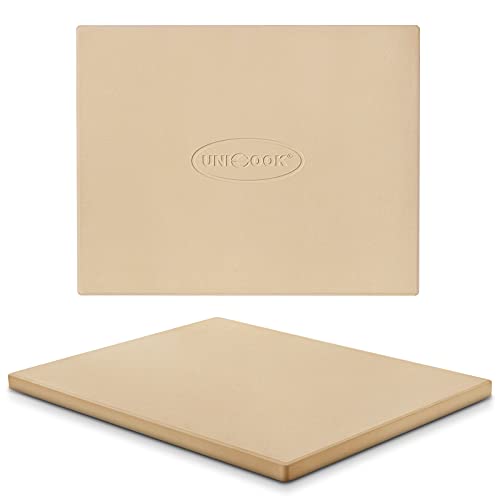
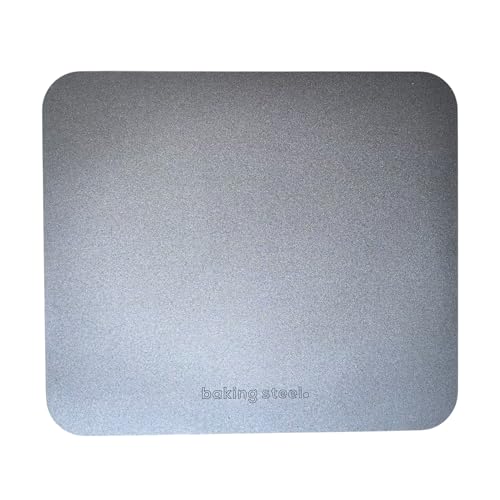
The five tools that do the work in every method on this site: a slab that stores heat, something to launch with, a way to read the surface, and a clean cut.


Rule one: a pizza oven is an outdoor appliance
Start here, because nearly every safe-placement decision flows from it: with one narrow exception, a pizza oven belongs outdoors, full stop. A gas or multi-fuel oven reaches an 850 to 950°F floor, and to do that it burns fuel and vents serious heat off its shell and chimney. The wood-, charcoal-, and pellet-fired models go further, they produce real smoke and can throw live embers out of the mouth and the flue. None of that is safe in an enclosed space. Indoors, smoke and combustion gases (including carbon monoxide) have nowhere to go, and radiant heat has nowhere to dissipate. A closed garage is not a loophole; it's an enclosed space with a car and fuel in it.
The only ovens engineered to run inside are the countertop electric models, which don't burn fuel and don't vent combustion. From our dataset, those are the Ooni Volt 2 (electric, 850°F, indoor-capable), the Breville Smart Oven Pizzaiolo (electric, 750°F, indoor countertop), the Ninja Artisan (electric, ~700°F), and the Cuisinart Indoor Pizza Oven (electric, ~700°F, budget). If your only realistic spot is an apartment kitchen with no outdoor access, one of these is your answer, and the only safe one. For everything else, plan for open sky overhead.
Clearances: keep a generous gap from anything combustible
Once you're outdoors, the next question is how far the oven needs to be from everything around it, and the honest answer is "more than you'd think, and exactly what your manual says." The exterior shell of a working oven gets hot, and the chimney or flue gets hotter still, that's where the exhaust escapes, and it can scorch an eave, a soffit, or a low branch directly above it. So you want generous clearance on every side from anything combustible: house siding, wooden fences, railings, deck balusters, pergola posts, planters, string lights, and anything overhead.
We are not going to hand you a universal "X inches" number, because there isn't one, clearances depend on the oven's shell design, its fuel, and how its flue is routed, and a dense-insulated, safe-touch shell behaves very differently from a bare steel one. The Gozney Roccbox, for instance, is built with dense insulation and a safe-touch shell, while a budget bare-metal oven radiates much more from its sides. So the rule is simple and non-negotiable: follow the manufacturer's stated clearances in your oven's manual, and check them against your local fire code, which may set its own minimums for an open-flame appliance near a structure.
The surface: sturdy, level, heat-tolerant, and rated for the weight
A pizza oven needs to sit on something sturdy, level, and heat-tolerant, and, critically, something rated to hold its weight. Level matters because a tilted oven means a tilted bake and a peel that won't launch cleanly. Heat-tolerant matters because the underside and the surface around the mouth get hot. And weight matters because the spread across this category is enormous, and people routinely underestimate it.
From our verified dataset: an Ooni Koda 12 is a featherweight at 20.4 lb, and an Ooni Koda 16 is about 40.1 lb, either is happy on a sturdy table or a purpose-built stand. But a Gozney Dome is 128 lb, and an Alfa Moderno 2 Pizze is a genuine 220 lb, those are not "set it on the patio table" ovens; they need a stand or a stone, concrete, or steel counter actually engineered to carry that load. A wobbly folding table that's fine under a 20 lb Koda will collapse under a 95 lb Koda 2 Max. Match the surface to the real number, not to a guess.
Covered patios, roofs, and eaves: only with real overhead clearance
This is the question we get most, and the honest answer has nuance. Can you run a pizza oven under a covered patio, a roof overhang, or an eave? Sometimes, but only with ample overhead clearance and genuine ventilation, and the answer is very different depending on fuel. The oven vents hot exhaust straight up out of its chimney, so whatever is above it has to be high enough and non-combustible enough to take that plume without scorching, and open enough on the sides that heat and any smoke can escape rather than pooling under the roof.
For wood-, charcoal-, or pellet-fired ovens, running under any roof is risky, the smoke has to go somewhere, embers can rise, and a low or enclosed cover traps both. We'd generally steer you to open sky for anything that burns solid fuel. A gas oven is more forgiving because it produces far less smoke and no embers, but it still throws a column of intense heat upward and still needs real height above the chimney plus open sides for airflow. "Forgiving" is not "safe under a low wooden eave." Whatever the fuel, this is exactly the scenario where your manufacturer's clearance spec and your local fire code matter most, check both before you commit a spot.
Wind, workflow, and the prep zone
Two placement factors decide whether the oven is a joy to use: wind and workflow. Wind first, because it's a performance issue our signature lens cares about directly. If the prevailing breeze blows straight into the oven's mouth, it robs heat from the cooking chamber and shoves the flame around, which drops your peak floor temperature and can knock you right out of the 60-Second-Pizza Club and slow your heat recovery between pies. So orient the oven so the mouth faces away from the prevailing wind, or tuck it into a spot with a natural windbreak (just not a combustible one too close, clearance still rules). A wind-protected oven holds its floor temp and bakes consistently; an exposed one fights you all night.
Workflow second. You want the oven near your kitchen for an easy prep run, stretching dough, topping pies, and ferrying peels back and forth, because pizza night is a relay, not a single sprint. But "near the kitchen" does not mean "against the house": you still need full clearance from the wall. The sweet spot is a stable surface a few comfortable steps from your kitchen door, with room beside it for a prep table or a landing spot for launched and finished pizzas, oriented so the wind is at the oven's back and you're working at its mouth in clear air.
Storage, weather, and the balcony/apartment reality
Placement isn't just where the oven runs, it's where it lives the other 165 hours of the week. Outdoor ovens should be protected from the weather with a weatherproof cover sized for the model; rain and freeze-thaw cycles are hard on shells, stones, and burners left exposed. Cover it only once it's fully cool, never while it's still hot. The countertop electric ovens are the easy case: bring them inside between uses like any other small appliance, and they sidestep the weather problem entirely. A portable gas oven like a 20.4 lb Ooni Koda 12 can also be carried into a garage or shed for storage between sessions (stored cold, fuel disconnected), its light weight is part of its appeal, whereas a 220 lb Alfa Moderno is staying exactly where you set it, which is all the more reason to choose its permanent home carefully.
Now the hard one: balconies and apartments. For any fuel-burning oven, an apartment balcony is usually a no, not because the oven can't physically sit there, but because open-flame appliances on balconies are frequently prohibited by leases, HOA rules, and municipal fire codes, and clearances from railings and the unit above are nearly impossible to meet. Don't improvise here: check your lease, your HOA, and your local fire code before assuming a gas or wood oven is allowed. The clean exception, again, is a countertop electric oven used indoors on the kitchen counter, that's the path that keeps apartment dwellers in the pizza game safely and within the rules.
The placement safety checklist
Before your first fire, and as a quick re-check anytime you move the oven, run this short list. None of it replaces your oven's manual or your local fire code; it's the floor, not the ceiling.
Fuel and location: if it burns gas, wood, charcoal, or pellets, it's outdoors with open sky above, never indoors or in a closed garage. Only a countertop electric oven goes inside. Clearances: generous, combustible-free space on every side and above the chimney, meeting the manufacturer's stated clearances and local fire code, not a number you guessed. Surface: sturdy, level, heat-tolerant, and rated above your oven's actual weight (look it up, 20 lb and 220 lb ovens are both in this category). Overhead: if under any cover, it's high, non-combustible, open-sided, and ideally gas rather than solid-fuel. Wind: mouth faces away from the prevailing breeze so your floor temp holds. Storage: a weatherproof cover for outdoor ovens (applied cold), electric ones brought inside. Rules: for balconies and rentals, lease, HOA, and fire code checked first.
Ready to buy? Start with our top picks
Whatever this guide steered you toward, here's where most readers land, ranked on stated floor heat. Live price check on each.
- Check price on Amazon
- Check price on Amazon
- Check price on Amazon
- Check price on Amazon
- Check price on Amazon
- Check price on Amazon
As an Amazon Associate we earn from qualifying purchases, at no cost to you.
Key terms
- Outdoor appliance
- What a fuel-burning pizza oven is, by design. Gas, wood, charcoal, pellet, and multi-fuel ovens vent serious heat, and the solid-fuel ones smoke and emit embers, so they must run in open air, never indoors or in a closed garage. Only countertop electric ovens are built to run inside.
- Clearance
- The combustible-free gap between a running oven and walls, fences, railings, eaves, and branches. The shell and especially the chimney get extremely hot, so clearance prevents scorching and fire. We don't publish a universal inch count, follow the manufacturer's stated clearances and your local fire code.
- Indoor-safe electric oven
- A countertop electric pizza oven that produces no combustion exhaust and is rated for indoor use. From our dataset: the Ooni Volt 2, Breville Smart Oven Pizzaiolo, Ninja Artisan, and Cuisinart Indoor Pizza Oven. These are the only ovens you can safely run inside a home.
- Weight rating
- Whether your stand, table, or counter can actually hold the oven. Weights in this category run from about 20.4 lb (Ooni Koda 12) to 128 lb (Gozney Dome) to 220 lb (Alfa Moderno 2 Pizze), so the surface must be sturdy, level, heat-tolerant, and rated above the real number with margin.
- Wind orientation
- Positioning the oven so the prevailing breeze hits its back, not its mouth. Wind blowing into the mouth steals heat and pushes the flame around, which lowers peak floor temperature, threatens 60-Second-Pizza Club membership, and slows heat recovery between pies.
- Overhead clearance
- The open, non-combustible space a chimney needs above it before you run an oven under any roof, eave, or covered patio. Solid-fuel ovens are risky under any cover; gas is more forgiving but still needs real height and open sides, verified against the manual and fire code.
Questions, answered
Can I use a pizza oven indoors or in my garage?
Only if it's a countertop electric model designed for indoor use. Gas, wood, charcoal, pellet, and multi-fuel ovens must never run indoors or in a closed garage, they vent serious heat and combustion gases (including carbon monoxide), and the solid-fuel ones add smoke and live embers, which is genuinely dangerous in an enclosed space. The only indoor-safe options are electric countertop ovens like the Ooni Volt 2, Breville Smart Oven Pizzaiolo, Ninja Artisan, and Cuisinart Indoor Pizza Oven. If your only spot is indoors, buy one of those, and run every fuel-burning oven outside under open sky.
How far should a pizza oven be from the house or a fence?
Far enough to meet your oven's stated clearances and your local fire code, and we deliberately won't quote a single universal inch number, because it varies by oven, fuel, and shell design. The exterior and especially the chimney get extremely hot, so you want generous, combustible-free space from siding, fences, railings, eaves, and low branches. As sensible general guidance: don't push the oven against the house, don't tuck it under a wooden eave or awning, and give the chimney clear air above it. Then confirm against the manual and your fire code, which are the real authority.
What surface can I put a pizza oven on?
Something sturdy, level, heat-tolerant, and rated for the oven's actual weight. The spread is huge: an Ooni Koda 12 is just 20.4 lb and an Ooni Koda 16 about 40 lb, so a solid table or stand is fine, but a Gozney Dome is 128 lb and an Alfa Moderno 2 Pizze is 220 lb, which demand a stand or a stone, concrete, or steel counter engineered to carry that load. Look up your specific oven's weight, then confirm the surface is rated above it with margin. Masonry, concrete, and steel are ideal because they're stable and heat-tolerant; a flimsy resin table is the most common placement mistake.
Can I run a pizza oven under a covered patio or roof?
Sometimes, but only with ample overhead clearance, real ventilation, and ideally a gas oven rather than a solid-fuel one. The oven vents a column of hot exhaust straight up, so whatever is above must be high, non-combustible, and open-sided enough for heat and smoke to escape. Wood-, charcoal-, and pellet-fired ovens are risky under any roof because of smoke and embers, we'd steer those to open sky. Gas is more forgiving but still needs height above the chimney and airflow. This is exactly where your manufacturer's clearance spec and local fire code matter most, so check both before committing a spot.
Does wind affect a pizza oven, and which way should it face?
Yes, wind is the enemy of your peak floor temperature. A breeze blowing into the oven's mouth robs heat from the chamber and pushes the flame around, dropping the floor temp, threatening your place in the 60-Second-Pizza Club, and slowing heat recovery between pizzas. Orient the oven so the mouth faces away from the prevailing wind, or place it where a natural (non-combustible, properly-spaced) windbreak shelters it. Stand where you'll actually work and confirm the wind is hitting the back of the oven, not the opening, a wind-protected oven holds its temperature and bakes far more consistently.
Can I put a pizza oven on an apartment balcony?
For a fuel-burning oven, usually no, and the reason is rules as much as physics. Open-flame appliances on balconies are frequently prohibited by leases, HOA policies, and municipal fire codes, and the clearances from railings and the unit above are nearly impossible to meet safely. Don't improvise: check your lease, your HOA, and your local fire code before assuming a gas or wood oven is allowed. The clean exception is a countertop electric oven used indoors on your kitchen counter, the Ooni Volt 2, Breville Pizzaiolo, Ninja Artisan, and Cuisinart indoor all make good pizza and keep apartment dwellers safely within the rules.
Keep reading.
Best Pizza Oven Stand and Cart (2026)
Heat-safe rolling stands at working height.
The Best Outdoor Pizza Ovens (2026)
Once you've got the spot, this is the ranked field, gas, wood, and multi-fuel ovens scored on floor heat, the 60-Second Club, and recovery.
The Best Indoor Pizza Ovens (2026)
No outdoor space? The countertop electric ovens you can safely run on a kitchen counter, sorted and scored.
The Best Pizza Oven Tables & Stands
The surface is part of the safety equation, sturdy, level, heat-tolerant stands rated for everything from a 20 lb Koda to a 220 lb Alfa.
Ooni vs Gozney: Which Brand Wins?
The two giants head to head, same ~950°F ceiling, very different philosophies, one clear way to choose.
Ooni Fyra 12 Review
Ooni's lightest wood-pellet oven reviewed, real live-fire flavor at $349, and what to cross-shop.