Our pick Ooni Koda 16
Check price on AmazonHow to Clean a Pizza Stone (2026): Scrape, Wipe, Never Soap
A pizza stone is cleaned with a scraper and a dry cloth, not with soap or a sink. This is the whole routine, what to do about burnt cheese, black stains, and a stone that smells, and the two habits that crack stones for good.
We earn a commission on purchases through our links, at no cost to you. It never decides a ranking. How this works

Quick answer
- Cool the stone fully in the oven before touching it. Moving or wetting a hot stone is how stones crack.
- Scrape, brush, wipe dry. A bench scraper or metal spatula for stuck food, a stiff brush for crumbs, a dry or barely damp cloth to finish.
- Never soap, never soak, never dishwasher, never oil. The stone absorbs all four and each one ruins it a different way.
- Stains are permanent and harmless. A black, blotchy stone bakes exactly like a new one.
- Deep clean for a burnt patch: baking soda paste, stiff brush, wipe, then air-dry a full 24 hours before the next preheat.
Short version: let the stone cool completely inside the oven, scrape off anything stuck with a bench scraper or metal spatula, brush away the crumbs, and wipe it with a dry cloth or one that is barely damp. That is the entire clean. No soap, no soaking, no dishwasher, no oil. Dark stains are permanent, harmless, and a sign the stone is doing its job. For a burnt-on patch, a paste of baking soda and a splash of water, scrubbed with a stiff brush and then dried for a full day, is the only deep clean the community endorses.
The reason the rules are so strict is that a stone is porous. Cordierite and ceramic absorb whatever touches them, which is why they wick moisture out of dough and crisp a base. It is also why soap goes in and comes back out as flavor, why soaked-in water flashes to steam on the next preheat and can split the slab, and why oil never seasons a stone the way it seasons cast iron; it just smokes and turns rancid inside the pores.
This guide is the consensus of the home-baking community and the care instructions manufacturers publish, cross-checked across the sources we track; we are a research and verification desk, not a test kitchen. If your stone lives in an outdoor oven rather than a kitchen oven, our guide to cleaning a pizza oven covers the burn-off method that handles most of it for you.
What you'll need
The five tools that do the work in every method on this site: a slab that stores heat, something to launch with, a way to read the surface, and a clean cut.


In this guide
The routine clean: cool, scrape, brush, wipe
Turn the oven off and leave the stone where it is until it is cool enough to hold comfortably, which on a thick stone is two hours or more. Pulling a 500°F stone out onto a counter is the second most common way owners crack one (the first is the cold-stone-into-hot-oven mistake covered in our how to use a pizza stone guide), and wiping a hot stone with anything damp is the same thermal shock in reverse.
Once it is cool, scrape any stuck cheese, sauce, or charred flour with a bench scraper, a metal spatula held at a low angle, or a dedicated oven brush with a scraper edge. Burnt material lifts off a cool stone more easily than you expect; it is glued on by sugars that go brittle as they cool. Then brush the surface with a stiff, dry brush to clear the crumbs and loose flour, because flour left on the stone burns on the next preheat and tastes bitter. Finish by wiping with a dry cloth, or one wrung out until it is barely damp if there is a sticky film. Let it air-dry before it goes back into a hot oven. That is the whole clean, and for most owners it happens once every few bakes, not every time.
Why soap, soaking, and oil ruin a stone
A pizza stone works because it is porous: cordierite and ceramic have microscopic channels that pull moisture out of the dough on contact, which is what crisps a base better than a metal tray. Those same channels absorb anything liquid. Soap soaks in, survives the wipe, and bakes back out of the stone into the bottom of your next pizza; owners describe the taste for weeks afterward. Water from soaking or running the stone under the tap fills the pores, and when the stone hits 450°F on the next preheat that water flashes to steam and can crack the slab from the inside. A dishwasher is both problems at once, plus a hot-wet-cold cycle the stone was never built for.
Oil is the mistake made with good intentions. Cast iron seasons because oil polymerizes into a hard film on a non-porous surface. A stone has no surface to build that film on; the oil sinks into the pores, smokes at pizza temperatures, and goes rancid between uses. Never oil a stone, never spray it, and never grease the pizza side of a pan that sits on it. If you want non-stick, that is what semolina, cornmeal, or a sheet of parchment under the dough is for.
Burnt cheese, black stains, and the deep clean
Stains are not dirt. A stone darkens unevenly within a few bakes, then keeps darkening for years, and the blotchy black-and-tan surface that results is baked-in oil and sugar that has carbonized inside the pores. It is sterile at 450°F, it does not transfer to food, and owners treat a well-blackened stone as a sign of a well-used one. No cleaning method removes it, and chasing it with abrasives just wears the surface. Stop trying.
Burnt-on cheese or a sauce spill is a different matter: it is sitting on top of the stone, not inside it. Let the stone cool, scrape what lifts, then run the oven's next preheat with the stone in place; most of what remains carbonizes to ash and brushes off afterward. For a stubborn patch, the community's accepted deep clean is a paste of baking soda and a splash of water, worked in with a stiff brush, wiped away with a barely damp cloth, and then, critically, the stone is left to air-dry for a full 24 hours before it sees heat again, so no moisture is trapped in the pores. Coarse salt rubbed in with a dry cloth works as a gentler abrasive for surface residue. Skip oven cleaner, bleach, vinegar, and anything with a fragrance; all of it goes into the stone.
Self-clean cycles, outdoor ovens, and mold
Self-clean cycles: take the stone out first. A self-clean cycle runs around 900°F, higher than many kitchen stones are rated for, and the rapid ramp is exactly the thermal shock that cracks them. Some owners do use the cycle deliberately to burn a cordierite stone clean and report no damage, but the manufacturers we track tell you not to, and a cracked stone is not covered when you do.
Outdoor pizza oven stones (the cordierite floor in an Ooni, Gozney, or Solo Stove) are cleaned almost entirely by heat. Run the oven to its maximum for 20 to 30 minutes after the last pizza, let it cool, brush the ash off with a long-handled brush, and flip the stone periodically so both faces get the burn-off. Our pizza oven cleaning guide walks through the full routine, including the stone-flip and storage. Never hose an outdoor stone, for the same reason you never soak a kitchen one.
Mold appears on stones stored damp in a garage or left in a wet outdoor oven over winter. It is surface growth on absorbed moisture, not rot: scrape and brush the visible mold off, then bake the stone empty at the oven's maximum for 30 to 45 minutes, which sterilizes it. Store a stone dry, indoors, or inside a covered oven; our oven cover rankings exist mostly to keep that stone dry between sessions.
When a stone is done, and what replaces it
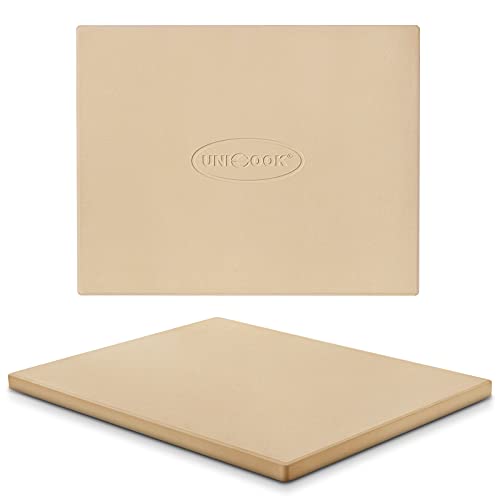
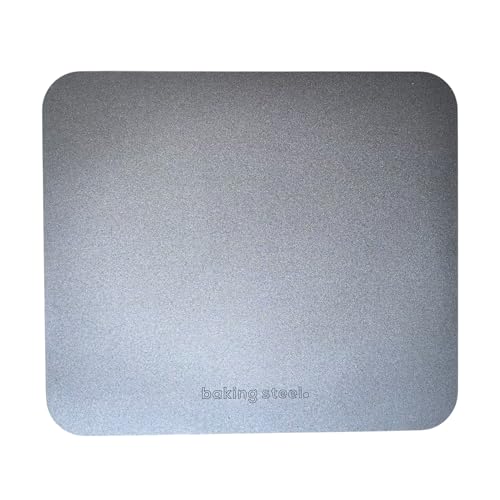
A clean crack straight through a stone does not have to end it; many owners keep baking on two halves pushed together for years. What retires a stone is crumbling, flaking, or a crack that shifts under the peel. At that point the replacement decision is the one our stones and steels rankings make: a thick cordierite stone like the Unicook 15 x 12 (around $29 at time of writing) is the value pick and shrugs off frozen pizzas and thermal shock better than thin ceramic, while a baking steel removes the whole cracking problem and cleans like a skillet. Our stone vs. steel comparison covers the trade-off, and how to use a pizza steel covers the very different care routine a steel wants.
How to clean a pizza stone
- 1
Cool it in the oven
Turn the oven off and leave the stone inside until it is cool to the touch, two hours or more. Never move or wet a hot stone.
- 2
Scrape stuck food
Use a bench scraper, metal spatula, or oven brush with a scraper edge, held at a low angle, to lift burnt cheese and char.
- 3
Brush off crumbs and flour
A stiff dry brush clears the loose flour and semolina that would burn bitter on the next preheat.
- 4
Wipe dry
Finish with a dry cloth, or one wrung out until barely damp for sticky film. No soap, no soaking, no dishwasher, no oil.
- 5
Deep clean only if needed
For a burnt patch, scrub with a baking soda paste and a stiff brush, wipe, and air-dry 24 hours before the stone sees heat again.
Ready to buy? Start with our top picks
Whatever this guide steered you toward, here's where most readers land. Live price check on each.
- Check price on Amazon

- Check price on Amazon

- Check price on Amazon

- Check price on Amazon

- Check price on Amazon

- Check price on Amazon

As an Amazon Associate we earn from qualifying purchases, at no cost to you.
Key terms
- Porosity
- The network of microscopic channels in cordierite and ceramic that wicks moisture out of dough. It is what makes a stone bake well and what makes it absorb soap, water, and oil.
- Burn-off
- Running the oven at its maximum with the stone empty so residue carbonizes to ash that brushes away. The primary cleaning method for outdoor pizza oven stones.
- Thermal shock
- The stress a stone suffers when one region heats or cools much faster than another. Moving a hot stone, wetting a hot stone, or running a self-clean cycle all cause it.
Frequently asked questions
Can you use soap on a pizza stone?
No. A pizza stone is porous and absorbs soap, which then bakes back out into the base of your next pizza. Clean it by scraping stuck food off a cool stone, brushing away crumbs, and wiping with a dry or barely damp cloth.
How do you get black stains off a pizza stone?
You do not, and you do not need to. The dark, blotchy surface is carbonized oil and sugar inside the pores; it is sterile, does not affect flavor, and no safe method removes it. Only burnt-on food sitting on top of the stone needs cleaning, and a scraper or a baking soda paste handles that.
Can a pizza stone go in the dishwasher?
Never. The dishwasher soaks the stone with water and detergent and runs it through a hot-wet-cold cycle. The water can crack the stone on the next preheat and the detergent flavors every pizza afterward.
How do you clean mold off a pizza stone?
Scrape and brush the visible mold off the cool stone, then bake it empty at the oven's highest setting for 30 to 45 minutes to sterilize it. Mold grows on moisture the stone absorbed in damp storage, so store it dry and indoors, or inside a covered oven.
Can you run a pizza stone through the oven's self-clean cycle?
Manufacturers say not to. The cycle reaches around 900°F with a rapid ramp, which exceeds many stones' ratings and is the thermal shock that cracks them. Take the stone out before running self-clean.
Filed under Explainer · Part of Pizza Oven 101, Accessories & Technique
Keep reading
Best Pizza Oven Brush (2026)
The brushes that clean cordierite without scratching it.
How to Use a Pizza Stone (2026)
The full method: cold oven in, an hour of preheat, the launch, and the doneness cues.
Best Pizza Stones and Steels (2026)
The slabs worth buying when a stone finally crumbles, ranked.
How to Clean a Pizza Oven (2026)
The burn-off routine for outdoor ovens, including the stone flip.
The Bake, free weekly
Price drops worth knowing about, technique that matters, and every new review.