Our pick Ooni Koda 16
Check price on AmazonHow to Cut a Pizza Evenly (2026): 6, 8, 10, 12 Slices, Square Cut, and the Right Tool
Even slices come from three habits: resting the pizza two minutes, cutting all the way across the pie in full passes instead of sawing from the center, and using a blade long enough to do it. Here is the geometry for every slice count, the tavern square cut, and which cutter actually makes the job easy.
We earn a commission on purchases through our links, at no cost to you. It never decides a ranking. How this works

Quick answer
- Rest 1-2 minutes before cutting. Molten cheese drags; set cheese holds its place under the blade.
- Cut edge to edge in full passes, never from the center out. Every even-slice method below is built on full passes.
- 8 slices: two perpendicular cuts, then bisect each quarter. 6 slices: three passes at 60 degrees. 12: cut 8, bisect four slices.
- Square / tavern cut: parallel passes 1.5-2 inches apart, then the same at 90 degrees. Standard for thin-crust party pizza.
- A 14-inch rocker blade is the easiest tool for even slices; a wheel works with a firm push and a straight stroke; scissors win on Roman and Detroit pans.
Short version: let the pizza rest 1 to 2 minutes so the cheese sets, then cut in full passes edge to edge, never from the center out. For 8 slices, cut once across, once at 90 degrees, then bisect each quarter. For 6, make three full passes at 60 degrees to each other. For 12, cut 8 and then bisect four of the resulting slices, or make six passes at 30-degree intervals. For a square (tavern) cut, make parallel passes an inch and a half to two inches apart in one direction, then the same across. A 14-inch rocker blade does all of it in one motion per pass; a wheel needs a firm push and a long, straight stroke.
Why the slices come out uneven: most people cut from the center outward, which means every cut starts at the same crowded point and drifts as the blade leaves it, and most people cut before the cheese has set, which drags the toppings with the blade. Fixing those two habits does more than any tool. The tool matters after that: a short wheel on a thick crust rides up and over instead of through, a dull wheel mashes the rim, and a chef's knife drags the cheese unless it is pressed straight down rather than sliced.
Our guidance is the consensus of the home-cooking community and the pizzeria convention, cross-checked across the sources we track; we are a research and verification desk, not a test kitchen. The cutters named on this page are the ones our cutter rankings verified as live and well reviewed.
What you'll need
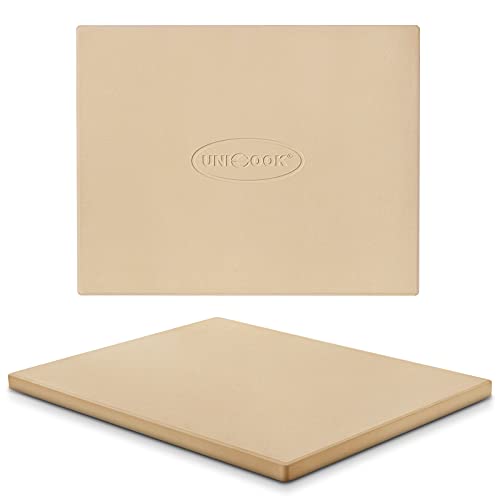
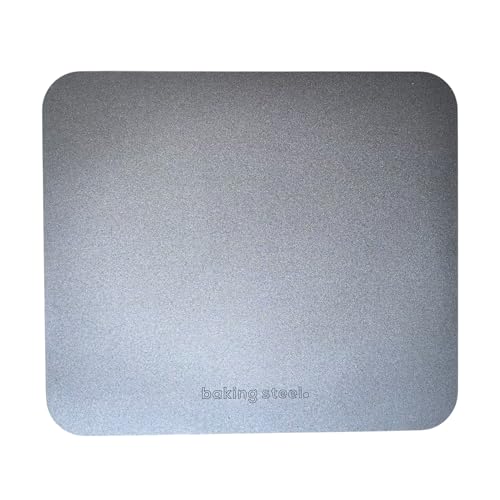
The five tools that do the work in every method on this site: a slab that stores heat, something to launch with, a way to read the surface, and a clean cut.


In this guide
The two habits that matter more than the tool
Rest it. A pizza straight from a 500°F oven, or a 900°F one, has cheese that is still liquid and sauce that is still loose. Cut it then and the blade pushes a wave of cheese ahead of it, the toppings slide, and the slices come apart ragged. One to two minutes on a board or wire rack lets the cheese set enough to hold its place; a thin Neapolitan needs only 60 seconds, a loaded New York pie closer to two. Rest on a rack rather than a flat board if you want the base to stay crisp; steam trapped under a pizza on a board softens the crust in the time it takes to cut.
Cut all the way across. The pizzeria method is full passes, edge to edge, with the blade going through the crust on both rims in one stroke. Cutting from the center outward, spoke by spoke, is how home pizzas end up with a crowded, mashed center and slices that widen or narrow as the blade drifts. Full passes also mean fewer strokes: 8 slices is four passes, not eight. Press straight down through the rim at each end rather than sawing at it; a rim that has been sawed tears, one that has been pressed through cuts clean.
The geometry: 4, 6, 8, 10, and 12 even slices
4 slices: one pass across the middle, one at 90 degrees. 8 slices: the same two passes, then bisect each quarter with two diagonal passes at 45 degrees; this is the standard for a 12 to 14 inch pizza and the easiest count to get even, because every cut is either perpendicular to or bisecting a previous one. 16 slices (for a large pie at a party) is 8, then each slice bisected again.
6 slices: three full passes at 60 degrees to each other, all through the center. The trick is the first two: make one pass, then the second at roughly the 2 o'clock to 8 o'clock angle rather than the perpendicular, and the third falls into place at 10 to 4. Six is the right count for a 10 to 12 inch pizza where eight slices would be too thin to hold. 12 slices: cut 6, then bisect each sixth, which is six passes total; or cut 8 and bisect four opposite slices, which gives slightly uneven widths but is faster. 10 slices: the hard one, because 36-degree angles do not fall on any easy landmark. Make five passes through the center, picturing a clock face and cutting at 12, then roughly 2:25, 4:50, 7:10, and 9:35; or cut the pizza into 5 wedges by eye and bisect each. Nobody gets 10 perfect without practice, and 8 or 12 is the better choice unless the crowd demands it.
For any count, start the first pass so it runs through the true center; on an oval or hand-stretched pizza, find the center by eye before the first cut, because every later pass depends on it. A 14-inch rocker blade makes this easy: it spans a 14-inch pizza in one rocking motion per pass, so the center is wherever the blade's midpoint lands.
The square cut, the strip cut, and Detroit pans
The square or tavern cut, standard for Chicago thin-crust and for party pizza everywhere, is a grid: parallel passes 1.5 to 2 inches apart across the whole pizza in one direction, then the same at 90 degrees. The center pieces are crustless squares, the edge pieces are odd shapes with rim, and that is the point; it turns one pizza into 20 to 30 pieces that a crowd can eat standing. It only works on a thin, crisp crust that holds its shape as a square; a floppy Neapolitan cut this way falls apart. A wheel cutter is the right tool here, because each pass is short and straight and a rocker's curve gets in the way on the off-center passes.
Strip cut (long rectangles, the "pizza fingers" of Roman al taglio and some bar pizzas) is the square cut in one direction only: parallel passes 2 inches apart across a rectangular pizza, then one cross-cut through the middle if the strips are too long to hold. Detroit, Sicilian, and other pan pizzas are cut in the pan, and the tools change: a pair of kitchen scissors or a bench scraper cuts a thick, caramelized-edge pan pizza cleanly where a wheel rides over the top, and the usual grid is 6, 8, or 12 rectangles depending on pan size. Lift the whole pizza out onto a board first if the pan is nonstick; a blade on a nonstick pan ruins the pan.
Wheel vs. rocker vs. scissors vs. knife
Wheel cutter. The default tool, and the right one for square cuts, pan pizzas you have lifted out, and anyone without drawer space for a rocker. The rules for a wheel: a large wheel (3.5 to 4 inches) climbs a thick rim instead of riding over it; a sharp edge matters more than on any other kitchen tool, because a dull wheel mashes; push firmly and straight in one stroke rather than rolling back and forth, which drags toppings. The Rubbermaid beechwood wheel (around $10 at time of writing) is our rankings' value pick; our best pizza cutters guide ranks the full field.
Rocker blade. A 14 to 16 inch curved blade with a handle at each end that cuts a full pass in one rocking press. It is the easiest tool for even wedge slices, the fastest for a crowd, and the one pizzerias use; it cannot do the square cut well and it needs a drawer or a wall hook. The Checkered Chef 14-inch rocker comes with a blade cover, the thing most rockers lack. Scissors. Underrated: the cleanest cut on Roman-style, Detroit, and any thick pan pizza, and the only tool that cuts a topped pizza without displacing anything, because the blades close on the slice rather than pushing through it. Ordinary kitchen shears work; dedicated pizza scissors add a spatula lip. Chef's knife. Works if you press straight down through the pizza in one motion rather than slicing back and forth, which drags the cheese. It is the worst of the four on a crisp crust and fine on a soft one.
How to cut a pizza into 8 even slices
- 1
Rest 1-2 minutes
Move the pizza to a board or wire rack and wait until the cheese sets. Molten cheese drags under the blade.
- 2
First pass through the center
Find the true center by eye, then cut edge to edge in one full pass, pressing straight down through the rim at each end.
- 3
Second pass at 90 degrees
Cut across the first pass at a right angle, again edge to edge. You now have four quarters.
- 4
Bisect each quarter
Two more full passes at 45 degrees to the first two, each running through the center. Eight even slices.
- 5
Serve from a rack
Slide the slices apart slightly so steam escapes between them. For 12 or 16 slices, bisect again.
Ready to buy? Start with our top picks
Whatever this guide steered you toward, here's where most readers land. Live price check on each.
- Check price on Amazon

- Check price on Amazon

- Check price on Amazon

- Check price on Amazon

- Check price on Amazon

- Check price on Amazon

As an Amazon Associate we earn from qualifying purchases, at no cost to you.
Key terms
- Tavern cut
- The square grid cut standard for Chicago thin-crust and party pizza: parallel passes 1.5-2 inches apart in both directions. Also called party cut or square cut.
- Rocker
- A long curved blade (14-16 inches) with a handle at each end that cuts a full pass across a pizza in one rocking press. The pizzeria tool for wedge slices.
- Full pass
- A single cut that runs edge to edge through the center of the pizza, as opposed to cutting from the center outward. The basis of every even-slice method.
Frequently asked questions
How do you cut a pizza into 6 equal slices?
Three full passes through the center at 60 degrees to each other. Make the first cut across, the second at roughly the 2 o'clock to 8 o'clock angle, and the third at 10 to 4. Rest the pizza 1 to 2 minutes first so the cheese holds.
How do you cut a pizza into 10 slices?
Five full passes through the center at 36-degree intervals, which is the hardest count to do by eye: picture a clock and cut at 12, about 2:25, 4:50, 7:10, and 9:35. Alternatively cut five wedges by eye and bisect each. Most people are better served by 8 or 12.
Should you cut pizza right out of the oven?
No. Rest it 1 to 2 minutes on a board or rack. The cheese on a pizza straight from the oven is liquid and the blade drags it; after a short rest it sets and the slices come out clean. A thin Neapolitan needs about 60 seconds, a loaded pie closer to two minutes.
What is the best tool to cut pizza?
A large, sharp wheel cutter for most people; it handles wedges, square cuts, and pan pizzas lifted onto a board. A 14-inch rocker blade is the easiest tool for even wedge slices and what pizzerias use. Scissors are the cleanest cut on Detroit, Roman, and thick pan pizzas. A chef's knife works only if pressed straight down rather than sliced.
Why is pizza cut in squares?
The square, or tavern, cut comes from Chicago bar pizza, where a thin crisp crust cut into small crustless squares could be eaten standing with one hand and stretched one pizza across a crowd. It only works on a crust firm enough to hold a square shape.
Filed under Explainer · Part of Pizza Oven 101, Accessories & Technique
Keep reading
The Bake, free weekly
Price drops worth knowing about, technique that matters, and every new review.