Our pick VEVOR Pizza Steel
Check price on AmazonGluten Free Pizza Dough: Recipe, Ratios and Par-Bake
300 g of a 1:1 gluten free flour blend, a binder (xanthan gum or psyllium husk), 85 percent water, yeast, salt and oil make two 10 inch crusts. Below: the ratios in grams, cups and baker's percentages, why gluten free dough needs far more water and a par-bake, and how to keep a celiac safe pizza away from shared stones, peels and cutters.
We earn a commission on purchases through our links, at no cost to you. How this works

Quick answer
- Use a 1:1 or pizza specific gluten free blend. If the ingredient list does not include xanthan gum, add 1 tsp (3 g) xanthan or 1 tbsp (8 g) psyllium husk powder per 300 g blend.
- Run hydration at 80 to 90 percent of the blend weight, much wetter than wheat dough. Rice and starch flours absorb more water and need it to cook through.
- Do not knead it. Beat it for 3 to 4 minutes into a thick, sticky dough and press it out with oiled hands on parchment.
- Par-bake the plain crust for 7 to 8 minutes at 475°F before topping. It is the single biggest fix for a gummy center.
- For celiac disease, a used stone, a wooden peel and a shared cutter all carry wheat. Use a dedicated surface or bake on parchment or a pizza screen, and dust with rice flour.
Short answer: mix 300 g (about 2 1/2 cups) 1:1 gluten free flour blend, 7 g (2 1/4 tsp) instant yeast, 6 g (1 tsp) salt, 6 g (1 1/2 tsp) sugar, 8 g (1 tbsp) psyllium husk powder if your blend does not already contain xanthan gum, 255 g (1 cup plus 1 tbsp) warm water and 15 g (1 tbsp) olive oil. Beat it into a thick, sticky dough, rise for 45 to 60 minutes, press it out on parchment, par-bake 8 minutes at 475°F, then top and bake 8 to 10 minutes more.
Gluten free dough is not wheat dough with a different flour. With no gluten there is nothing to knead, nothing to stretch and nothing to hold gas on its own, so the binder does that job, the dough runs far wetter so the starches can gelatinize into a crumb, and the crust is pressed and par-baked rather than tossed. Get those three changes right and the result is a crisp, sturdy crust that holds its toppings.
What you'll need
The five tools that do the work in every method on this site: a slab that stores heat, something to launch with, a way to read the surface, and a clean cut.


In this guide
The recipe at a glance
Makes two 10 inch crusts or one 13 to 14 inch crust. Weigh the flour if you can; gluten free blends vary in density, so cup measures drift more than they do with wheat flour.
| Ingredient | Grams | US measure | Baker's % |
|---|---|---|---|
| 1:1 gluten free flour blend | 300 g | about 2 1/2 cups | 100% |
| Warm water | 255 g | 1 cup plus 1 tbsp | 85% |
| Olive oil | 15 g | 1 tbsp | 5% |
| Psyllium husk powder (or 3 g xanthan) | 8 g | 1 tbsp | 2.7% |
| Instant yeast | 7 g | 2 1/4 tsp | 2.3% |
| Salt | 6 g | 1 tsp | 2% |
| Sugar | 6 g | 1 1/2 tsp | 2% |
The yeast level is higher than in a wheat dough (2.3 percent against roughly 0.5 to 1 percent for a same day wheat pizza) because the dough has a short rise and a weak structure, so it relies on a quick, strong burst of gas. The wheat ratios for comparison are in pizza dough salt and yeast ratios.
Equipment
Gluten free dough is pressed, not stretched, and it is more fragile going in and out of the oven. These do the most work.
- King Arthur Gluten Free Pizza Flour: a blend formulated for pizza, which takes the guesswork out of choosing starches. Check the bag for whether it already contains a binder before adding xanthan or psyllium.
- King Arthur Measure for Measure Flour: a 1:1 gluten free blend that already contains xanthan gum, so it works in this recipe without an added binder.
- NOW Foods psyllium husk powder: the 8 g of psyllium is what makes the dough pliable and gives the crust some chew. Add it to a blend without xanthan, or on top of one with xanthan for a chewier crust.
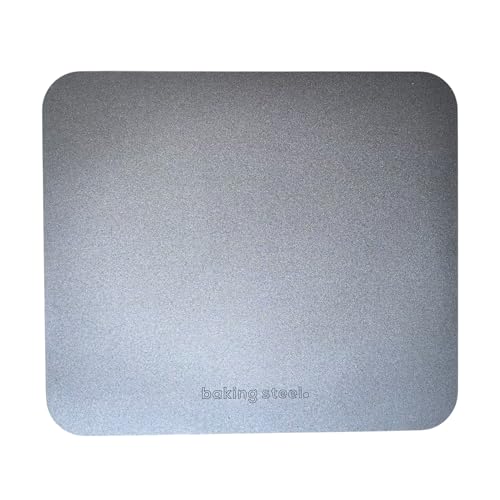
- Baking Steel Original: fast bottom heat is what crisps a wet, starch heavy base. If anyone eating is celiac, keep this one gluten free only.
- American Metalcraft 14 inch pizza screen: a metal mesh you can bake on directly, wash in hot soapy water, and keep separate from a shared stone.
A stand mixer paddle beats the thick dough smooth in 3 minutes, and a scale matters because blends vary in weight per cup. More on surfaces in best pizza stones and steels, the mixer comparison is in best stand mixers for pizza dough, and scales are in best kitchen scales for baking.
Choosing the flour and the binder
The blend. Most 1:1 or measure for measure gluten free blends are built on rice flour plus starches such as tapioca and potato, and many already include xanthan gum. A pizza specific blend is formulated for a crisp, stretchable result. Either works with this recipe. Single flours do not: plain rice flour or almond flour on its own will not hold together as a crust.
The binder. Gluten is a protein network that traps gas and gives dough stretch. Without it you need a hydrocolloid to stand in:
- Xanthan gum, about 1 tsp (3 g) per 300 g blend, adds viscosity and helps hold gas. Too much makes the crumb gummy and slick.
- Psyllium husk powder, about 1 tbsp (8 g) per 300 g blend, forms a gel that makes the dough more pliable and bready, and gives a chewier result. It absorbs a lot of water, which is part of why the hydration is so high. Some brands turn the crumb purple or grey; it does not affect flavor.
If your blend already lists xanthan gum, adding psyllium on top is a common upgrade for chew. Do not add more xanthan. The broader flour picture, including protein content in wheat flours, is in best flour for pizza dough.
Why higher hydration and why par-bake
Wheat pizza dough usually sits at 58 to 70 percent hydration (see pizza dough hydration explained). Gluten free dough commonly runs at 80 to 90 percent, and it still looks stiffer than a 65 percent wheat dough. Rice flour, starches and especially psyllium absorb a great deal of water, and the starches need that water to gelatinize in the oven into a soft crumb. Too little water gives a sandy, crumbly crust that cracks when you lift it.
That same water is why par-baking matters. A wet, dense base under sauce and cheese struggles to cook through before the toppings burn. Baking the plain crust for 7 to 8 minutes drives off surface moisture and sets the structure, so the second bake is about browning and melting rather than cooking raw dough. It also makes the crust firm enough to slide on and off a peel without tearing.
Baking it: home oven and pizza oven
| Setup | Par-bake | Finish | Notes |
|---|---|---|---|
| Home oven, steel | 475°F, 6 to 7 min | 7 to 9 min | Middle rack |
| Home oven, stone | 475°F, 7 to 8 min | 8 to 10 min | Full hour preheat |
| Home oven, pizza screen | 475°F, 8 to 9 min | 8 to 10 min | Good choice for celiac |
| Pizza oven | 600 to 650°F floor, 1 to 2 min | 2 to 3 min | No parchment, use a screen |
Parchment limits. Most parchment is rated to around 420 to 450°F. It darkens at 475°F but holds for the short par-bake, which is why the method pulls it out early in the second bake. Never put parchment into a pizza oven: at 600°F and above it chars and can ignite.
In a pizza oven, run the floor at 600 to 650°F rather than the 800°F plus used for Neapolitan dough. A wet, starch heavy base burns on the bottom long before the middle sets at full heat. Par-bake on a pizza screen, top, then finish on the screen or directly on the floor once the crust is firm. Temperature references are in our pizza oven temperature chart.
Cross-contact for celiac: stone, peel, cutter
For someone with celiac disease, a gluten free recipe is only half the job. Celiac organizations such as the Celiac Disease Foundation treat cross-contact, small amounts of gluten transferred from shared equipment, as a real risk. The pizza kitchen has a few specific trouble spots.
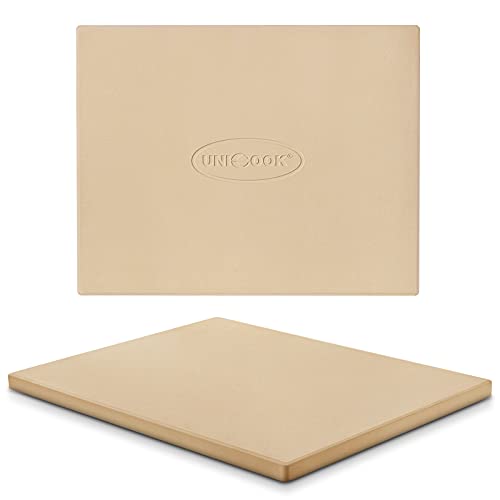
- Pizza stones are porous. Flour and crumbs work into the surface and cannot be washed out the way they can from metal. A stone that has baked wheat pizza should be treated as not gluten free. Use a dedicated stone or steel, a pizza screen, or a clean sheet pan. Stone cleaning is covered in how to clean a pizza stone, but cleaning does not make a used stone gluten free.
- Wooden peels hold flour. Use a metal peel that can be washed, or keep a separate one. Peel options are in best pizza peels.
- Dusting flour. Dust only with rice flour or the gluten free blend, and do it before any wheat flour is out on the counter. Airborne wheat flour settles on everything nearby.
- Cutters, boards and oven floors. Use a washed cutter and board. In a shared pizza oven, bake the gluten free pizza first, on a screen, before wheat pizzas leave flour and crumbs on the floor.
How to Make Gluten Free Pizza Dough
- 1
Preheat
Preheat a home oven to 475°F with a pizza steel or stone on the middle rack for 45 to 60 minutes. Use a dedicated surface, or plan to bake on parchment or a pizza screen if the stone has been used for wheat.
- 2
Mix the dry ingredients
Whisk 300 g gluten free flour blend, 7 g instant yeast, 6 g salt, 6 g sugar and, if your blend has no xanthan gum, 8 g psyllium husk powder or 3 g xanthan gum.
- 3
Add the liquids and beat
Add 255 g warm water (about 100°F) and 15 g olive oil. Beat with a stand mixer paddle or a sturdy spatula for 3 to 4 minutes until smooth, thick and sticky, like a stiff muffin batter that holds its shape. If using psyllium, it will firm up over the next few minutes.
- 4
Rise
Cover and let it rise somewhere warm for 45 to 60 minutes until puffy. It will not double the way wheat dough does. You can also refrigerate it for up to 24 hours for more flavor.
- 5
Shape on parchment
Divide in two (about 295 g each). Put each portion on a sheet of parchment, oil your hands, and press it into a 10 inch round about 1/4 inch thick with a slightly thicker edge. Do not try to stretch or toss it.
- 6
Par-bake
Slide the crust, on its parchment, onto the hot steel or stone and bake for 7 to 8 minutes, until the surface is dry and set but not browned.
- 7
Top and finish
Top lightly, then return it to the oven for 8 to 10 minutes until the cheese is melted and the underside is golden. Pull the parchment out after the first few minutes of this second bake so the base crisps directly on the surface.
Ready to buy? Start with our top picks
Whatever this guide steered you toward, here's where most readers land. Live price check on each.
- Check price on Amazon

- Check price on Amazon

- Check price on Amazon

- Check price on Amazon

- Check price on Amazon

- Check price on Amazon

As an Amazon Associate we earn from qualifying purchases, at no cost to you.
Frequently asked questions
What flour is best for gluten free pizza dough?
A 1:1 or measure for measure gluten free blend, or a blend sold specifically for pizza. These combine rice flour with starches such as tapioca and potato. Single flours like plain rice or almond flour do not hold together as a crust on their own.
Do I need xanthan gum for gluten free pizza dough?
You need a binder. If your blend already lists xanthan gum, do not add more. If it does not, add about 1 tsp (3 g) xanthan gum or 1 tbsp (8 g) psyllium husk powder per 300 g of blend. Psyllium gives a chewier, more bread-like result.
Why is my gluten free pizza crust gummy?
Usually it was not par-baked, it was too thick, or there was too much xanthan gum. Press it to about 1/4 inch, par-bake the plain crust for 7 to 8 minutes at 475°F, and top it lightly.
Why is gluten free pizza dough so wet and sticky?
It is supposed to be. Gluten free dough typically runs at 80 to 90 percent hydration because rice flour, starches and psyllium absorb far more water than wheat flour, and the starches need that water to cook into a soft crumb. Oil your hands to press it out instead of adding more flour.
Can you knead gluten free pizza dough?
There is no gluten to develop, so kneading does nothing useful. Beat it with a paddle or spatula for 3 to 4 minutes until smooth, then press it out by hand on parchment.
Can I use my regular pizza stone for gluten free pizza?
Not if the pizza is for someone with celiac disease. Stones are porous and hold wheat flour that cannot be fully cleaned out. Use a dedicated stone or steel, a washable pizza screen, or a clean sheet pan, and a washed metal peel and cutter.
Can gluten free pizza dough be frozen?
The par-baked crust freezes better than raw dough. Cool the par-baked crust completely, wrap it tightly and freeze it for up to about 2 months, then top and bake from frozen, adding a few minutes to the finish.
Filed under Explainer · Part of Pizza Recipes
Keep reading
Best Flour for Pizza Dough
The flours compared, including the gluten free pizza blend.
Pizza Dough Hydration Explained
The sourced hydration figures by style, and why water changes the bake.
How to Clean a Pizza Stone
What cleaning can and cannot remove from a porous stone.
Best Pizza Stones and Steels
If you are buying a dedicated gluten free surface, start here.
The Bake, free weekly
Price drops worth knowing about, technique that matters, and every new review.