Our pick Ooni Koda 2
Check price on AmazonNeapolitan Pizza Dough Recipe (AVPN Style, in Grams)
Four ingredients, four 250 g balls: 615 g 00 flour, 369 g water, 17 g salt and about 1 g fresh yeast, mixed and fermented on the schedule in Commission Regulation (EU) No 97/2010 and baked for 60 to 90 seconds. Below: every quantity checked against the AVPN and EU figures, the timeline, the pizza oven bake, and the home oven adaptation on a steel.
We earn a commission on purchases through our links, at no cost to you. How this works

Quick answer
- Recipe: 615 g 00 flour, 369 g water, 17 g fine sea salt, 1 g fresh yeast (or 0.4 g dry). Makes four 250 g balls.
- Hydration is 60 percent, inside the 55.6 to 62.5 percent band we derive from the AVPN's 1 litre of water to 1,600 to 1,800 g of flour. The EU regulation fixes a single 55.6 percent.
- Salt at 2.8 percent of flour satisfies both documents: the EU figures convert to 2.8 to 3.1 percent and the AVPN's to 2.2 to 3.75 percent.
- Yeast follows the EU's 3 g of fresh yeast per litre of water, which is about 1.1 g for 369 g of water. The AVPN allows as little as 0.1 g per litre for a slower rise of up to 24 hours.
- 250 g balls sit inside both ball ranges: 180 to 250 g in the EU regulation and 200 to 280 g on the AVPN's recipe page.
- Bake 60 to 90 seconds on a floor of 380 to 485°C (716 to 905°F). In a home oven, a steel at 500 to 550°F with the broiler gives a 3 to 5 minute adaptation that is not AVPN compliant but is close in style.
Short answer: 615 g 00 flour, 369 g water (60 percent), 17 g sea salt (2.8 percent) and 1 g fresh yeast, kneaded 20 minutes, risen 2 hours, divided into four 250 g balls and proofed 4 to 6 hours at about 77°F (25°C). Bake each one for 60 to 90 seconds on a floor of roughly 716 to 905°F.
Neapolitan pizza is one of the few dishes with a written specification. The Associazione Verace Pizza Napoletana (AVPN) publishes one, and Commission Regulation (EU) No 97/2010 registered Pizza Napoletana as a Traditional Speciality Guaranteed with its own. The two agree on most things and disagree on a few, and this recipe is built to sit inside both wherever that is possible. Where it is not, we say which document we followed.
The recipe is simple on purpose. There is no oil and no sugar, because neither document lists them and because both would burn in a 60 to 90 second bake at these temperatures. What makes the pizza is the flour, the ratio of water to it, the fermentation time, and an oven hot enough to finish the job in about a minute and a half.
What you'll need
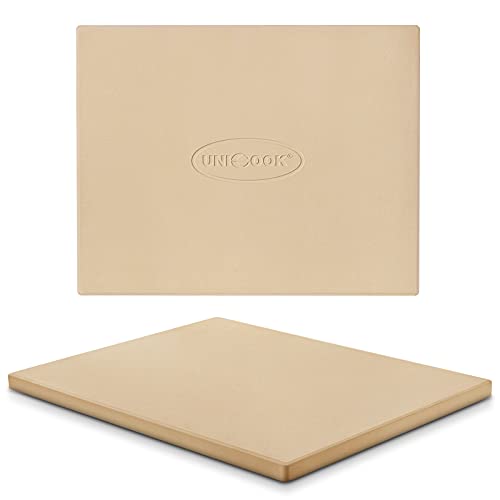
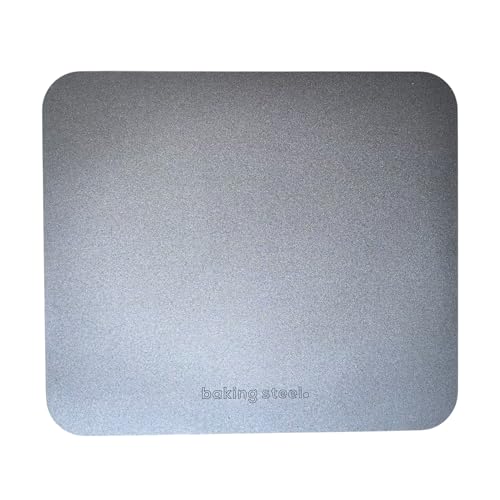
The five tools that do the work in every method on this site: a slab that stores heat, something to launch with, a way to read the surface, and a clean cut.


In this guide
- 1.The recipe, checked against the AVPN and EU figures
- 2.Equipment
- 3.Timeline: the EU same day schedule and the AVPN long window
- 4.Baking in a pizza oven: 60 to 90 seconds
- 5.Home oven adaptation with a steel
- 6.Toppings that match the dough
- 7.How to Make Neapolitan Pizza Dough
- 8.How we researched
- 9.Key terms
- 10.FAQ
The recipe, checked against the AVPN and EU figures
Four balls of 250 g. Every line below is placed inside the published figures, and the right hand column says which ones.
| Ingredient | Grams (volume) | Baker's % | Published range |
|---|---|---|---|
| 00 flour | 615 g (about 5 cups) | 100% | EU: W 220 to 380 |
| Water | 369 g (1 1/2 cups plus 1 tbsp) | 60% | AVPN 55.6 to 62.5%, EU 55.6% (our conversions) |
| Fine sea salt | 17 g (a scant 3 tsp) | 2.8% | EU 2.8 to 3.1%, AVPN 2.2 to 3.75% |
| Fresh yeast | 1 g | 0.17% | EU 3 g per litre of water |
| or dry yeast | 0.4 g (a scant 1/8 tsp) | 0.06% | AVPN: dry is one third of fresh |
The arithmetic. The EU regulation gives 3 g of fresh yeast per litre of water. This recipe uses 0.369 litres, so 3 multiplied by 0.369 is 1.1 g, which rounds to 1 g at kitchen scale. Its 50 to 55 g of salt per litre becomes 18.5 to 20.3 g on 369 g of water, but because this dough is a little wetter than the EU's fixed 55.6 percent, we set salt by flour instead: 2.8 percent of 615 g is 17 g, which sits at the floor of the EU's converted band and comfortably inside the AVPN's. These conversions are ours; the method is set out in pizza dough salt and yeast ratios. To scale to more or fewer balls, the pizza dough calculator does the same arithmetic.
Why 60 percent hydration. The AVPN ratio converts to 55.6 to 62.5 percent depending on how much water the flour absorbs, and the EU regulation sits at the dry end at 55.6 percent. 60 percent is inside the AVPN band and is easier to open by hand than 55.6. If your 00 flour feels slack at 60, come down toward 58; the full explanation is in pizza dough hydration explained.
Equipment
A Neapolitan dough is four ingredients and an oven. These are the items that make the difference.
- Caputo Pizzeria 00 flour: a soft wheat 00 flour sold for exactly this style and labelled with a W strength value, the measure the EU regulation uses. Alternatives in best flour for pizza dough.
- Etekcity 0.01 g scale: weighs 1 g of fresh yeast or 0.4 g of dry accurately, which a normal kitchen scale cannot.
- OXO 11 lb kitchen scale: for the flour, water, salt and the 250 g balls. Compared in best kitchen scales for baking.
- Etekcity Lasergrip infrared thermometer: the only way to know your floor is between 716 and 905°F before you launch.
- Baking Steel Original: for the home oven adaptation below, a steel gets closest to a pizza oven floor. Ranked in best pizza steel.
Timeline: the EU same day schedule and the AVPN long window
The two documents describe different clocks, and you choose the yeast quantity after you choose the clock.
| Step | EU same day | AVPN up to 24 h |
|---|---|---|
| Fresh yeast for this batch | 1 g (3 g per litre) | down to 0.04 g (0.1 g per litre) |
| Knead | 20 min, low speed | 20 min, low speed |
| First rise | 2 h at 25°C | longer, as yeast is reduced |
| Ball rise | 4 to 6 h | to a total of 8 to 24 h |
| Bake | 60 to 90 sec | 60 to 90 sec |
The EU schedule is 2 hours under a damp cloth, then 4 to 6 hours as balls, all at a fermentation temperature of 25°C. That is 6 to 8 hours in total: mix late morning, bake for dinner. The AVPN's recipe page allows a minimum of 8 and a maximum of 24 hours, with fresh yeast anywhere from 0.1 to 3 g per litre. At the slow end, 0.1 g per litre on 369 g of water is 0.04 g, which only a 0.01 g scale can weigh. That arithmetic is ours.
Neither document describes a refrigerated ferment. Many home pizzaiolos cold ferment Neapolitan dough anyway for schedule reasons, and that is a reasonable choice, but it is convention rather than specification. The detail is in cold ferment vs same day pizza dough.
Baking in a pizza oven: 60 to 90 seconds
Both documents specify a bake of 60 to 90 seconds, and they put the cooking floor somewhere between 380 and 485°C (716 to 905°F). They disagree about which surface is hotter: the AVPN puts the floor at about 380 to 430°C with the dome at about 485°C, while the EU regulation puts the floor at about 485°C and the dome at about 430°C. The details are on our pizza oven temperature chart.
In a gas or wood pizza oven, preheat until the center of the stone reads in that range on an infrared thermometer, then:
- Stretch the ball to about 30 to 35 cm (12 to 13.8 inches), top sparingly and slide it onto a lightly floured wooden peel.
- Launch toward the back of the oven, away from the flame for the first few seconds.
- After 15 to 20 seconds, lift and turn the pizza with a small turning peel so the side facing the flame changes. Repeat until the rim is spotted and risen.
- Pull at 60 to 90 seconds. The EU regulation notes the dough reaches an internal temperature of only 60 to 65°C in that time, which is why the center stays soft.
If the base is pale while the rim is done, let the floor recover longer between pizzas. If the base burns, the floor is hotter than the dome; lower the flame for a minute before the next launch. If you bake in a portable gas oven and want ball sizes for 12 and 16 inch models plus a fridge schedule, see the pizza oven dough recipe. Ovens that can actually reach these temperatures are compared in best pizza oven for Neapolitan pizza.
Home oven adaptation with a steel
A home oven tops out around 500 to 550°F, which is well below the 716°F floor at the bottom of the published range. You cannot make an AVPN compliant pizza in it, but you can get close in style with a steel and the broiler.
- Put a pizza steel on the top rack position that leaves about 4 to 6 inches between the steel and the broiler.
- Set the oven to its maximum and preheat 45 minutes. Then switch to the broiler on high for 10 minutes so the steel and the air above it are as hot as they will get.
- Launch the pizza and leave the broiler on. Check at 2 minutes and turn it. Most pizzas are done in 3 to 5 minutes.
The longer bake drives off more water than a 90 second bake does, so many home bakers raise the hydration a couple of points, toward 62 percent, for this method. Expect a slightly crisper, less leopard spotted base than a pizza oven gives.
Toppings that match the dough
The AVPN and the EU regulation both describe two classic pizzas, the marinara (tomato, garlic, oregano, olive oil) and the margherita (tomato, mozzarella, basil, olive oil). Keep the toppings light. A 60 to 90 second bake does not give watery or heavy toppings time to cook off, and too much sauce is the usual cause of a soupy center.
For a margherita on one 250 g ball, a common amount is 70 to 80 g of crushed tomatoes, 80 to 100 g of torn mozzarella that has drained for 30 minutes, a few basil leaves and a thin drizzle of olive oil. Peeled San Marzano tomatoes such as Cento Certified San Marzano, crushed by hand with a pinch of salt and nothing else, are the usual sauce.
How to Make Neapolitan Pizza Dough
- 1
Dissolve the salt in the water
Pour 369 g water at about 68 to 72°F into the bowl and dissolve 17 g fine sea salt in it. This is the order the EU regulation gives: water, then salt, then a small share of the flour, then yeast.
- 2
Add 10 percent of the flour, then the yeast
Stir in about 60 g of the flour, then crumble in 1 g fresh yeast (or 0.4 g dry). Stir until the yeast disperses. The salt is already dissolved, so the yeast never sits on undissolved salt.
- 3
Add the rest of the flour and knead
Add the remaining flour gradually. The EU regulation specifies 20 minutes of kneading at low speed. By hand, knead 15 to 20 minutes until the dough is smooth, soft and not sticky.
- 4
First rise: 2 hours
Cover the dough with a damp cloth and leave it 2 hours at about 77°F (25°C), the fermentation temperature the regulation names.
- 5
Divide into 250 g balls
Cut four 250 g pieces and shape each into a smooth, tight ball. Place them in a covered proofing box or on a floured tray with space to spread.
- 6
Second rise: 4 to 6 hours
Leave the balls 4 to 6 hours at room temperature until they have relaxed and puffed. For the AVPN's longer window of up to 24 hours total, reduce the yeast as described below.
- 7
Open the ball by hand
Press from the center outward, leaving a 1 to 2 cm rim, and stretch to no more than 35 cm (13.8 inches), the maximum both documents allow. No rolling pin.
- 8
Bake 60 to 90 seconds
Top lightly, launch onto a floor of 716 to 905°F and turn the pizza every 15 to 20 seconds so the rim colors evenly. It is done in 60 to 90 seconds.
Ready to buy? Start with our top picks
Whatever this guide steered you toward, here's where most readers land. Live price check on each.
- Check price on Amazon

- Check price on Amazon

- Check price on Amazon

- Check price on Amazon

- Check price on Amazon

- Check price on Amazon

As an Amazon Associate we earn from qualifying purchases, at no cost to you.
How we researched this
Every specification figure on this page comes from two primary documents, the AVPN's published regulations and recipe page and Commission Regulation (EU) No 97/2010, and matches the figures already sourced on our hydration, salt and yeast, dough per pizza, cold ferment and temperature chart pages.
Neither document prints a percentage. The conversions from per litre quantities to baker's percentages, and the scaling down to a four ball batch, are our arithmetic, and we show it.
Gram to volume conversions are approximate and use about 120 g per cup of 00 flour and 237 g per cup of water. Neapolitan dough should be weighed.
The home oven method is an adaptation and is labelled as one. It is not a method either document describes. We ran no physical tests; this is a research and verification desk.
Key terms
- 00 flour
- An Italian classification for finely milled soft wheat flour. For Neapolitan pizza the EU regulation also specifies strength, W 220 to 380, rather than just the grind.
- AVPN
- Associazione Verace Pizza Napoletana, the Naples based association that publishes the regulations and recipe for authentic Neapolitan pizza.
- TSG
- Traditional Speciality Guaranteed, the EU status granted to Pizza Napoletana by Commission Regulation (EU) No 97/2010, which includes a full production specification.
- Fresh yeast
- Compressed brewer's yeast, the form both documents specify. The AVPN states dry yeast is one third of the fresh quantity.
- Cornicione
- The raised rim of a Neapolitan pizza, formed by pressing the gas toward the edge when opening the ball by hand.
Frequently asked questions
What is the AVPN hydration for Neapolitan dough?
The AVPN specifies 1 litre of water to 1,600 to 1,800 g of flour. Converted, that is 55.6 to 62.5 percent hydration; the conversion is our arithmetic because the document prints no percentage. The EU regulation fixes a single 55.6 percent. This recipe uses 60 percent.
How much yeast for Neapolitan pizza dough?
The EU regulation specifies 3 g of fresh yeast per litre of water for a 6 to 8 hour dough. For this recipe's 369 g of water that is about 1 g fresh, or about 0.4 g dry, since the AVPN states dry yeast is one third of fresh. The AVPN allows as little as 0.1 g per litre for a rise of up to 24 hours.
How long does Neapolitan dough need to rise?
On the EU schedule, 2 hours for the first rise and 4 to 6 hours as balls, 6 to 8 hours in total at 25°C. The AVPN's recipe page allows 8 to 24 hours. Neither describes a refrigerated ferment.
What temperature do you cook Neapolitan pizza at?
Both documents put the cooking floor between 380 and 485°C, which is 716 to 905°F, for a bake of 60 to 90 seconds. They disagree on whether the floor or the dome should be the hotter surface.
Can you make Neapolitan pizza in a regular oven?
Not to the AVPN specification, because a home oven peaks around 500 to 550°F. A pizza steel near the broiler, preheated 45 minutes and then broiled, gets a 3 to 5 minute bake that is close in style.
Do you put oil or sugar in Neapolitan dough?
No. Neither the AVPN nor the EU regulation lists oil or sugar in the dough. Both would also brown too fast in a 60 to 90 second bake at 716°F and above.
How big should a Neapolitan dough ball be?
The EU regulation says 180 to 250 g and the AVPN's recipe page says 200 to 280 g, for a pizza no wider than 35 cm. 250 g is inside both.
Filed under Explainer · Part of Pizza Recipes
Keep reading
Pizza Dough Hydration Explained
Where the 55.6 to 62.5 percent band comes from, with the division shown.
Pizza Dough Salt and Yeast Ratios
The EU and AVPN salt and yeast figures, and the thirtyfold yeast gap.
Pizza Oven Temperature Chart
Floor and dome targets by style, including the AVPN and EU disagreement.
Neapolitan vs New York Pizza
How the two styles differ in dough, oven and bake.
Best Pizza Oven for Neapolitan Pizza
Ovens that reach the floor temperatures this dough is written for.
The Bake, free weekly
Price drops worth knowing about, technique that matters, and every new review.