Our pick Ooni Halo Pro Spiral Mixer
Check price on AmazonPizza Dough Calculator: Grams for Any Number of Balls
Enter the number of dough balls, the ball weight, hydration, salt and yeast, and get flour, water, salt and yeast in grams. Below the calculator: what each input means, a ball weight table by style and size, and a worked example.
We earn a commission on purchases through our links, at no cost to you. How this works

Our pick
Ooni Halo Pro Spiral MixerBest Overall for Pizza Dough. From Best Stand Mixers for Pizza Dough (2026).
Quick answer
- Total dough = number of balls x ball weight. Flour = total dough / (1 + hydration + salt + yeast), with each percentage written as a decimal. Every other ingredient is flour x its percentage.
- Ball weight scales with pizza area: about 1.2 to 1.7 g per square inch, so roughly 137 to 190 g for a 12 inch pizza and 186 to 259 g for a 14 inch. Neapolitan balls are 180 to 250 g per EU Regulation 97/2010, or 200 to 280 g per the AVPN.
- Hydration sets the style: 55.6 to 62.5% for Neapolitan (derived from the AVPN ratio), 57 to 62% for New York, 71 to 75% for Detroit pan dough.
- Salt sits between 2.8 and 3.1% of flour to satisfy both the EU regulation and the AVPN. Yeast depends on the ferment time: 0.17% fresh yeast is the EU same day figure for 6 to 8 hours.
- Dry yeast is one third of the fresh yeast weight, per the AVPN recipe. At small batch sizes that is well under 1 g, so you need a 0.01 g scale to weigh it.
Short answer: multiply the number of balls by the ball weight to get total dough, then divide that by 1 plus your hydration, salt and yeast percentages to get the flour. For 4 Neapolitan balls of 250 g at 62% hydration, 2.8% salt and 0.17% fresh yeast, that is 606 g flour, 376 g water, 17 g salt and 1.0 g fresh yeast.
Every pizza dough recipe is the same four ingredients in different proportions, and bakers express those proportions as percentages of the flour weight, called baker's percentages. Once you know the percentages for the style you want, the only other things you need are how many pizzas you are making and how big each ball should be. That is all a dough calculator does.
Use the calculator below to set your own numbers. The sections after it explain each input, where the default figures come from, and how to check the result by hand.
Pizza dough calculator
| Ingredient | Grams |
|---|---|
| Flour | 606 |
| Water | 376 |
| Salt | 17.0 |
| Fresh yeast | 1.03 |
| Total dough | 1,000 |
Percentages are of flour weight (baker's percentages). Enter yeast as a fresh-yeast percentage; choosing dry yeast uses one third of that weight. Longer or colder ferments use less yeast.
What you'll need
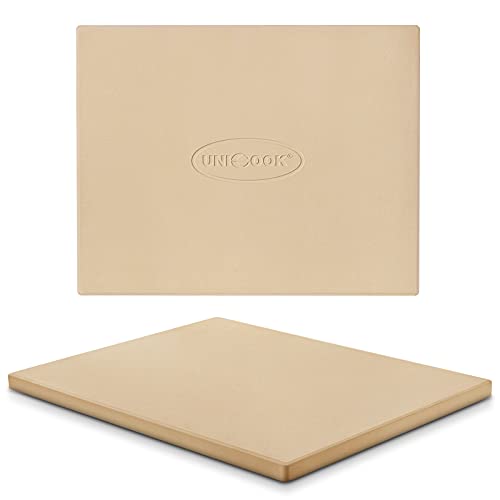
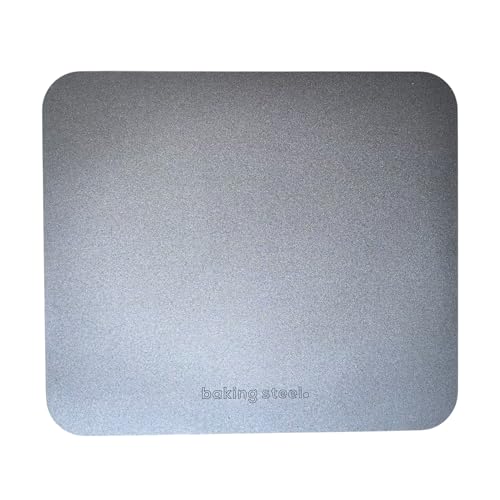
The five tools that do the work in every method on this site: a slab that stores heat, something to launch with, a way to read the surface, and a clean cut.


In this guide
- 1.How the calculator works
- 2.Equipment for weighing and mixing dough
- 3.Input 1 and 2: number of balls and ball weight
- 4.Input 3: hydration
- 5.Input 4 and 5: salt, yeast type and yeast percentage
- 6.Input 6: ferment time and the full timeline
- 7.Worked example: 4 Neapolitan balls of 250 g
- 8.How to calculate pizza dough by hand
- 9.Key terms
- 10.FAQ
How the calculator works
The calculator runs one piece of arithmetic. Here it is, so you can check any result by hand.
- Total dough = number of balls x ball weight.
- Flour = total dough / (1 + hydration + salt + yeast), with each percentage written as a decimal (62% is 0.62).
- Water = flour x hydration. Salt = flour x salt percentage. Yeast = flour x yeast percentage.
The division in step 2 is the part people get wrong by hand. If you multiply the total dough weight by 62% to get the water, you end up with too much water and too little flour, because the water percentage is of the flour, not of the finished dough. Dividing by the sum of all the percentages fixes that.
Equipment for weighing and mixing dough
A dough calculator gives you grams, so the first requirement is a scale. These are the tools that turn the numbers into consistent dough.
- OXO 11 lb food scale: enough capacity for a full batch of flour and water, with a pull-out display that stays readable under a large bowl.
- Weigh Gram pocket scale: reads to 0.01 g, which is what the yeast figure needs. A 1 g kitchen scale cannot weigh 0.34 g of instant yeast at all.
- Caputo Pizzeria 00 flour: the flour most Neapolitan recipes are written around, so the hydration defaults behave as expected.
- Chef Pomodoro proofing box: keeps the balls covered and separate through the final proof so they hold the weight and shape you gave them.
- KitchenAid Artisan 5 quart mixer: optional, but it takes the work out of batches of six balls or more.
Our rankings of kitchen scales for baking, flour for pizza dough and stand mixers for pizza dough go further on each.
Input 1 and 2: number of balls and ball weight
The number of balls is simply how many pizzas you plan to bake. Add one spare if you are new to stretching; a torn ball is easier to replace than to repair.
Ball weight depends on the size of the pizza and how thick you want it. The table uses the rate from our dough per pizza guide, 1.2 to 1.7 g of dough per square inch of finished pizza, alongside the two published Neapolitan specifications.
| Style and size | Area (sq in) | Ball weight | Basis |
|---|---|---|---|
| Neapolitan, up to 35 cm | 149.1 | 180 to 250 g | EU Regulation 97/2010 |
| Neapolitan, up to 35 cm | 149.1 | 200 to 280 g | AVPN website recipe |
| Round, 10 in | 78.5 | 95 to 132 g | 1.2 to 1.7 g per sq in |
| Round, 12 in | 113.1 | 137 to 190 g | 1.2 to 1.7 g per sq in |
| Round, 14 in | 153.9 | 186 to 259 g | 1.2 to 1.7 g per sq in |
| Round, 16 in | 201.1 | 243 to 338 g | 1.2 to 1.7 g per sq in |
| Round, 18 in (New York size) | 254.5 | 308 to 428 g | 1.2 to 1.7 g per sq in |
| Pan, 8 x 10 in | 80 | about 136 g | Top of the band |
| Pan, 10 x 14 in | 140 | about 238 g | Top of the band |
Use the low end of each range for a thinner, crisper pizza and the high end for a thicker, breadier one. Pan styles are thicker by design, so the top of the band is the natural starting point for a rectangle, and many pan recipes go heavier still. For a rectangle, multiply length by width to get the area and apply the same rate.
Input 3: hydration
Hydration is water weight divided by flour weight. It is the input that most changes how the dough handles and what kind of crust it bakes into. Our hydration guide has the full sourcing; the short version by style:
- Neapolitan: 55.6 to 62.5%, our derivation from the AVPN ratio of 1 litre of water to 1,600 to 1,800 g of flour. EU Regulation 97/2010 fixes a single 55.6%.
- New York: 57 to 62%.
- Grandma: 62.6% (King Arthur Baking).
- Detroit and pan: 71 to 75%.
- Sicilian: 73.5% (King Arthur Baking).
If you are new to dough, start at the low end of your style's range. Every point of hydration makes the dough softer, stickier and harder to launch from a peel.
Input 4 and 5: salt, yeast type and yeast percentage
Salt. EU Regulation 97/2010 specifies 50 to 55 g of sea salt per litre of water, which converts to 2.8 to 3.1% of flour. The AVPN recipe's 40 to 60 g converts to 2.2 to 3.75%. Anything between 2.8 and 3.1% satisfies both, and it is the default range in the calculator. Our salt and yeast guide shows every conversion.
Yeast type. Recipes are written for fresh yeast, active dry or instant dry. The AVPN recipe states dry yeast at one third of the fresh quantity, and that is the conversion this page uses: 1.0 g of fresh yeast becomes about 0.34 g of dry. Pick the type you have in the calculator and it converts for you.
Yeast percentage. This is the input that depends on the schedule. EU Regulation 97/2010's 3 g of fresh yeast per litre of water is 0.17% of flour, for a same day dough of 6 to 8 hours. The AVPN range runs from 0.006% to 0.19% fresh, with the low end meant for a much longer ferment. Less yeast means a slower dough, so the longer you plan to ferment, the lower the yeast.
Input 6: ferment time and the full timeline
Ferment time is how long the dough has between mixing and baking. Set it in the calculator and the yeast figure adjusts. These are the two common schedules.
Same day (the EU specification). Mix and knead until smooth. Rest the dough in bulk for 2 hours, covered. Divide and ball it, then let the balls rise 4 to 6 hours at room temperature, around 25°C (77°F). That is 6 to 8 hours from mixing to baking, and the AVPN recipe allows a range of 8 to 24 hours in total.
Cold ferment (common home practice). Mix, rest in bulk for an hour or two, ball, and refrigerate the balls in a covered container. Home recipes commonly call for 24 to 72 hours in the fridge, then 1 to 3 hours at room temperature before stretching so the dough relaxes. Neither the EU regulation nor the AVPN describes a cold ferment, so treat these hours as practitioner consensus rather than specification. Our cold ferment vs same day guide covers the trade-offs.
| Stage | Same day | Cold ferment |
|---|---|---|
| Bulk rest | 2 hours | 1 to 2 hours |
| Balled proof | 4 to 6 hours, room temp | 24 to 72 hours, fridge |
| Warm up before stretching | Not needed | 1 to 3 hours |
| Total | 6 to 8 hours | About 1 to 3 days |
Worked example: 4 Neapolitan balls of 250 g
Here is the calculator's default, worked by hand. Four balls of 250 g, 62% hydration, 2.8% salt and 0.17% fresh yeast, the EU same day figure.
- Total dough: 4 x 250 g = 1,000 g.
- Sum of percentages: 1 + 0.62 + 0.028 + 0.0017 = 1.6497.
- Flour: 1,000 / 1.6497 = 606 g.
- Water: 606 x 0.62 = 376 g. Salt: 606 x 0.028 = 17 g. Fresh yeast: 606 x 0.0017 = 1.0 g.
| Ingredient | Baker's % | Grams | Approx. volume |
|---|---|---|---|
| 00 flour | 100% | 606 g | About 5 cups |
| Water | 62% | 376 g | 1 1/2 cups plus 1 1/2 tbsp |
| Fine sea salt | 2.8% | 17 g | About 2 3/4 tsp |
| Fresh yeast | 0.17% | 1.0 g | Weigh it |
| or dry yeast | 0.057% | 0.34 g | A scant 1/8 tsp |
The four ingredients add up to 1,000 g, which is the check that the math is right. Cup measures are approximate because flour packs differently depending on how you scoop it and salt crystals vary in size, which is why the calculator works in grams.
Bake settings. In a pizza oven, the AVPN and EU specifications both give 60 to 90 seconds for Neapolitan, with the AVPN floor at 380 to 430°C (about 715 to 805°F). In a home oven, put a pizza steel in the upper third, preheat at the oven's maximum for 45 minutes, bake 5 to 7 minutes, and finish with 60 to 90 seconds under the broiler. Expect a home oven pizza to be thicker and crisper than the Neapolitan spec, because it bakes for minutes instead of seconds.
How to calculate pizza dough by hand
- 1
Set the total dough
Multiply the number of balls by the ball weight. 4 balls x 250 g = 1,000 g.
- 2
Add up the percentages
Write hydration, salt and yeast as decimals and add them to 1. 1 + 0.62 + 0.028 + 0.0017 = 1.6497.
- 3
Find the flour
Divide the total dough by that sum. 1,000 / 1.6497 = 606 g of flour.
- 4
Find everything else
Multiply the flour by each percentage: 376 g water, 17 g salt, 1.0 g fresh yeast (or 0.34 g dry).
- 5
Check the total
The ingredients should add back up to the total dough weight. If they do not, recheck the decimals.
Ready to buy? Start with our top picks
Whatever this guide steered you toward, here's where most readers land. Live price check on each.
- Check price on Amazon

- Check price on Amazon

- Check price on Amazon

- Check price on Amazon

- Check price on Amazon

- Check price on Amazon

As an Amazon Associate we earn from qualifying purchases, at no cost to you.
Key terms
- Baker's percentage
- Each ingredient's weight as a percentage of the flour weight. Flour is always 100%.
- Hydration
- Water weight divided by flour weight. The main input that sets how soft the dough is and what style it bakes into.
- Bulk ferment
- The rest the dough takes as one mass after mixing and before it is divided into balls.
- Cold ferment
- Holding balled dough in the refrigerator for a day or more to slow the yeast and build flavor. Common home practice, not part of the Neapolitan specifications.
Frequently asked questions
How do you calculate pizza dough?
Multiply the number of balls by the ball weight to get total dough. Divide that by 1 plus the hydration, salt and yeast percentages (as decimals) to get the flour. Multiply the flour by each percentage to get the water, salt and yeast.
How much flour for 4 pizza dough balls?
For 4 balls of 250 g at 62% hydration, 2.8% salt and 0.17% fresh yeast, you need 606 g of flour. For four 12 inch pizzas at 180 g each, you need about 436 g of flour at the same percentages.
What is the best hydration for pizza dough?
It depends on the style. Neapolitan is 55.6 to 62.5%, New York is 57 to 62%, and Detroit pan pizza is 71 to 75%. Start at the low end of your style's range if you are new to stretching dough.
How much salt is in pizza dough?
Between 2.8 and 3.1% of the flour weight satisfies both EU Regulation 97/2010 and the AVPN recipe. For 600 g of flour, that is about 17 to 19 g of salt.
How much yeast for pizza dough?
It depends on how long the dough will ferment. The EU Neapolitan figure is 0.17% fresh yeast for a 6 to 8 hour same day dough. Longer ferments use less. Dry yeast is one third of the fresh weight, per the AVPN.
How much does a pizza dough ball weigh?
Neapolitan balls are 180 to 250 g per EU Regulation 97/2010, or 200 to 280 g per the AVPN. For other round pizzas, use about 1.2 to 1.7 g per square inch: 137 to 190 g for 12 inches, 186 to 259 g for 14 inches.
Keep reading
How Much Dough Per Pizza
Where the 1.2 to 1.7 grams per square inch rate comes from, with the full table by size.
Pizza Dough Hydration Explained
The sourced hydration figures by style and what each band does to the dough.
Pizza Dough Salt and Yeast Ratios
The EU and AVPN salt and yeast figures, converted to baker's percentages.
Cold Ferment vs Same Day Pizza Dough
Choosing the schedule, which sets the yeast.
Best Kitchen Scales for Baking
The scales that make gram-based dough recipes work, including 0.01 g models for yeast.
The Bake, free weekly
Price drops worth knowing about, technique that matters, and every new review.