Our pick VEVOR Pizza Steel
Check price on AmazonCalzone Recipe: Dough, Ricotta Filling, Seal and Bake
How to make a calzone at home: 250 g of dough per calzone, a drained ricotta and mozzarella filling, a rolled and crimped seal, two steam vents, and a 475 to 500°F bake on a preheated steel. Full dough formula in grams and cups, a 24 to 72 hour timeline, and pizza oven settings.
We earn a commission on purchases through our links, at no cost to you. How this works

Quick answer
- Dough: 250 g per calzone. A 1,000 g batch makes four, from 595 g flour, 375 g water, 17 g salt, 1.8 g instant yeast and 12 g olive oil.
- Filling: about 175 to 200 g per calzone. Drain the ricotta for at least 30 minutes, and cook raw meats and wet vegetables before they go in.
- Seal: leave a 1 inch border, fold, press the edges together, then roll the edge over itself and crimp. Cut two or three small vents on top.
- Home oven: steel on an upper middle rack, preheated 45 to 60 minutes at 475 to 500°F, bake about 12 to 16 minutes.
- Pizza oven: turn the flame low and aim for a floor of roughly 650 to 750°F, about 4 to 6 minutes with frequent turns. Full Neapolitan heat burns the outside before the inside is hot.
Short answer: use a 250 g ball of pizza dough per calzone, stretch it to about 10 inches, fill one half with about 175 to 200 g of drained ricotta, mozzarella and Parmigiano plus your fillings, fold, seal the edge by rolling and crimping, cut two vents, and bake on a steel preheated at 475 to 500°F for about 12 to 16 minutes until deep golden. Four calzones take about 1 kg of dough.
Everything below is that method in detail: the dough formula as baker's percentages with the arithmetic shown, the filling quantities, how to seal so nothing leaks, a timeline from mixing to baking, and how to adjust for a pizza oven, where a calzone needs a much lower floor than a pizza.
We are a research and verification desk, not a test kitchen. The quantities and settings are the standard home method, and the batch arithmetic is ours, shown in full so you can check it. Ovens vary, so let color and the vents bubbling be the final call on doneness.
What you'll need
The five tools that do the work in every method on this site: a slab that stores heat, something to launch with, a way to read the surface, and a clean cut.


In this guide
The method in brief
A calzone is a pizza folded over its filling, so it uses ordinary pizza dough. What changes is the filling, which needs to be drier than a pizza topping, and the bake, which needs to be longer and a little cooler so heat reaches the center through two layers of dough.
- Dough: 250 g per calzone, cold fermented 24 to 72 hours.
- Filling: drained ricotta, mozzarella and Parmigiano, about 175 to 200 g per calzone including other fillings.
- Shape: stretch to about 10 inches, fill one half, fold, roll and crimp the edge, cut vents.
- Bake: preheated steel, 475 to 500°F, about 12 to 16 minutes.
Equipment
A calzone is heavy and holds a lot of moisture, so the gear that matters is whatever gets heat into the base quickly and lets you build it where it will bake.
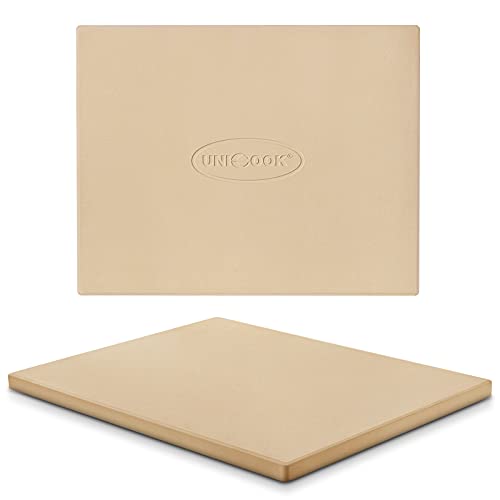
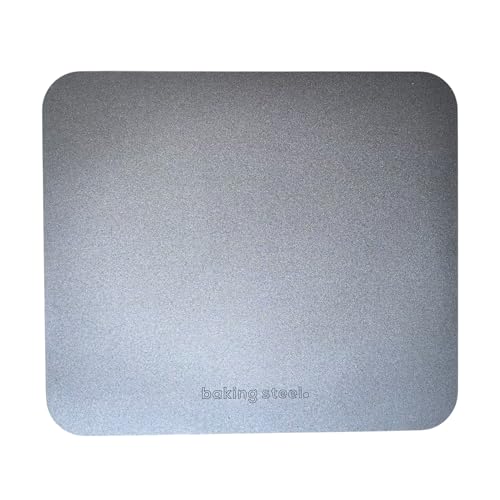
- Baking Steel Original: steel conducts heat into the bottom crust faster than stone in a home oven, which is what browns a filled calzone before the filling waters it down.
- New Star 16 inch wooden peel: build, fold and seal the calzone on the peel so you never have to lift a filled, floppy half-moon.
- Cento Certified San Marzano, 28 oz: a calzone is served with tomato sauce on the side, and one can of whole peeled tomatoes makes enough dipping sauce for the whole batch.
- OXO 11 lb kitchen scale: weighing the dough balls and filling portions is how every calzone in a batch finishes in the same time.
- Ooni infrared thermometer: reads the steel or pizza oven floor so you know you are at 475 to 500°F, or in the 650 to 750°F band in a pizza oven, before launching.
Comparisons: best pizza steel, best pizza peels, best kitchen scales for baking and best flour for pizza dough.
The dough formula, with the arithmetic shown
This is a standard home oven pizza dough at 63 percent hydration with a little oil, which helps browning at 500°F, the temperature a home oven tops out at. All quantities are baker's percentages, meaning each ingredient is a share of the flour weight.
| Ingredient | Baker's % | Grams (4 calzones) | Approx. volume |
|---|---|---|---|
| Bread flour or 00 flour | 100% | 595 g | About 4 3/4 to 5 cups, spooned and leveled |
| Cold water | 63% | 375 g | 1 1/2 cups plus 1 1/2 tbsp |
| Fine sea salt | 2.8% | 17 g | About 2 3/4 tsp |
| Instant dry yeast | 0.3% | 1.8 g | About 1/2 tsp, scant |
| Olive oil | 2% | 12 g | Scant 1 tbsp |
| Total | 168.1% | 1,000 g | Four 250 g balls |
How the flour figure is derived: four calzones at 250 g is 1,000 g of dough. The percentages add up to 168.1, so the flour is 1,000 divided by 1.681, which is 595 g. Every other line is 595 g multiplied by its percentage. Volume conversions are approximate, and salt in particular varies widely by brand and crystal size, so weigh it. The hydration reasoning is in pizza dough hydration explained, and the salt and yeast figures are in pizza dough salt and yeast ratios.
Why 250 g: stretched to about 10 inches and folded, a 250 g ball gives a calzone that is one generous serving with a wall thick enough to hold a wet filling without tearing. For a smaller calzone, 180 to 200 g stretched to 8 to 9 inches works with about 140 g of filling. The size table is in how much dough per pizza.
Timeline: mix to bake
| Step | When | Time | Notes |
|---|---|---|---|
| Mix and knead | Day 1 | 15 to 20 min | Smooth and slightly tacky |
| Bulk rest | Day 1 | 1 to 2 hours | Covered, room temperature |
| Divide and ball | Day 1 | 10 min | Four 250 g balls, covered containers |
| Cold ferment | Day 1 to Day 2, 3 or 4 | 24 to 72 hours | Refrigerator, about 38 to 40°F |
| Drain ricotta | Bake day | 30 min or more | Sieve over a bowl, in the fridge |
| Temper dough | Bake day | 2 to 3 hours | Out of the fridge, still covered |
| Preheat steel | Bake day | 45 to 60 min | 475 to 500°F, upper middle rack |
| Shape, fill, bake | Bake day | About 20 min each | 12 to 16 min in the oven |
Short on time? A same day dough works: raise the instant yeast to about 0.6 percent (3.6 g) and give it 4 to 6 hours at room temperature instead of the cold ferment. The trade-offs are covered in cold ferment vs same day pizza dough.
The ricotta filling
For four calzones:
- 425 g (one 15 oz tub) whole milk ricotta, drained for at least 30 minutes
- 225 g (about 2 cups) shredded low moisture mozzarella; fresh mozzarella is too wet unless it is diced and drained
- 40 g (about 1/2 cup) finely grated Parmigiano Reggiano
- 1 large egg, optional, which binds the filling so it slices cleanly
- Black pepper, a pinch of salt, chopped basil or parsley
- Add-ins, 120 to 200 g total: sliced ham or salami, cooked and crumbled sausage, sauteed spinach squeezed dry, sauteed mushrooms
Rules that keep it from going soggy: anything raw that releases water gets cooked and cooled first, raw meat always gets cooked before it goes in, and tomato sauce stays outside. If you want sauce inside, one tablespoon spread thinly under the cheese is the most a calzone base can handle.
Sealing and venting
Leave a 1 inch border clear of filling, and brush it lightly with water if the dough has dried. Fold the top half over so the edges line up. Press the two layers together with your fingertips, then roll the bottom edge up and over the top edge and crimp it every inch or so, the way a pie edge is finished. A fork crimp alone is the version that most often leaks.
Then cut two or three short slits, about 1 inch long, across the top. Ricotta and vegetables throw off steam, and without a vent the steam either balloons the calzone or blows a hole through the seal. Egg wash (one egg beaten with a tablespoon of water) gives a glossy, darker top; olive oil gives a crisper, more matte one. Build it on a peel dusted with fine semolina, which acts like ball bearings under a heavy calzone.
For the dipping sauce, make the no-cook sauce in our pizza sauce recipe and warm it, or simmer it with garlic as a quick marinara. How a calzone differs from its rolled cousin is in calzone vs stromboli.
Baking: home oven and pizza oven
Home oven on a steel or stone. Place the slab on an upper middle rack and preheat at the oven's maximum, 475 to 500°F, for 45 to 60 minutes. Launch the calzone and bake about 12 to 16 minutes. It is done when the top is deep golden, the base is browned and the vents are bubbling. A stone runs a few minutes slower than a steel. The setup detail is in how to make pizza in a regular oven and pizza stone vs steel.
Without a steel or stone. Bake on a parchment lined sheet pan at 450°F for about 18 to 22 minutes. The base will be softer.
In a pizza oven. A calzone cannot take the 800°F plus floor and 60 to 90 second bake of a Neapolitan pizza, because the crust burns long before the filling is hot. Let the oven heat fully, then turn the flame to low and let the floor settle to roughly 650 to 750°F. Bake about 4 to 6 minutes, turning every 30 to 45 seconds so the side facing the flame does not scorch. Use a smaller 200 g calzone the first time, and check the floor reading before each launch. Our pizza oven temperature chart has the floor ranges.
How to Make a Calzone
- 1
Mix and cold ferment the dough
Mix 595 g flour, 375 g cold water, 17 g fine salt, 1.8 g instant yeast and 12 g olive oil until smooth, about 8 to 10 minutes by hand or 5 to 6 in a mixer. Rest it covered at room temperature for 1 to 2 hours, divide into four 250 g pieces, ball them, and refrigerate in covered containers for 24 to 72 hours.
- 2
Drain the ricotta and prepare fillings
Set 425 g whole milk ricotta in a fine sieve over a bowl in the fridge for at least 30 minutes. Cook any raw sausage, and saute and squeeze spinach or mushrooms. Let cooked fillings cool so they do not warm the dough.
- 3
Temper the dough and preheat
Take the dough balls out 2 to 3 hours before baking. Put a steel or stone on an upper middle rack and preheat at 475 to 500°F for 45 to 60 minutes.
- 4
Make the filling
Mix the drained ricotta with 225 g shredded low moisture mozzarella, 40 g grated Parmigiano, 1 egg, black pepper and a pinch of salt. Divide into four portions of roughly 175 to 200 g including your other fillings.
- 5
Stretch, fill and fold
Stretch a ball to about 10 inches on a peel dusted with semolina. Spread the filling over one half, leaving a 1 inch border. Fold the empty half over and line up the edges.
- 6
Seal and vent
Press the edges together, roll the bottom edge up over the top edge, and crimp with your fingers or a fork. Cut two or three short slits in the top. Brush with egg wash or olive oil if you want a glossy crust.
- 7
Bake
Slide onto the steel and bake about 12 to 16 minutes, until the top is deep golden and the base is browned. Rest 5 minutes before cutting, since the filling is far hotter than the crust. Serve with warm marinara on the side.
Ready to buy? Start with our top picks
Whatever this guide steered you toward, here's where most readers land. Live price check on each.
- Check price on Amazon

- Check price on Amazon

- Check price on Amazon

- Check price on Amazon

- Check price on Amazon

- Check price on Amazon

As an Amazon Associate we earn from qualifying purchases, at no cost to you.
Frequently asked questions
How much dough do you need for a calzone?
About 250 g per calzone, stretched to roughly 10 inches. That makes one generous serving. For a smaller one, use 180 to 200 g stretched to 8 to 9 inches with about 140 g of filling. Four 250 g calzones need 1 kg of dough.
What temperature do you bake a calzone at?
475 to 500°F in a home oven, ideally on a steel or stone preheated for 45 to 60 minutes, for about 12 to 16 minutes. Without a steel, use a sheet pan at 450°F for about 18 to 22 minutes. In a pizza oven, lower the flame to a floor of roughly 650 to 750°F and bake 4 to 6 minutes.
How do you keep a calzone from getting soggy?
Drain the ricotta for at least 30 minutes, cook and squeeze wet vegetables, keep sauce on the side, cut steam vents in the top, and bake on a preheated steel or stone so the base browns quickly.
How do you seal a calzone so it does not open?
Leave a 1 inch border clear of filling, press the edges together, then roll the bottom edge up over the top edge and crimp it. A fork crimp alone is the weaker seal. Cutting vents in the top also helps, because trapped steam is what usually pushes a seal open.
Do you put sauce inside a calzone?
Usually not. American calzones are normally filled with ricotta and mozzarella and served with marinara on the side for dipping. If you want sauce inside, limit it to about one tablespoon spread thinly under the cheese.
Can you use store bought pizza dough for calzones?
Yes. Most store bought dough comes in 1 lb (454 g) bags, which divides into two calzones of about 227 g each. Let it warm up for 1 to 2 hours before stretching so it does not spring back.
Should you put egg in calzone filling?
It is optional. One egg in a ricotta filling for four calzones binds it so it holds together when cut. Leave it out if you prefer a looser, creamier filling.
Filed under Explainer · Part of Pizza Recipes
Keep reading
How to Make Pizza in a Regular Oven
Rack position, preheat time and the steel or stone setup that the calzone bake uses.
Pizza Dough Hydration Explained
Why this formula sits at 63 percent water, and how to adjust it for your flour.
Cold Ferment vs Same Day Pizza Dough
The 24 to 72 hour cold ferment against the same day option, and what each does to the crust.
How to Stretch Pizza Dough
Opening a ball without thin spots, which matters more when a hole means a leaking calzone.
Best Pizza Steel
The slabs that brown a calzone base fastest in a home oven.
The Bake, free weekly
Price drops worth knowing about, technique that matters, and every new review.