Our pick LloydPans Detroit Style Pizza Pan
Check price on AmazonDetroit Style Pizza Recipe: Pan, Dough, Cheese, Stripes
A 10 x 14 inch pan, a 70 percent hydration dough, brick cheese pushed all the way to the edges so it fries into a crisp frico wall, and sauce laid on top in racing stripes after the bake. Below: what Detroit style pizza is, the full recipe in grams and cups, the timeline, and bake settings at 500 to 550°F.
We earn a commission on purchases through our links, at no cost to you. How this works

Quick answer
- The pan defines the style: a 10 x 14 inch rectangle with straight sides about 2 to 2.5 inches tall and a dark surface. An 8 x 10 pan takes about 57 percent of the dough.
- Dough runs wet, about 70 to 75 percent hydration, and proofs in the pan until it is puffy and fills the corners. Total dough for a 10 x 14 is about 485 g.
- Brick cheese is traditional. Monterey Jack, or Monterey Jack mixed with low moisture mozzarella, is the standard substitute. Cube it, do not shred it, and push it right to the walls.
- Pepperoni goes on the dough before the cheese, and the sauce goes on last, in two or three stripes, either before baking or ladled hot over the baked pizza.
- Bake at 500 to 550°F on the lowest rack for 12 to 15 minutes, until the cheese edge is dark brown, almost burnt looking. That is the frico, and it is the point.
Short answer: Detroit style pizza is a thick, rectangular pan pizza baked in a 10 x 14 inch dark metal pan, with cubed brick cheese spread all the way to the pan walls so it melts down and fries into a crunchy, caramelized edge, and sauce ladled over the top in stripes. For one 10 x 14 pan, make a dough of 280 g bread flour, 196 g water (70 percent), 6 g salt and 3 g instant yeast, proof it in the oiled pan for 2 to 3 hours, top with 280 g brick or Monterey Jack cheese, and bake at 550°F for 12 to 15 minutes.
The style dates to 1946 at Buddy's Rendezvous in Detroit, where the pizzas were baked in blue steel trays originally made for automotive parts. Those pans are why the style looks the way it does: the tall straight sides hold a thick, airy crust and let the cheese climb the wall, and the dark metal absorbs heat and fries the bottom and edges. Today most home and restaurant pans are hard anodized aluminum built to the same shape.
What you'll need
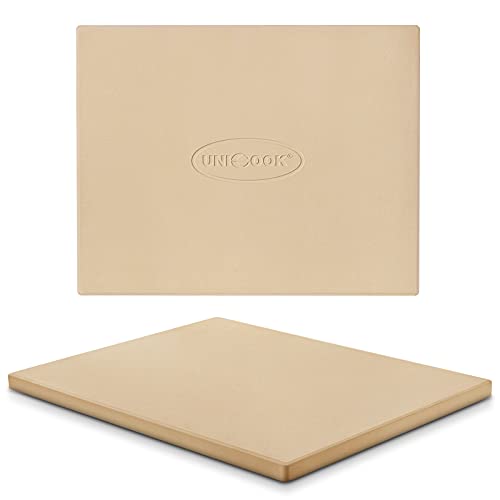
The five tools that do the work in every method on this site: a slab that stores heat, something to launch with, a way to read the surface, and a clean cut.


In this guide
The recipe at a glance
For one 10 x 14 inch pan, which makes 8 square slices. For an 8 x 10 pan, multiply every dough weight by 0.57 and use about 160 g cheese.
| Ingredient | Grams | US measure | Baker's % |
|---|---|---|---|
| Bread flour | 280 g | about 2 1/4 cups | 100% |
| Water, about 90°F | 196 g | 3/4 cup plus 1 tbsp | 70% |
| Fine salt | 6 g | 1 tsp | 2.1% |
| Instant yeast | 3 g | 1 tsp | 1.1% |
| Oil or butter for the pan | 14 g | 1 tbsp | not in dough |
| Topping | Grams | US measure |
|---|---|---|
| Brick cheese or Monterey Jack, cubed | 280 g | 10 oz |
| Pepperoni, cup and char style if available | 60 to 85 g | 2 to 3 oz |
| Pizza sauce, cooked and fairly thick | 180 to 240 g | 3/4 to 1 cup |
Total dough is about 485 g for 140 square inches of pan, or roughly 3.5 g per square inch, about twice what a thin round carries. The full dough weight arithmetic for pans is in how much dough per pizza. Detroit doughs are commonly published at 70 to 75 percent hydration (see pizza dough hydration explained); 70 percent is the easier one to handle if you are new to wet dough.
Equipment
Detroit is the one pizza style where the pan is not optional. A glass dish or a thin sheet pan will not give you the fried edge. The full pan comparison is in our best Detroit style pizza pan guide.
- LloydPans Detroit Style Pan, 10 x 14 x 2.5 in: the standard size this recipe is written for, with tall straight walls and a dark hard anodized finish that releases cheese well.
- LloydPans Detroit Style Pan, 8 x 10 in: the four slice size for one or two people. Two fit side by side in most home ovens.
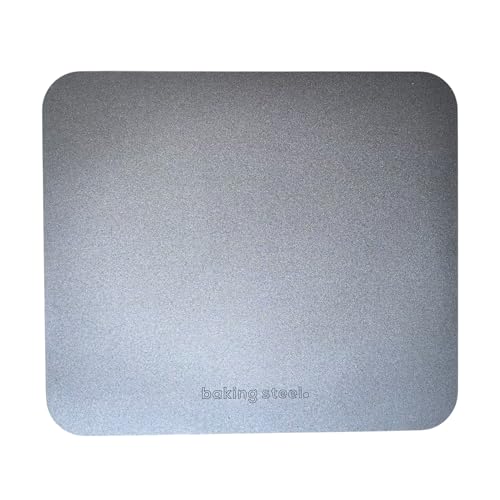
- Baking Steel Original: set under the pan on the lowest rack, it pushes more heat into the bottom so the crust fries rather than steams.
- OXO 11 lb kitchen scale: at 70 percent hydration, a few grams of water is the difference between workable and soup. Weigh it.
- OXO offset spatula: a thin, bent blade slides down the pan walls to cut the cheese crust free while it is still hot, before it welds to the metal.
What is Detroit style pizza
Detroit style pizza is a rectangular, deep pan pizza from Detroit, Michigan. Its defining features, all of which come from the pan, are:
- A rectangular shape, traditionally 10 x 14 inches, cut into squares, so every slice has at least one edge.
- A thick, light, open crumb, from a wet dough proofed in the pan. It is airy rather than dense, closer to focaccia than to a deep dish crust.
- A fried, crunchy base, from oil in a dark metal pan.
- The cheese crust, sometimes called frico: cheese pushed to the walls melts down the sides and caramelizes against the hot metal into a lacy, dark, crunchy border.
- Sauce on top, in stripes, often called racing stripes, rather than under the cheese.
Its origin is usually credited to Buddy's Rendezvous in 1946, where blue steel trays made for holding automotive parts were used as pizza pans. The style spread through Detroit pizzerias for decades before going national in the 2010s.
How it differs from other pan pizzas. Chicago deep dish is a pastry like crust built up high sides with cheese under a thick layer of sauce. Sicilian and grandma pies are rectangular too, but without the cheese wall, and grandma pies are thinner. A cast iron pan pizza is round and usually lighter on cheese; it is covered in cast iron pan pizza.
The cheese: brick cheese and the substitutes
Brick cheese is a Wisconsin cheese, semi soft and mild when young, with a high fat content that lets it melt smoothly and fry hard at the edges. It is the traditional choice and the source of the frico's flavor. Outside the Midwest it can be hard to find; look for it at cheese counters or order it from Wisconsin creameries.
Monterey Jack is the most common substitute. It melts and browns in a similar way and has a similar mild flavor. Many recipes blend it with low moisture whole milk mozzarella, roughly half and half, for more stretch. Avoid fresh mozzarella; it releases too much water into a thick crust.
Cube it, do not shred it. Cubes of 1/4 to 1/2 inch melt more slowly than shreds, so the top stays creamy while the edge has time to fry. Shredded cheese tends to brown across the top before the crust is done.
Sauce and the racing stripes
Detroit pizzerias put the sauce on top, in two or three lines running the length of the pizza. Some pizzerias stripe it on before the bake, which concentrates the sauce as it cooks; others ladle warm sauce over the pizza after it comes out, which keeps it bright and saucy. Both are traditional, so choose by taste.
Use a cooked, fairly thick sauce: crushed tomatoes simmered with garlic, oregano, a pinch of sugar and a little butter or oil until it coats a spoon. A thin raw sauce runs off the cheese and pools. Good canned tomatoes, such as Cento Certified San Marzano tomatoes or a California plum tomato, make the difference here.
Keep the sauce warm if you are saucing after the bake, so it does not cool the pizza.
Baking: home oven and pizza oven
| Setup | Temperature | Time | Notes |
|---|---|---|---|
| Home oven, pan on lowest rack | 550°F | 12 to 14 min | Steel under the pan if you have one |
| Home oven, max 500°F | 500°F | 14 to 16 min | Lowest rack, longer for the edge |
| Pizza oven, flame low | 500 to 600°F floor | 12 to 15 min | Rotate the pan every 3 minutes |
Detroit is a long, moderate bake compared with Neapolitan pizza. The thick crust needs 12 minutes or more to cook through, so a pizza oven running at 850°F will burn the bottom of the pan long before the center is done. If you bake it in a pizza oven, let the floor drop to 500 to 600°F, turn the flame to its lowest, and rotate the pan often. Most people get more consistent results from a home oven for this style; see how to make pizza in a regular oven.
Doneness. The cheese crust at the walls should be very dark brown, darker than seems right. Lift a corner with a spatula: the bottom should be golden and crisp. If the top is done but the bottom is pale, move the pan directly onto the oven floor for 2 minutes.
Common problems
Cheese edge is pale and soft. The cheese did not touch the walls, the oven was not hot enough, or the pan is light colored. Push cheese against the metal, bake at 550°F, and give it the extra minutes.
Dough will not reach the corners. The gluten is tight. Wait 20 to 30 minutes and press again; do not force it or it tears.
Dense crumb. Underproofed. The dough should be visibly puffy and jiggly before topping. In a cool kitchen, the pan proof can take 3 hours.
Pizza stuck in the pan. Run a thin spatula around the walls within a minute of leaving the oven, while the cheese is still soft. Once it cools it welds to the metal.
How to Make Detroit Style Pizza
- 1
Mix the dough
Stir 280 g bread flour, 6 g salt and 3 g instant yeast together, then add 196 g water at about 90°F. Mix until no dry flour remains. It will be sticky and shaggy. Rest it covered for 15 minutes, then do one set of stretch and folds with wet hands.
- 2
Bulk ferment
Cover and leave at room temperature for 2 hours, or refrigerate for 24 to 72 hours for more flavor. If cold fermented, let it sit at room temperature for an hour before the next step.
- 3
Oil the pan and press
Coat a 10 x 14 inch Detroit pan with 1 tbsp (14 g) of oil or soft butter, including the walls. Put the dough in and press it toward the corners with oiled fingers. It will spring back; leave it.
- 4
Rest and press again
After 20 to 30 minutes, press the dough again. It should now reach the corners. Cover the pan.
- 5
Pan proof
Proof at warm room temperature for 1 1/2 to 2 hours, until the dough is visibly puffy, has risen about half again, and has bubbles on the surface. Preheat the oven to 550°F with a rack in the lowest position during the last hour.
- 6
Top in the right order
Lay pepperoni directly on the dough. Scatter 280 g brick or Monterey Jack cheese, cut into 1/4 to 1/2 inch cubes, over the whole surface, pushing it firmly against all four walls so it touches the metal. Optionally spoon two or three lines of sauce down the length of the pizza.
- 7
Bake
Bake on the lowest rack for 12 to 15 minutes until the cheese at the walls is dark brown and the top is bubbling and spotted. A pizza steel on the lowest rack under the pan helps the bottom crisp.
- 8
Release and stripe
Run a thin metal spatula around the walls to free the cheese crust while hot, then lift the pizza out onto a rack. If you did not sauce before baking, ladle warm sauce over it in two or three stripes. Rest 3 minutes before cutting into 8 squares.
Ready to buy? Start with our top picks
Whatever this guide steered you toward, here's where most readers land. Live price check on each.
- Check price on Amazon

- Check price on Amazon

- Check price on Amazon

- Check price on Amazon

- Check price on Amazon

- Check price on Amazon

As an Amazon Associate we earn from qualifying purchases, at no cost to you.
Frequently asked questions
What is Detroit style pizza?
A rectangular pan pizza from Detroit, baked in a 10 x 14 inch dark metal pan with tall sides. It has a thick, airy, fried crust, brick cheese pushed to the edges so it caramelizes into a crunchy border, and sauce on top in stripes.
What makes Detroit style pizza different?
The cheese crust and the sauce order. Cheese goes all the way to the pan walls and fries into a crisp, dark edge, and sauce goes on top in stripes rather than under the cheese. The rectangular dark pan and the wet, airy dough complete the style.
What cheese is used on Detroit style pizza?
Wisconsin brick cheese is traditional. Monterey Jack is the usual substitute, often mixed about half and half with low moisture mozzarella. Cut it into cubes rather than shredding it.
What size pan do you need for Detroit style pizza?
The standard is 10 x 14 inches with sides about 2 to 2.5 inches tall. An 8 x 10 inch pan works for a smaller pizza with about 57 percent of the dough. Glass dishes and thin sheet pans do not produce the fried edge.
What temperature do you bake Detroit style pizza at?
500 to 550°F on the lowest oven rack for 12 to 15 minutes, until the cheese at the walls is dark brown. In a pizza oven, run the floor at 500 to 600°F with a low flame and rotate the pan often.
Why is the sauce on top of Detroit pizza?
Putting sauce on top keeps it from soaking into the thick crust and lets the cheese melt directly on the dough. The stripes, either baked on or ladled over after baking, give each bite a mix of sauce and cheese.
Can I make Detroit style pizza in a cast iron skillet?
You can make a similar pan pizza, and the cheese will fry against the cast iron walls, but it will be round, and the shallower sides of most skillets hold less dough. The method for that is in our cast iron pan pizza recipe.
Keep reading
Best Detroit Style Pizza Pan
The 10 x 14 and 8 x 10 pans compared, plus grandma and Sicilian sizes.
Best Cast Iron Pizza Pan
For the round, skillet version of a thick, fried crust pan pizza.
Pizza Dough Hydration Explained
Why Detroit and Sicilian doughs run wetter than Neapolitan.
How Much Dough Per Pizza
The grams per square inch arithmetic for rectangular pans.
The Bake, free weekly
Price drops worth knowing about, technique that matters, and every new review.