Our pick VEVOR Pizza Steel
Check price on AmazonGreek Yogurt Pizza Dough: The 2 Ingredient Recipe
Equal weights of self-rising flour and plain Greek yogurt, 200 g of each, make one 12 inch crust with no yeast and no rise. Below: why equal weights works better than the cup for cup version, the homemade self-rising flour substitute, and bake settings for a steel, a stone, an air fryer and a pizza oven.
We earn a commission on purchases through our links, at no cost to you. How this works

Quick answer
- The ratio is 1:1 by weight: 200 g self-rising flour to 200 g Greek yogurt for one 12 inch crust. Weighing matters more than usual, because a cup of yogurt weighs roughly twice what a cup of flour does.
- Homemade self-rising flour: per 200 g all purpose flour, add 10 g (2 1/2 tsp) baking powder and 2 to 3 g (a scant 1/2 tsp) salt.
- Use plain, strained Greek yogurt. Regular yogurt is far wetter and turns the dough into a paste; flavored yogurt adds sugar that burns.
- Expect a soft, slightly tangy, flatbread-like crust, closer to a naan or a biscuit than to a chewy yeasted base.
- Bake at 450 to 475°F on a preheated steel or stone, or around 650°F on a pizza oven floor. The milk sugars and protein brown quickly.
Short answer: mix 200 g (about 1 2/3 cups) self-rising flour with 200 g (about 3/4 cup plus 2 tbsp) plain full fat Greek yogurt, knead for 1 to 2 minutes with a little extra flour until smooth, roll to 12 inches, and bake at 475°F on a preheated steel or stone for 10 to 12 minutes. No yeast, no rise, about 25 minutes from bowl to table.
It works because each ingredient brings half of what dough needs. Self-rising flour already contains baking powder and salt. Greek yogurt supplies the water, plus acid that gives the baking powder an extra push and a mild tang, and some fat and protein that keep the crumb tender. No self-rising flour? Whisk 200 g all purpose flour with 2 1/2 tsp (10 g) baking powder and a scant 1/2 tsp (2 to 3 g) salt.
What you'll need
The five tools that do the work in every method on this site: a slab that stores heat, something to launch with, a way to read the surface, and a clean cut.


In this guide
The recipe at a glance
One 12 inch crust about 1/4 inch thick, or two 8 inch personal pizzas. Scale by keeping the two weights equal.
| Ingredient | Grams | US measure | Baker's % |
|---|---|---|---|
| Self-rising flour | 200 g | about 1 2/3 cups | 100% |
| Plain Greek yogurt, full fat or 2% | 200 g | about 3/4 cup plus 2 tbsp | 100% |
| Flour for kneading | 10 to 20 g | 1 to 2 tbsp | as needed |
Homemade self-rising flour. The standard substitution is 1 1/2 tsp baking powder and 1/4 tsp salt per cup of all purpose flour. Scaled to this recipe:
| Ingredient | Grams | US measure |
|---|---|---|
| All purpose flour | 200 g | about 1 2/3 cups |
| Baking powder | 10 g | 2 1/2 tsp |
| Fine salt | 2 to 3 g | scant 1/2 tsp |
Whisk it for a full 20 seconds so the baking powder is evenly spread. Note that commercial self-rising flour in the US is often milled from softer, lower protein wheat, so the homemade version made with all purpose flour gives a slightly sturdier, chewier crust. Flour protein is explained in pizza flour protein content.
Equipment
Two ingredients means each one has to be measured right, and a soft, quick dough depends on a hot surface to crisp up.
- Bob's Red Mill self-rising flour: half of the recipe. It already contains the baking powder and salt, so there is nothing else to measure.
- OXO 11 lb kitchen scale: the whole recipe is an equal weight ratio, and yogurt measured by the cup can be off by 20 percent or more depending on how thick it is.
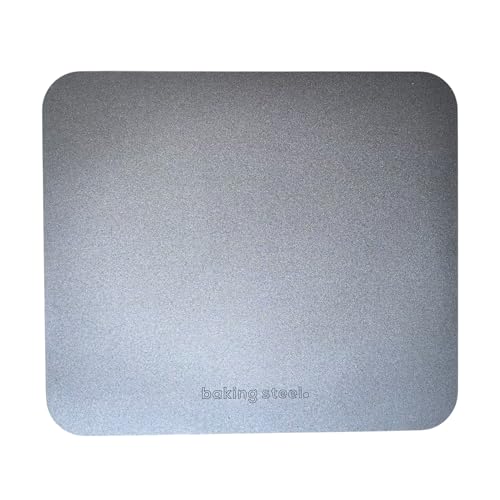
- Baking Steel Original: strong bottom heat sets a soft, high moisture crust before the dairy browns the top too far.
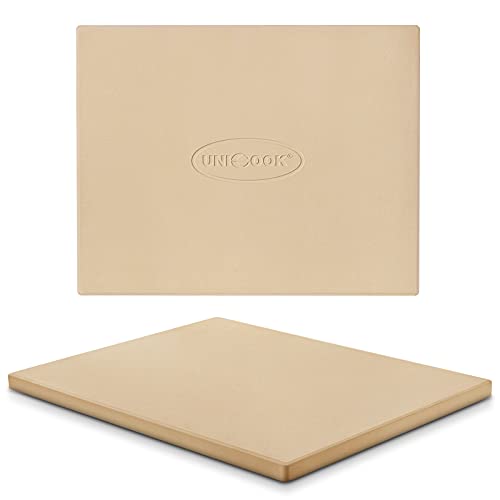
- Unicook cordierite pizza stone: the budget option, slightly gentler than steel, which suits a dough that browns fast.
- Chef Pomodoro aluminum peel: launch on parchment from a thin metal peel, then slide the parchment out halfway through.
The surface comparison is in pizza stone vs steel and the scale comparison in best kitchen scales for baking.
Why equal weights, not a cup of each
The version that circulates most widely calls for one cup of self-rising flour and one cup of Greek yogurt. The problem is that a cup of flour weighs roughly 120 to 125 g while a cup of Greek yogurt weighs roughly 225 to 245 g. Cup for cup, you are using nearly twice as much yogurt as flour by weight, which is why so many people end up with a sticky paste and keep adding flour until it works.
Equal weights gets you to roughly the same place without the guessing. Plain Greek yogurt is mostly water, around 80 to 85 percent by weight according to USDA FoodData Central, so 200 g of yogurt supplies about 160 to 170 g of water. Against 200 g of flour, that is an effective hydration of roughly 80 to 85 percent. That sounds high next to a 60 to 65 percent wheat pizza dough (see pizza dough hydration explained), but yogurt's protein and fat hold much of that water, so the dough handles more like a soft biscuit dough than a slack one.
Thickness of the yogurt matters. Brands strain to different thicknesses. If the dough is still too sticky to knead after 2 tbsp of extra flour, your yogurt is on the thin side; add flour 1 tsp at a time. Regular unstrained yogurt is too wet for this ratio, and nonfat yogurt gives a drier, tougher crust than full fat or 2%.
Baking it: oven, air fryer and pizza oven
| Setup | Temperature | Time | Notes |
|---|---|---|---|
| Home oven, steel or stone | 475°F | 10 to 12 min | Upper middle rack, full preheat |
| Home oven, sheet pan | 450°F | 13 to 16 min | Oil the pan, lowest rack |
| Air fryer | 375°F | 4 min, then 4 to 6 topped | Par-bake one side, flip, then top |
| Pizza oven | about 650°F floor | 2 to 3 min | Turn every 30 seconds |
Yogurt adds milk sugar (lactose) and protein, both of which brown faster than a plain flour and water dough. That is good for color, but it means the rim can go from golden to dark in a minute. In a pizza oven, let the floor drop to around 650°F, well below the 800°F plus used for Neapolitan dough, and keep the flame low. The temperature references are in our pizza oven temperature chart.
What it tastes like, and when to use it
A yogurt dough bakes into a soft, tender, slightly tangy crust with a crisp bottom when it is cooked on a hot surface. It is closer to a naan or a flatbread than to a pizzeria crust, and it has none of the open holes or chew a fermented dough gets from yeast and time.
That makes it a good fit for a weeknight pizza, a kids' pizza night, flatbreads and garlic knots, or anyone who wants a crust in under 30 minutes. If you want the classic chewy, blistered base, you need yeast; the ratios are in pizza dough salt and yeast ratios, and the other no yeast option, made with baking powder, water and oil, is in pizza dough without yeast.
Common problems
Too sticky to handle. The yogurt is thinner than average or the measures were by volume. Weigh both, then add flour 1 tsp at a time while kneading.
Dense and flat. The baking powder is old, or the self-rising flour has been open for a long time. Baking powder loses strength over months once opened. Test it in hot water; it should fizz hard.
Pale and soft underneath. The surface was not hot enough. Give a steel or stone the full preheat, and par-bake for 4 minutes if the toppings are wet or heavy. The same mechanism is behind a soggy middle with any dough.
Burnt rim, raw center. Too hot for a dairy dough. Drop the oven or the pizza oven floor by 25 to 50°F and roll it a little thinner.
How to Make 2 Ingredient Greek Yogurt Pizza Dough
- 1
Preheat
Heat the oven to 475°F with a pizza steel or stone on the upper middle rack for 45 to 60 minutes. If you are using a sheet pan instead, 15 minutes of preheat is enough.
- 2
Weigh and mix
Weigh 200 g self-rising flour and 200 g plain Greek yogurt into a bowl. Stir with a spoon until it forms a shaggy, sticky mass.
- 3
Knead briefly
Turn it onto a counter dusted with 1 to 2 tbsp of flour and knead for 1 to 2 minutes, adding small pinches of flour only until it stops sticking to your hands. Stop as soon as it is smooth.
- 4
Rest 5 minutes
Cover it with the bowl for 5 minutes so the flour hydrates and the dough relaxes. It will roll out more easily and shrink back less.
- 5
Roll and top
Roll to a 12 inch round on parchment or a floured peel, about 1/4 inch thick. Prick the center a few times with a fork. Top lightly with sauce, cheese and toppings.
- 6
Bake
Bake on the hot steel or stone for 10 to 12 minutes until the rim is deep golden and the underside is browned. For heavy toppings, par-bake the plain crust for 4 minutes first.
Ready to buy? Start with our top picks
Whatever this guide steered you toward, here's where most readers land. Live price check on each.
- Check price on Amazon

- Check price on Amazon

- Check price on Amazon

- Check price on Amazon

- Check price on Amazon

- Check price on Amazon

As an Amazon Associate we earn from qualifying purchases, at no cost to you.
Frequently asked questions
Can I use regular yogurt instead of Greek yogurt for pizza dough?
Not at the same ratio. Regular yogurt is unstrained and much wetter, so 1:1 by weight gives a paste. Strain it in a cheesecloth lined sieve for a few hours first, or start with about 150 g regular yogurt per 200 g flour and add more only if the dough is dry.
How do I make self-rising flour for Greek yogurt pizza dough?
Whisk 200 g (about 1 2/3 cups) all purpose flour with 10 g (2 1/2 tsp) baking powder and 2 to 3 g (a scant 1/2 tsp) salt. That follows the standard substitution of 1 1/2 tsp baking powder and 1/4 tsp salt per cup of flour.
Does Greek yogurt pizza dough need to rise?
No. The baking powder in self-rising flour does the leavening when the dough hits the heat. A 5 minute rest helps it roll out without shrinking, but a longer wait does not improve it.
Why is my 2 ingredient pizza dough sticky?
Usually because it was measured by the cup. A cup of Greek yogurt weighs about twice what a cup of flour does. Use equal weights, 200 g of each, then knead in up to 2 tbsp of extra flour.
Can you make Greek yogurt pizza dough ahead?
You can refrigerate it, wrapped, for up to a day, but it loses some lift as the baking powder reacts. For make ahead, par-bake the crust for 4 to 5 minutes, cool it, and refrigerate or freeze it, then top and bake.
Can you cook Greek yogurt pizza dough in a pizza oven?
Yes, but cooler than Neapolitan dough. Let the floor settle around 650°F, keep the flame low, and turn it every 30 seconds for 2 to 3 minutes. The milk sugars in yogurt burn quickly at full heat.
Keep reading
Best Kitchen Scales for Baking
An equal weight recipe needs a scale. The models that read to 1 g.
Pizza Dough Hydration Explained
Why water percentage changes how dough handles and bakes.
Pizza Stone vs Steel
Which surface browns a quick dough better in a home oven.
How to Make Pizza in a Regular Oven
Rack position, preheat and bake times for a home oven.
The Bake, free weekly
Price drops worth knowing about, technique that matters, and every new review.