Our pick VEVOR Pizza Steel
Check price on AmazonSourdough Discard Pizza Dough (Same Day or Overnight)
Unfed starter is too weak and too acidic to raise a pizza dough reliably on its own, so this recipe uses 160 g of discard for flavor and a small amount of instant yeast for lift. Below: grams and cups, the true hydration with the starter's water counted, a same day schedule, an overnight cold version, and bake settings for a home oven and a pizza oven.
We earn a commission on purchases through our links, at no cost to you. How this works

Quick answer
- Formula on the flour you add: 100 percent flour, 30 percent discard, 58.5 percent water, 2.8 percent salt, and 0.38 percent instant yeast for same day or 0.19 percent for overnight.
- Discard at 100 percent hydration is half flour and half water. Counting it, the dough is about 64 percent hydration, which suits a 6 to 8 minute home oven bake. The division is shown below.
- Same day: 2 g instant yeast, about 2 hours bulk and 2 to 3 hours in balls. Overnight: 1 g yeast, 1 hour bulk, then 24 to 72 hours in the fridge.
- Discard from the fridge works. Very old discard, with a gray liquid layer and a sharp smell, adds more sourness and can weaken the dough, so use discard that is days old rather than weeks.
- A discard only version, with no commercial yeast, is possible but slow and less predictable. If you go that way, plan on 8 to 12 hours at room temperature and watch the dough rather than the clock.
- Bake on a steel at 500 to 550°F for 6 to 8 minutes, or in 90 seconds to 2 1/2 minutes in a pizza oven run slightly cooler than for Neapolitan.
Short answer: mix 530 g flour, 160 g sourdough discard, 310 g water, 15 g salt and 2 g instant yeast, let it rise about 2 hours, ball it, and bake 2 to 3 hours later. For an overnight version cut the yeast to 1 g and refrigerate the balls 24 to 72 hours. Either way it makes four balls of about 250 g.
Discard is the starter you pour off before feeding. It still carries the flavor of a sourdough culture, but it has used up most of its food, so its yeast is sluggish and its acidity is high. That is why discard recipes that rely on the discard alone tend to rise slowly and unpredictably. Adding a measured pinch of commercial yeast fixes the timing while the discard supplies the tang.
This page gives one formula with two clocks: a same day dough for tonight, and an overnight cold dough for tomorrow or the day after. Pick the clock first and the yeast weight follows from it, which is the same rule laid out on our salt and yeast ratios page.
What you'll need
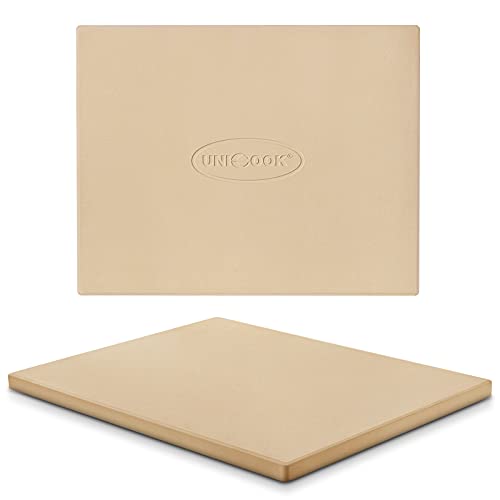
The five tools that do the work in every method on this site: a slab that stores heat, something to launch with, a way to read the surface, and a clean cut.


In this guide
The recipe in grams, cups and baker's percentages
This makes four balls of about 250 g, each enough for a 12 to 14 inch pizza. The ball weights and their sizes are worked out in how much dough per pizza, and the pizza dough calculator rescales this formula to any batch size.
| Ingredient | Grams | Approx. volume | Baker's % |
|---|---|---|---|
| Bread flour or all purpose flour | 530 g | about 4 1/3 cups | 100% |
| Sourdough discard, 100% hydration | 160 g | about 2/3 cup | 30% |
| Water, lukewarm | 310 g | 1 1/3 cups | 58.5% |
| Fine sea salt | 15 g | 2 1/2 tsp | 2.8% |
| Instant yeast, same day | 2 g | a scant 3/4 tsp | 0.38% |
| Instant yeast, overnight | 1 g | about 1/3 tsp | 0.19% |
The true hydration, shown. 160 g of discard at 100 percent hydration is about 80 g flour and 80 g water. Add those and the dough holds 610 g of flour and 390 g of water. 390 divided by 610 is 0.639, so the effective hydration is about 64 percent. On the same basis the salt is 15 divided by 610, or 2.5 percent of total flour. Both divisions are ours. 64 percent sits just above the 57 to 62 percent New York band on our hydration table, which is right for a dough that will spend several minutes in a home oven.
Equipment
Discard dough is forgiving, but these tools make it repeatable.
- OXO 11 lb kitchen scale: discard varies in thickness, so weighing it is the only way to know how much flour and water you actually added. More in best kitchen scales for baking.
- KitchenAid Artisan 5 qt stand mixer: kneads this 1 kg batch on low in 6 to 8 minutes with no mess. Other options in best stand mixers for pizza dough.
- Chef Pomodoro proofing box: holds the four balls through the proof or the overnight fridge rest without drying.
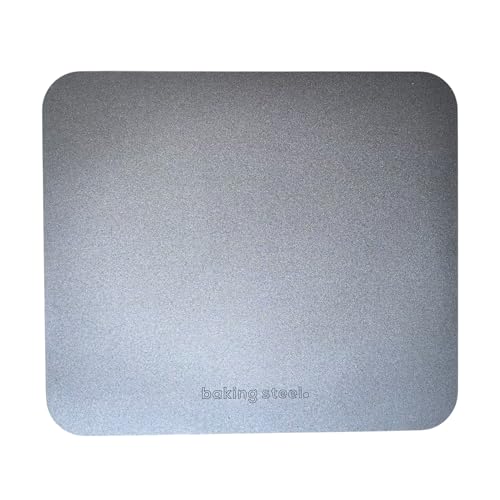
- Baking Steel Original: gives a home oven the bottom heat a 64 percent dough needs to crisp in 6 to 8 minutes. Ranked in best pizza steel.
- King Arthur bread flour: a higher protein flour that holds the acidic discard together and browns well over a 6 to 8 minute home oven bake.
Timeline: same day and overnight
| Step | Same day | Overnight cold |
|---|---|---|
| Instant yeast | 2 g | 1 g |
| Mix and knead | 20 to 25 min | 20 to 25 min |
| Bulk rise, room temp | about 2 h | about 1 h |
| Ball | 10 min | 10 min |
| Proof | 2 to 3 h, room temp | 24 to 72 h, fridge |
| Temper before baking | not needed | 2 to 3 h, room temp |
| Preheat and bake | 45 min, then 6 to 8 min | 45 min, then 6 to 8 min |
Same day runs about 5 to 6 hours from mixing to the first pizza, which means mixing after lunch for dinner. Overnight is the better tasting option for most people, because the cold rest gives the discard flavor time to come through, and it lets you mix one evening and bake any time in the next three days. The schedule trade is covered in cold ferment vs same day pizza dough.
Why discard needs help from commercial yeast
A fed starter at its peak is full of active yeast with food to eat. Discard is the same culture after it has run out of that food. Two things follow.
It is slow. The yeast population is still there but much less active, so a dough leavened by discard alone can take 8 to 12 hours or more at room temperature, and the time changes with every batch depending on how old the discard is.
It is acidic. The longer a starter goes unfed, the more acid it builds up. Acid gives the tang people want, but a lot of it weakens gluten, which shows up as a dough that tears or spreads. That is why this recipe keeps discard to 30 percent of the flour.
A small dose of instant yeast takes over the job of rising, so the discard only has to supply flavor. The amount is low on purpose: 2 g on 530 g of flour is under 0.4 percent, enough to finish in an afternoon without the dough tasting yeasty.
Bake settings
Home oven with a steel or stone. Put the steel in the upper third of the oven, about 6 to 8 inches under the broiler, set the oven to 500 to 550°F and preheat 45 minutes. Bake 6 to 8 minutes, turning once, and finish under the broiler for a minute if the top needs color. The full routine is in how to use a pizza steel.
Pizza oven. This dough is wetter and built on bread or all purpose flour, so it does best a little below full Neapolitan heat. Aim the floor at about 700 to 800°F on an infrared thermometer and expect 90 seconds to 2 1/2 minutes, turning often. The acid and sugars from the discard brown the rim fast; if the rim chars before the base is set, lower the flame.
| Setup | Surface temp | Bake time |
|---|---|---|
| Home oven + steel | 500 to 550°F | 6 to 8 min |
| Home oven + stone | 500 to 550°F | 7 to 10 min |
| Pizza oven | 700 to 800°F floor | 90 sec to 2 1/2 min |
Using discard that has been in the fridge
Most people collect discard in a jar in the fridge until they have enough to bake with. That works. A few practical points:
- Days old is ideal. Discard collected over the past several days gives a clear sourdough flavor without overwhelming sourness.
- Gray liquid on top is alcohol and acid from a hungry culture. Pour it off for a milder crust or stir it in for a sharper one.
- Anything fuzzy, pink or orange is mold, not sourness. Throw that jar out.
- Cold discard is fine. It slows the first hour slightly. Use lukewarm water to compensate.
If your pizzas spread or tear when you stretch them, very acidic discard is a likely cause. Use fresher discard or drop it to 20 percent of the flour.
How to Make Sourdough Discard Pizza Dough
- 1
Weigh the discard
Stir your discard and weigh 160 g. It can come straight from the fridge. If it has a layer of dark liquid on top, pour that off or stir it in; stirring it in makes the dough more sour.
- 2
Mix
In a large bowl or stand mixer, combine 530 g flour, 160 g discard, 310 g lukewarm water and the instant yeast (2 g for same day, 1 g for overnight). Mix until no dry flour remains, rest 15 minutes, then add 15 g salt.
- 3
Knead
Knead 8 to 10 minutes by hand or 6 to 8 minutes on low speed with a dough hook until smooth and elastic. The dough should be soft and slightly tacky, not sticky.
- 4
Bulk rise
Same day: cover and leave about 2 hours at room temperature, until roughly 50 percent larger. Overnight: leave 1 hour, then go straight to balling.
- 5
Divide and ball
Cut four pieces of about 250 g and shape into tight balls. Put them in lightly oiled lidded containers or a proofing box.
- 6
Proof or refrigerate
Same day: proof 2 to 3 hours at room temperature until puffy. Overnight: refrigerate 24 to 72 hours, then take the balls out 2 to 3 hours before baking.
- 7
Stretch, top and bake
Stretch to 12 to 14 inches, top and bake 6 to 8 minutes on a steel preheated 45 minutes at 500 to 550°F, or 90 seconds to 2 1/2 minutes in a pizza oven.
Ready to buy? Start with our top picks
Whatever this guide steered you toward, here's where most readers land. Live price check on each.
- Check price on Amazon

- Check price on Amazon

- Check price on Amazon

- Check price on Amazon

- Check price on Amazon

- Check price on Amazon

As an Amazon Associate we earn from qualifying purchases, at no cost to you.
How we researched this
The formula is a standard baker's percentage build. Effective hydration and salt percentages are our arithmetic and are shown. Hydration and salt are chosen to agree with the sourced figures on our hydration and salt and yeast pages.
Gram to volume conversions use 120 g per cup of flour, 237 g per cup of water and about 3 g per teaspoon of instant yeast. They are approximate. Weigh where you can.
The long cold ferment is practitioner convention. Neither the AVPN nor Commission Regulation (EU) No 97/2010 specifies a refrigerated schedule, as set out on our cold ferment page.
We ran no physical tests. This is a research and verification desk.
Key terms
- Sourdough discard
- The portion of starter removed before feeding. It still holds the culture's flavor but has little leavening power because it has used up most of its food.
- Instant yeast
- Dried commercial yeast that can be mixed straight into flour without dissolving first. About 3 g per teaspoon.
- Effective hydration
- Hydration calculated with the flour and water inside the starter or discard included. It is always higher than the figure on the flour you weigh into the bowl.
- Hooch
- The gray or dark liquid that collects on a hungry starter. It is mostly alcohol and acid and can be poured off or stirred in.
Frequently asked questions
Can you make pizza dough with sourdough discard?
Yes. Use discard for flavor and add a small amount of commercial yeast for a predictable rise. This recipe uses 160 g discard to 530 g flour with 2 g instant yeast for a same day dough, or 1 g for an overnight cold ferment.
Does sourdough discard pizza dough need yeast?
Not strictly, but without it the rise is slow and varies from batch to batch, often 8 to 12 hours at room temperature. A small amount of instant yeast makes the timing reliable while the discard supplies the sourdough flavor.
How long does discard pizza dough need to rise?
With 2 g instant yeast, about 2 hours in bulk and 2 to 3 hours in balls at room temperature. With 1 g yeast and a cold ferment, about 1 hour at room temperature, then 24 to 72 hours in the fridge and 2 to 3 hours to warm up before baking.
How old can sourdough discard be for pizza?
Discard that is a few days old gives good flavor. Older discard gets more sour and more acidic, which can weaken the dough. Throw out any discard that shows mold, which looks fuzzy or pink rather than just gray and liquid.
Is discard pizza crust sour?
Mildly. With discard at 30 percent of the flour and a same day rise the crust has a light tang. An overnight cold ferment brings out more. For a strongly sour crust, use an active starter and a longer cold ferment.
Can I use discard straight from the fridge?
Yes. Cold discard slows the first part of the rise a little, so mix with lukewarm water. There is no need to bring it to room temperature or feed it first.
Filed under Explainer · Part of Pizza Recipes
Keep reading
Cold Ferment vs Same Day Pizza Dough
Which schedule to pick, and what the AVPN and EU documents say about fermentation time.
Pizza Dough Hydration Explained
How to count the water inside a starter and why bake time sets the hydration.
Pizza Dough Salt and Yeast Ratios
Why yeast weight is a clock setting, with the published figures converted.
How to Make Pizza in a Regular Oven
Home oven setup for a dough built for a longer bake.
Best Stand Mixers for Pizza Dough
Mixers that handle a 1 kg batch without strain.
The Bake, free weekly
Price drops worth knowing about, technique that matters, and every new review.