Our pick Ooni Halo Pro Spiral Mixer
Check price on AmazonSourdough Pizza Dough Recipe (Grams and Timeline)
A naturally leavened pizza dough at 68 percent hydration with 15 percent active starter and 2.8 percent salt, for four 250 g balls. Below: the formula in grams and cups, the baker's percentages, the full timeline from feeding the starter to the bake, and settings for a home oven with a steel and for a 900°F pizza oven.
We earn a commission on purchases through our links, at no cost to you. How this works

Our pick
Ooni Halo Pro Spiral MixerBest Overall for Pizza Dough. From Best Stand Mixers for Pizza Dough (2026).
Quick answer
- Formula: 100 percent flour, 68 percent water, 15 percent active starter, 2.8 percent salt. For four 250 g balls that is 540 g flour, 367 g water, 81 g starter and 15 g salt.
- The starter adds water. At 100 percent hydration, 81 g of starter is about 40 g flour and 40 g water, which lifts the true hydration from 68 to about 70 percent. That division is ours and is shown in the table.
- The AVPN specifies mother yeast (sourdough starter) at 5 to 20 percent of flour. 15 percent sits inside that band.
- Use the starter at its peak, usually 4 to 12 hours after feeding depending on temperature. A starter that has collapsed is closer to discard and will ferment slowly.
- Bulk ferment 4 to 6 hours at about 75°F, ball, then cold ferment 24 to 72 hours. The long cold ferment is practitioner convention, not something the AVPN or EU documents specify.
- Bake on a steel at 500 to 550°F for 6 to 8 minutes in a home oven, or in 60 to 120 seconds on a pizza oven floor in the 750 to 900°F range.
Short answer: mix 540 g bread or 00 flour, 367 g water, 81 g active starter at its peak and 15 g salt, bulk ferment 4 to 6 hours at room temperature, divide into four 250 g balls, then refrigerate 24 to 72 hours. That is 68 percent hydration on the flour you add and about 70 percent once you count the water inside the starter.
Sourdough pizza works on the same four ingredients as any other pizza dough. The difference is that the leavening is a living culture rather than a measured packet of yeast, so the clock is set by how active your starter is and how warm your kitchen is, not by a fixed yeast weight. That makes the timeline below a range rather than a single number, and the cue that matters is what the dough looks like, not what the clock says.
The starter quantity sits inside the one published figure that exists for it. The AVPN's recipe page specifies mother yeast, its term for a sourdough starter, at 5 to 20 percent of the flour used. This recipe uses 15 percent, which is high enough to make a same day or next day bake realistic in a normal kitchen and low enough that the starter does not swamp the flavor with sourness.
What you'll need
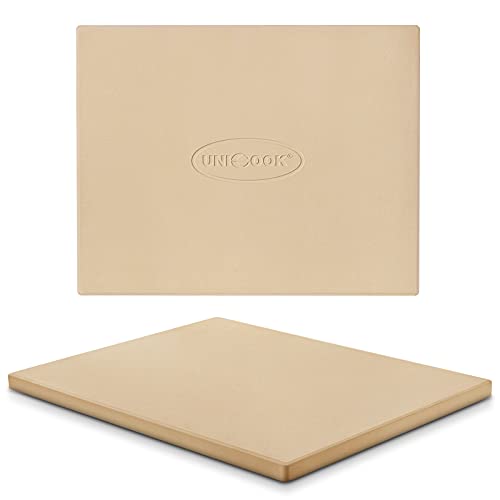
The five tools that do the work in every method on this site: a slab that stores heat, something to launch with, a way to read the surface, and a clean cut.


In this guide
- 1.The recipe in grams, cups and baker's percentages
- 2.Equipment
- 3.Timeline: from feeding the starter to the first pizza
- 4.Bake settings: home oven with a steel, and a pizza oven
- 5.Starter strength: the variable that decides everything
- 6.Flour choice for sourdough crust
- 7.Stretching and launching a sourdough ball
- 8.How to Make Sourdough Pizza Dough
- 9.How we researched
- 10.Key terms
- 11.FAQ
The recipe in grams, cups and baker's percentages
This makes four 250 g dough balls, which each stretch to roughly a 12 to 14 inch pizza. 250 g sits inside both published Neapolitan ball ranges, 180 to 250 g in Commission Regulation (EU) No 97/2010 and 200 to 280 g on the AVPN's recipe page, and the arithmetic for other sizes is in how much dough per pizza. To scale the batch to a different number or size of balls, use the pizza dough calculator.
| Ingredient | Grams | Approx. volume | Baker's % |
|---|---|---|---|
| Bread flour or 00 flour | 540 g | 4 1/2 cups | 100% |
| Water, about 80°F | 367 g | 1 1/2 cups plus 2 1/2 tsp | 68% |
| Active starter, 100% hydration | 81 g | a heaping 1/3 cup | 15% |
| Fine sea salt | 15 g | 2 1/2 tsp | 2.8% |
| Total | 1,003 g | four 250 g balls | 185.8% |
The true hydration, shown. A starter kept at 100 percent hydration is equal weights of flour and water, so 81 g of starter carries about 40.5 g of each. Add those to the formula and the dough holds 580.5 g of flour and 407.5 g of water. 407.5 divided by 580.5 is 0.702, so the effective hydration is about 70 percent, against 68 percent on the flour you weigh into the bowl. That is our arithmetic, and it is the reason a sourdough dough often feels wetter than the number on the recipe suggests. The full method for these divisions is in pizza dough hydration explained.
Salt. 15 g on 540 g of flour is 2.8 percent, the bottom of the 2.8 to 3.1 percent band that the EU regulation's figures convert to and inside the AVPN's wider 2.2 to 3.75 percent. Both conversions are shown in pizza dough salt and yeast ratios.
Equipment
Sourdough is more sensitive to weight and temperature than yeasted dough, so these are the tools that actually change the result.
- OXO 11 lb kitchen scale: reads to 1 g, which is all you need for flour, water, starter and salt in this recipe. Cups cannot give you a hydration figure. Compared in best kitchen scales for baking.
- Caputo Pizzeria 00 flour: the right flour if your bake is in a pizza oven at 750°F or more. For a home oven, King Arthur bread flour browns better over a longer bake; see best flour for pizza dough.
- Chef Pomodoro proofing box: holds four balls flat in the fridge for the cold ferment and keeps them from drying out or sticking together.
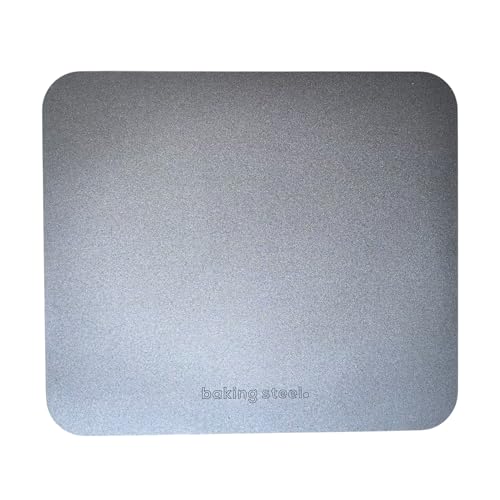
- Baking Steel Original: the home oven upgrade that makes a 6 to 8 minute bake possible. Ranked in best pizza steel.
Timeline: from feeding the starter to the first pizza
This is the schedule most practitioners use for a next day or two day bake. Times assume a kitchen around 75°F; a cooler kitchen stretches every room temperature step.
| Step | Time | What to look for |
|---|---|---|
| Feed starter | 4 to 12 h before mixing | Doubled, domed, bubbly |
| Autolyse (flour + water) | 30 to 60 min | No dry flour left |
| Mix in starter and salt, knead | 8 to 10 min by hand | Smooth, stretchy |
| Bulk ferment with folds | 4 to 6 h | About 50% bigger, bubbles on top |
| Divide and ball | 10 min | Four tight 250 g balls |
| Cold ferment | 24 to 72 h | Balls spread slightly, small bubbles |
| Temper at room temp | 2 to 4 h | Soft, slow spring back to a poke |
| Preheat and bake | 45 min preheat, then 1 to 8 min per pizza | See bake settings below |
Same day version. Skip the fridge. Let bulk run 5 to 7 hours, ball, then proof the balls another 2 to 3 hours at room temperature until they are puffy. The crust is milder and the timing is less forgiving, because a starter at room temperature keeps working whether you are ready or not. The trade between the two schedules is laid out in cold ferment vs same day pizza dough.
Bake settings: home oven with a steel, and a pizza oven
Home oven with a steel or stone. Put a pizza steel on a rack in the upper third of the oven, about 6 to 8 inches under the broiler, set the oven to its maximum (500 to 550°F on most) and preheat 45 minutes. Bake 6 to 8 minutes, turning once, and switch to the broiler for the last minute if the top needs color. A stone works the same way but needs the full preheat and gives a slightly paler base.
Pizza oven. Heat the oven until the floor reads in the 750 to 900°F range on an infrared thermometer, launch, and turn the pizza every 15 to 20 seconds. At this hydration expect 60 to 120 seconds. Sourdough browns faster than a plain yeasted dough because the long ferment leaves more free sugars in the crust, so if the rim scorches before the base sets, drop the flame for 30 seconds before launching.
| Setup | Surface temp | Bake time |
|---|---|---|
| Home oven + steel | 500 to 550°F | 6 to 8 min |
| Home oven + stone | 500 to 550°F | 7 to 10 min |
| Gas or wood pizza oven | 750 to 900°F floor | 60 to 120 sec |
Starter strength: the variable that decides everything
Every sourdough pizza problem comes back to the starter. A commercial yeast recipe tells you a weight and the yeast behaves the same every time. A starter varies with how recently it was fed, what flour it eats, and the temperature of your kitchen.
Use it at the peak. A starter is at its most active when it has risen to its highest point and has not yet fallen. Before that it has not built up enough yeast; after that it has started to run out of food and turns more acidic. A starter that has collapsed and smells sharp or like nail polish is effectively discard, and it belongs in a sourdough discard pizza dough that uses commercial yeast for lift, not in this recipe.
The float test is a rough guide only. A spoonful of ripe starter usually floats in water because it is full of gas. Plenty of strong starters sink when they are made with whole grain flour, so treat a doubled, domed jar as the better signal.
If the dough barely moves in bulk, the cause is almost always a starter used too early or too late, or a kitchen below about 70°F. Move the dough somewhere warmer before you change the formula.
Flour choice for sourdough crust
The flour you pick should follow the oven, not the leavening. 00 flour is milled for very short, very hot bakes and stays pale and soft if it spends 8 minutes in a 500°F home oven. Bread flour has more protein and browns better over a longer bake, which suits a steel. Both handle 68 percent hydration comfortably.
A small share of whole wheat flour, 5 to 10 percent of the total, gives a nuttier crust and speeds the starter up a little. Above that, the dough gets thirstier and less stretchy, so add a point or two of water if you go there.
Stretching and launching a sourdough ball
A cold fermented sourdough ball is more extensible than a same day yeasted one, which makes it easy to open and easy to overstretch. Press the air from the center out to the rim with your fingertips, leave a 1/2 inch border alone, then drape the dough over your knuckles and let gravity do the last of the work. The full technique is in how to stretch pizza dough.
At about 70 percent effective hydration the dough will stick to a bare peel if it sits too long. Dust the peel with semolina, build the pizza quickly, and give the peel a shake before you walk to the oven.
How to Make Sourdough Pizza Dough
- 1
Feed the starter so it peaks at mix time
Feed your starter 4 to 12 hours before you plan to mix, at a ratio you know it doubles on. Use it when it has at least doubled, the top is domed and bubbly, and a spoonful smells yeasty and mildly sour rather than sharp. You need 81 g.
- 2
Mix flour and water, then rest
Combine 540 g flour with 340 g of the water until no dry flour remains. Cover and rest 30 to 60 minutes. This rest, called an autolyse, lets the flour hydrate so the dough comes together with less kneading.
- 3
Add starter, salt and the last of the water
Add 81 g starter and 15 g salt, then the remaining 27 g water a little at a time, squeezing it through the dough. Knead 8 to 10 minutes by hand, or 6 to 8 minutes on low in a stand mixer, until the dough is smooth and passes a rough windowpane test.
- 4
Bulk ferment 4 to 6 hours
Cover and leave at about 75°F. Give the dough 2 to 4 sets of stretch and folds in the first 2 hours, 30 minutes apart. Bulk is done when the dough has grown by roughly 50 percent, the surface shows bubbles and it feels airy rather than dense. Cooler kitchens take longer.
- 5
Divide and ball
Turn the dough out and cut four 250 g pieces. Shape each into a tight ball by tucking the edges underneath, then place them in lightly oiled lidded containers or a proofing box.
- 6
Cold ferment 24 to 72 hours
Refrigerate the balls. 24 hours gives a mild flavor; 48 to 72 hours gives a more sour, more complex crust. This is practitioner convention rather than a published specification.
- 7
Temper 2 to 4 hours before baking
Take the balls out 2 to 4 hours before the bake so they come up to room temperature and relax. Cold dough springs back and tears. The dough is ready when it is soft and a fingertip poke springs back slowly.
- 8
Stretch, top and bake
Preheat the steel or pizza oven fully, stretch the ball by hand to 12 to 14 inches, top lightly and launch. Bake 6 to 8 minutes on a steel at 500 to 550°F, or 60 to 120 seconds in a pizza oven, turning as needed.
Ready to buy? Start with our top picks
Whatever this guide steered you toward, here's where most readers land. Live price check on each.
- Check price on Amazon

- Check price on Amazon

- Check price on Amazon

- Check price on Amazon

- Check price on Amazon

- Check price on Amazon

As an Amazon Associate we earn from qualifying purchases, at no cost to you.
How we researched this
The formula on this page is a standard baker's percentage build. The only authority figure used is the AVPN's published mother yeast range of 5 to 20 percent of flour, which we already cite on our salt and yeast ratios page.
Hydration, salt and ball weight are chosen to agree with the sourced figures on our hydration, salt and yeast, and dough per pizza pages. Gram to cup conversions are approximate, use 120 g per cup of flour and 237 g per cup of water, and are given for convenience only. Weigh where you can.
Fermentation times for sourdough depend on starter strength and kitchen temperature, so we give the ranges practitioners commonly use and the visual cues to read, not a single time.
We ran no physical tests. This is a research and verification desk, and nothing here is a result from a kitchen of ours.
Key terms
- Starter (levain)
- A culture of wild yeast and bacteria kept alive in flour and water. The AVPN calls it mother yeast and specifies it at 5 to 20 percent of the flour used.
- Starter hydration
- The water to flour ratio of the starter itself. A 100 percent hydration starter is equal weights of each, which is why it adds water to the dough as well as leavening.
- Peak
- The point where a fed starter has risen to its highest and not yet fallen. This is when it has the most leavening power.
- Bulk ferment
- The first rise of the whole batch before it is divided. For sourdough at about 75°F it typically runs 4 to 6 hours.
- Autolyse
- A rest of flour and water before salt and leavening go in, which lets the flour hydrate and reduces kneading time.
Frequently asked questions
How much sourdough starter do I use for pizza dough?
15 percent of the flour weight is a practical middle value, which is 81 g of starter for 540 g of flour. The AVPN publishes a range of 5 to 20 percent of the flour for mother yeast. Toward 5 percent, fermentation is slower and milder; toward 20 percent it is faster and more sour.
Can I make sourdough pizza dough the same day?
Yes. Bulk ferment 5 to 7 hours at about 75°F, ball, then proof the balls 2 to 3 hours at room temperature before baking. It will be milder than a cold fermented dough and the timing depends heavily on how active your starter is.
How long should sourdough pizza dough cold ferment?
Practitioners commonly use 24 to 72 hours in the refrigerator. 24 hours gives a mild crust; 48 to 72 hours gives more sourness. Neither the AVPN nor the EU regulation specifies a cold ferment, so this is convention rather than a rule.
What hydration is best for sourdough pizza?
65 to 70 percent is the usual range. This recipe is 68 percent on the flour you add and about 70 percent once the water in a 100 percent hydration starter is counted. Go lower if the dough is hard to launch, higher only if your flour absorbs it.
Why is my sourdough pizza dough not rising?
Usually the starter was used before or well after its peak, or the kitchen is too cold. Feed it so it doubles and use it at the top, and keep the dough near 75°F during bulk. A probe thermometer in the dough tells you where you actually are.
Can I use sourdough discard instead of active starter?
Not as the only leavening, unless you accept a much longer and less predictable rise. Discard is weak and acidic. The reliable approach is to use discard for flavor and add a small amount of commercial yeast for lift.
Do I need 00 flour for sourdough pizza?
Only for a pizza oven. 00 flour is made for 60 to 90 second bakes at very high heat. In a 500 to 550°F home oven, bread flour browns better and gives a crisper crust.
Filed under Explainer · Part of Pizza Recipes
Keep reading
Cold Ferment vs Same Day Pizza Dough
What the AVPN and EU documents actually say about fermentation time, and when a long cold ferment is worth it.
Pizza Dough Hydration Explained
The sourced hydration table by style and why bake time sets the ceiling.
Pizza Dough Salt and Yeast Ratios
Salt bands and the AVPN mother yeast range converted to baker's percentages.
How to Use a Pizza Steel
Rack position, preheat and bake times for the home oven version of this recipe.
Best Flour for Pizza Dough
00 vs bread flour matched to your oven and bake time.
The Bake, free weekly
Price drops worth knowing about, technique that matters, and every new review.